
A rabbit can find a chewable cord, carpet corner, or tiny hiding gap faster than you might expect. A rabbit proof home gives your bunny room to explore while keeping everyday hazards out of reach.
You don’t need a perfect house or expensive equipment. Start with one safe area. Then gradually expand your pet rabbit’s free roam space as you learn what they love to investigate.
The goal is simple: block risky items, offer better things to chew and dig, then check the room again from rabbit level.
Key Takeaways for a Rabbit-Proof Home
- Cover or fully block electrical cords before your rabbit enters a room.
- Move houseplants, cleaning supplies, small plastic items, and human food away from floor level.
- Use exercise pens, baby gates, and furniture placement to block baseboards, stairs, and narrow gaps.
- Set up a base camp with hay, fresh water, a litter box, and a hideout.
- Offer cardboard, rabbit-safe wooden toys, willow, and a dig box for safer chewing and digging.
- Recheck your setup often. Rabbits quickly notice new corners, loose edges, and gaps.
This quick table can guide your first room-by-room check.
| Room | Main hazards | Simple first fix |
|---|---|---|
| Living room | Cords, carpet, remotes, furniture | Cover cables and block tempting edges |
| Kitchen | Food, plants, cleaners, appliances | Use a gate and clear low cupboards |
| Bedroom or office | Chargers, desk wires, under-bed gaps | Lift cables and close off hiding spaces |
| Bathroom or laundry | Chemicals, water, appliances | Keep the door shut or use a secure barrier |
Start With a Safe Base Camp
A free-roam house rabbit still needs one familiar place to rest and find the basics. This can be a roomy exercise pen, a sectioned-off corner, or a rabbit-safe room.
Keep hay, water, a large litter box, and a hiding place together. Your bunny shouldn’t need to cross a busy hallway to drink water or use the litter box.
Choose a pen with secure gaps and height
Metal puppy exercise pens are an easy starting point for new owners. Put the pen against a wall or in a calm living-room corner, then check the door latch, panel connections, and spacing between bars.
Some rabbits are little climbers. Watch your bunny closely during the first few days, especially if they jump onto a hideout or litter box near the pen wall.
A baby gate can block access to stairs and unsafe rooms. It needs gaps small enough that your rabbit can’t squeeze through or get their head caught.
Look at every room from floor level
Get down low and look where your bunny will look. Check behind furniture, beneath cabinets, around heaters, and near the litter box.
The RSPCA Australia lists electrical wires, houseplants, cleaning products, sprays, and human food among common household hazards for rabbits. A quick floor-level check can catch most problems before your rabbit does.
A barrier works better than telling a rabbit “no.” Your bunny is following a normal urge to explore, chew, and dig.
Living Room: Protect Cords, Carpet, and Furniture
The living room is often the first free-roam space. It has room to hop, familiar people nearby, and plenty of interesting things at bunny height.
It also has the biggest collection of cords.
Cover electrical cords and power strips
Unplug and move unused chargers first. For cords that must stay connected, run them behind furniture or through a sturdy wire protector, such as split wire loom, that your rabbit can’t access.
Check television cords, lamp wires, extension leads, router cables, phone chargers, and power strips. Don’t leave a loose loop of cable on the floor, even for a short supervised visit.
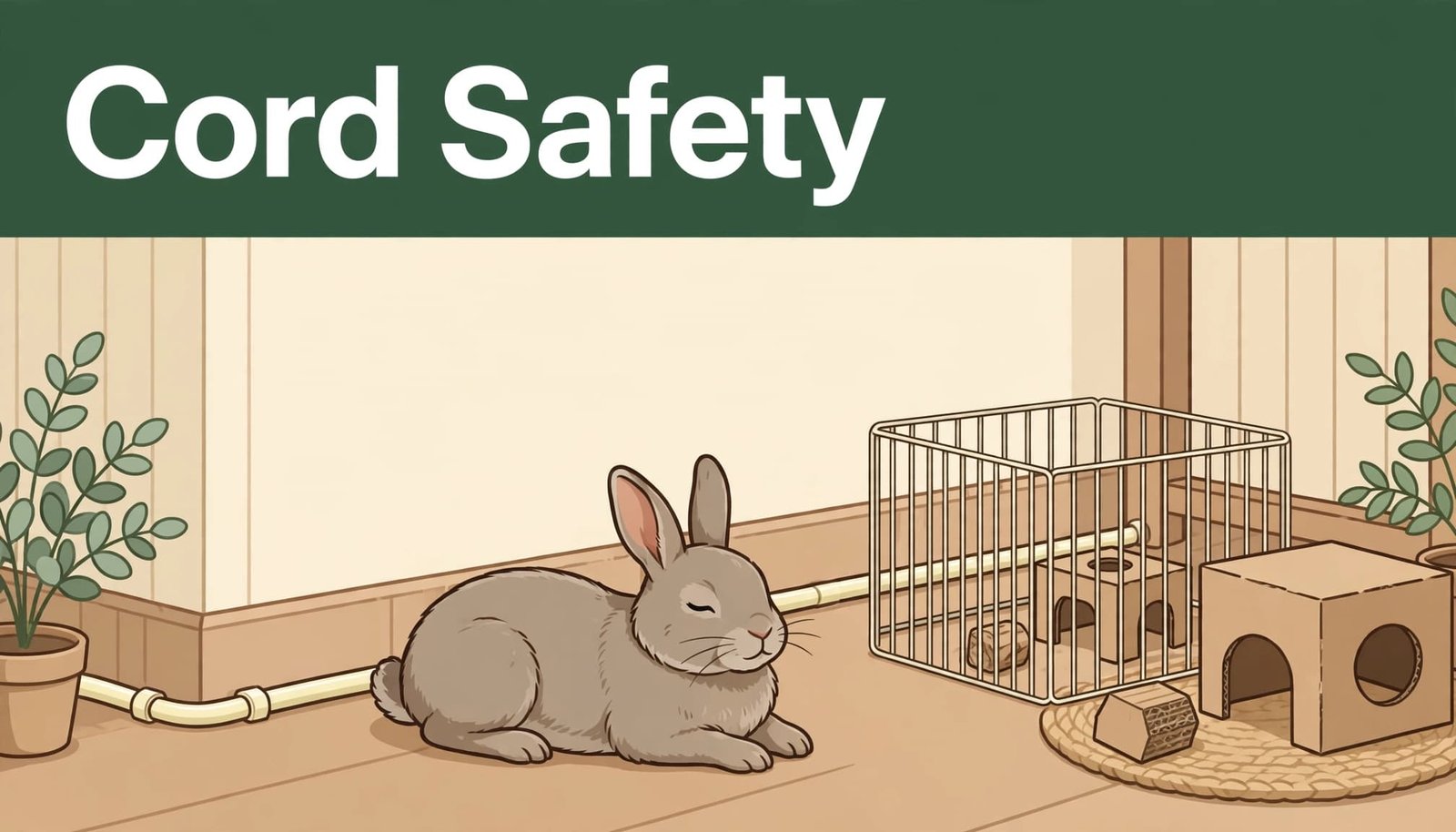
A cord cover is not something to test with a determined chewer. If your bunny starts chewing the cover, block access to that whole area with pen panels or furniture.
Block baseboards, walls, and soft furniture
Baseboards are a classic rabbit target because they are low, firm, and easy to reach. Block the area with an exercise-pen panel, a fitted guard, or furniture that sits flush to the wall.
Watch corners of sofas, chair skirts, and upholstered furniture. A fabric guard or washable throw may protect upholstered furniture, but it isn’t automatically safe if your rabbit pulls threads or eats fabric.
Carpet needs similar attention. The House Rabbit Society warns that swallowed carpet fibers can cause a gastrointestinal obstruction, which is an emergency. Read more about carpet fibers and rabbit proofing before letting a persistent carpet digger roam freely.
Pick up small chewable items
A remote control, earbuds, batteries, pens, rubber bands, and plastic packaging belong in drawers. A rabbit doesn’t know which object is expensive, sharp, or unsafe.
Keep low tables clear until you know your bunny’s habits. A curious young rabbit may chew almost anything, while another rabbit may focus only on one chair leg.
Kitchen and Dining Area: Keep Food and Plants Away
Kitchens are busy rooms with many things that shouldn’t be sampled. For most homes, a closed door or baby gate is the easiest choice.
Supervised access can work later, but supervision isn’t a substitute for a careful hazard check.
Secure cleaners, food, and appliance wires
Move cleaning sprays, dishwasher tablets, detergent pods, and loose sponges into closed cupboards. Wipe spills quickly, including dropped food under a table.
Check the cables behind coffee machines, microwaves, refrigerators, and lamps. Move them out of reach when possible, or cover an exposed cable with split wire loom.
Rabbits can slip into awkward spaces behind appliances, so block access to those gaps instead of trying to pull them out later.
Dining chairs may also invite chewing. Push chairs in, cover exposed legs if needed, and give your bunny a safe chew option nearby.
Remove plants unless you have checked them
Don’t rely on a high plant stand. Rabbits can reach fallen leaves, trailing vines, and soil on the floor.
Many toxic plants are unsafe for rabbits, as noted in UC Davis guidance on rabbit-safe flooring and house plants. Move plants to a truly separate room until you have checked each one.
Food safety matters too. If you are unsure about a vegetable, use the rabbit vegetable safety checker before sharing it with your bunny.
Bedroom and Office: Chargers Need Extra Attention
Bedrooms and home offices often have chargers everywhere. Beds, desks, and storage furniture also create dark, tempting tunnels.
Take a few minutes to check these rooms before letting your long-eared friend explore.
Lift chargers and hide desk cables
Put phone chargers, laptop cables, headphones, and power strips on top of a desk or inside cable-management boxes. Bundle longer cables behind furniture or shield them with a split wire loom where your rabbit can’t reach them.
Don’t forget cords near bedside tables. A rabbit can reach behind a nightstand faster than you can.
If a desk has an open back, use a pen panel or secure barrier to block access to the cable area. Check the barrier daily for pushed-out corners.
Block under-bed and closet gaps
Under a bed may look like a fun hideout, but it can hold dust, forgotten objects, loose fabric, and tangled cables. Block the opening with storage bins, a fitted barrier, or pen panels.
Close closet doors and keep laundry baskets out of reach. Socks, shoes, and loose clothing can become chew toys, then become a hard problem to remove.
Bathroom, Laundry, and Utility Areas Should Stay Closed
These rooms contain hazards that are difficult to make rabbit-safe. Keeping the door closed is usually the safest option.
If the door won’t stay closed, use a tall baby gate or an exercise pen barrier.
Put chemicals and medicines completely away
Store shampoo, toothpaste, cosmetics, medicines, disinfectants, bleach, and laundry products in closed cupboards. Keep toilet brushes, bins, and cleaning cloths out of reach too.
Even an empty-looking bottle can contain residue. Rabbits explore with their mouths, so don’t leave containers on the floor.
Block heat sources, water, and appliances
Keep rabbits away from radiators, space heaters, washing machines, dryers, and open toilet bowls. Check behind appliances for tight gaps and warm areas.
Damp floors can also be slippery. Solid flooring with a secure, washable mat gives better grip than a loose rug with loops that can catch nails.
Give Chewing and Digging a Better Job
Rabbits are natural chewers, and they dig because both behaviors are normal. They aren’t trying to be naughty or destroy your favorite rug.
A safe rabbit proof home includes things your bunny is allowed to investigate.
Offer chew toys, hay, and cardboard
Keep unlimited grass hay available every day. Timothy, orchard, and meadow hay help support digestion and give rabbits plenty of natural chewing time.
You can also offer untreated applewood, safe wooden toys, plain cardboard boxes, and cardboard tubes. Avoid tape, staples, and glossy coatings, so these chew toys stay safe. Check these items often and remove pieces that splinter or become too small.
For help keeping hay available in your bunny’s base camp, try the rabbit hay requirement calculator.
Make a simple dig box
A large cardboard box with plain shredded paper, hay, or safe paper packing can serve as a simple dig box for natural digging behavior. Keep it dry and remove any material your bunny starts eating.
The University of Michigan notes that good foraging and digging enrichment lets rabbits use natural behaviors. Rotate a few items every week so the space stays interesting.
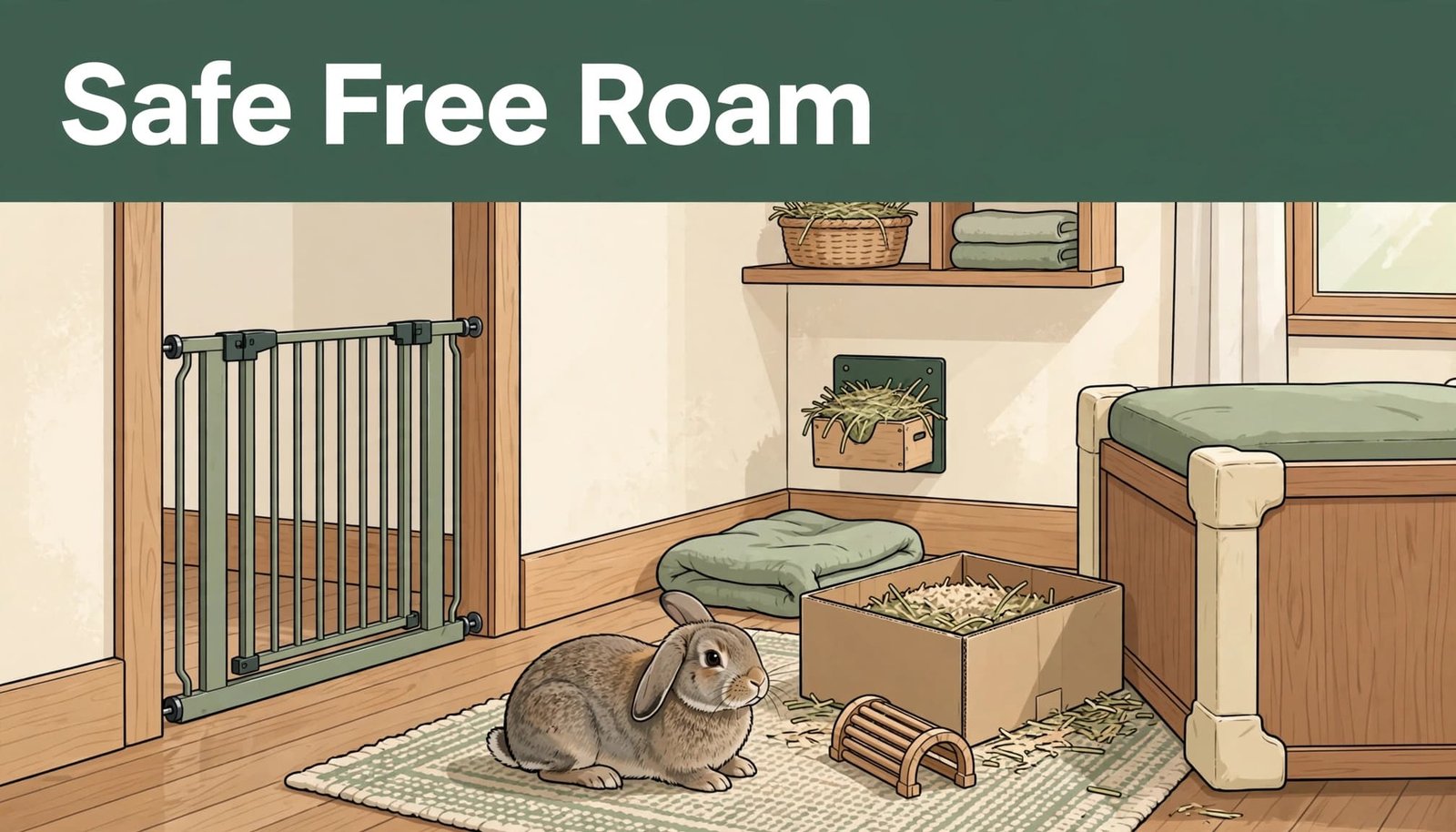
A bold young rabbit may need more barriers and more activities. An older or less-mobile bunny may need wider paths, soft traction, and low-entry litter boxes.
Expand Free Roam One Room at a Time
Start with one rabbit-safe room and supervise your bunny there. Once they use the space calmly, open another area after checking it and setting up barriers, such as exercise pens.
This gradual approach makes bunny proofing feel manageable. Keep each expansion under supervision while you learn your rabbit’s favorite habits.
Watch what your rabbit chooses to investigate
Does your bunny pull at the rug? Chew table legs? Try to climb the pen? Those choices show what needs changing.
Move the item, block access to the area, then place an approved chew toy or dig box nearby. Don’t wait for repeated damage before making the change.
Merck Veterinary Manual explains that rabbits need enrichment and room to move, not a barren setup. Read its guidance on rabbit housing and enrichment for more ideas.
Do a short safety check every day
A daily check only takes a few minutes:
- Look for bite marks on cord covers, barriers, rugs, and furniture.
- Pick up dropped items before your bunny gets to them.
- Check water, hay, the toilet area, and the base camp gate.
- Look behind furniture after moving it or adding new equipment.
If your rabbit chews a cord, carpet, plastic, medicine, plant, or other potentially dangerous item, contact a rabbit-savvy veterinarian. Call promptly if your bunny seems unwell, stops eating, has fewer droppings, or acts painful.
FAQ
How do I stop my rabbit from chewing electrical cords?
Move cords out of reach whenever possible. Cover necessary cables with a sturdy protector, then block access with furniture or pen panels if your bunny keeps chewing in that area.
Never rely on supervision alone around exposed electrical cords.
What can I use to protect baseboards?
Exercise-pen panels, furniture against the wall, and fitted guards can block baseboards. Choose an option your rabbit can’t pull away or chew around.
Give your bunny hay and rabbit-safe chew toys nearby, so they have a better choice.
Can my rabbit free roam all day?
Some rabbits can safely free roam in part of your home, but this requires regular checks and a well-prepared space. Start with supervised time in one room, keep a base camp available, and expand only after covering or blocking hazards.
A Safer Home Gives Your Bunny More Freedom
A good rabbit proof home isn’t about removing every interesting thing. It’s about making safe choices easy for your bunny.
Cover cords, block gaps, and remove harmful items. Then give your furry friend safe places to chew, dig, hide, and hop. A few simple changes can make your home safer for both you and your happy bunny.