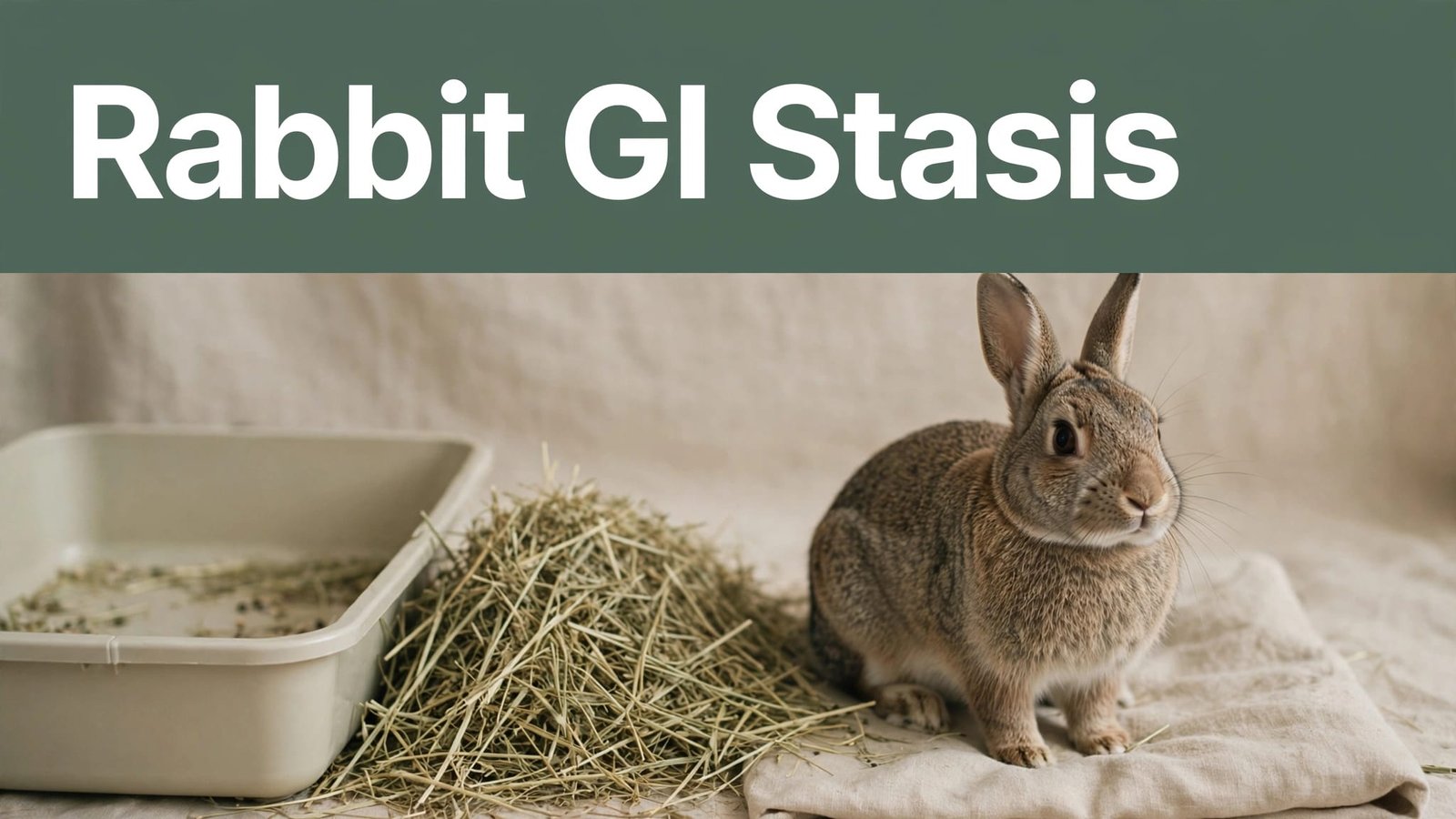
A rabbit who suddenly ignores hay is never being “picky.” Rabbit GI stasis can become serious fast, so a sudden reduction in hay intake or fecal production requires prompt action.
New rabbit owners don’t need to panic, but they do need to act promptly. Knowing your bunny’s normal appetite, energy, and litter box habits makes it much easier to spot a problem early.
What Gastrointestinal Stasis Means
Gastrointestinal stasis means your rabbit’s digestive system has slowed down or stopped moving normally. Rabbits need a steady flow of fiber through the gut all day, mostly from grass hay.
When a bunny eats less, reduced fiber intake slows gut movement. The gut contents become drier and harder to move. Gas and pain can build up, and the condition can worsen quickly.
Why rabbits can get sick so quickly
Rabbits are prey animals. They often hide pain until they feel quite unwell.
A bunny may still nibble one favorite green while avoiding hay and pellets. That is not a reason to relax. A sudden appetite change still needs a call to a rabbit-savvy veterinarian.
The House Rabbit Society treats no eating and no poop for about 12 hours as an emergency. But you should call much sooner if your rabbit refuses food, has tiny droppings, or seems uncomfortable. Reduced fecal output means less waste is moving through the gut. Rabbit.org’s GI stasis guidance explains why this needs fast attention.
GI stasis is not always the main problem
GI stasis is often a symptom of another issue. Pain, dehydration, stress, dental disease, urinary trouble, infection, arthritis, and diet changes can all slow the gut down. Dysbiosis, an unhealthy disruption of normal gut bacteria, can also contribute. Severe illness or diarrhea may point to enterotoxemia, a serious condition a veterinarian must diagnose.
An intestinal obstruction can look similar at first. That is why home treatment is not enough to tell you what is happening.
A rabbit that stops eating may have a gut problem, but the reason behind it matters just as much as the gut slowdown itself.
Early Warning Signs in Rabbits
The earlier you notice changes, the better. Check your bunny’s hay, water bowl, and litter box every morning and evening.
Changes in eating and poop
A healthy rabbit usually eats hay throughout the day and leaves plenty of dry, round fecal pellets. There is no perfect poop size for every breed, but you will learn what is normal for your own bunny.
Watch for:
- Eating less hay, pellets, greens, or favorite foods.
- Smaller, drier, fewer, or missing fecal pellets.
- Fur-linked “string of pearls” poop during a molt, especially with less appetite.
- Repeated uneaten cecotropes, the soft droppings rabbits normally reingest during cecotrophy, or a messy bottom.
- Drinking much less than usual.
A few small pellets on their own may have several causes. Small pellets plus reduced eating or low energy is much more worrying.
Signs your rabbit may be in pain
Pain can make a rabbit sit still and stop eating. Your long-eared friend may sit hunched, press their belly to the floor, hide, grind their teeth, or move less than usual.
A swollen-looking belly, weakness, trouble breathing, watery diarrhea, blood, collapse, or unusual coldness may signal hypothermia and require urgent veterinary attention. Call an emergency clinic right away.
This article cannot diagnose your rabbit or replace professional veterinary care. If something feels wrong, trust that feeling and call.
Emergency Steps When Your Rabbit Stops Eating or Pooping
Start calling a rabbit-experienced veterinarian as soon as you notice a clear appetite drop with fewer droppings. If your regular clinic is closed, call an emergency hospital before leaving and ask if it treats rabbits.
Tell the staff that your rabbit isn’t eating, has reduced fecal output, and may have GI stasis. Ask whether they can provide pain relief, subcutaneous fluids, imaging, hospitalization, or treatments such as buprenorphine when appropriate.
Keep your bunny calm for transport
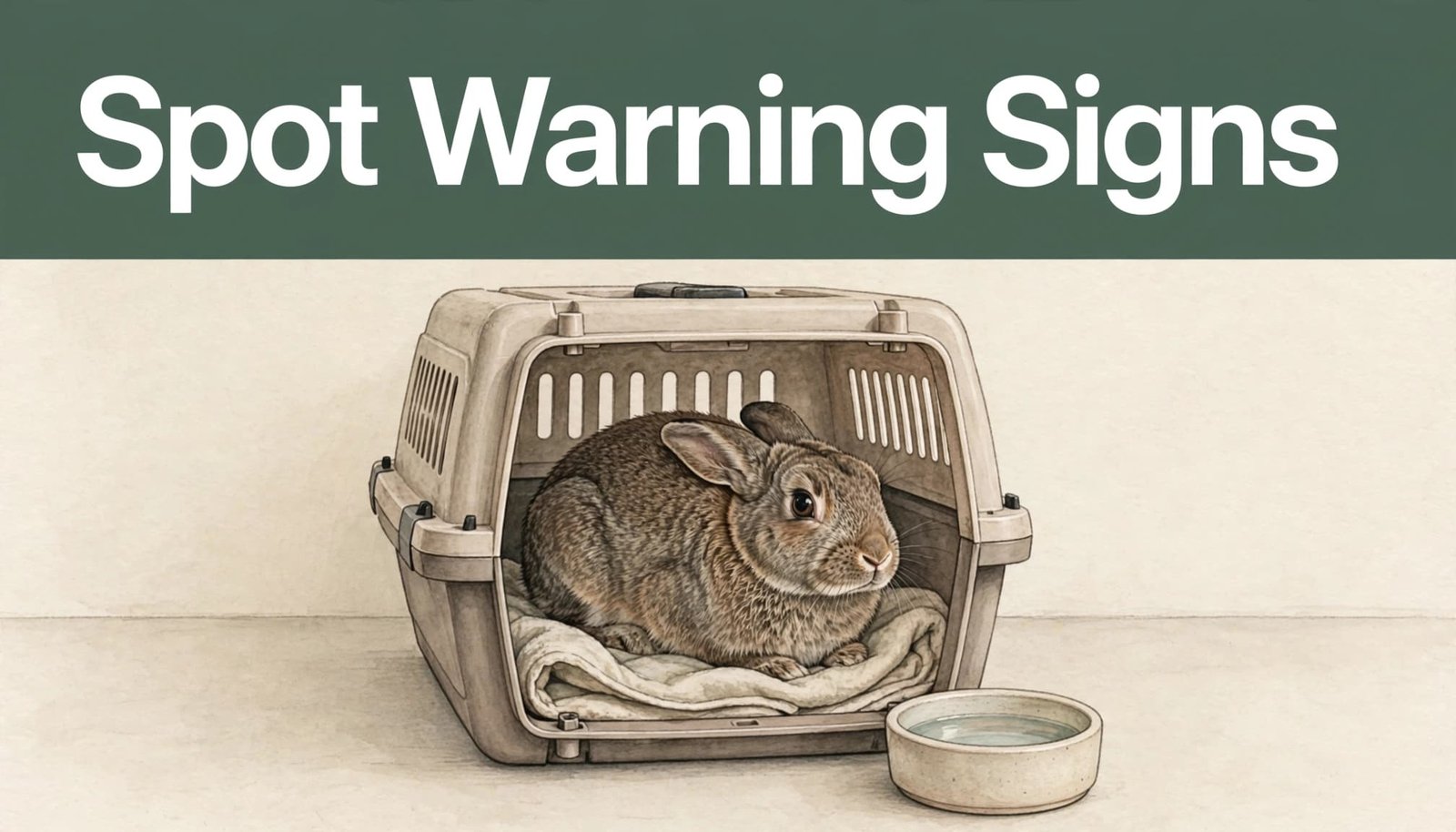
While you arrange care, place your rabbit in a quiet carrier with a soft towel. Keep the carrier away from loud noise, pets, and drafts.
If your bunny feels cold, they may have hypothermia and a dangerously low body temperature. Warm them gradually with a wrapped warm pack beside, not under, the carrier. Never place a rabbit directly on a heating pad or use intense heat.
You can offer fresh grass hay and clean water if your rabbit is willing to take them. Don’t delay the veterinary visit to try different foods, treats, tummy massage, or home remedies.
Do not force-feed a sick rabbit
Don’t attempt syringe feeding if your rabbit is bloated, very weak, struggling to breathe, severely painful, or unable to swallow. Don’t give gut-motility medicines, simethicone, leftover medications, or human medicine.
An intestinal obstruction can be life-threatening, and force-feeding or prokinetics may be unsafe until a veterinarian has assessed your bunny. Veterinary Information Network’s rabbit gastrointestinal overview describes why blockage needs to be ruled out before some treatments are used.
Pineapple juice and protein-digesting enzymes aren’t treatments for supposed rabbit hairballs, or trichobezoars. Fur in the gut is often a result of slowed digestion and grooming, not the original cause.
How a Veterinarian Checks for Slowed Digestion or Blockage
A rabbit-savvy veterinarian starts with the full picture. They’ll ask what your bunny has eaten, whether poops changed, when signs started, and whether there were recent stresses or diet changes.
They’ll also check hydration, body temperature, pain level, teeth, stomach feel, and overall condition. After assessing pain, they may consider prescribed analgesia, such as buprenorphine.
Radiographs can show the gut pattern
Abdominal radiographs, often called X-rays, help the veterinarian check gas patterns, stomach enlargement, and signs of an intestinal obstruction.
A rabbit with simple gastrointestinal stasis and a rabbit with a physical blockage may need very different care. The University of Illinois College of Veterinary Medicine notes that radiographs help evaluate suspected obstruction.
This distinction guides medical management and explains why you shouldn’t wait for a painful, bloated belly to improve on its own.
Bloodwork can reveal hidden problems
Blood tests can help assess dehydration, electrolyte changes, blood glucose, kidney concerns, and other signs of illness. Severe fluid loss can impair circulation and lead to hypovolemic shock.
The veterinarian may also find dental spurs, bladder pain, arthritis, or another condition that made eating uncomfortable. Rabbits’ teeth grow continuously, so dental pain can trigger GI stasis.
A bunny that avoids hay, drops food, drools, shakes their head, or chooses only soft foods may have dental pain. Clinical information on rabbit gastrointestinal disease shows why a full exam matters.
Treating the slowed gut without finding the cause can lead to another episode.
Veterinary Treatment for Gut Stasis
Treatment depends on what the veterinarian finds. Medical management is individualized to each rabbit’s condition, rather than being one quick fix.
Fluids and pain relief help the gut restart
Fluid therapy helps rehydrate the rabbit and soften gut contents. The veterinarian may choose subcutaneous fluids or intravenous fluids based on the rabbit’s condition.
Severely dehydrated rabbits may need urgent hospitalization to help prevent hypovolemic shock.
Pain relief is also a big part of medical management. Untreated pain can cause a rabbit to stay still and refuse food. Your veterinarian may prescribe meloxicam, buprenorphine, or another analgesic. Drug choice and dose depend on examination findings.
Pain medicines must come from a veterinarian. Never use medication left over from another pet.
Food support comes after the safety check
Once a blockage has been assessed and ruled out, a veterinarian may recommend assisted feeding with a recovery formula such as Oxbow Critical Care. They’ll tell you when to feed, how much to give, and how to do it safely.
Some rabbits also receive prokinetics, including metoclopramide or cisapride, to support gut movement. These medicines aren’t appropriate for every rabbit or suspected blockage.
Hospital care may include warmth, monitoring, repeat imaging, and treatment for the underlying cause. An intestinal obstruction may require surgical management instead of medical treatment.
Hay, Water, and Daily Prevention
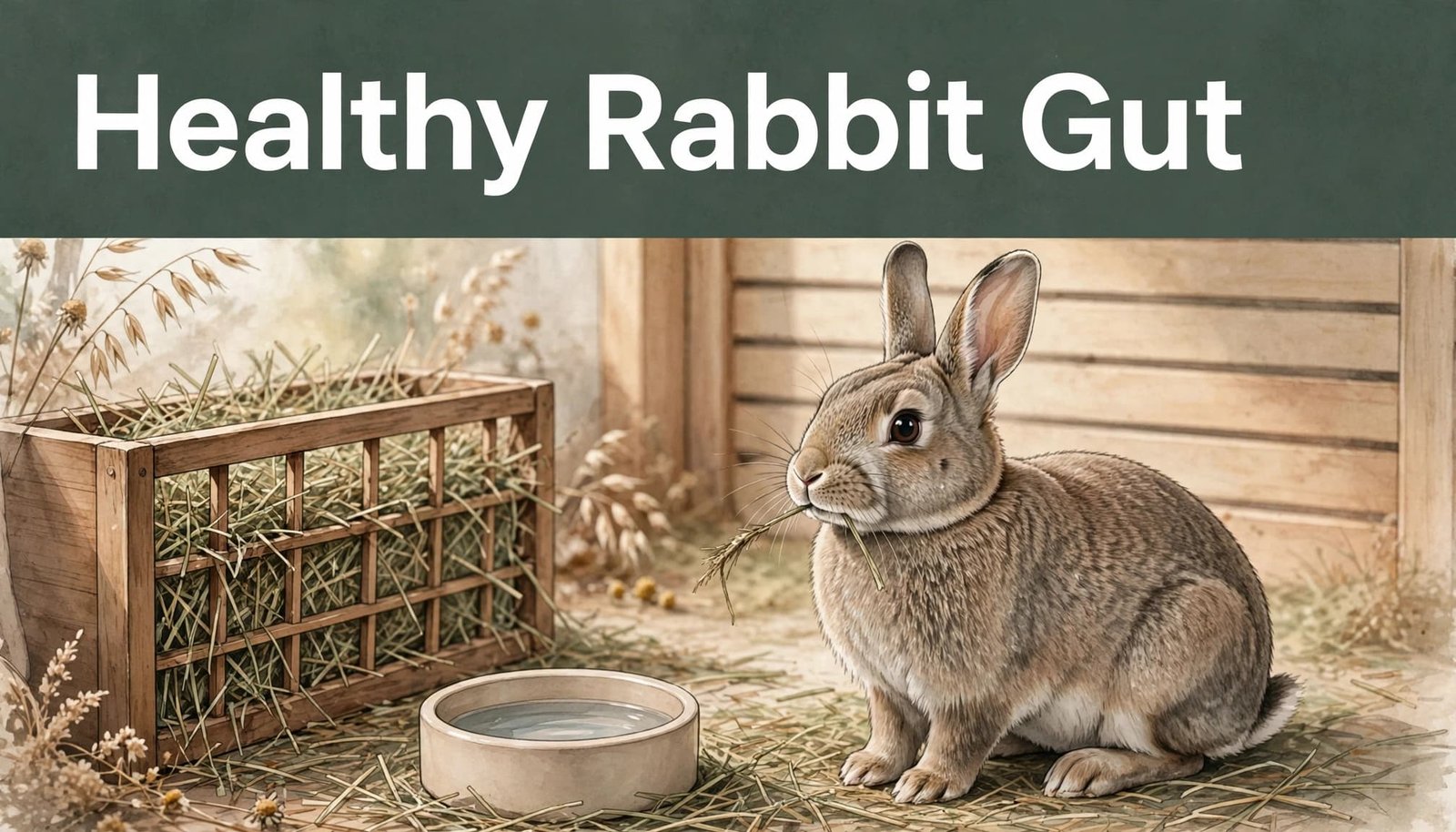
Most adult rabbits should have unlimited grass hay available at all times. Timothy, orchard, oat, and meadow hay are common choices.
Hay is not filler food. Its long fibers help meet a rabbit’s daily fiber requirement, support normal gut movement, and wear down teeth. It also gives rabbits something healthy to do throughout the day.
Build meals around hay, not pellets
Pellets and greens can be useful parts of a rabbit’s diet, but they shouldn’t replace hay. Rich treats, too many pellets, and sudden food changes can upset a sensitive gut.
If you are building a better feeding routine, use this daily hay guide for rabbits alongside your veterinarian’s advice. You can also review what to feed rabbits for a simple look at hay, greens, pellets, and treats.
Introduce new greens one at a time over several days. This makes it easier to notice if a food doesn’t agree with your bunny.
Hydration and movement matter too
Fresh water should always be available in a clean bowl, bottle, or both. Check daily that bottles work and bowls aren’t empty or dirty.
Encourage safe daily movement in a roomy, rabbit-proofed area. Regular brushing during heavy shedding can remove loose fur before your rabbit swallows it.
A rabbit water intake estimator can help you monitor everyday drinking habits. A sudden drop in water intake deserves a prompt call, especially with reduced poop.
Key Takeaways for New Rabbit Owners
- Reduced eating and smaller poops are early warning signs, not minor quirks.
- Call a rabbit-savvy veterinarian within hours of a clear appetite change.
- No eating and no poop for about 12 hours is an emergency, but don’t wait for that point.
- Keep your bunny calm, gently warm if cold, and offer hay and water only if they are willing.
- Do not force-feed, give human medication, or use home remedies without veterinary guidance.
- Unlimited grass hay, fresh water, and daily litter box checks help prevent many problems.
Frequently Asked Questions
Can gastrointestinal stasis go away on its own?
Some rabbits may pass a few small pellets after a brief upset, but a rabbit with reduced appetite, fewer droppings, pain, or low energy needs veterinary advice promptly. The condition can worsen quickly, and an obstruction can’t be ruled out at home.
Is a rabbit hairball the cause of GI stasis?
Not usually. Rabbits swallow fur while grooming, especially during a molt. Fur can collect when the gut has already slowed down. Focus on the real cause, such as pain, dehydration, low fiber intake, or disease, rather than treating a supposed hairball with pineapple juice.
What should I bring to the emergency vet?
Bring a note of when your bunny last ate, drank, and pooped. Include current foods, medications, recent changes, and past health concerns. A photo of unusual droppings can also help.
How do I find a rabbit-savvy veterinarian before an emergency?
Ask your regular clinic whether it sees rabbits routinely and treats GI stasis. Ask who handles after-hours emergencies and whether the hospital offers imaging, pain relief, fluids, and hospitalization for rabbits.
Keep the clinic number, emergency number, your rabbit’s weight, and carrier ready before you ever need them.
A Small Change Can Be the First Clue
This condition is scary, but quick action gives your bunny the best chance of getting the right help. Know your rabbit’s normal hay intake, water use, droppings, and personality.
When those things suddenly change, call early. Your bunny’s quiet behavior can say a lot, and fast veterinary care can make all the difference.

I stumbled upon myself during a search for trustworthy sports markets and I am genuinely impressed. Their odds are sharp, withdrawals are processed without unnecessary delays, and the promotions keep rolling every week. It feels like a platform that actually values its community instead of just chasing quick signups. Definitely my go to place now.
no spammy links allowed – especially not for gambling – thanks for stopping by 🙂