A new leafy green can feel like a tiny celebration for your bunny, but slow and simple is always best. Before offering it, confirm it’s safe rabbit food. With new foods rabbits haven’t tried before, start with a small bite and introduce one change at a time.
Your rabbit doesn’t need a huge salad menu overnight. Hay and fresh water stay at the center of a healthy rabbit diet, forming the foundation of a balanced diet. Greens, herbs, vegetables, pellets, and treats are added with care.
Start With a Healthy Daily Rabbit Diet
Before you introduce anything new, make sure your bunny is already eating well. A rabbit who is off their food, making fewer droppings, or acting unlike themselves shouldn’t be trying a new snack. If you’re unsure whether your bunny is well, speak with an exotic veterinarian experienced with rabbits before changing foods.
Hay and water come first
Fresh grass hay should always be available. It anchors a rabbit’s high-fiber diet and supports digestive health and dental health through regular chewing.
Timothy hay is a popular choice for adult rabbits, while orchard grass, meadow hay, and oat hay are other types of grass hay. Alfalfa hay may suit young or growing rabbits, but it isn’t generally the everyday hay choice for healthy adult rabbits.
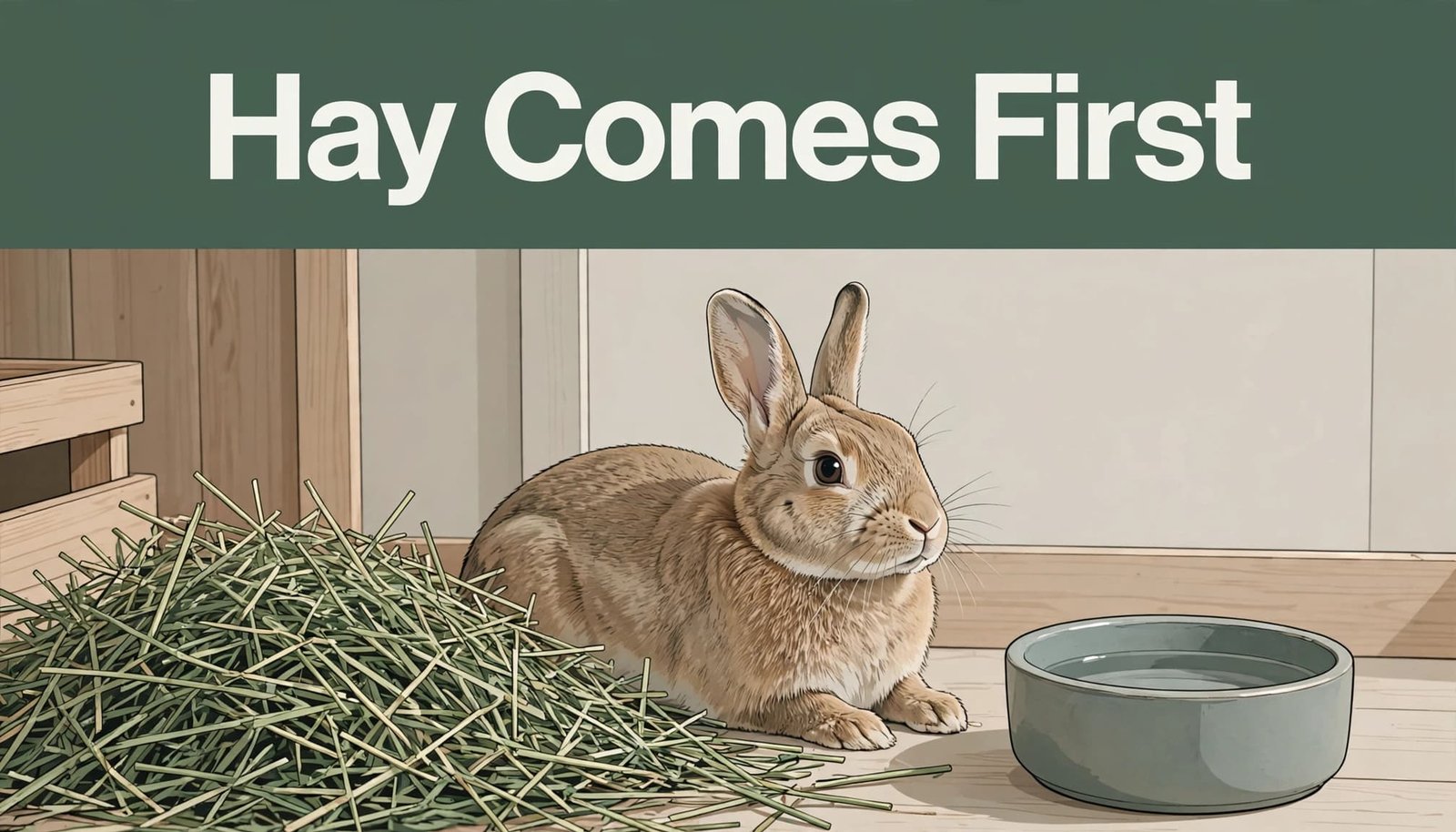
The RSPCA rabbit diet guidance recommends hay and grass as the main part of a rabbit diet. Hay and water are the foundation of safe rabbit food choices, so keep clean water available every day, preferably in a sturdy bowl that your rabbit can’t tip over.
If you aren’t sure whether your bunny is getting enough roughage, use a rabbit daily hay requirement calculator as a helpful starting point.
Greens and pellets support the diet
Fresh leafy greens add moisture, flavor, and variety. Pellets can also be part of the diet, but they shouldn’t replace hay.
A plain, high-fiber rabbit pellet is usually a better pick than a colorful mix full of different pieces. Pellet portions should reflect your rabbit’s nutritional needs, age, weight, health, and hay intake.
A bunny who fills up on pellets or treats may eat less hay, and hay is the food you want them returning to all day.
How to Introduce New Foods Rabbits Haven’t Tried
The safest rule is easy: use a reliable guide to safe rabbit food, then offer one new food at a time. A rabbit’s sensitive digestive tract can react to several changes. Don’t add parsley, bell pepper, kale, and strawberry on the same day, even if your furry friend seems excited.
The House Rabbit Society diet guide also recommends slow introductions for fresh vegetables. It makes it much easier to see what agrees with your rabbit.
Begin with a tiny taste
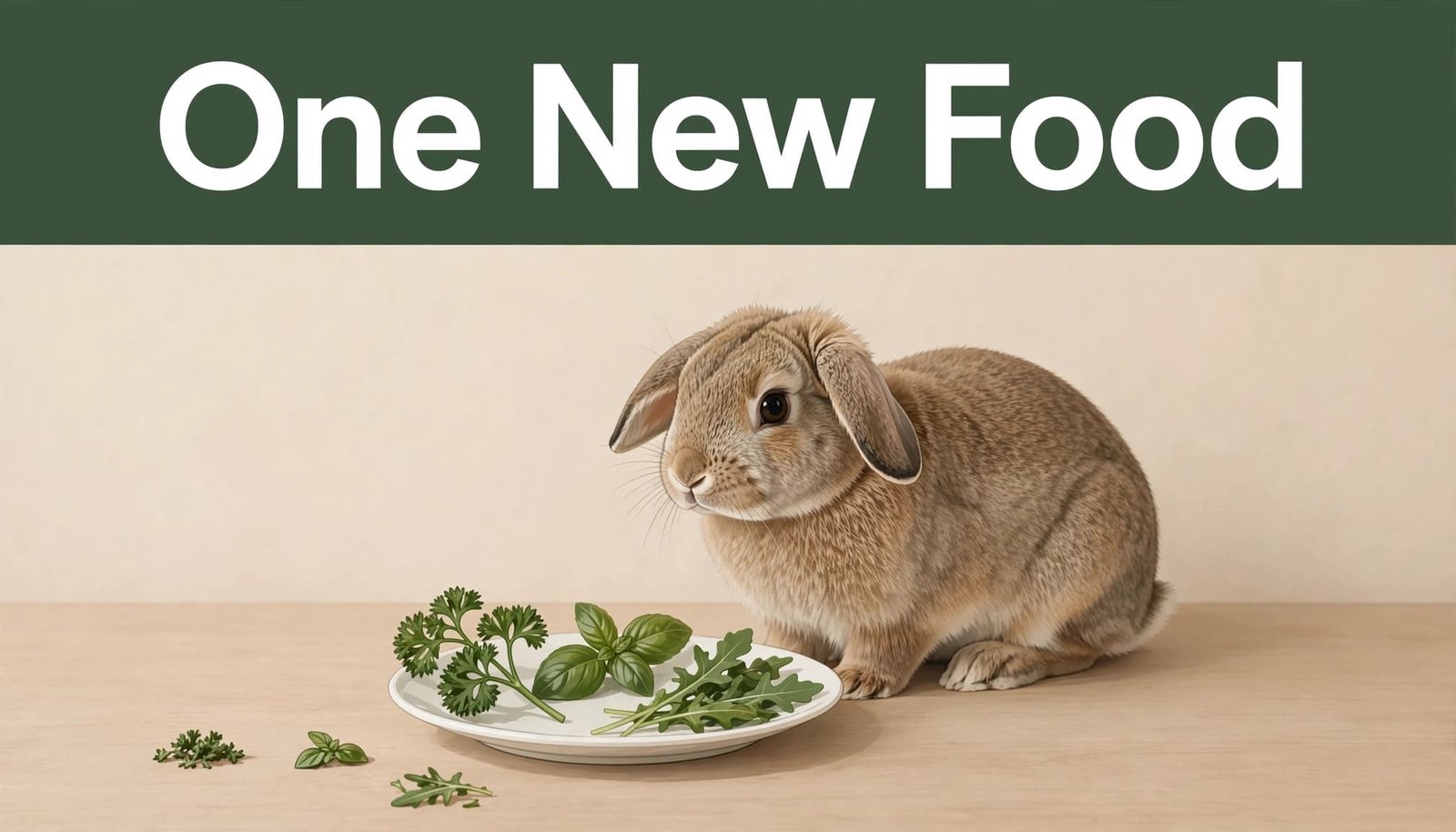
Start with a small piece of one washed green or herb. For a larger adult rabbit, one or two tablespoons is plenty for an early trial. A smaller bunny needs less.
Keep their regular hay, water, pellets, and familiar greens the same. The new item is the only change.
Watch for several days
Offer that same small amount for about three to five days. Check that your bunny is eating hay normally, drinking, moving around, and leaving regular droppings.
If everything looks normal, you can slowly make that food part of their usual greens. Then wait before trying the next new item.
Keep a simple food note
You don’t need a fancy chart. A note on your phone works well. Record the food, the day you started it, and how your rabbit handled it.
This makes food transitions easier to track and helps you identify a reaction. After a few weeks, you’ll have a clear list of foods your bunny enjoys and handles well.
Choose Simple First Foods
Leafy greens and fresh herbs are often gentle first choices. Still, every rabbit is different, so a food that works well for one bunny may not suit another.
Good beginner greens and herbs
Romaine lettuce, cilantro, parsley, basil, dill, mint, arugula, bok choy, bell pepper, and dandelion greens are common safe rabbit food options. Only offer dandelion greens when they’re clean, correctly identified, and free from lawn chemicals. Pick one, not a mixed bowl, for the first introduction.
The RWAF vegetable and herb list can help when you want more safe ideas later.
Wash produce well and remove anything wilted, slimy, or spoiled. Serve it plain. Your rabbit doesn’t need oil, salt, sauces, seasoning, or cooked leftovers from your dinner.
Go easy on richer greens
Some greens are better as occasional choices instead of daily basics. Spinach is one example, since it is high in oxalates.
Kale can also be offered in moderation. Start with simpler greens first, then build a varied routine once your bunny has shown they tolerate each item.
Work Toward the Right Amount of Fresh Greens
It is tempting to give a rabbit a giant bowl of greens because they look so happy eating it. More isn’t always better, though.
Use weight as your guide
Fresh greens are commonly fed daily, but the right amount depends on your rabbit’s body weight. My Rabbit Place’s fresh greens calculator for rabbits helps estimate a daily amount. It’s only a starting point, since health, age, and nutritional needs can affect the ideal serving.
A general guide is one to two cups of leafy greens per two pounds of body weight. That range is a guide, not a universal prescription.
Start at the lower end if your rabbit is new to greens or has had digestive trouble before. Rabbits with an unusual body condition or other health needs may require individualized advice from an exotic veterinarian.
Build variety after tolerance
Once your rabbit handles a few greens well, you can offer a small mixed salad. Three to five familiar greens can make mealtimes more interesting without turning dinner into a surprise.
Rotate foods gradually. If you run out of cilantro, don’t replace the whole meal with a big serving of something brand new.
Keep Pellets and Fruit in Their Place
Pellets and fruit can be useful feeding additions, but they are not the main event. Measured rabbit pellets and tiny fruit portions can be safe rabbit food additions, never replacements for hay. Your bunny’s hay pile still wins every time.
Measure pellets for your rabbit
Adult rabbits generally need a limited amount of pellets, while young rabbits under six months may need a different portion as they grow. Their nutritional needs vary, so there isn’t one scoop size that suits every rabbit.
Use a rabbit pellet feeding calculator to check a starting point based on age and body weight. Then watch your rabbit’s body condition, appetite, and hay intake, and ask an exotic veterinarian about concerning changes.
Choose plain pellets made for rabbits. Skip products with colorful sugary bits, seed mixes, nuts, or dried fruit.
Save fruit for a small treat
Fresh fruits such as apple with the seeds and core removed, blueberries, strawberries, melon, and a tiny piece of banana can be occasional treats. Their sugar content means portions should stay bite-sized, not bowl-sized.
Offer treats only after your rabbit is eating hay well and has a settled routine with greens. A rabbit treat limit calculator can help you keep treats small.
Foods and Habits to Avoid
Not every food in your fridge belongs in a rabbit bowl. Pet rabbits are herbivores with specific nutritional needs and do best with fresh hay, safe greens, a measured pellet portion, and clean water.
Don’t give mystery snacks
Avoid processed human foods such as bread, biscuits, sweets, breakfast cereal, chocolate, and chips. Dog food and cat food also aren’t rabbit foods.
Iceberg lettuce is another food to skip. It is low in useful nutrition, and some rabbits may get loose stools after eating it.
Don’t guess about plants, garden clippings, vegetables, fruit, or human snacks. Check a reliable guide to safe rabbit food or ask your veterinarian before offering anything unfamiliar.
Don’t change everything at once
A sudden switch from one hay to another, a pile of new greens, and a new pellet brand can make digestive upset hard to trace.
Food transitions are easier to troubleshoot when only one variable changes. For new foods rabbits are testing, slow changes are kinder. One food, a small amount, and a few calm days of watching is the safer plan.
Know What Healthy Digestion Looks Like
A rabbit’s daily habits tell you a lot. Most healthy rabbits are interested in hay, eat throughout the day, and leave plenty of round, dry, fibrous droppings.
Signs a new food may not agree
Stop offering the new item if you notice soft stools, diarrhea, bloating, smaller or fewer droppings, reduced appetite, or unusual tiredness. These changes may signal a digestive health problem.
Hiding, sitting still, refusing favorite foods, or drinking much more or less than normal also deserve attention. Don’t try another new food while your bunny is unsettled.
When to call an exotic veterinarian
Contact an exotic veterinarian familiar with rabbits where possible if your rabbit stops eating, stops producing droppings, seems painful, has ongoing diarrhea, or looks bloated and unwell.
Rabbits can become sick quickly when their digestion slows down. Call promptly rather than waiting to see whether symptoms resolve. Clear advice can help protect your long-eared friend.
Key Takeaways for New Rabbit Owners
- Keep unlimited hay and fresh water available before, during, and after every food change. Hay supports digestion and dental health.
- Introduce one new green, herb, vegetable, or treat at a time.
- Begin with a small amount, then watch appetite and droppings for several days.
- Make fresh greens part of a gentle routine, not a sudden menu overhaul.
- Stop the food and contact a rabbit-savvy veterinarian if your rabbit eats less, produces fewer droppings, or seems unwell.
Frequently Asked Questions
How many cups of fresh vegetables should an adult rabbit eat?
The amount depends on weight and individual tolerance. A common guide is one to two cups of leafy greens per two pounds of body weight daily, but start lower with a rabbit who is new to greens.
Hay should still make up most of the diet. Greens are a healthy addition, not a replacement.
Can baby rabbits have new vegetables?
Young rabbits have different nutritional needs than adult rabbits. Don’t automatically give a baby rabbit the same greens, pellets, or portions as an adult bunny.
Talk with an exotic veterinarian about the right approach before adding fresh vegetables to a young rabbit’s diet.
How often can rabbits have fruit?
Fruit is an occasional treat, not an everyday food. Give a tiny bite a few times a week at most, and only after your rabbit has a stable hay and greens routine.
What if my rabbit refuses a new food?
That’s okay! Rabbits have likes and dislikes just like us. Remove the uneaten food before it spoils, keep offering familiar hay and greens, and don’t force the new item.
You can try a different item another day after confirming it’s safe rabbit food.
A Slow Start Keeps Your Bunny Happy
Introducing new foods to your rabbit isn’t a race. Start tiny, keep unlimited hay and fresh water available, and watch your bunny’s appetite and droppings closely. This hay-first routine also supports dental health.
A calm, one-food-at-a-time routine helps you learn what suits your healthy, happy rabbit.