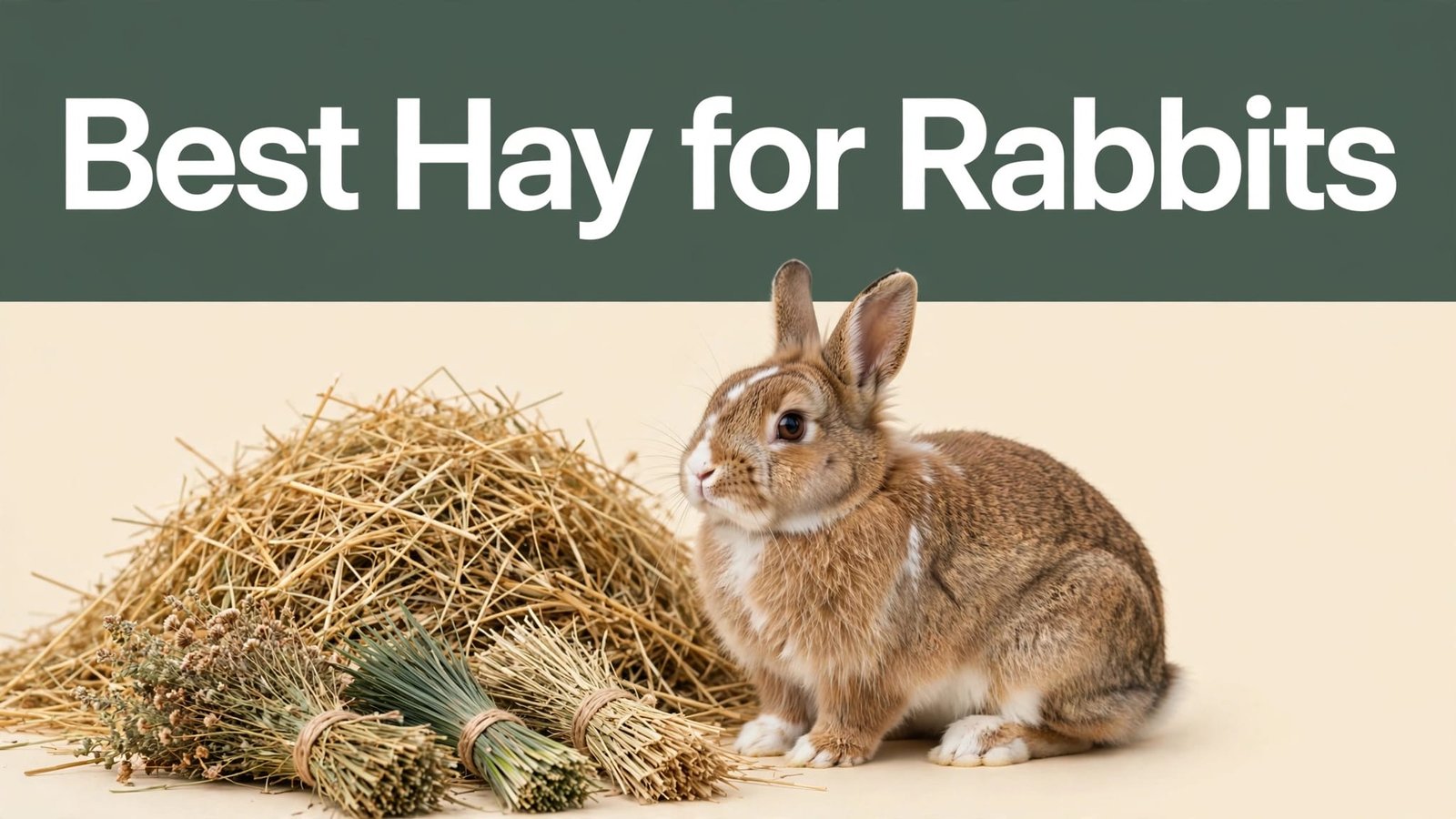
Fresh hay is not just bedding or a snack. It is the biggest part of your bunny’s daily food routine, and choosing the best hay for rabbits helps support healthy teeth, digestion, and lots of happy chewing.
For most adult rabbits, grass hay should make up most of what they eat each day. Timothy hay is a popular starting point, but orchard grass, meadow hay, and oat hay can also be great choices for your long-eared friend.
Your rabbit’s age and the hay’s fiber content help guide the right choice for its daily diet. Once you know both, hay shopping becomes much easier.
Why Hay Matters Every Day
Hay and grass should make up around 80 to 90 percent of a healthy rabbit diet. Rabbit Welfare describes hay and grass as about 85 percent of a rabbit’s food, showing how central they are to daily care.
Pellets, leafy greens, vegetables, and treats all have their place. But they don’t replace loose hay.
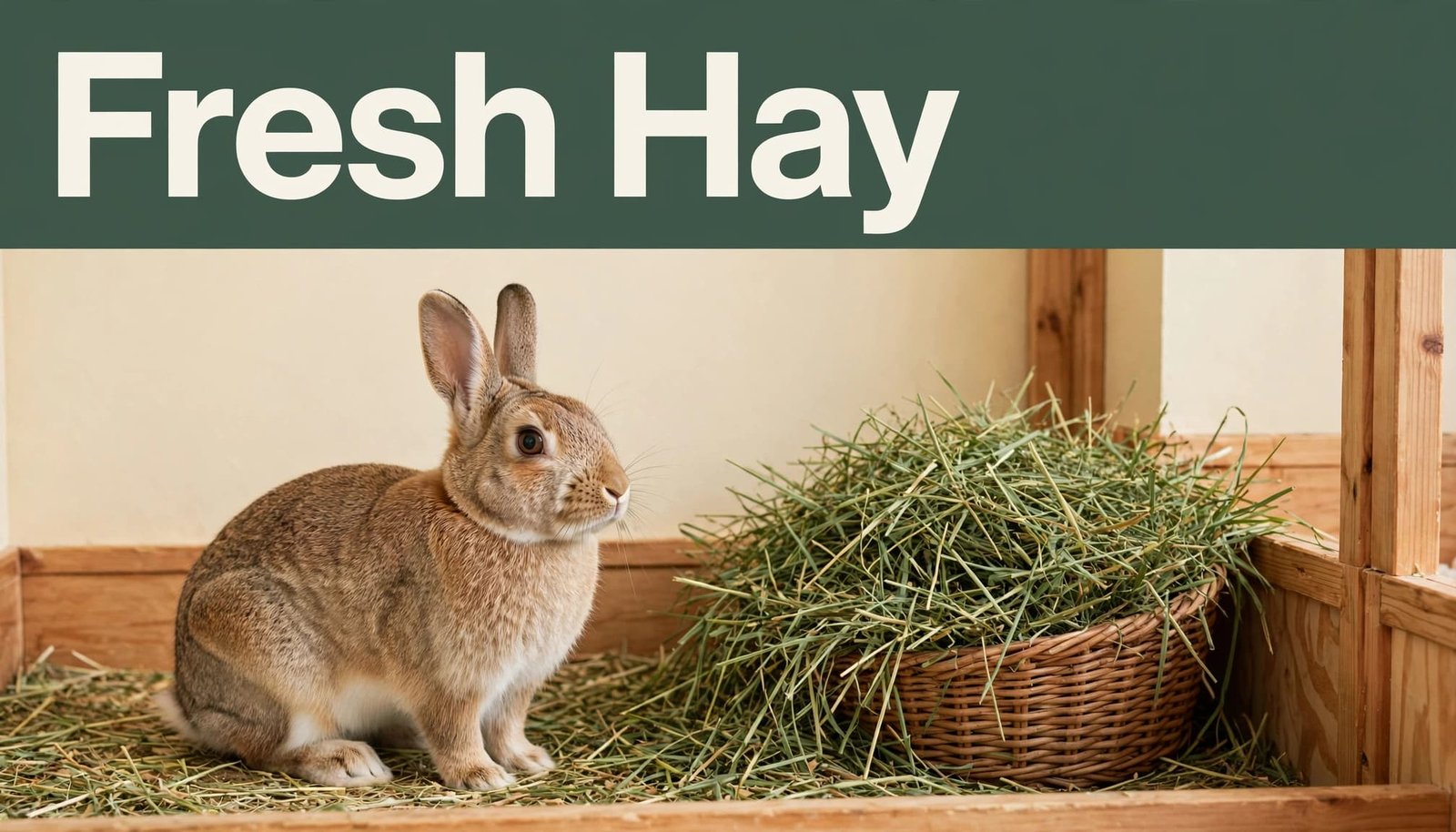
Hay keeps the digestive system moving
Rabbits need lots of long fiber every day. This fiber supports digestive health and helps food move normally through their sensitive digestive system.
A bunny with unlimited hay also has something natural to nibble throughout the day. Grazing and chewing are natural behaviors for rabbits.
Fresh greens are healthy, but greens alone don’t provide the roughage rabbits need. Hay should always stay at the center of the bowl, feeder, or litter box.
Constant chewing supports rabbit teeth
Rabbit teeth grow throughout life. Chewing strands of hay gives those teeth regular wear and helps prevent them from becoming too long.
The Nibbles guide to hay also explains that hay supports both dental health and gut health. That’s why a rabbit who eats pellets happily but ignores hay still needs attention.
A full hay rack is good, but a rabbit must also be eating the hay. Check the amount each day, not only whether it’s available.
Grass Hay: A Strong Starting Point for Adult Rabbits
For healthy adult rabbits, a fresh grass hay they enjoy eating every day is usually the right choice. Timothy hay is common, but it isn’t the only suitable option.
A rabbit who eagerly eats orchard grass is often better off than one who turns away from an unfamiliar bag.
Timothy hay is a reliable adult-rabbit choice
Timothy hay is widely used for adult rabbits. It has long, crunchy fibers that encourage plenty of chewing and work well as an everyday option.
You may see first cutting, second cutting, or third cutting on a package. First cutting is often stemmier, while second cutting is commonly a balanced option. Third cutting may be leafier or softer.
These labels describe harvest timing and texture, not guaranteed quality. A second cutting can be a useful starting point, but inspect every batch for freshness.
Look at the hay itself. Your bunny needs hay that is clean, dry, and tempting enough to eat.
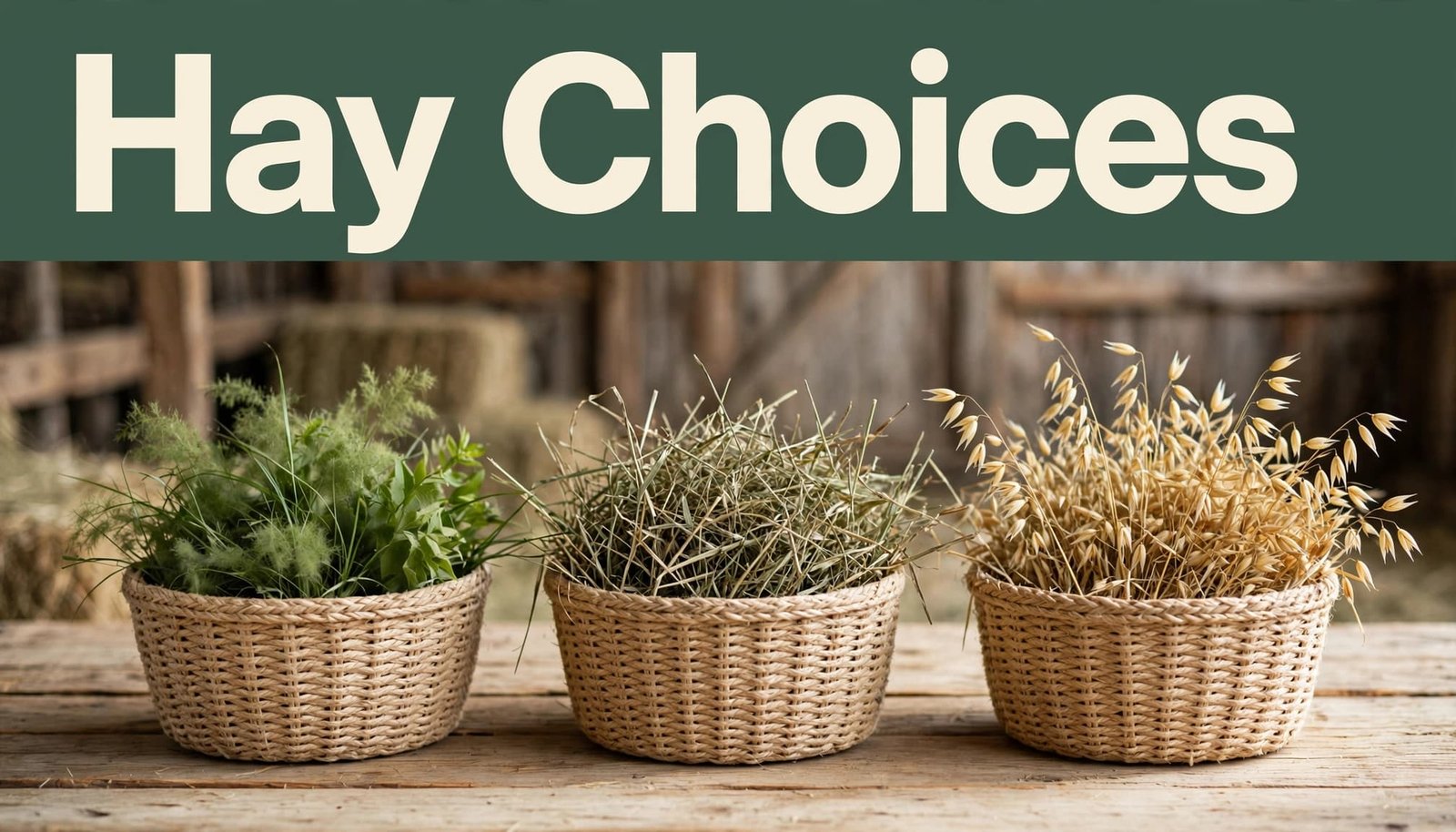
Orchard grass, meadow hay, and oat hay add variety
Orchard grass is soft and leafy, and many picky rabbits enjoy it. Meadow hay can offer a mixed texture because it comes from different grasses. Oat hay often has thicker stems and may include seed heads that some rabbits find exciting.
You can offer one type as the main choice or rotate between suitable hay varieties. Make changes gently, especially if your rabbit has a sensitive tummy.
A simple mix might look like this:
- Keep Timothy hay available as the usual everyday choice.
- Add a small amount of orchard grass to make the feeder more interesting.
- Offer oat hay or meadow hay now and then for a different texture, or combine both in a small blend.
Alfalfa Hay Is for Young or Special-Needs Rabbits
Alfalfa hay differs from other common hays. It is a legume hay, not a grass, and is especially nutrient-dense.
That may suit a growing bunny. It isn’t usually the everyday choice for a healthy adult rabbit.
Growing rabbits have different needs
Baby rabbits are still developing, so their food needs differ. North Carolina State University Veterinary Hospital notes that young rabbits can have unlimited alfalfa hay and pellets because they need more calcium and protein during growth.
Pregnant or nursing rabbits may also need a different diet. Underweight rabbits or rabbits with health problems may need support with weight management.
These are times to speak with a rabbit-savvy veterinarian for individualized guidance. Your bunny’s age, weight, health history, and appetite all matter.
Adult rabbits usually need grass hay
Once a rabbit is ready for an adult diet, grass hay becomes the main choice. Timothy hay, orchard grass, and meadow hay are all options to consider.
If you’re moving a young rabbit away from this richer option, don’t make a sudden switch. Start by offering a small pile of grass-based hay beside the usual hay. Let your bunny become familiar with the new smell and texture.
Then follow your veterinarian’s advice about when to make the new hay the main choice. Keep an eye on appetite and droppings during any food change.
How to Pick Fresh, Good-Quality Hay
The best hay bag is not always the prettiest package. Your rabbit needs hay that smells fresh, feels dry, and looks like something they will want to pull apart and chew.
Hay quality can change between bags and seasons. A brand your rabbit loved last month may have a batch with a different texture today.
Use your senses before you buy
Fresh hay should have a pleasant grassy smell. It should look mostly green or golden, depending on the type, and it should feel dry.
Skip hay that smells musty, looks damp, or has visible mold. Very dusty hay is also not a great choice for your home or your bunny’s enclosure.
Long strands are helpful because they encourage chewing. A few soft leaves are fine too. The goal is not a perfect-looking bag. The goal is hay your rabbit eats well.
Packages from small pet select and oxbow hay can look different, but brand names matter less than a clean smell, dry texture, and hay your rabbit actually eats.
Compare cutting labels carefully
A first cutting is often stemmier, while a second cutting is usually softer and leafier. A second cutting may suit picky eaters, while a third cutting tends to be finer and softer. A third cutting can be softer still, but freshness and your rabbit’s acceptance matter more than any cutting label.
Compare hay varieties and batches when shopping, since appearance and texture can vary. Your rabbit’s preferences are more important than choosing a particular cutting.
Store hay where it stays dry and airy
Keep hay in a cool, dry place away from moisture. A breathable container, paper bag, or clean storage bin that is not sealed tightly can work better than leaving hay in a damp area.
Do not mix old hay with a new bag if the older hay smells stale. Give your bunny fresh handfuls often, even if there is still a little left in the feeder.
For a wider look at hay, pellets, greens, and water, see this complete rabbit diet guide.
How Much Hay Should a Rabbit Eat?
Hay should be available 24/7. Keep feeding hay throughout the day and night, since most rabbits naturally graze. One small serving in the morning isn’t enough.
A useful general guide is that rabbits may eat about 1.5 to 2 times their body weight in hay daily. For example, a 4-pound rabbit may eat around 6 to 8 ounces of hay in a day.
Keep hay in more than one spot
Some rabbits like a hay rack. Others prefer to eat hay while using their litter box. You can offer it in both places.
Put a pile of hay that is fresh near your rabbit’s favorite resting area too. This can make hay easy to reach during quiet moments.
If you want a simple starting point based on your bunny’s weight, try the rabbit hay requirement calculator. It can help you notice when your rabbit may be eating less than expected.
When changing brands or products, such as oxbow hay, track how much your rabbit eats. A major change in appetite or weight can signal health problems, so contact your veterinarian.
Pellets should not push hay aside
Pellets are convenient and can be part of a balanced rabbit diet. Still, too many pellets may leave your bunny too full to eat enough hay.
Choose a plain rabbit pellet with high fiber. Avoid colorful mixes with seeds, nuts, or sugary pieces. Measure pellets to support weight management and an appropriate body condition.
A hay-first routine is simple: unlimited hay that is fresh, clean water, appropriate greens, and a controlled pellet portion.
What If Your Rabbit Refuses Hay?
A picky bunny can make hay shopping feel stressful. Start with small changes, but don’t ignore a sudden drop in hay eating.
Less hay can mean your rabbit dislikes the batch. It can also signal that something is wrong.
Make hay more interesting
Try different suitable hay varieties gradually, such as orchard grass or meadow hay. Offer a fresh handful several times a day, especially after cleaning the litter area.
You can also place hay in a cardboard box, a paper bag with both ends open, or a clean hay feeder. Keep it simple and safe. Loose hay should still be easy for your rabbit to reach.
Reducing excess pellets may help a healthy rabbit become more interested in hay again. Don’t make big food changes all at once.
Call a rabbit-savvy veterinarian when appetite changes
Call promptly if your rabbit suddenly eats much less than usual, makes fewer droppings, acts uncomfortable, or refuses food. Rabbits can become sick quickly when their digestion slows down.
Reduced hay intake can sometimes signal health problems, including dental pain or digestive trouble, rather than simple preference. A veterinarian can check for these concerns.
Don’t assume picky eating is only a behavior problem.
Key Takeaways for Choosing Rabbit Hay
- Adult rabbits should have unlimited fresh grass hay every day.
- Timothy hay is a popular option, while orchard grass and other suitable grass hays can add variety. Suitable hay varieties can help a picky rabbit keep eating.
- Alfalfa hay is usually better for young, growing, pregnant, nursing, or underweight rabbits with veterinary guidance.
- Hay should smell grassy, stay dry, and be replaced when it becomes stale or messy.
- Pellets and greens support your rabbit’s diet, but they shouldn’t replace hay.
- A sudden drop in hay intake needs quick attention from a rabbit-savvy veterinarian.
Frequently Asked Questions
Is timothy hay a good everyday choice?
Timothy hay is a great everyday choice for many healthy adult bunnies. A commercial option such as oxbow hay can be suitable, but no brand is universally best.
Orchard grass and meadow hay can also work. Offering different hay varieties can help a picky rabbit stay interested.
Can a healthy adult bunny eat alfalfa hay?
A healthy adult bunny can eat alfalfa hay in some special situations, but it isn’t usually the main hay choice. Alfalfa is richer than grass hay and is more often used for young rabbits or rabbits with individual needs.
Ask a rabbit-savvy veterinarian before making alfalfa a regular part of an adult bunny’s diet.
Can hay cubes replace loose hay?
Hay cubes can be an occasional addition, but they shouldn’t replace loose hay. Loose hay gives rabbits long strands to pull, chew, and graze on through the day.
Keep fresh loose hay available at all times. It’s the easy everyday choice for healthy teeth and digestion.
A Hay-First Routine Keeps Rabbit Care Simple
Choosing hay does not need to be complicated. Start with fresh grass hay for an adult rabbit, keep it available all day, and pay attention to what your bunny truly eats.
The right hay is the one that is clean, fresh, safe for your rabbit’s life stage, and always ready for a happy munch. Fresh hay every day is one of the kindest habits you can build for your furry friend.