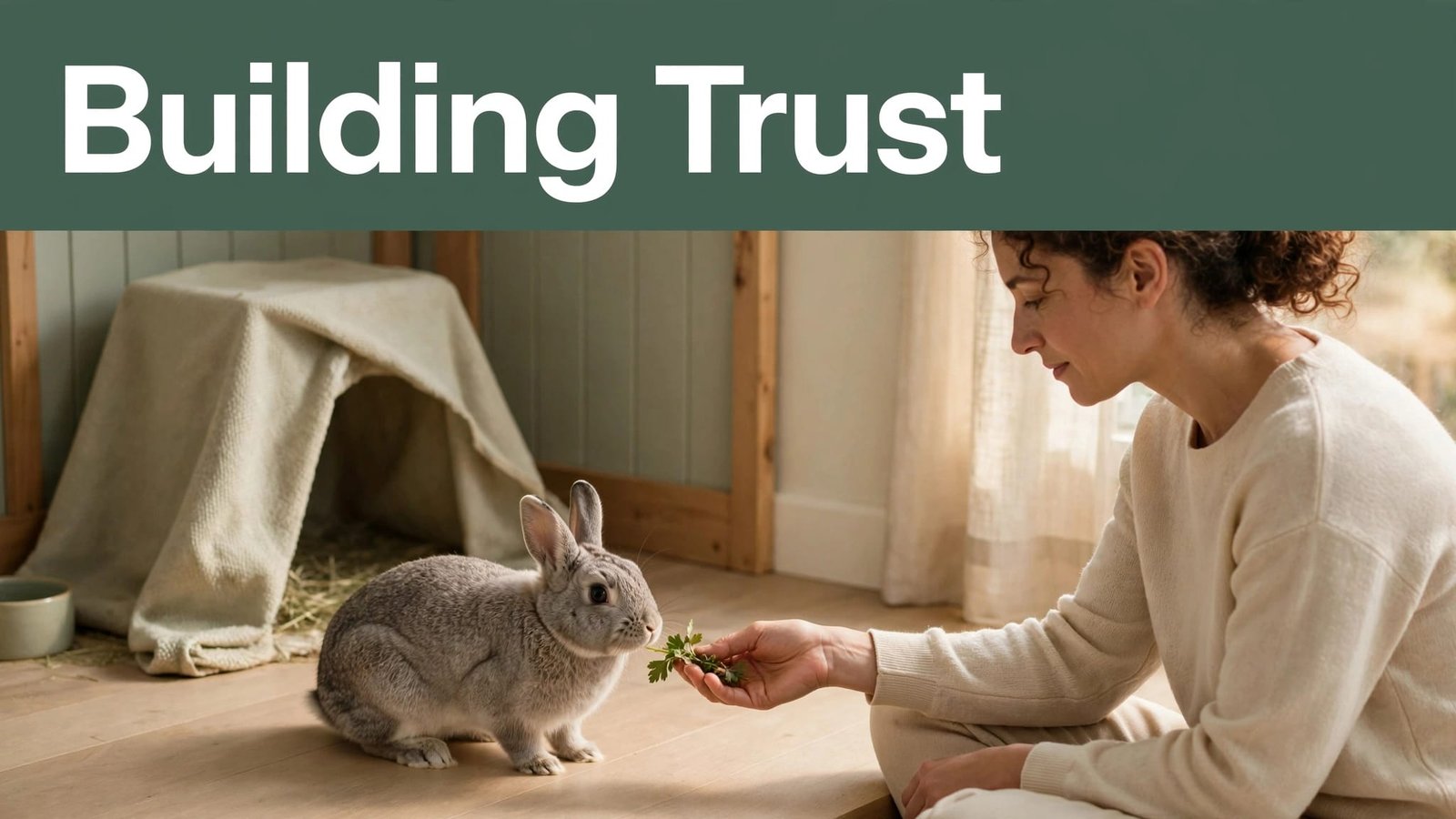
A shy bunny isn’t being unfriendly. Your rabbit is figuring out whether their new home, new people, and daily routine are safe.
Building shy rabbit trust takes patience, not pressure. Every individual rabbit moves at a different pace. Some become curious in days, while a rescue rabbit may need weeks or longer. Respect their choices, and value small, calm signs of progress over cuddles.
Key Takeaways
- Build shy rabbit trust with patience, calm routines, and choices—not pressure or forced cuddles.
- Give your bunny a secure home with solid footing, hiding places, predictable care, and safe opportunities to explore.
- Spend quiet time at floor level and let your rabbit approach, sniff, and accept treats or touch at their own pace.
- Notice voluntary signs of comfort, such as eating nearby, exploring, grooming, flopping, or resting close to you.
- Handle your rabbit only when necessary, avoid punishment and stressful positions, and contact a rabbit-savvy veterinarian when behavior changes suddenly.
Why Shy Rabbit Behavior Makes Sense
Rabbits are prey animals. A domestic rabbit isn’t a wild animal, but its natural history still shapes its instincts. Fast footsteps, loud voices, reaching hands, and sudden movements can feel scary to a small animal who lives close to the ground.
Your bunny may hide, freeze, thump, run away, or watch you from a safe corner. A beginner-friendly house rabbit handbook would describe these as normal defensive reactions, not rejection. This doesn’t mean they dislike you. It means they need more time to feel secure.
A hand from above can feel frightening
People often reach down to pet a rabbit without thinking about it. To a nervous bunny, a hand coming from above can look like danger.
Move slowly and let your rabbit see you first. Speak softly before opening a pen door or walking into their room. Little habits like this can make your long-eared friend feel less surprised.
Why most rabbits dislike being picked up
Many rabbits don’t enjoy being held high off the ground. The RSPCA explains that rabbits are fragile and often prefer not to be picked up, even when they know their person.
Being lifted can make a shy rabbit panic and struggle. Only pick your bunny up when it is truly needed, such as for a vet visit, health check, or emergency. When lifting is unavoidable, support the chest and back legs securely. For safe support, review the RSPCA’s rabbit handling advice.
A rabbit who sits beside you by choice is showing more trust than a rabbit who stays still because they feel trapped.
Shy Rabbit Trust Starts With a Safe Home
Give your rabbit one safe space where they can eat, rest, use the litter box, and hide without interruption. A busy home can still work well, but your bunny needs somewhere quiet to take a break.
Keep the basics in the same places each day. Fresh hay, water, a clean litter box, a hideout, and safe chew toys help your rabbit settle in. Consistent litter box placement also makes litterbox training easier.
Give your bunny secure footing
Slippery floors can make a nervous rabbit feel unsteady. Use secure cotton mats, low-loop rugs, or washable coverings over a solid floor. These basics support your bunny’s quality of life by giving them comfort and control.
Avoid wire flooring for your rabbit’s main space. It can be uncomfortable and may lead to sore feet. A soft, solid surface gives your bunny better traction for hopping, turning, and relaxing.
Make hiding normal, not a problem
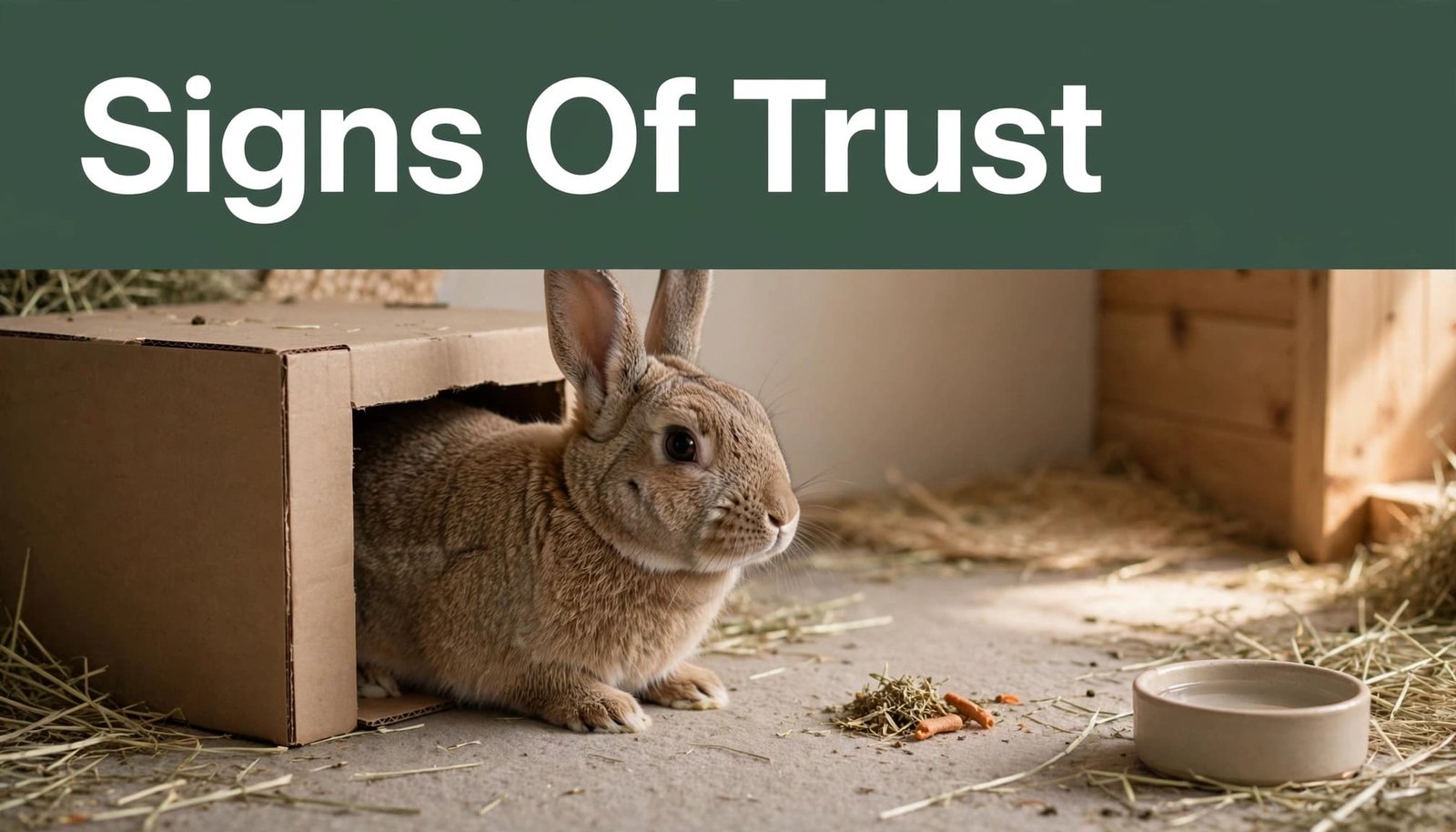
A cardboard box with two exits, a tunnel, or a covered corner gives your rabbit a place to reset. Don’t pull them out when they hide. Sit nearby for a few minutes, then let them decide when to come out.
Bunny-proofing also prevents stressful surprises. Cover cords, block access to unsafe gaps, and remove houseplants unless you know they are rabbit-safe. A secure area can support supervised free roam time. Put hay, plain cardboard, and safe chew toys nearby because chewing is normal rabbit behavior.

Build Trust at Floor Level
The easiest way to look less scary is to get down to your rabbit’s level. Sit on the floor a short distance away, read a book, scroll quietly, or simply sit still. This quiet floor time becomes a predictable form of positive human interaction.
Try not to stare at your bunny or reach toward them. Curiosity often does the work for you. Your rabbit may sniff your sock, circle around you, or hop away and come back again.
Let your rabbit make the first move
Start with short, calm sessions every day. Five or ten peaceful minutes is better than one long session where your bunny feels cornered.
Place yourself near their pen or safe room. During safe free roam time, remain seated and let your rabbit approach without chasing. Keep your hands still on your lap or the floor. If your rabbit comes over, let them sniff without trying to pet them right away.
Use the same gentle routine
Feed hay, refresh water, and offer greens at similar times each day. Predictable routines teach a shy rabbit that you bring good things and don’t cause trouble.
If children are involved, give them one simple rule: sit low, use quiet voices, and let the bunny come over. Hand feeding can be optional, but it should always be the rabbit’s choice. No chasing, squeezing, carrying, or pulling. Your rabbit also needs space while eating, resting, or using the litter box.
Use Treats Without Overdoing Them
A tiny food reward can be positive reinforcement, helping your bunny connect your presence with something safe and pleasant. Start by placing a small treat a little way from you. Later, try hand feeding from an open palm, but wait for your rabbit to choose to approach.
Don’t use treats to lure your rabbit into a corner or make them accept touch. The goal is choice. If they take the food and hop away, that’s still a good step.
Small pieces of rabbit-safe greens can work well. A little apple or banana is a sweet treat, so keep it occasional and portions small. The rabbit treat limit calculator recommends treats make up no more than 5% of your rabbit’s total diet.
Your bunny’s regular food matters too. Unlimited hay and a balanced daily diet help support good rabbit health. If you are new to feeding, this guide on what to feed rabbits can help you keep meals simple and healthy.
When Your Rabbit Refuses to Be Touched
Some rabbits love forehead rubs. Others prefer your company without much touching. Both can enjoy a happy, trusting relationship with you.
If your bunny moves away when you reach over, stop and let them leave. Never use hand feeding to trap them or pressure them into accepting touch. Reaching again can teach them that approaching you leads to something they don’t want.
Try touch only after voluntary visits
Wait until your rabbit regularly comes near you and stays relaxed. Offer one gentle scritch on the forehead or between the ears, then pause.
A rabbit who lowers their head, stays nearby, or asks for more may enjoy it. A rabbit who pulls away, flattens their body, or turns their head has said “not now.” Respecting that answer builds more trust over time.
Rebuild after a scary moment
Sometimes a rabbit gets frightened during nail trims, medication, travel, or a loud household event. Go back to simple floor time for a few days.
Don’t try to fix it with extra handling. Bring back calm routines, quiet voices, and easy treat sessions. Your bunny may need a little space before they feel brave again.
Signs Your Rabbit Is Beginning to Relax
Trust can be easy to miss because rabbit affection is often subtle. A shy bunny may never jump into your lap, but they can still feel safe and happy with you.
Look for small changes they make voluntarily.
Your bunny explores while you are nearby
A rabbit who comes out to eat hay, use the litter box, groom, or play while you sit nearby is becoming more comfortable. They may sniff your clothes, nudge your hand, or rest a little closer than before.
Chin-rubbing objects, tossing a toy, and exploring their room are also good confidence signs. Your rabbit is starting to treat the space as their home.
Relaxed body language is a good sign
A bunny may stretch out, loaf with their feet tucked under, groom, or flop on their side when they feel safe. Some rabbits will do little happy hops called binkies. These voluntary behaviors usually show comfort.
Freezing is different. A frightened rabbit may stay very still with wide eyes and tense muscles. The RSPCA’s guide to rabbit behavior lists changes in eating, toileting, bar chewing, and over-grooming as possible stress signs.
Necessary Handling and Health Checks
Even a bunny who hates being picked up may need safe handling sometimes. Veterinary visits, grooming, and health checks are part of proper care.
Keep these moments short and calm. Prepare the carrier before you need it, with a secure towel or mat inside for grip. Support your rabbit’s hindquarters and back legs, so they can’t kick without support.
Never place your rabbit on their back to “relax”
A rabbit lying still on their back is not always calm. This can be tonic immobility, a fear response sometimes called “playing dead.”
Don’t use this position for bonding, photos, or routine care. The Rabbit Welfare Association’s handling guidance has helpful advice for calm handling when grooming, medicine, or examinations are needed.
Call a rabbit-savvy veterinarian when behavior changes suddenly
Shyness that has always been part of your rabbit’s personality is one thing. Sudden fear, aggression, hiding, or refusal to be touched can be different.
Contact a rabbit-savvy veterinarian if your bunny also eats less, produces fewer droppings, seems hunched, has messy fur, or appears painful. Rabbits can hide illness well, so a change in normal behavior deserves attention. Prompt care protects rabbit health and your bunny’s quality of life.
Spay and Neuter: Cage Protective Behavior
Hormones can affect rabbit behavior, especially after sexual maturity. An unspayed or unneutered rabbit may spray urine, guard their space, mount, or act more territorial.
Spaying or neutering prevents accidental litters and may reduce spraying and some aggressive behavior. A veterinarian can discuss timing based on sexual maturity, health, and individual needs. It won’t turn every rabbit into a cuddly bunny overnight, but it may make daily life calmer. Rabbit.org’s shelter care guidance also supports this step for rabbit welfare and aligns with established house rabbit society recommendations.
Don’t put your hand into a guarded space
A rabbit who lunges or growls when you reach into their pen may be protecting their home. Let them come out first if possible, then refresh food or clean the litter area.
Use a calm routine and avoid punishment. Yelling, tapping the nose, or forcing contact can worsen fear and guarding.
Give your bunny more choices
A rabbit with a hideout, room to move, chew items, and safe free roam time has more control over their day. These choices support quality of life and can help a nervous rabbit feel safer.
Keep an eye on patterns. Does your bunny react only during cleaning? Only near the litter box? Only when someone reaches from above? The answer can help you change the situation without blaming the rabbit.
Frequently Asked Questions
How long does a rescue rabbit take to trust you?
There is no set timeline. Some rescued rabbits become curious quickly, while others need many weeks or months. Let your bunny set the pace and notice small progress, such as eating near you or approaching for a sniff.
Can a shy rabbit ever become cuddly?
Maybe, but don’t make cuddling the goal. Some rabbits enjoy head rubs or sitting near their people. Others prefer floor-level companionship with little touching. Both are real forms of rabbit trust.
What should I do if my rabbit thumps and runs away?
Stop moving toward them and give them space. Check for loud noises, new smells, visitors, or other changes that may have caused fear. Later, return to a quiet floor session without trying to touch them.
Is hand feeding the best way to win a rabbit’s trust?
It can help, but it isn’t required. Start by placing a tiny reward near you. When your rabbit feels ready, they may take it from your open palm. Never hold food in a way that blocks their exit.
A Gentle Friendship Takes Time
The best shy rabbit trust comes from a bunny who feels safe enough to choose you. Calm routines, a comfortable home, floor-level time, and respect for boundaries are simple things that add up.
Your rabbit may show love with a nudge, a relaxed flop, or by resting nearby. Those quiet choices are trust, and they are worth celebrating.