
A scared rabbit isn’t telling you they dislike you. Fear is a normal rabbit response, especially when a bunny hears a loud sound, sees fast movement, or feels trapped.
Your furry friend may hide, freeze, thump, run away, or flatten their ears when something feels unsafe. Knowing how to calm a scared rabbit starts with removing pressure, giving them a safe place, and letting them choose when to come close.
Small, calm changes can help your bunny feel safer at home again.
How to Calm a Scared Rabbit in the Moment
When your rabbit gets frightened, the first job is simple: stop adding more stress. Don’t chase them, reach into their hiding place, talk loudly, or try to pick them up for reassurance.
Lower the noise around them. Ask children to give the rabbit space, move other pets away, and turn down the TV or music. Open access to a familiar hideout, then stay nearby without staring.
A rabbit who lies very still isn’t always relaxed. They may be frozen with fear, waiting to see if danger passes.
Give Your Bunny a Safe Exit
Let your rabbit move away if they want to. A cardboard box, tunnel, covered bed, or familiar corner can give your bunny a place to reset.
Sit several feet away at floor level. Keep your hands still and your voice low. You can read a book, scroll quietly, or simply sit there for five to ten minutes.
Don’t block the exit to their hideout. Don’t keep peeking inside. Your bunny needs to learn that hiding is allowed, and that they can come out when they feel ready.
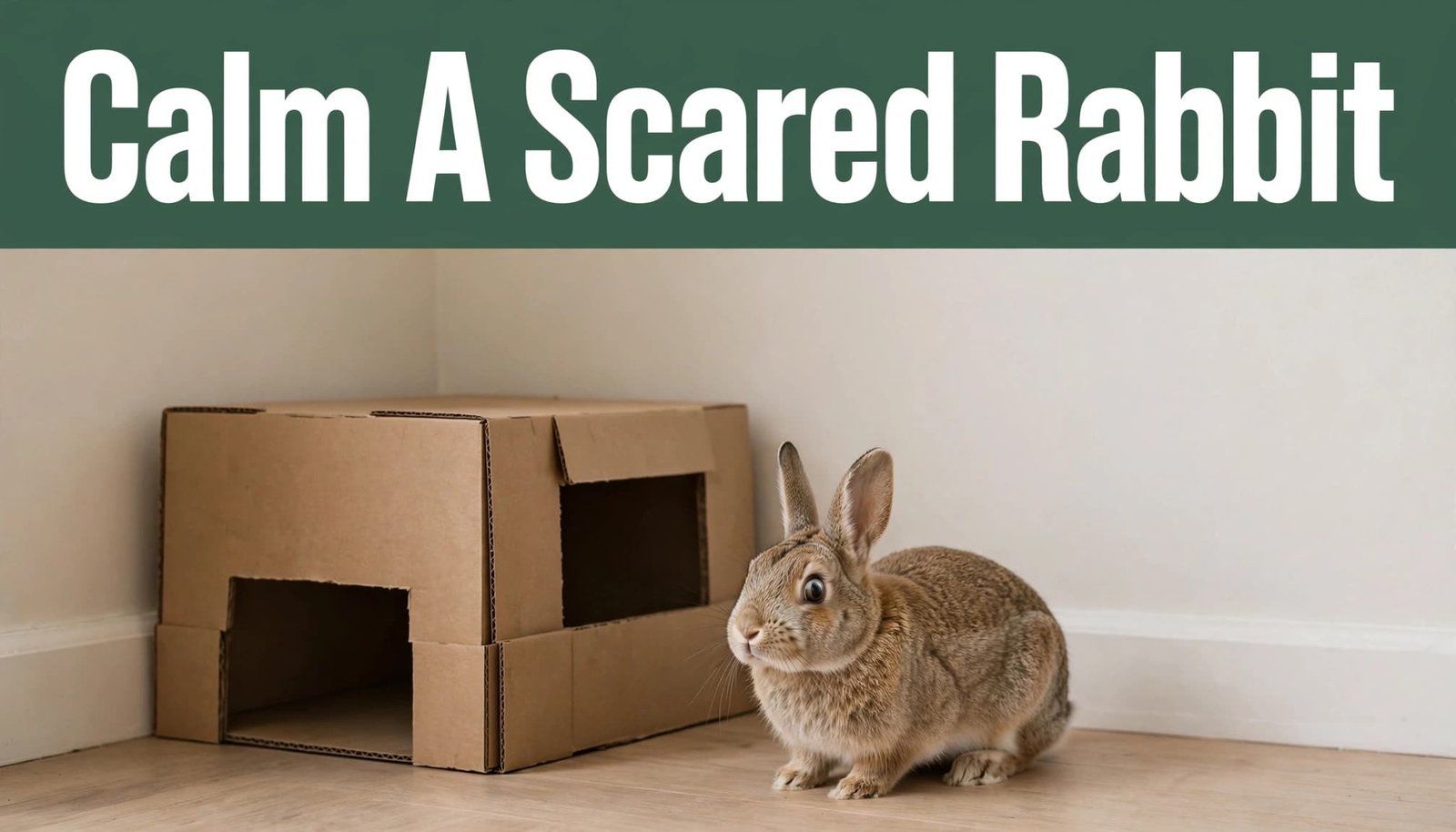
Read the Body Language Behind Your Rabbit’s Fear
Fear can look different from one rabbit to another. Common signs include wide eyes, tense muscles, flattened ears, freezing, thumping, hiding, running away, or a low crouched posture.
Relaxed rabbits often groom themselves, stretch out, loaf with their feet tucked in, flop on their side, explore, or eat hay near you. A bunny who does a binky, tosses a toy, or nudges your hand is usually feeling more confident.
The PDSA rabbit body language guide also explains that scared rabbits may hide often, and they should not be pulled from their safe spot. Watch for patterns. Does fear happen during cleaning, around the dog, or when a hand reaches down from above? That pattern gives you a helpful clue.
A rabbit who walks away has said “not now.” Respecting that answer builds trust over time.
Why Rabbits Get Scared So Easily
Rabbits are prey animals. Even a loved indoor bunny has instincts that say fast footsteps, loud voices, unfamiliar smells, and sudden hands could mean danger.
Your rabbit isn’t being dramatic or stubborn. They are trying to stay safe in the way rabbits know best.
A Hand From Above Can Feel Threatening
People often reach down to pet a rabbit without thinking about it. To a nervous bunny, a hand coming from above can feel frightening.
Speak softly before entering their room or opening their pen. Move slowly, and let your rabbit see you first. If they move away, pause instead of following.
The RSPCA rabbit behavior guide lists changes in eating, toileting, bar chewing, and over-grooming as possible signs of stress. Those changes are worth noticing, especially when they become part of a new pattern.
Being Picked Up Is Usually Scary
Most rabbits don’t enjoy being held high off the ground, even when they trust their person. Being lifted takes away their ability to run, hide, and choose where they go.
Only pick up your bunny when it is truly necessary, such as for a health check, medicine, travel, or a veterinary visit. A rabbit sitting beside you by choice shows more trust than one who stays still because they feel trapped.
Create a Calm, Rabbit-Friendly Space
A nervous rabbit needs one area where life feels familiar. This doesn’t have to be a perfect rabbit room. It does need to be safe, quiet, and easy for your bunny to understand.
Use solid flooring with good traction. Low-loop rugs, washable cotton mats, or secure coverings can help rabbits feel steady while hopping and turning. Slippery floors can make a worried bunny feel even less sure of themselves.
Keep fresh hay, clean water, a litter box, and safe chew items in predictable places. Avoid wire flooring in your rabbit’s main living area because it can be uncomfortable on their feet.
Give Your Rabbit More Than One Hiding Place
A box with two exits is better than a dead-end hideout. Your bunny can rest inside while still knowing they have a way out.
Add a tunnel, a covered corner, or a second cardboard box in another part of the space. Don’t pull your rabbit out when they hide. Let the hideout do its job.
The Chewy overview of rabbit body language describes freezing and bolting to a hideout as signs that a rabbit feels overwhelmed. A safe retreat helps them recover without more pressure.
Bunny-Proof Before Problems Happen
Cover electrical cords, block unsafe gaps behind furniture, and remove houseplants unless you know they are rabbit-safe. Rabbits chew because it is normal rabbit behavior, not because they are being naughty.
Keep cats, dogs, and loud household activity away from your bunny’s safe area. During supervised free-roam time, offer plain cardboard, rabbit-safe toys, hay, and places to explore.
A quiet, prepared space gives your long-eared friend more control over their day.
Use Routine, Choice, and Enrichment to Reduce Anxiety
A predictable routine can make a shy bunny feel much safer. Feed hay, refresh water, clean the litter box, and offer leafy greens at similar times each day.
Your rabbit begins to learn that familiar sounds and daily care don’t lead to scary things. This matters even more for a rescue rabbit or a bunny settling into a new home.
Let Your Rabbit Make Small Choices
Choice is a big part of rabbit confidence. Your bunny should be able to approach you, retreat, rest, eat, dig, and investigate without getting cornered.
Offer supervised exercise time in a rabbit-proofed space. Add tunnels, paper-filled digging boxes, untreated cardboard, and safe chew toys. Rotate items now and then, but don’t change the entire area at once.
A rabbit who comes out to eat hay, use the litter box, or groom while you are nearby is making progress. Those small choices matter.
Keep Cleaning Less Scary
Some rabbits become nervous when their litter box is cleaned or their pen is rearranged. If possible, let your bunny come out first, then clean their space while they explore nearby.
Avoid reaching into a guarded enclosure while your rabbit is inside. A bunny who lunges or growls may be protecting their home, not trying to be mean.
Keep one familiar hideout and some familiar bedding in place. A full clean is necessary sometimes, but your rabbit will settle faster when the area still smells and feels like home.
Also see this article on Happy Bunny Space
Build Trust Without Forcing Cuddles
The easiest way to look less scary is to get down to your rabbit’s level. Sit on the floor a short distance away during safe free-roam time. Keep your hands on your lap or resting on the floor.
Start with five or ten peaceful minutes each day. Don’t stare. Don’t reach. Let curiosity do the work.
Your bunny may sniff your sock, circle around you, hop away, then come back again. That is a good sign.
Let Your Bunny Make the First Move
Use tiny portions of rabbit-safe greens as an optional reward. Start by placing a small piece near you. Later, your rabbit may take it from an open palm.
Never use food to lure a rabbit into a corner or make them accept touching. If your bunny takes a green and hops away, that still counts as trust.
Some rabbits warm up in days. Others need weeks or months. Sitting nearby, eating hay in your presence, or resting a little closer are meaningful steps.

Handle Scary Tasks With Less Stress
Nail trims, grooming, medicine, travel, and health checks may require handling. Prepare before you start. Set up a secure carrier with a towel or nonslip mat inside, and keep supplies within reach.
When lifting is unavoidable, support your rabbit’s chest and hind legs securely. Keep the task short, then give your bunny a quiet break afterward.
Never place a rabbit on their back for bonding, photos, or routine care. This stillness can be tonic immobility, which is a fear response sometimes called “playing dead.”
After a stressful event, return to calm floor time for a few days. Don’t try to fix fear with extra cuddles or handling.
Know When Fear May Be a Health Problem
A rabbit who has always been shy may simply need time. Sudden fear, aggression, hiding, or refusal to be touched is different, especially when it comes with other changes.
Rabbits are good at hiding illness. A bunny may become withdrawn or fearful because they are uncomfortable or in pain.
Watch for Changes in Eating and Droppings
Contact a rabbit-savvy veterinarian if your bunny eats less, produces fewer droppings, sits hunched, has messy fur, hides more than usual, or grinds their teeth in discomfort.
A rabbit that refuses food can become seriously ill fast. The Veteris guide to a rabbit not eating lists hiding, reduced movement, a hunched posture, and tooth grinding among signs that need attention.
Don’t wait until tomorrow if reduced appetite and fewer droppings are happening together. Call your regular rabbit vet or an emergency clinic that treats rabbits.
Hormones Can Affect Fear and Guarding
An unspayed or unneutered rabbit may spray urine, guard their space, mount, or act more territorial after sexual maturity. Hormones can make daily interactions feel more intense for some bunnies.
Spaying or neutering can reduce spraying and some aggressive behavior, while also preventing accidental litters. A rabbit-savvy veterinarian can help you decide the right timing based on your rabbit’s health and age.
The Calistoga rabbit behavior guide also advises paying close attention when hiding happens with poor appetite or fewer droppings. Treat sudden behavior changes as useful information, not bad behavior.
Key Takeaways
- Stop chasing, reaching, loud talking, and forced cuddles when your bunny gets scared.
- Give your rabbit a quiet hideout with more than one exit, solid footing, hay, water, and safe chew items.
- Spend short, calm sessions on the floor and let your bunny choose whether to approach.
- Notice relaxed behaviors like grooming, flopping, exploring, and eating nearby.
- Call a rabbit-savvy veterinarian when fear is sudden or happens with appetite, droppings, posture, or pain changes.
A Calmer Home Helps a Scared Rabbit Feel Safe
The kindest way to calm a frightened bunny is to remove pressure and make daily life feel predictable. Safe hiding places, calm routines, floor-level time, and choices can help your rabbit become braver at their own pace.
Rabbit affection doesn’t always look like lap cuddles. It may be a relaxed flop, a gentle nudge, a happy hop, or your bunny choosing to rest nearby.
Respect those boundaries, celebrate the small progress, and get veterinary help when fear appears suddenly with signs of illness.