
Does your bunny know their name, or do they simply perk up when they hear your voice? It’s a fair question when that same rabbit comes running for a rustling food bag.
So, can rabbits recognize their names? They can learn to associate the sound with good experiences, although responding doesn’t prove they understand names as people do.
Start by noticing what your rabbit does before expecting them to hop over.
Can Rabbits Recognize Their Names?
Yes, rabbits can learn to respond to their names as familiar sound cues. Repeated pairings with food, attention, or enjoyable interaction help that sound become meaningful.
However, recognizing a cue differs from understanding that a word identifies you. A rabbit approaching after hearing their name shows a learned association. It doesn’t establish a human-like understanding of identity, and everyday observations can’t settle that distinction.
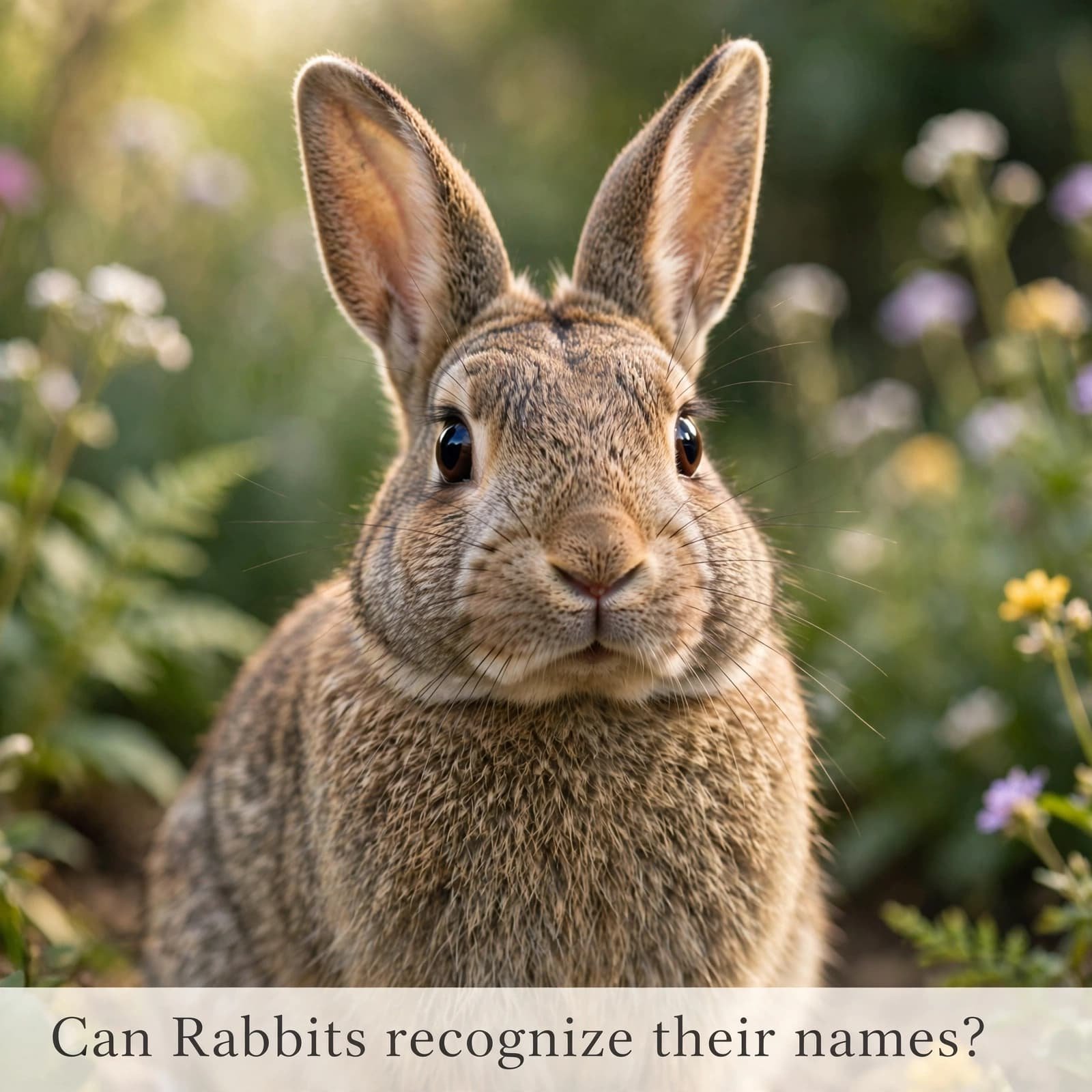
How to tell name recognition from a reaction to your voice
Try saying your rabbit’s name during calm, ordinary moments. Keep your hands still and food packaging out of sight, because those cues can attract attention too.
On separate occasions, compare their response with other familiar words spoken in the same gentle tone. Look for a repeated pattern: turning toward you, moving an ear, pausing, or approaching.
If you rustle a treat bag while calling, you can’t tell which sound prompted the response.
These observations may suggest that rabbits recognize their names as distinct cues. Still, no single ear movement or approach proves recognition.
Why some rabbits respond more than others
Personality, age, hearing, and surroundings can all affect the response you see. Reward history matters too: a name linked with pleasant experiences may attract more attention.
Some rabbits hop over readily. Others acknowledge you with a pause or ear turn, especially when they’re resting or occupied.
The Rabbit Awareness Action Group’s guide to rabbit behavior can help you read these quieter signals. Watch your bunny’s usual behavior rather than comparing them with another rabbit. A lack of response doesn’t mean they can’t learn.
How to Teach a Rabbit to Respond to Their Name
Name training should feel like a pleasant invitation. Choose a quiet, familiar space with secure footing and somewhere your rabbit can retreat.
Pair the name with a calm, positive reward
Sit at floor level near your bunny. Say their name once in a gentle, consistent voice, then promptly reward a small sign of attention.
A tiny piece of a familiar, tolerated leafy green can work. For example, use a small portion of romaine or cilantro your rabbit already eats. A favorite interaction can also be rewarding, but offer petting only if your bunny welcomes it.
The University of Miami’s rabbit training guidance describes positive reinforcement as a way to encourage behavior. Keep rewards small and count food rewards within the day’s portions.
Try one or two minutes initially, and stop before your rabbit loses interest. Keep hay available; hunger shouldn’t be part of training.

Build the response without calling repeatedly
Once your rabbit regularly notices the cue nearby, practice from a slightly greater distance. Reward attention first; you don’t need to demand an approach.
Then gradually vary where you sit or practice in another familiar area. Change one thing at a time so the task stays manageable.
Avoid repeating the name rapidly or using it only before stressful handling. Never lure your bunny into a corner, restrain them, or block their exit to secure a response.
If children join in, have them sit low and speak softly. Your rabbit should choose whether to approach, accept the reward, or leave.
What to Do if Your Rabbit Ignores Their Name
Treat a missed response as information, not disobedience. Your rabbit might be distracted, frightened, resting, or listening to something else. First, check what’s happening around them.
Make practice easier and rebuild pleasant associations
Return to a quiet space your rabbit knows well. Turn off competing sounds and wait until they’re awake and relaxed. Give them space while eating, resting, or using the litter box.
Reward smaller responses again, such as a glance or pause. If they move away, let them go rather than following them into a hideout.
Also consider what usually follows their name. If calling often leads to a nail trim or unwanted pickup, add more low-pressure, pleasant interactions.
Helping rabbits recognize their names takes consistency, but there’s no guaranteed timetable. End an unproductive session calmly and try another day.
Check for changes in hearing or health
A sudden change deserves more attention than an occasional missed response. If your rabbit stops reacting to several familiar sounds, contact a rabbit-savvy veterinarian rather than assuming training has failed.
Mention when the change started and any other symptoms. Head shaking, repeated ear scratching, discharge, or balance problems also warrant veterinary advice. Don’t test hearing by clapping loudly nearby or startling your rabbit.
Meanwhile, watch appetite and droppings. A rabbit who stops eating or producing normal droppings needs prompt veterinary care. Treats and extra training aren’t a substitute for checking a possible health problem.
A Familiar Name Can Become a Gentle Invitation
Rabbits can learn their names as meaningful sound cues, but each bunny responds in their own way. An ear turn or brief pause can be worth noticing, even without a hop toward you.
Use the name warmly, reward voluntary attention, and respect your rabbit’s choice to stay put. The useful goal is a familiar, pleasant cue your bunny feels safe responding to.