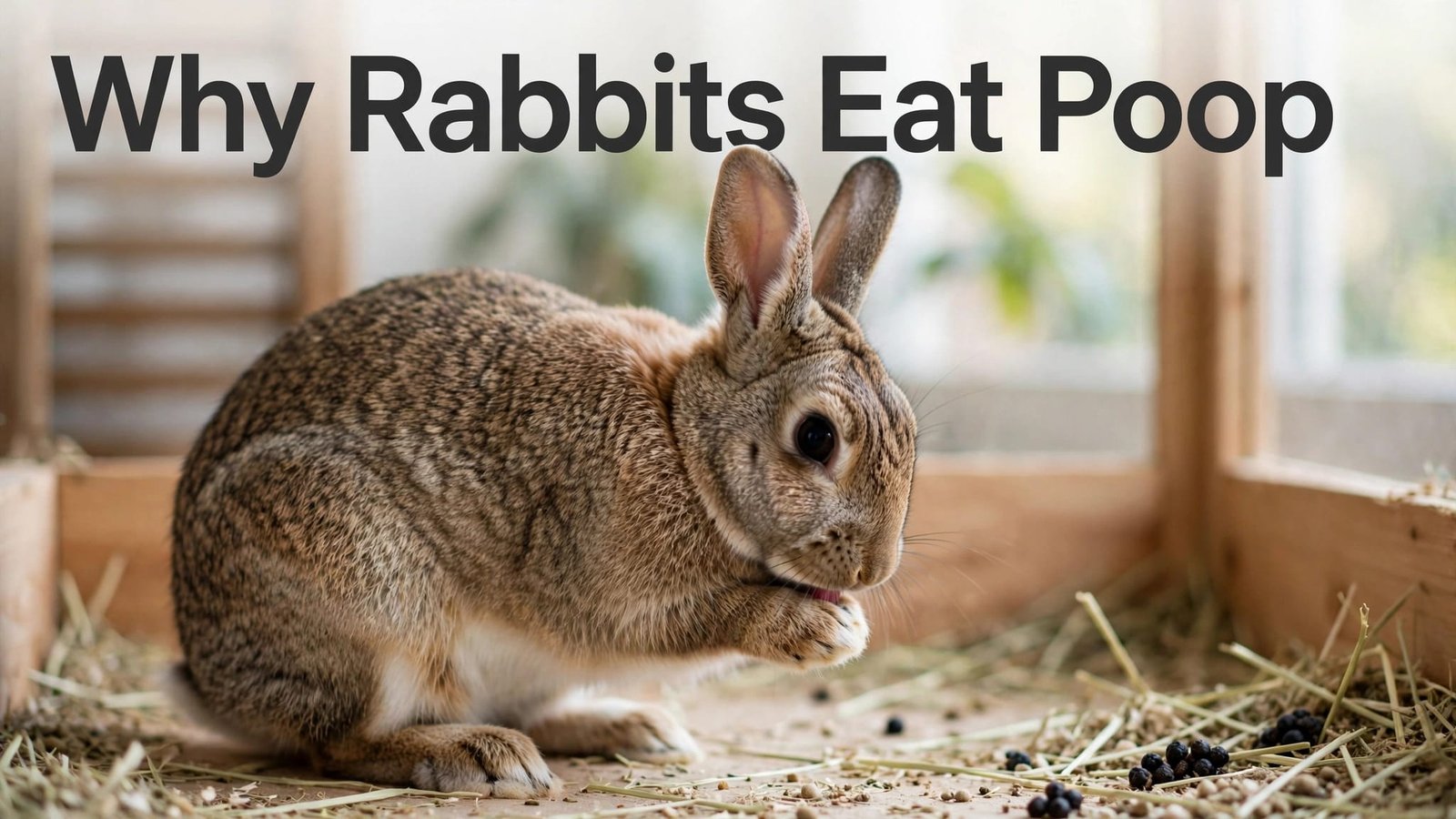
Seeing a new bunny eat their poo can be surprising, but it’s usually a normal part of healthy digestion.
Your bunny eats special soft droppings called caecotrophs to absorb protein, B vitamins, and other nutrients. Eating their faeces is normal and helps rabbits get nourishment from their food, so you shouldn’t stop this behaviour.
Knowing which type of soft cluster your bunny eats helps you separate a healthy habit from a problem that needs attention.
Rabbit Eating Poop: Which Droppings Are Normal?
Your rabbit produces two types of faeces. Only one type normally gets eaten.
When rabbits are eating their faeces, they usually choose the soft type, not the hard pellets.
| Feature | Hard faecal pellets | Caecotrophs |
|---|---|---|
| Appearance | Dry, round, cocoa-puff-like balls | Dark, shiny clusters resembling tiny grapes |
| Texture | Firm and fibrous | Soft and moist |
| Purpose | Waste normally left behind | Nutrients eaten again |
These soft clusters are also called cecotropes or “night faeces.” Compared with ordinary pellets, they contain significantly less fibre and are rich in protein and B vitamins.
Your bunny usually eats them directly from their bottom. This can look like grooming, followed by chewing. The House Rabbit Society’s droppings guidance explains why owners often never see these soft clusters: healthy rabbits usually eat them straight away.
How Your Rabbit’s Second Meal Works
Eating these soft clusters is called caecotrophy. It gives your bunny’s digestive system a second chance to absorb useful nutrients.
The first trip releases more nutrients
Food travels through your rabbit’s mouth, stomach, and small intestine. Some nutrients are absorbed along the way, but plant material isn’t fully broken down during this first trip.
Fine particles reach the caecum, a large digestive pouch. Helpful bacteria break down the material through fermentation. In the caecum, this fermentation makes protein and B vitamins available from plant fibre.
NC State’s rabbit nutrition guidance describes this normal behaviour of eating nutrient-containing soft stools.
The second trip lets your bunny absorb them
The fermented material forms soft clusters, which pass through the colon and leave the body. Re-ingesting them gives the material a second ingestion through the digestive tract. It passes through the small intestine again, where your rabbit can absorb nutrients.
Caecotrophy is sometimes compared with a cow chewing its cud. Both help animals get more nourishment from plant food, although the processes are different.
Never punish or interrupt your bunny for doing this. Preventing access to the soft clusters can lead to nutritional deficiencies and related deficiency diseases.
Build a Rabbit-Friendly Diet
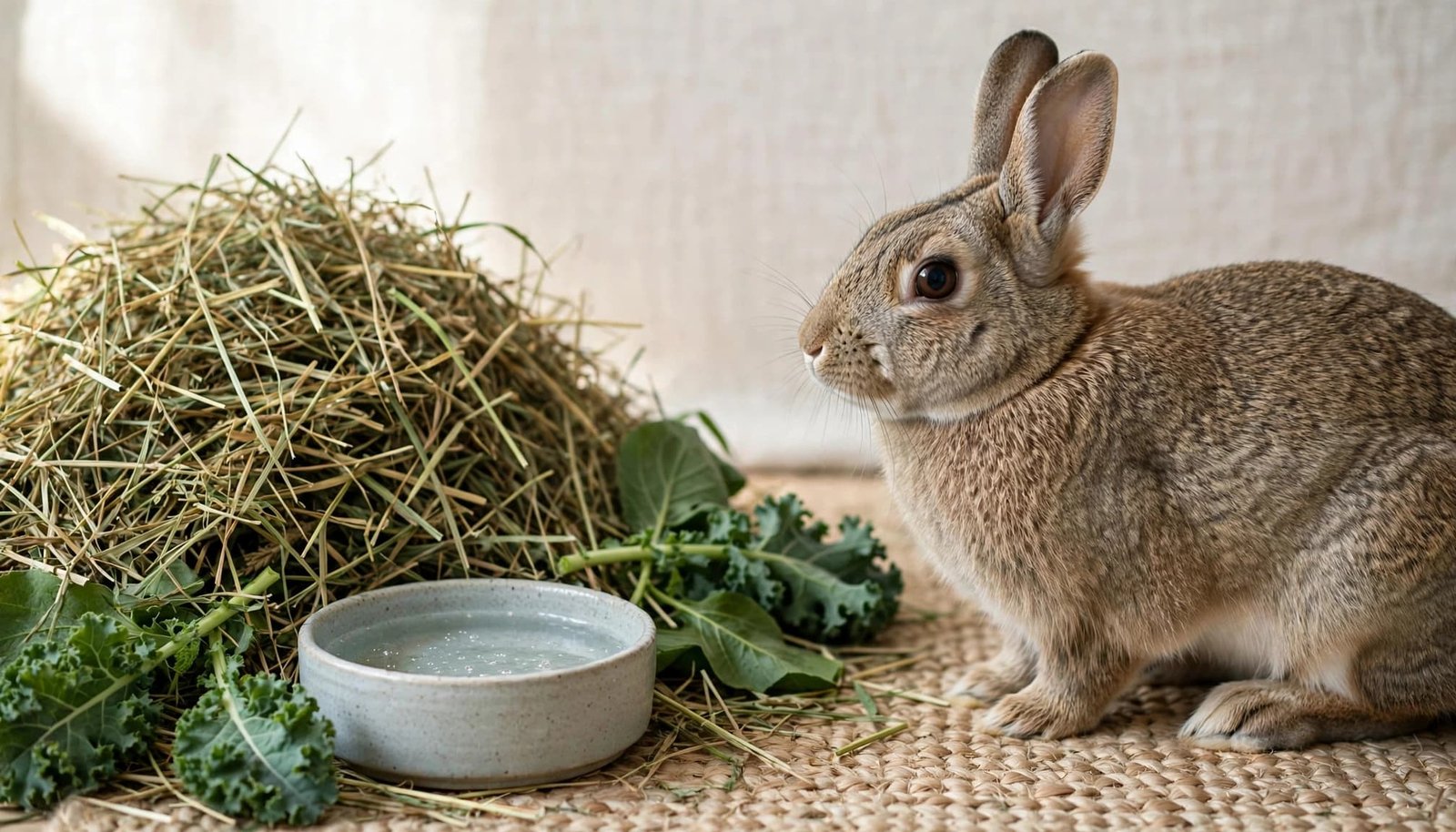
A simple feeding routine supports healthy digestion. For most adult rabbits, fresh grass/hay should be available throughout the day.
Hay recommendations vary slightly. Petplan suggests grass or hay should make up 85-95% of a nutrient-rich diet. The Merck Veterinary Manual’s feeding guidance recommends about 85-90% grass hay.
Timothy, orchard grass, and meadow hay are common adult choices. Add fresh water, suitable leafy greens, and a small, measured portion of good-quality plain rabbit pellets.
Romaine, cilantro, cabbage, and small amounts of kale can provide variety. Our guide to introducing new foods safely helps you add foods gradually while watching appetite and normal output.
Avoid muesli-style foods containing seeds, nuts, or colourful pieces. These encourage selective eating and are associated with dental problems and digestive issues.
When Missed Caecotrophs Need Attention
Eating caecotrophs is normal. Repeatedly leaving these clusters behind deserves attention, especially when your bunny’s usual habits change.
Soft clusters left behind or stuck to fur
Your rabbit may struggle to reach their bottom because of obesity, arthritis, or reduced mobility. Dental pain and digestive problems can also interfere with eating these clusters.
Contact a rabbit-savvy veterinarian promptly if uneaten clusters increase or soft droppings stick to the fur. A vet can assess the cause and offer dietary advice. Don’t assume your bunny simply needs less food.
A persistent change can signal an underlying issue in your rabbit’s digestive system, such as an imbalance in gut bacteria called caecal dysbiosis. Appearance alone can’t identify the cause.
While arranging care, keep familiar hay and water available. Avoid sudden diet changes or trying to fix the problem with supplements.
Appetite changes and diarrhoea need urgent help
True watery diarrhoea is different from a soft cluster and is never normal.
Seek urgent veterinary care if your rabbit stops eating, produces few or no pellets, becomes unusually quiet, or shows pain. Don’t wait until the next day.
Our guide to normal rabbit poop and warning signs explains other changes worth noticing. A quick morning and evening check helps you track your bunny’s usual pellet size, quantity, and texture alongside appetite.
Key Takeaways for New Rabbit Owners
- Let your rabbit eat these soft clusters without interruption.
- Keep fresh hay and water available every day.
- Call a rabbit-savvy vet about repeated uneaten clusters, a messy bottom, or changes in appetite, toileting habits, or normal output.
Frequently Asked Questions
How often should my rabbit eat caecotrophs?
Rabbits commonly eat these clusters during a daily period, often late at night or early in the morning. It can happen at other times too. “Night faeces” doesn’t mean your bunny must follow a strict schedule.
Should I worry if I never see caecotrophs?
Usually, no. Your bunny may eat them before you notice. Focus on whether your rabbit eats normally, stays comfortable, and produces their usual dry pellets. You don’t need to find soft clusters to know digestion is working.
A Normal Habit Worth Leaving Alone
When your rabbit eats soft droppings called caecotrophs, they get important nourishment. Let your bunny follow this natural routine.
Watch for changes in their usual pattern. Repeatedly finding these clusters uneaten, a dirty bottom, or reduced eating deserves veterinary attention, not a home diet experiment.