
Your rabbit’s first vet visit helps you get a clear picture of their health and a good start on everyday care.
At this first visit, expect a full physical assessment, a discussion about your rabbit’s routine, and a fecal test or other tests when needed. Your vet will also discuss recommended vaccinations and a suitable care schedule.
A little preparation makes the appointment easier for both you and your furry friend. Start with a rabbit-experienced vet, then gather the items you’ll need for the appointment.
Key Takeaways
- Choose a veterinarian who regularly treats rabbits, and keep their emergency contact details handy.
- Prepare a secure travel setup with familiar bedding before appointment day.
- Bring health records and medication details, and act promptly if their eating or droppings change.
When Should Your Rabbit Have Their First Vet Visit?
An early checkup for a baby bunny
Torrance Animal Hospital’s rabbit checkup guide recommends an initial visit at about 5 weeks old. This early appointment includes a full physical assessment, a fecal test, and other diagnostics or vaccinations as appropriate.
That timing doesn’t mean young bunnies are ready to leave their mother. An early health check and the right time to move into a new home are separate things.
If you’re adopting an older rabbit, arrange their first appointment soon after they arrive. Bring any records from their rescue, breeder, or previous owner.
Choose a rabbit-experienced clinic
Ideally, find your vet before bringing your rabbit home. Rabbits have different care needs from cats and dogs, so regular rabbit experience matters.
Ask whether the clinic provides rabbit wellness care, dental care, spaying or neutering, and emergency treatment. Also find out where your rabbit can receive care outside normal opening hours.
Our guide to finding a rabbit-savvy veterinarian gives you helpful questions for that first phone call.
What Should You Bring to the Appointment?
A small bag of familiar supplies can make the visit more comfortable. Keep your records together so you aren’t searching for them at reception.
- Bring previous medical records, your rabbit’s vaccination card, and details of current medications.
- Pack familiar bedding, a spare washable liner, and a small reward treat they already eat.
- Write down questions and any changes in appetite, droppings, movement, or behavior, including when they started.
- Bring a fecal or urine sample if the veterinary team requests one.
When booking, ask the receptionist whether a urine sample is needed for diagnostic tests or a planned procedure. If requested, collect it on the morning of the appointment using the clinic’s collection instructions.
Don’t squeeze your rabbit’s abdomen to obtain urine. If you can’t collect a sample, let the team know.
Photos of their usual food and living area can also help you explain their routine. Keep a list of hay, pellets, greens, and supplements they receive.
Get Your Rabbit Comfortable With the Carrier

Make the carrier a familiar place
Choose a solid, well-ventilated rabbit carrier with secure fastenings. Your rabbit needs room to sit comfortably and turn around without sliding across a large empty space.
The RSPCA’s rabbit transport advice recommends a sturdy model that rabbits can’t easily chew or escape from. Cardboard boxes can become damp and are too easy to chew through.
Leave it open on the floor before the visit. Add familiar bedding, a safe toy, hay, or a small piece of a vegetable it already eats. Let it explore at its own pace to build a positive association with this setup.
Load your bunny without a chase
A top-opening model can make loading easier. Before the appointment, ask the veterinary team to demonstrate safe handling. A frightened rabbit can injure its spine while struggling, with spinal fractures a possible serious consequence.
If the team recommends loading through a front opening, they may demonstrate standing it on its end with a towel at the bottom. The method involves supporting the chest between the front legs, cradling the hindquarters in the crook of your elbow, and gently shielding the eyes while lowering it.
Don’t improvise this with a panicking rabbit. Support the chest and hindquarters together, stay low, and never lift by the ears or scruff. If it starts scrambling, return it safely to the floor and pause.
Keep the Journey and Waiting Room Calm
Keep familiar bedding in the carrier so they have something familiar around them. Keep the car comfortably cool, avoid loud music, and drive gently. A quiet, familiar journey can reinforce a positive association with carrier training.
Secure the travel setup so it can’t slide or tip during braking. The Rabbit Welfare Association & Fund’s safe rabbit transport guidance explains how to secure it in the vehicle and warns against putting rabbits in the boot.
If you’re considering a calming rabbit spray, discuss a suitable product with your vet first. Don’t spray your rabbit or add strong fragrances to their bedding.
Some rabbit-friendly clinics offer quiet appointment times or a waiting area away from dogs. These options can help a nervous bunny.
Keep your rabbit inside it while waiting. Speak softly and avoid repeatedly opening it for reassurance. Familiar bedding and a calm space are more useful than extra handling.
What Happens During Your Rabbit’s First Vet Visit?
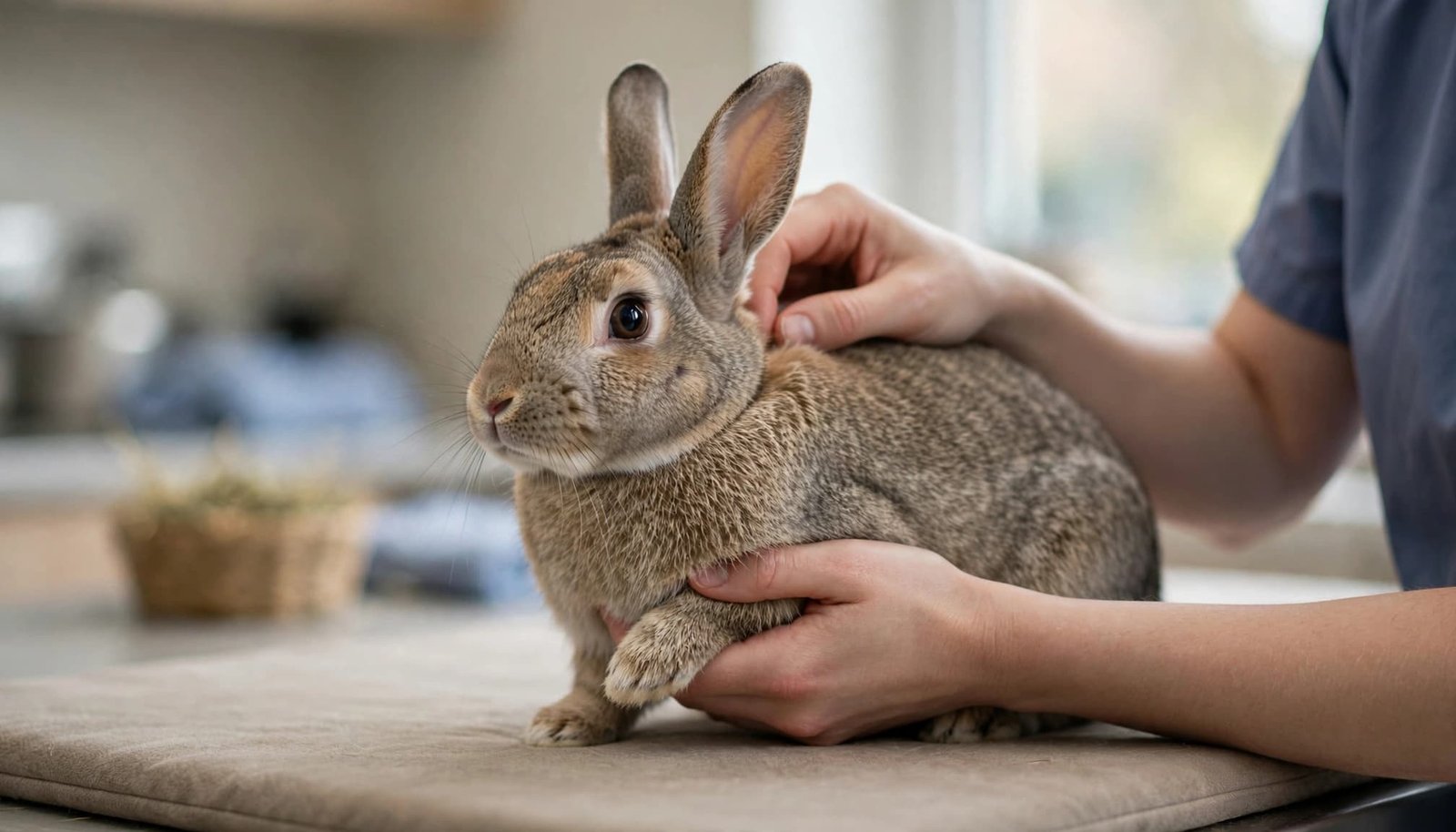
Your vet learns what’s normal for them
The appointment usually begins with questions about your rabbit’s background and daily routine. You’ll discuss their age, previous care, food, housing, activity, and any concerns you’ve noticed.
Be honest if you’re still learning. You don’t need perfect answers or a perfectly behaved pet.
Your vet will perform a full physical assessment and discuss anything that needs attention. This first appointment also creates a starting record for future visits.
Use the conversation to ask about suitable food portions, safe exercise space, grooming, and spaying or neutering. A written question list helps you remember the small things once you’re in the room.
Tests and vaccinations depend on your rabbit
A fecal test may be included in your rabbit’s initial assessment. Other diagnostics depend on their history, symptoms, age, and examination findings.
Bloodwork, urinalysis, and imaging aren’t automatically necessary for every healthy rabbit. Your veterinarian will explain why a particular test is recommended and how it affects the care plan.
Vaccinations also need an individual plan based on your rabbit’s age and location. An early checkup doesn’t mean every vaccination will happen that day.
Before leaving, make sure you understand any treatment instructions, medication doses, and follow-up appointments. Ask the team to demonstrate anything you’ll need to do at home.
What Affects the Cost of a Vet Visit for Your Rabbit?
The cost depends on what your rabbit needs during the appointment. A straightforward wellness examination costs less than a visit that includes vaccine boosters, bloodwork, and urinalysis.
Parasite testing, medication, illness treatment, and advanced diagnostics can add separate charges. A first appointment may also involve more work if your rabbit has no previous records or arrives with a health concern.
An examination fee and the total bill aren’t always the same amount. A treatment estimate should separate the consultation, recommended tests, vaccines, and medication so you can understand the costs.
Keep routine care and unexpected treatment in separate parts of your rabbit budget. A healthy checkup doesn’t include every expense your rabbit might have later.
If money is a concern, tell the veterinary team early. They can explain which recommendations address an immediate problem and which belong in a longer-term care plan.
How Often Will Your Rabbit Need Checkups?
Plan regular visits throughout their life
Healthy adult rabbits generally need a routine checkup once a year, called an annual checkup. Very young and senior rabbits commonly benefit from twice-yearly visits. How often additional visits are needed depends on ongoing illness or medication.
Your vet can set a schedule around your bunny’s needs. Ask the clinic how often to adjust it as your rabbit ages. Brick Town Veterinary Hospital’s wellness guidance also recommends yearly examinations for rabbits.
Rabbits can live 10 to 12 years, and some live longer. Routine veterinary care supports a healthier life, although lifespan also depends on breed, diet, environment, and individual health.
Don’t wait for a scheduled appointment if something changes
Rabbits instinctively hide illness. Reduced eating, smaller or fewer droppings, unusual hiding, and changes in movement or behavior deserve prompt veterinary attention.
If your rabbit stops eating or produces markedly fewer droppings, call a rabbit-experienced vet promptly. Don’t wait overnight to see whether a treat fixes the problem.
Open-mouth breathing, collapse, and watery diarrhea need emergency care. Don’t give human medicines or begin force-feeding a sick rabbit without veterinary instructions.
They can still look alert while needing urgent care. Changes in eating and droppings matter even when they aren’t visibly distressed.
Frequently Asked Questions
Should you feed your rabbit before the vet visit?
Yes. For a routine appointment, keep your rabbit’s normal food and water available, and bring hay for the carrier.
Rabbits generally shouldn’t be fasted like dogs or cats before procedures. If your bunny is having surgery or another treatment, follow the rabbit-experienced veterinary team’s feeding instructions rather than applying advice intended for another pet.
What should you watch for after coming home?
Give them a quiet, familiar space with their usual food and water. Watch whether they settle, eat, and produce droppings.
Contact the clinic promptly if they stop eating, seem painful, or aren’t recovering as expected. Our guide to your rabbit’s first week home can help you keep the wider settling-in routine calm and familiar.
Give Your Bunny a Calm Start to Veterinary Care
Your rabbit’s first vet visit is easier with a familiar travel setup, useful records, and a team that understands rabbits. You don’t need to know every medical term to give them good care.
Keep eating and droppings at the center of your daily observations. Regular checkups provide ongoing support, while noticing changes helps you get care when your rabbit needs it.