
A rabbit can turn a quiet evening into a cheerful round of hops, toy tossing, and curious nose nudges. Before bringing home your first rabbit, a little preparation makes everyday care much easier.
Your bunny needs room to move, a steady feeding routine, and people who respect their personality. You don’t need every fancy accessory, but you do need a safe home and a plan for daily care.
Start with these seven beginner basics so your long-eared friend can settle in comfortably.
1. Your First Rabbit Is a Long-Term Commitment
Many pet rabbits live eight years or longer. That means planning for your bunny through busy weeks, holidays, moves, and changes in family life.
Daily care includes feeding, cleaning, exercise, and checking that your rabbit is eating and behaving normally. Children can help, but an adult needs to take responsibility for expenses and health decisions.
Our guide to rabbits as family pets can help you decide whether bunny care fits your household.
Before adopting, budget for hay, greens, pellets, litter, housing, grooming supplies, and veterinary care. Ask a local rabbit-experienced clinic about routine appointments, spaying or neutering, and emergency costs.
AEE Rwanda reported that 12-year-old Diane earned money for school expenses after learning to breed rabbits over several generations. This example of rabbit breeding shouldn’t set income expectations for a family pet.
A rabbit rescue can help you meet bunnies with different personalities. The House Rabbit Society offers adoption services and education for rabbit owners.
Also choose a reliable holiday caregiver. Your bunny still needs daily observation when you’re away.
2. A Small Cage Won’t Give Your Bunny Enough Space
Rabbits need room to stretch, hop, run, and rest. A roomy exercise pen or rabbit-safe room is a helpful starting point.

Plan for usable floor space
Look at the open space remaining after adding a litter box, hideout, and bowls. Your rabbit should still have room for several full hops.
My Rabbit Place’s indoor rabbit space guide suggests around 3 metres by 2 metres, with about 1 metre of height, for two average-sized bonded rabbits. Treat that as a planning reference rather than a size that suits every rabbit.
A small breed still needs generous space. Larger rabbits need roomier equipment, while older bunnies may need easier access.
Make the floor comfortable
Choose solid flooring with good traction. Wire floors can hurt feet, while slippery surfaces make movement harder.
Washable, low-pile rugs can help, provided your bunny doesn’t chew or swallow them. Check for loose threads and replace damaged coverings.
Keep hay, water, the litter box, and a hiding place together in a calm base camp. Daily access to a larger, rabbit-proofed exercise area gives your furry friend more room to explore.
3. Bunny-Proofing Starts Before the First Hop
Rabbits explore with their noses and teeth. A charging cable or carpet edge can look interesting before you’ve noticed it yourself.
Start with one prepared area, then expand as you learn your bunny’s habits.
Get down to floor level and check electrical cords, houseplants, cleaning products, small plastic objects, and gaps behind furniture. Fully block access to wires or use suitable protection that your rabbit can’t chew through.
Move plants and household chemicals out of reach. Keep unsafe rooms closed, and check barriers for gaps that could trap a head or allow an escape.
Offer safe things to investigate, such as plain cardboard boxes, tunnels, and rabbit-safe chew toys. Remove tape and staples, and replace anything your bunny starts swallowing.
A hideout with two exits gives your rabbit somewhere to retreat without feeling cornered.
The House Rabbit Society’s care resources cover safe housing and bunny-proofing alongside other everyday needs.
Supervise exploration in unfamiliar areas. Even a well-prepared room needs another check once your bunny discovers a new climbing spot or loose edge.
4. Hay Is the Foundation of a Healthy Rabbit Diet
Rabbit feeding can stay simple. For most healthy adult rabbits, the basics are unlimited grass hay, fresh water, suitable leafy greens, and measured plain pellets.
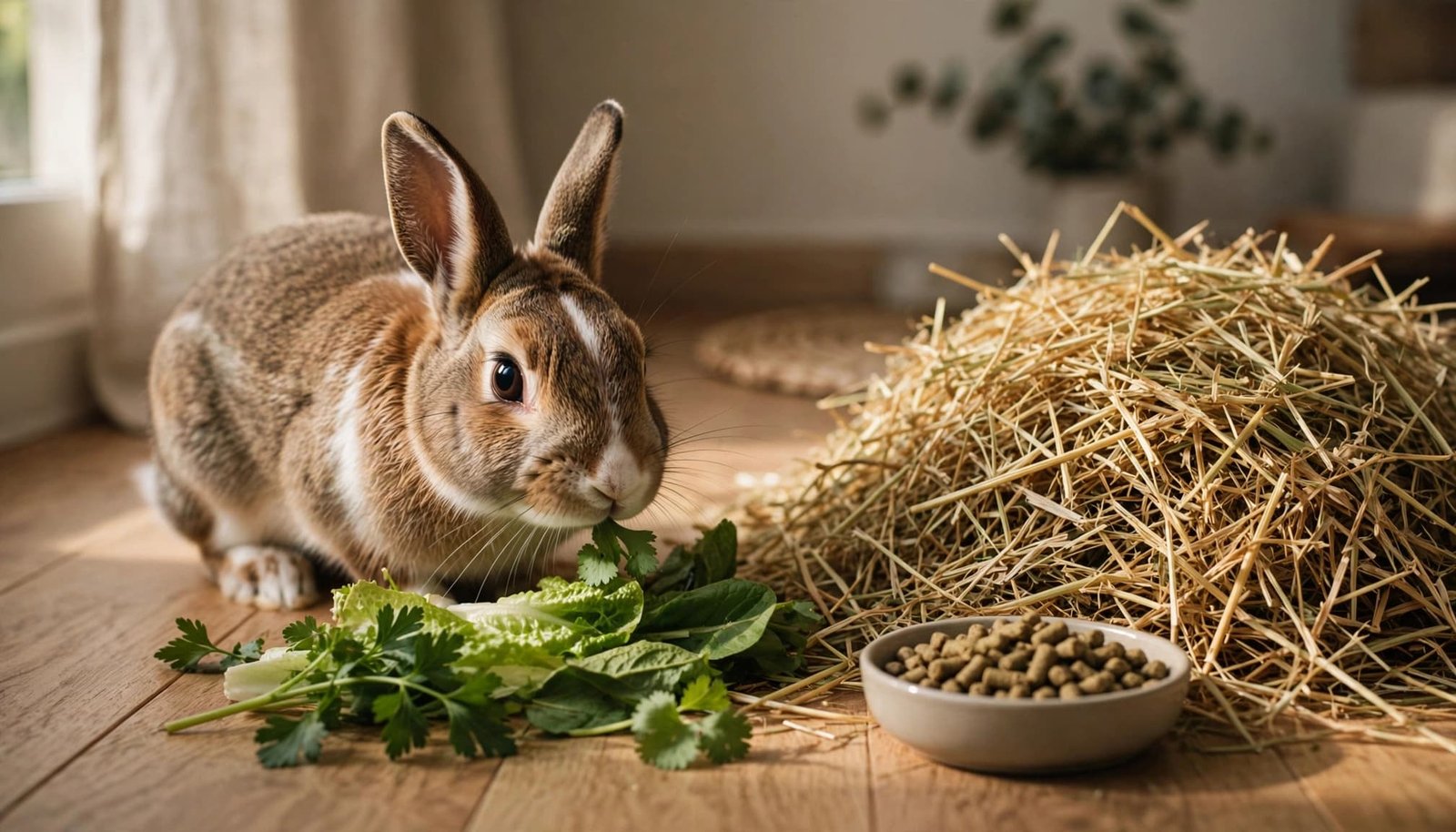
Keep hay and water available
Timothy, orchard, and meadow hay are common grass hay choices. Hay provides fiber for digestion and helps wear down your rabbit’s continuously growing teeth.
Refresh it regularly and remove wet or dirty hay. Your bunny should always have clean hay available, even when pellets or greens are served.
Offer fresh water in a stable bowl and wash it daily. Check that your rabbit is drinking rather than assuming a full bowl means everything is fine.
Match portions to your rabbit
Pellets are a measured addition to the diet. Choose plain rabbit pellets rather than colorful mixes containing seeds or sugary pieces.
Introduce suitable greens gradually, one at a time. Familiar options include romaine lettuce and herbs such as cilantro. Carrots and fruit belong in small, occasional treat portions.
Young rabbits and rabbits with health concerns may need a different feeding plan. Ask your veterinarian about age-appropriate portions.
Our guide to what rabbits should eat explains the everyday basics. During the move home, keep familiar foods consistent and avoid sudden diet changes.
5. Your Rabbit Needs Gentle Company
Rabbits are social animals with individual personalities. Some approach quickly, while others need more time before they feel comfortable.
Build trust at floor level
Sit on the floor and let your rabbit investigate you. Quiet company is often more welcome than reaching into their hiding place.
Keep early visits short, especially during the first week. Children can sit nearby, speak softly, and watch your bunny’s body language with adult supervision.
Many rabbits dislike being carried. A bunny who avoids being picked up can still enjoy gentle strokes and spending time beside you.
When lifting is necessary, support the chest and hindquarters securely. Never lift a rabbit by the ears or scruff, and ask your veterinarian to demonstrate safe handling.
Think about rabbit companionship
A compatible rabbit companion offers company that people can’t fully replace. The Rabbit Welfare Association’s welfare guidance includes companionship among rabbits’ everyday needs.
Adopting an already-bonded pair can make this easier. Ask the rescue about their relationship, health, and neutering status.
If you’re starting with one rabbit, discuss a future companion with a rabbit-experienced rescue or veterinarian. Introductions need care, and unfamiliar rabbits can fight.
Don’t put two rabbits together and hope they become friends. Prevent accidental breeding, and get support with a proper bonding plan.
6. Litter Habits and Grooming Need a Simple Routine
Many rabbits learn to use a litter box. Start with a roomy tray that allows your bunny to turn around comfortably.
A large cat litter box often works better than a tiny corner tray. Older rabbits may need a lower entrance.
Use rabbit-safe paper-based litter or suitable compressed wood pellets. Avoid clumping cat litter, clay litter, silica crystals, and cedar shavings.
Place fresh hay at one end of the box or in an accessible feeder above it. Many rabbits enjoy eating while using their bathroom spot.
Scoop wet litter daily and refresh the box as needed. If your bunny repeatedly chooses another corner, move the tray there. Accidents during the settling-in period are normal, so avoid punishment.
Grooming belongs in the routine too. Brush regularly, with extra attention during shedding. Long-haired rabbits need more frequent coat care.
Rabbits usually don’t need baths. If your bunny has a dirty bottom or trouble staying clean, ask your veterinarian about the cause.
Arrange a demonstration before your first nail trim. A little hands-on help makes the job easier for you and your furry friend.
7. Find a Rabbit-Experienced Veterinarian Before You Need One
Rabbit care differs from dog and cat care. Before bringing your first rabbit home, find a clinic that regularly treats rabbits.
Ask whether the clinic provides routine care, dental assessment, and spaying or neutering. Discuss vaccination needs for your region and book a checkup.
The RSPCA’s rabbit-care guidance covers health alongside housing, diet, and behavior. Your veterinarian can help adapt those basics to your bunny.
Find out where to go after hours. Keep the clinic details handy, and prepare a secure carrier with comfortable, nonslip footing.
Learn your rabbit’s normal appetite, droppings, activity, and resting posture. Those daily observations help you spot changes early.
A rabbit who stops eating or produces far fewer droppings needs prompt veterinary advice, even if they still look fairly alert.
Smaller droppings, unusual hiding, a hunched posture, or reduced movement also deserve attention. Don’t wait until the next morning if your bunny stops eating.
Avoid guessing with home treatments or human medicines. Call the clinic and follow their advice. A prepared care plan gives you somewhere to turn when something feels wrong.
Key Takeaways for New Rabbit Owners
Keep these basics in mind before adoption:
- Prepare a roomy, rabbit-proofed home with comfortable flooring and a hiding place.
- Keep suitable hay and water available, with portions matched to your bunny’s needs.
- Plan gentle companionship, daily cleaning, grooming, and rabbit-experienced veterinary care.
Common Questions Before Bringing a Rabbit Home
Can my first rabbit live indoors?
Yes. Indoor living can work well when your rabbit has safe space, good ventilation, comfortable footing, and daily exercise. Keep their resting area away from direct heat and busy walkways.
How long will my rabbit take to settle in?
Some rabbits explore quickly, while others need days or weeks to feel confident. Keep routines steady and let your bunny approach you. Continued eating and normal droppings matter more than immediate friendliness.
What should I buy first?
Start with a roomy enclosure, hay, familiar food, a water bowl, a litter box, safe litter, a hideout, and a carrier. Choose the essentials before spending on extra accessories.
Give Your First Rabbit a Comfortable Start
A happy start comes from steady, thoughtful care. Safe space, familiar food, and gentle company help your bunny feel secure.
Prepare the home and veterinary plan before adoption. Then give your long-eared friend time to settle in and show you their personality.
Those curious nose nudges are even sweeter when your rabbit feels safe beside you.