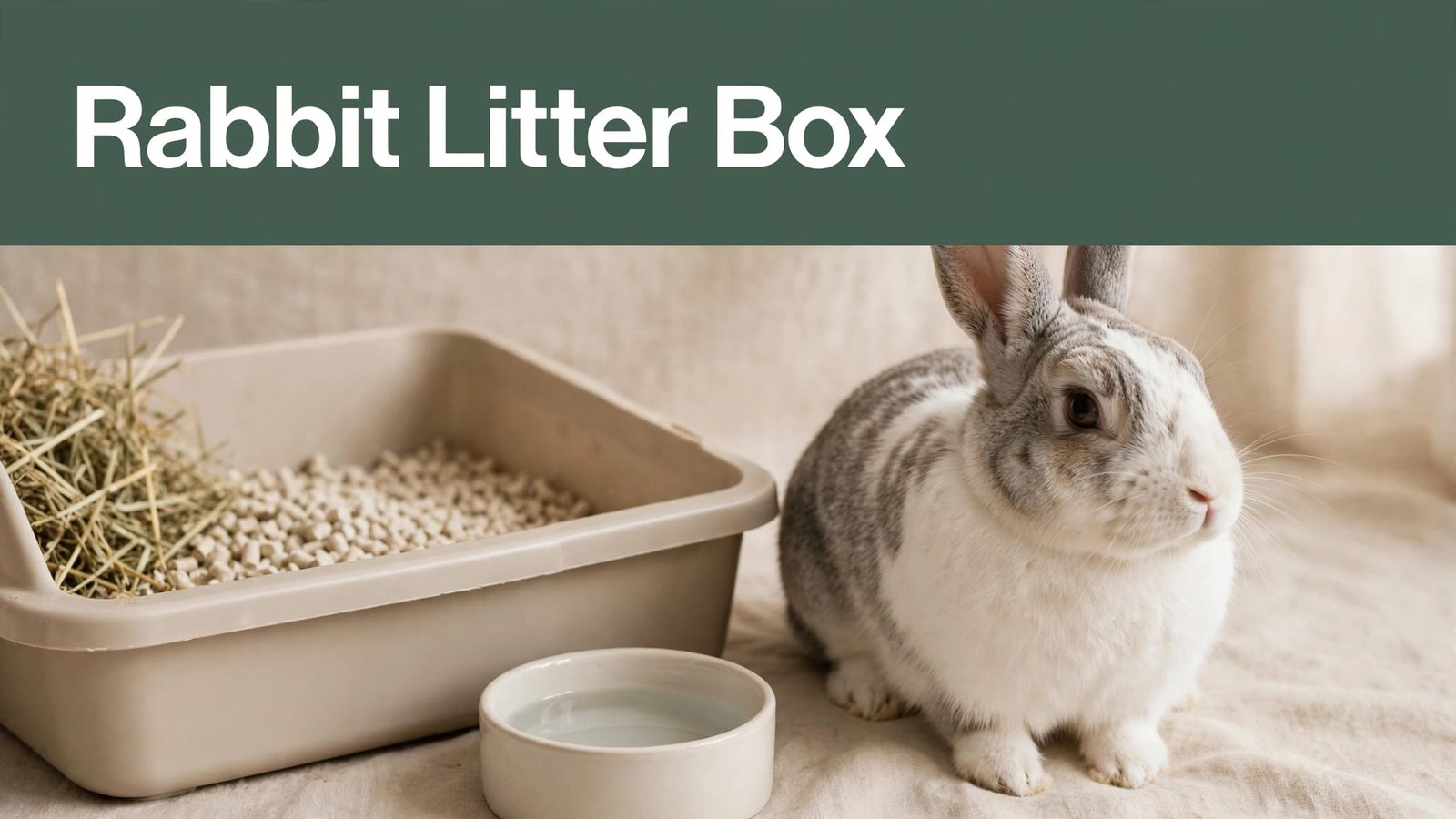
A good rabbit litter box makes daily bunny care so much easier. It keeps one part of the pen cleaner, gives your rabbit a familiar bathroom spot, and can make free-roam time less stressful.
The best litter box setup is usually simple: a roomy cat litter box, safe litter, fresh hay, and a nearby water bowl. A hay rack can keep hay accessible as an alternative. Your long-eared friend doesn’t need a fancy little corner tray to be happy.
Key Takeaways for New Rabbit Owners
Choosing a rabbit litter box doesn’t need to feel confusing. Keep these beginner basics in mind:
- Pick a box large enough for your bunny to turn around, sit, and eat hay comfortably.
- A large cat litter box or shallow storage tub often works better than a small corner box.
- Choose paper based litter or rabbit-safe compressed wood pellets.
- Avoid clumping cat litter, clay litter, silica crystals, corn cob litter, and cedar or pine shavings.
- Put fresh hay in one end of the box or in a hay rack right above it.
- Scoop wet litter and droppings daily, then fully refresh the box when needed.
- Use a low entry litter box for senior rabbits, small rabbits, or bunnies with sore hocks and other mobility issues.
Keep the box away from spilled water and the water bowl to help keep litter dry. A simple setup can quickly become one of your bunny’s favorite places to sit, snack, and use the bathroom.
Pick the Right Rabbit Litter Box Size and Shape
Small corner litter pans look cute in pet shops, but many rabbits outgrow them fast. Your bunny needs room to hop in, turn around, eat hay, and rest without hanging halfway over the side.
Bigger is usually better
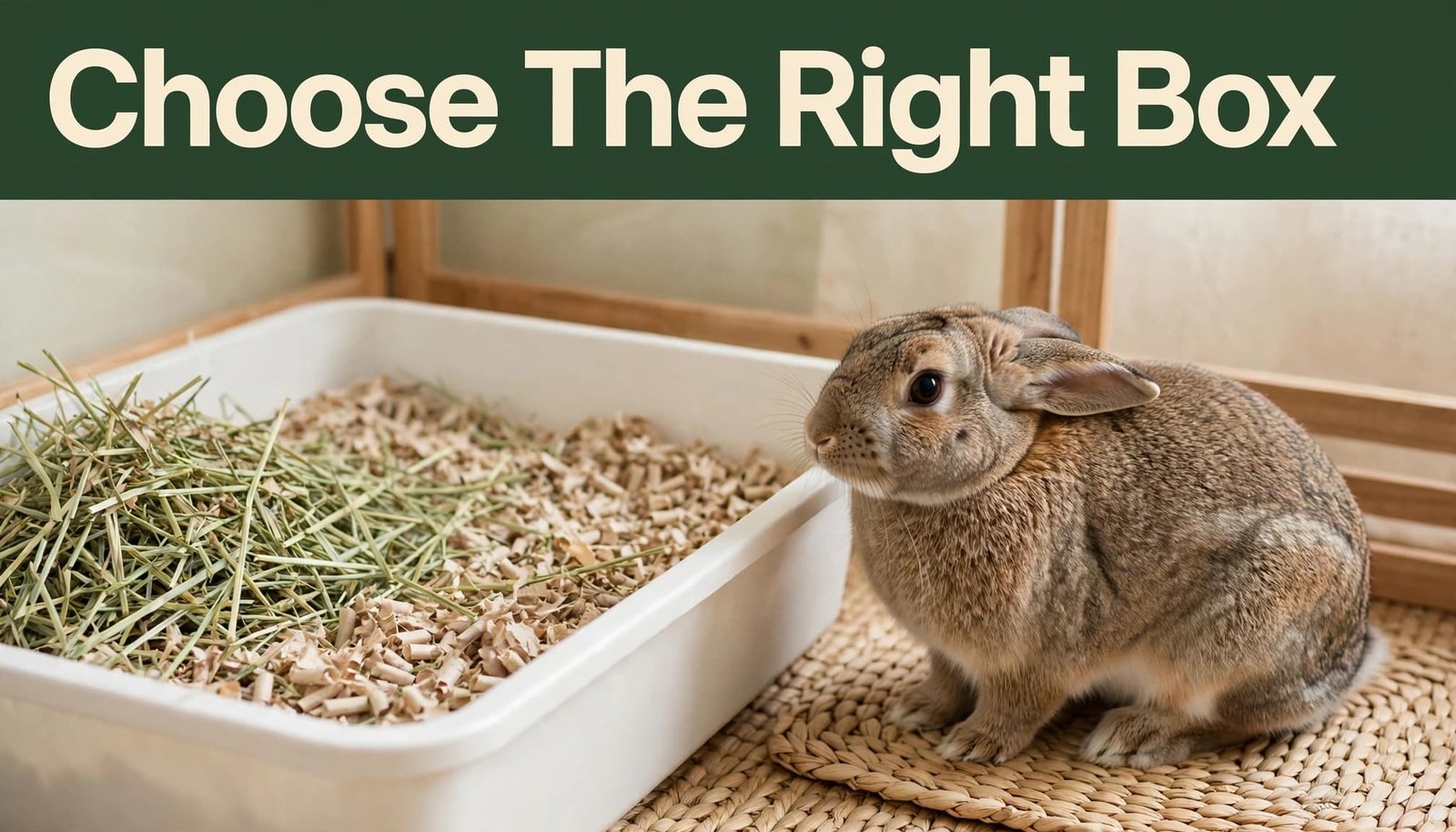
A large cat litter box is a great choice for most indoor rabbits. High-sided cat boxes help contain kicked litter and urine, while an open top makes it easy for your bunny to enter.
For a large breed, bonded pair, or messy digger, try a wide under-bed storage bin or a shallow cement mixing tub. Leave enough room for your rabbit to sit fully inside and reach a hay rack.
Compared with a cat litter box, a storage tub can offer more floor space for larger rabbits. A stainless steel litter box is another durable, easy-to-clean option, though it isn’t necessary for every owner.
Don’t worry if the box seems oversized at first. Rabbits often like to lounge in their litter area while they eat.
Choose an easy entry
Young, healthy rabbits can usually handle a normal cat box. Older rabbits, rabbits with arthritis, and bunnies with sore hocks may need a lower front edge.
A low entry litter box helps them step in without jumping. You can also cut down one side of a sturdy plastic storage tray, then smooth and cover any rough edge.
Skip boxes with tall sides on every edge if your rabbit hesitates to enter. Easy access matters more than a perfect-looking setup.
Safe Rabbit Litter Choices
Rabbits may nibble litter while eating hay, so the material inside the box matters. Choose an absorbent option with no added scent, perfumes, or harsh chemicals.
The Rabbit Resource’s litter guide lists recycled paper and compressed pellets as common rabbit-safe choices. Start with a shallow layer, then see what keeps your bunny dry and comfortable.
Good litter options for rabbits
Paper based litter is soft, absorbent, and easy for beginners to find. An unscented carefresh version may be an option, but choose one labeled for rabbits.
Paper products and suitable plain pellets are beginner-friendly rabbit safe bedding choices. Recycled paper pellets and loose paper bedding are both popular options.
Compressed wood pellets can also work well when they are plain, kiln-dried, and made for animal bedding. They control odor nicely and usually last longer than fluffy paper bedding.
Here is a quick comparison to make shopping easier:
| Litter type | Why it works | What to watch for |
|---|---|---|
| Paper pellets | Absorbent, low dust, easy to scoop | Some brands can be expensive |
| Loose paper bedding | Soft and comfortable | May need changing more often |
| Plain wood pellets | Good odor control and budget-friendly | Use only safe, untreated pellets |
| Hay-only box | Simple and natural for some rabbits | Needs frequent refreshing |
When shopping, check carefresh labels carefully and choose an unscented, rabbit-appropriate version.
Litters to leave on the shelf
Don’t use clumping cat litters. They can swell when wet and aren’t made for rabbits who may taste or inhale them. Clay litter and silica crystal litter are also poor choices.
Avoid pine and cedar shavings too. Their strong scent may seem fresh to us, but aromatic wood bedding isn’t a good choice for rabbits. This rabbit-safe litter overview explains why cat litter and aromatic softwoods should stay out of your bunny’s box.
A litter box should smell like clean hay, not perfume. Unscented products are the safer, simpler choice.
Put Hay Where Your Rabbit Wants It
Rabbits often poop and pee while they eat. It may sound funny, but it is one reason litter training can work so well.
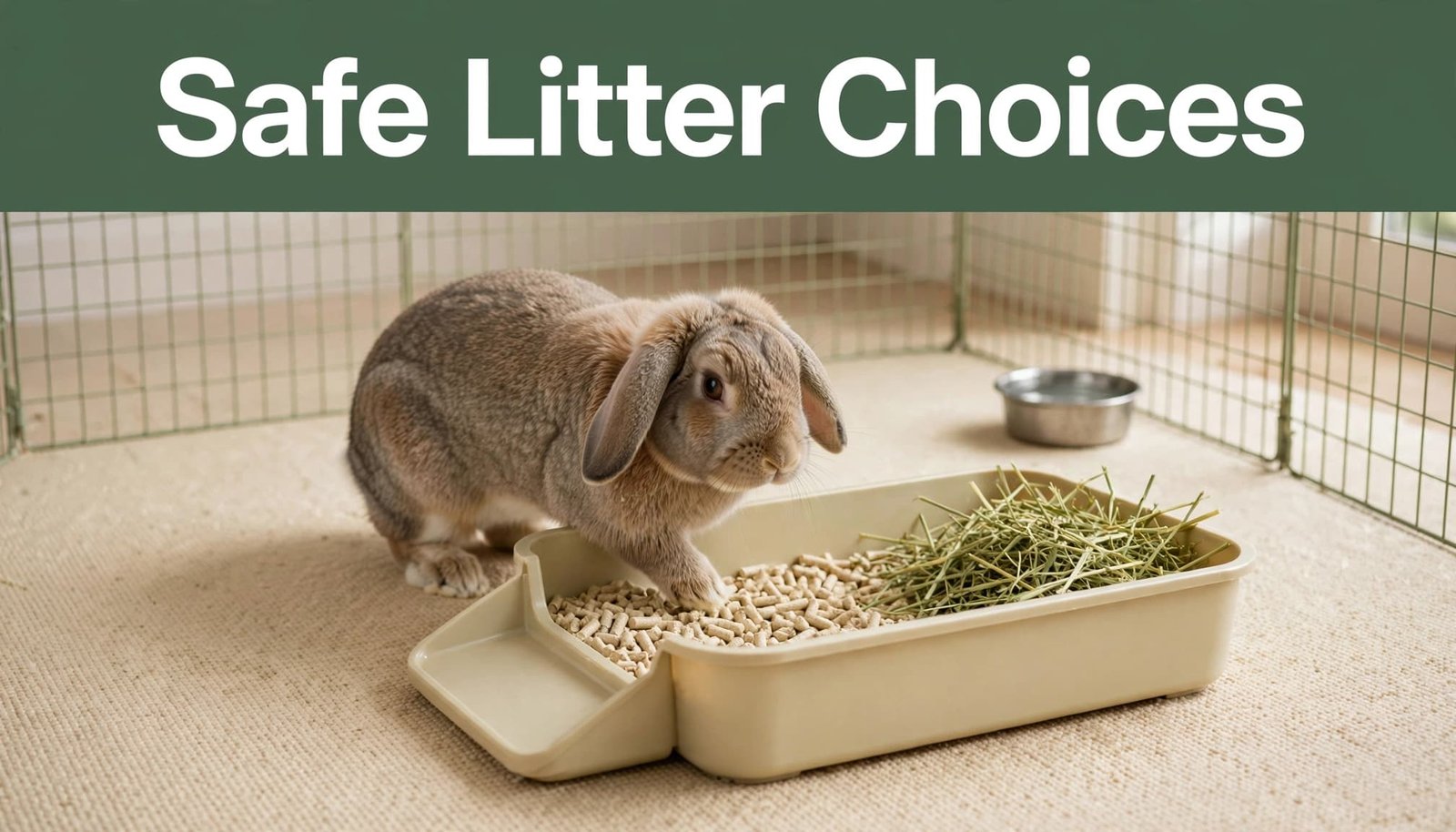
Fresh hay turns the rabbit litter box into a useful little bathroom and snack station. It gives your bunny a reason to return to the same spot throughout the day.
Hay inside the box or above it
Put a generous pile of clean grass hay at one end of the box. Timothy hay, orchard grass, and meadow hay are common choices for adult rabbits.
Some owners prefer a hay rack mounted directly above the box. This can reduce hay waste, although your rabbit should still be able to pull hay down easily.
Keep the hay fresh. Remove wet or soiled pieces daily and add a new handful. For help with daily feeding beyond the litter area, see our complete rabbit diet guide.
Find your bunny’s favorite corner
Place the box where your rabbit already chooses to pee. Most rabbits pick a corner of their exercise pen, room, or enclosure.
Keep the box away from the water bowl so spilled water doesn’t soak the litter. A quiet corner is often a good fit, but don’t move the box away from your rabbit’s chosen bathroom spot just because another corner looks tidier.
Litter Box Training Made Simple
Many rabbits learn litter habits quickly, especially after they are spayed or neutered. Hormones can make intact rabbits spray or leave territorial droppings, so training may take longer before that step.
Patience matters. Your bunny isn’t being naughty when an accident happens. They are still learning the space.
Start in a smaller area
Begin with one rabbit-proofed room or an exercise pen. Put the litter box in your rabbit’s preferred corner, keep free roam limited, and position the water bowl where it won’t make the training area damp.
If your bunny pees outside the box, blot it with a paper towel and place the towel in the litter box. Move stray droppings into the box too. The scent helps show your rabbit where the bathroom belongs.
Don’t punish, shout, or tap your rabbit’s nose. Calm routines work much better. House Rabbit Society’s litter training tips also recommend keeping hay available in or above the litter box with a hay rack.
Expand free roam space slowly
Once your rabbit uses the box reliably in one area, open one more bunny-proofed room. Add another litter box before your bunny needs it.
A second box is helpful near a favorite nap spot, under a table, or in a larger room. More than one box is not a training failure. It is often the easiest way to prevent accidents.
Give quiet praise when your bunny uses the box. A tiny rabbit-safe treat can help, but hay is usually reward enough.
Keep the Litter Box Clean Without Strong Chemicals
A dirty box can make a rabbit look for a cleaner corner. Daily spot cleaning takes only a few minutes and keeps odors from building up.
Oxbow Animal Health recommends daily spot cleaning and replacing the litter about once a week. Your rabbit may need a full change sooner if the box is small, shared, or heavily used.
A simple cleaning routine
Each day, remove wet litter, soiled hay from the box or hay rack, and extra droppings. Check the water bowl too, since spills can make the litter damp. Add fresh litter if the bottom is getting wet.
Once a week, empty the entire box and rinse it with warm water. White vinegar mixed with water can help loosen urine residue on plastic boxes, while a stainless steel litter box can be wiped clean. Rinse every box well and let it dry before adding new litter and hay.
Avoid bleach, heavily scented sprays, and strong cleaners around your bunny. If you use a rabbit-safe cleaner, follow its directions and keep your rabbit away until the box is rinsed and dry.
Keep a spare box if you can
A second litter pan makes full cleaning easier. Your bunny can use the clean box while the other one dries.
This is especially helpful for free roam rabbits and bonded pairs. A clean, dry, solid surface supports comfortable footing for rabbits prone to sore hocks, but it doesn’t treat a medical problem. A clean, familiar bathroom spot helps keep the rest of the home fresher too.
Grates, Sore Hocks, and Special Rabbit Needs
Some rabbit litter boxes include a plastic or wire grate that sits above the litter. The idea is to keep feet dry, but grates are not the best choice for every bunny.
Your rabbit should be able to sit comfortably in the box. Watch how they use it before deciding the grate is helping.
Are grated litter boxes safe?
A grate may keep some litter away from your bunny’s feet, but it can be uncomfortable when the openings are hard, narrow, or poorly sized. Rabbits with tender feet, thin fur on their soles, or sore hocks may find a hard grate especially unpleasant.
If your rabbit avoids the box, sits awkwardly, or has red skin on the bottoms of their feet, remove the grate and use a soft litter layer instead. A roomy open pan is often the easiest option.
Never use a wire-floor box as your rabbit’s main resting surface. Rabbits need solid flooring with comfortable traction.
Make room for two rabbits
Bonded rabbits often share a litter box, but one box may not be enough. Give each pair at least two roomy boxes, especially during the first weeks together.
Place them in separate corners so neither rabbit feels crowded. Clean more often because two rabbits can fill a box quickly.
For an older rabbit, choose a low-entry pan and keep it close to favorite resting spots. If litter habits suddenly change, or your rabbit strains, dribbles urine, stops eating, or seems uncomfortable, contact a rabbit-savvy veterinarian.
FAQ About Rabbit Litter Boxes
Can you use a standard cat litter box for a rabbit?
Yes. A large, open cat litter box is one of the easiest options for many homes. Choose a size that gives your bunny room to turn and eat hay inside.
Avoid using cat litter in the box. The container is fine, but the litter must be rabbit-safe.
How often should you change rabbit litter?
Scoop wet areas and remove soiled hay every day. Many single-rabbit boxes need a full refresh about once a week.
With carefresh and similar products, replacement depends on dampness, odor, box size, and use. Change it sooner if your bunny stops using it.
A larger box can stay cleaner longer. A shared box usually needs more frequent changes.
Why did my rabbit stop using the litter box?
First, check the setup. The box may be too small, too dirty, moved to a new spot, or missing fresh hay.
A spill or a moved water bowl can make the area damp or change your bunny’s routine. A new room, a new pet, or hormonal behavior can also cause accidents.
Sudden changes with signs of pain, urine dribbling, reduced appetite, or fewer droppings need veterinary attention.
Are pee pads okay for rabbits?
Pee pads can be tempting because they look convenient, but chewing them can be risky. A traditional box with safe litter and hay is usually the better everyday choice.
If you are considering them, read our guide to pee pads for rabbits before adding them to your bunny’s space.
A Comfortable Box Helps Build Good Habits
Your rabbit doesn’t need an expensive bathroom setup. A roomy, easy-entry box with safe litter, dry footing, and fresh hay is enough for most bunnies. A hay rack can help keep hay available.
Keep the litter box in a familiar spot and clean it often. Place the water bowl far enough away to prevent spills from soaking the box. With a little patience, your rabbit litter box can help your furry friend feel comfortable while keeping your home much tidier.