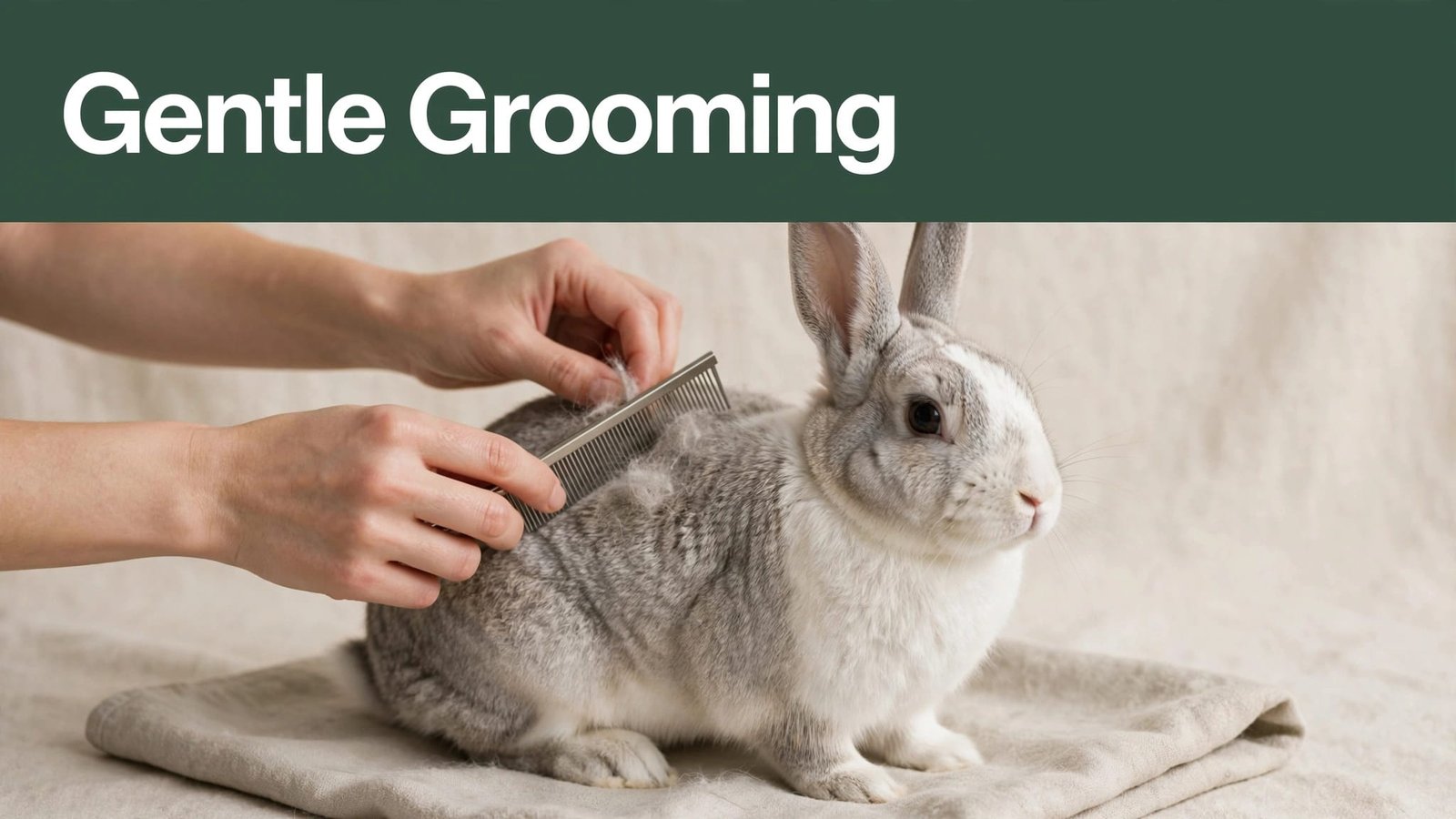
A small tangle can turn into a painful mat faster than many new rabbit owners expect. The safest way to remove rabbit fur mats is slow, gentle, and never rushed.
Your bunny’s delicate skin is especially vulnerable around the belly, legs, and rear. Don’t pull on a mat, don’t cut close to the skin, and don’t rush if your rabbit is frightened or sore. This calm beginner guide covers rabbit grooming basics and helps you handle mats with care.
Key Takeaways
- Small, loose tangles can often be eased apart with clean fingers and a fine-toothed comb, or a mat splitter used only on loose, visible fur.
- Never use household scissors to cut a mat from your rabbit’s coat.
- A mat that is tight against the skin needs help from a rabbit-savvy veterinarian or professional groomer.
- When you brush your rabbit, check behind the ears, under the chin, around the leg joints, belly, and rear.
- Keep the rear clean and dry. Wet, dirty fur can attract flies and lead to serious health problems.
First, Check What Kind of Mat You Are Dealing With
Not every case of tangled fur needs an urgent appointment. A loose knot near the surface of the coat is usually manageable with patience. A hard clump pressed against the skin is a different situation.
Small tangles are usually safe to work on
A small mat may feel like a little knot in the fur. You can often see and move the fur around it. Your rabbit should not flinch, kick, or pull away when you gently touch nearby fur.
These are the mats you can try to loosen at home. Work slowly, and stop after a few minutes if your bunny becomes restless. Short grooming sessions are much nicer for both of you.
Tight mats need a closer look
A tight mat may feel flat, firm, or stuck to the skin. Long-haired rabbits, including Lionheads and Angoras, can develop larger mats under the chin, behind the ears, around the bottom, and between the back legs.
If you cannot see where the fur ends and rabbit skin begins, don’t try to remove it yourself. Have an exotic veterinarian experienced with rabbits assess the mat. Rabbit.org’s safe mat removal guidance warns that scissors can cause serious cuts when used on mats.
A mat that pulls on the skin is not a small grooming problem anymore. It is a comfort and safety problem.
Set Up a Calm Grooming Space
Your bunny will notice if you’re worried or rushing. Choose a quiet time when your rabbit is already relaxed, such as after eating hay or resting.
Give your rabbit secure footing
Use a flat surface with good grip, such as a folded towel on the floor or a low table with someone nearby. Slippery floors can make rabbits panic because they feel unsteady.
Keep your supplies within reach before you begin. You don’t want to leave your bunny sitting alone while you look for a comb. A soft towel can also help your rabbit feel settled without needing a tight wrap.
Handle tasks such as nail trims in a separate calm session, rather than combining them with mat removal.
Let your bunny have breaks
Start with one or two minutes of brushing. Offer a little praise, a head rub if your bunny enjoys it, or a rabbit-safe leafy green afterward.
Watch for stress signs like trying to escape, thumping, hiding, grunting, biting, or freezing in place. Stop and give your furry friend a break. Grooming shouldn’t become a battle.
Choose Rabbit-Safe Grooming Tools
You do not need a drawer full of fancy tools. A few gentle grooming supplies can help you remove loose fur before it becomes tangled fur.
Tools that help with small mats
A fine-toothed comb is useful for checking the coat and easing apart small knots. Your fingers are often the safest first tool because you can feel how close the mat is to the skin.
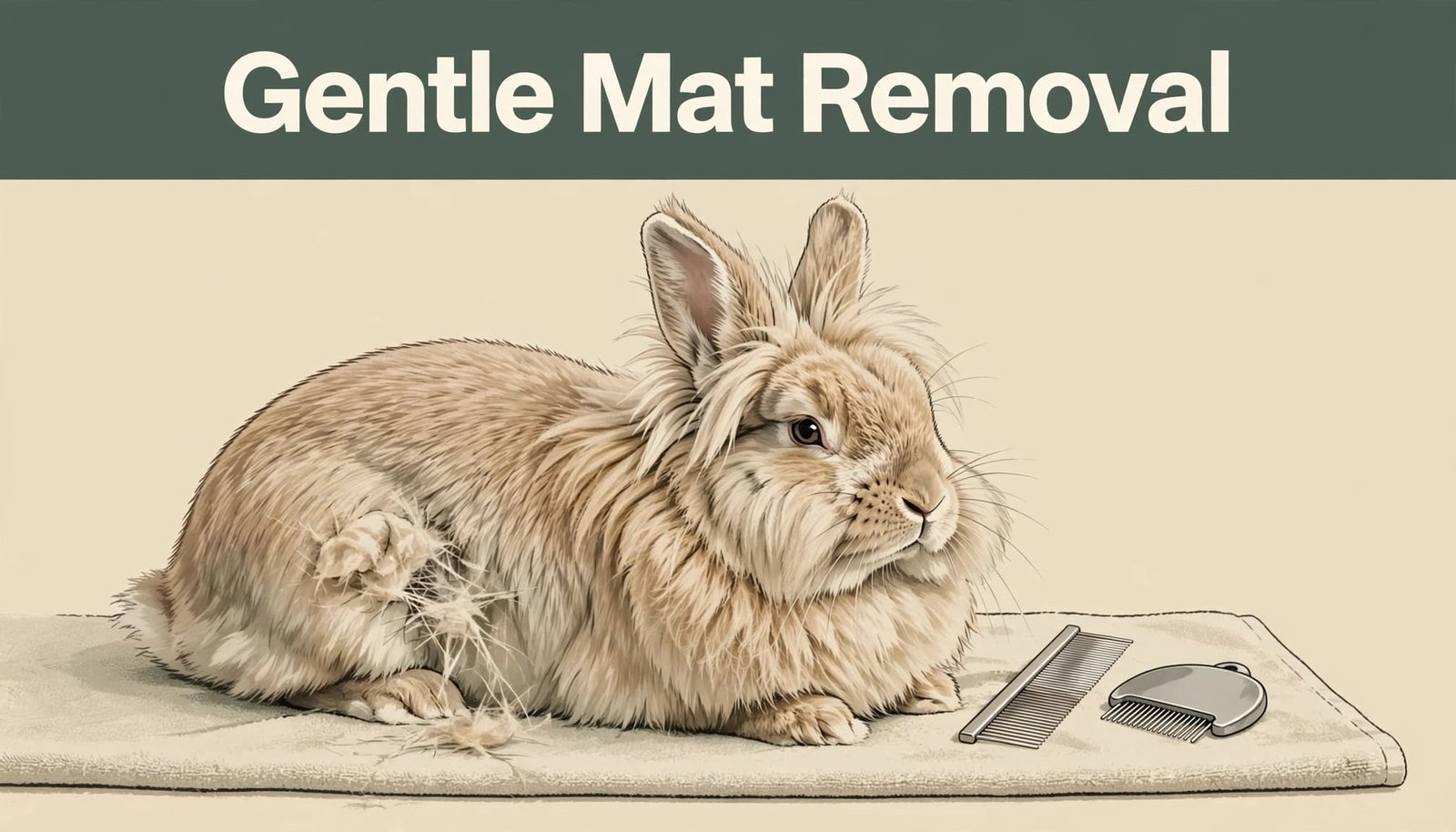
A flea comb can help you check for fleas, but it should never be used to dig into a mat. For a small mat that will not separate, a rounded mat splitter or mat rake may help. These tools divide a mat gradually rather than cutting straight across it. Use them only when you can clearly see the fur and work with very light pressure.
A soft-tipped slicker brush can lift loose fur from the outer coat. It is not meant for digging into a tight knot. A tiny amount of baby cornstarch powder may help with surface friction, but avoid creating dust your rabbit could inhale. It is not a substitute for professional help. For more ideas, keep a few essential rabbit grooming supplies ready in your bunny care area.
Why scissors are a bad choice
Never slide scissors under a mat. Rabbit skin can get pulled up inside the tangled fur, even if the mat looks far away from the body.
One quick snip can cause a painful cut that needs veterinary care. Small craft scissors, blunt-ended scissors, and nail scissors are not safer choices. Tools used for nail trims are unrelated to mat removal and should never be used on a mat. If a mat seems like it must be cut, it is time to call a rabbit-savvy professional.
How to Remove Rabbit Fur Mats Safely
When the mat is small, loose, and clearly away from the skin, you can begin. Go gently. You may only loosen part of the knot in one session, and that’s okay.
Separate the fur with your fingers first
Place your fingertips at the outside edge of the mat. Gently pull a few hairs apart at a time. Don’t grab the whole clump and pull.
If you can see the skin, rest two fingers between the mat and your rabbit’s body. This helps prevent the knot from tugging on the skin while you work. If you can’t see the skin, stop.
A tiny amount of baby cornstarch powder may help dry, loose fur slide apart, but use it only if your rabbit stays calm. Keep it away from the nose, eyes, and mouth, and don’t let your bunny inhale it.
Comb from the ends toward the skin
Start at the very tips of the tangled fur. Use a fine-toothed comb for one small section, then move a little closer to the mat. Never begin at the skin and pull outward.
Try this simple routine:
- Use your fingers to loosen the outer edge of the tangle.
- Comb only the loose strands at the end of the mat.
- Pause if the comb catches or your bunny reacts.
- Return to your fingers and separate another tiny section.
- Brush the area lightly once the mat is gone.
If the knot doesn’t get smaller after a few gentle attempts, leave it alone. Trying harder is how a simple tangle becomes a sore spot.
Clean the Belly and Rear Without a Full Bath
Mats around the rear can happen when urine, soft droppings, or damp bedding catch in the fur. This area needs gentle attention because it is sensitive and hard for rabbits to keep clean when they are unwell.
Spot-cleaning the dirty area
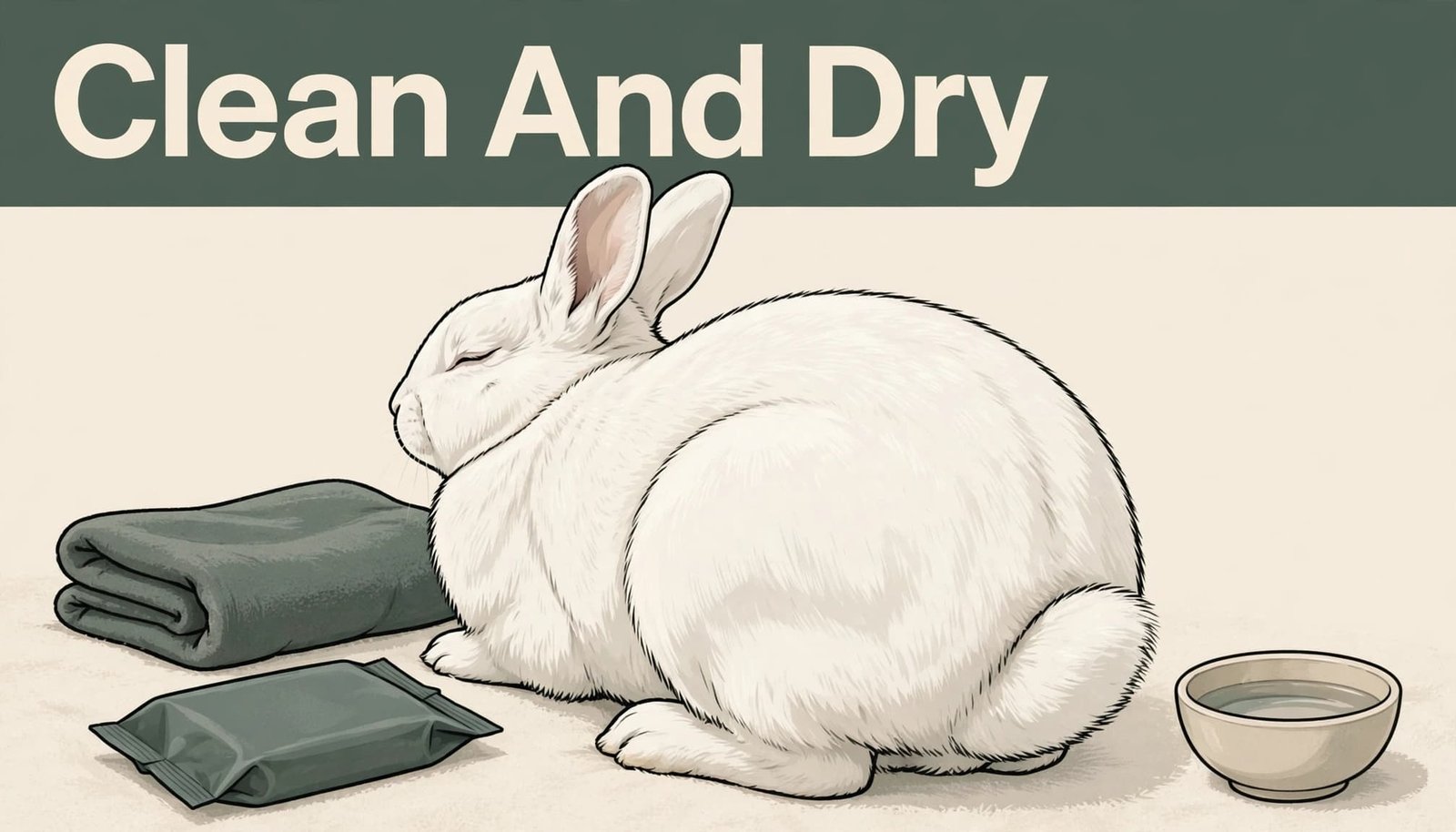
For a small amount of surface dirt, use a soft cloth lightly dampened with warm water or an unscented, alcohol-free pet wipe. During spot-cleaning, wipe only the fur, not the skin. Wipe gently around the sensitive rear area and scent glands, never scrub, then dry it fully with a towel.
Gentle spot-cleaning is safer than soaking your rabbit. Don’t use rabbit shampoo, because rabbits generally shouldn’t be washed with it. An improvised dry bath isn’t appropriate for contaminated or sore skin, and baby cornstarch powder can worsen wet, urine-soaked, or irritated fur.
A clean litter box and dry flooring also help prevent new rear mats. You can find more simple rabbit cleaning and brushing tips for keeping the coat fresh between grooming sessions.
Know when a butt bath is not enough
A very dirty bottom, red skin, strong urine smell, or fur soaked with urine needs veterinary advice. These problems can point to pain, dental trouble, arthritis, obesity, urinary issues, or a diet problem. A butt bath may not be safe or effective in these cases.
The PDSA’s guidance on urine scald notes that badly soiled rabbits may need clipping, cleaning, and drying by a vet. A professional can remove contaminated fur without causing a skin injury.
Large Sheet Mats Need Professional Help
A sheet mat is a wide, dense layer of tangled fur that sits close to the body. It may cover the belly, rear, chest, or side and hide sensitive structures, including scent glands. Don’t try to comb through it or pull it apart.
Call a rabbit-savvy veterinarian if the skin may be damaged or contaminated. Otherwise, a professional groomer can assess the area and use safe clipping methods if needed. This is much safer than trying electric clippers at home around skin you can’t see.
Get help promptly if you notice broken skin, swelling, bleeding, a bad smell, or maggots or fly eggs. Dirty rear fur and urine scald can attract flies. The Royal Veterinary College’s flystrike owner guide explains why rabbits with dirty or damaged skin are at higher risk.
Flystrike is an emergency. Your bunny needs veterinary treatment right away.
Prevent New Mats With Simple Rabbit Fur Care
Prevention is easier than trying to remove rabbit fur mats later. A few minutes of regular brushing helps catch loose fur before it knots together.
Brush more often during shedding
Most rabbits need brushing at least once a week. Long-haired rabbits often need several sessions each week. During shedding season, daily gentle brushing may be needed.
Brush in the direction the hair grows. Check behind the ears, beneath the chin, around the legs, near the scent glands, and under the tail. These hidden spots are where mats love to start.
Keep the rear dry with gentle spot-cleaning when needed. A dry bath isn’t a routine substitute for proper cleaning or veterinary care.
The Rabbit Welfare Association’s grooming advice is a helpful reminder that regular coat checks, nail trims, and grooming are part of everyday rabbit care.
Loose fur is worth removing
Rabbits groom themselves often, so loose fur can be swallowed. Most fur passes through the digestive system, but swallowed fur can sometimes form hairballs. In severe cases, hairballs may contribute to gastrointestinal blockages.
Cornell University explains that rabbit hairballs can sometimes become serious. These risks aren’t inevitable, but a rabbit that stops eating, produces fewer droppings, or becomes unusually quiet needs prompt veterinary care.
Daily hay, fresh water, movement, and regular brushing all support healthy digestion and reduce how much fur your bunny swallows.
Frequently Asked Questions
Can I pull a mat apart quickly if my rabbit does not complain?
No. Rabbits often hide discomfort. Pulling can stretch the skin and make the mat tighter. Work a few hairs at a time with your fingers, then stop if the knot does not loosen.
How often should I brush a long-haired rabbit?
Check the coat every day and brush several times each week. During shedding season, many long-haired rabbits need a gentle daily brush. A quick check behind the ears and around the rear can prevent a bigger problem.
What if my rabbit bites or fights grooming?
End the session before anyone gets hurt. Start again later with a shorter session and a calmer setup. Keep scent glands and nail trims separate from mat removal. If mats keep forming, ask a rabbit-savvy vet or groomer for help.
Can I use baby cornstarch powder or give my rabbit a dry bath?
Don’t improvise either option around wet, sore, or contaminated skin. A dry bath can trap debris against irritated skin, so ask a rabbit-savvy vet before using any powder or cleaning method.
Can swallowed loose fur cause hairballs?
Rabbits can swallow loose fur, but hairballs may contribute to a dangerous blockage. Contact a vet promptly if your bunny stops eating, produces fewer droppings, or seems painful.
Can a groomer remove every mat?
An experienced professional groomer may be able to help with coat care, but a vet is the better choice if the mat is near the skin, the rear is dirty, or there are sores. Gentle spot-cleaning may help with minor messes, but your bunny may need medical care as well as grooming.
A Comfortable Coat Starts With Gentle Care
A small mat is easier to handle when you catch it early. Use your fingers first, work from the ends of the fur, and never risk your bunny’s delicate skin with scissors.
Regular brushing, dry living areas, quick checks of hidden coat areas and scent glands, and routine nail trims keep your long-eared friend cleaner and more comfortable. Keep the rear dry with spot-cleaning. A dry bath isn’t a substitute for safe cleaning or professional care, so choose professional help when a mat is tight, painful, or dirty.


I honestly did not expect such a smooth experience when I first clicked on the homepage but here I am hooked. The atmosphere feels warm and inviting like sitting at a favorite neighborhood lounge. Every game is crafted with so much attention that I lose track of time in the best way possible. Step into the action at {spam removed} and discover why everyone is talking about it.
thanks for stopping by…does spamming casino links ever work? Genuinely curious…casinos are just BAD for the soul…thanks for stopping by though