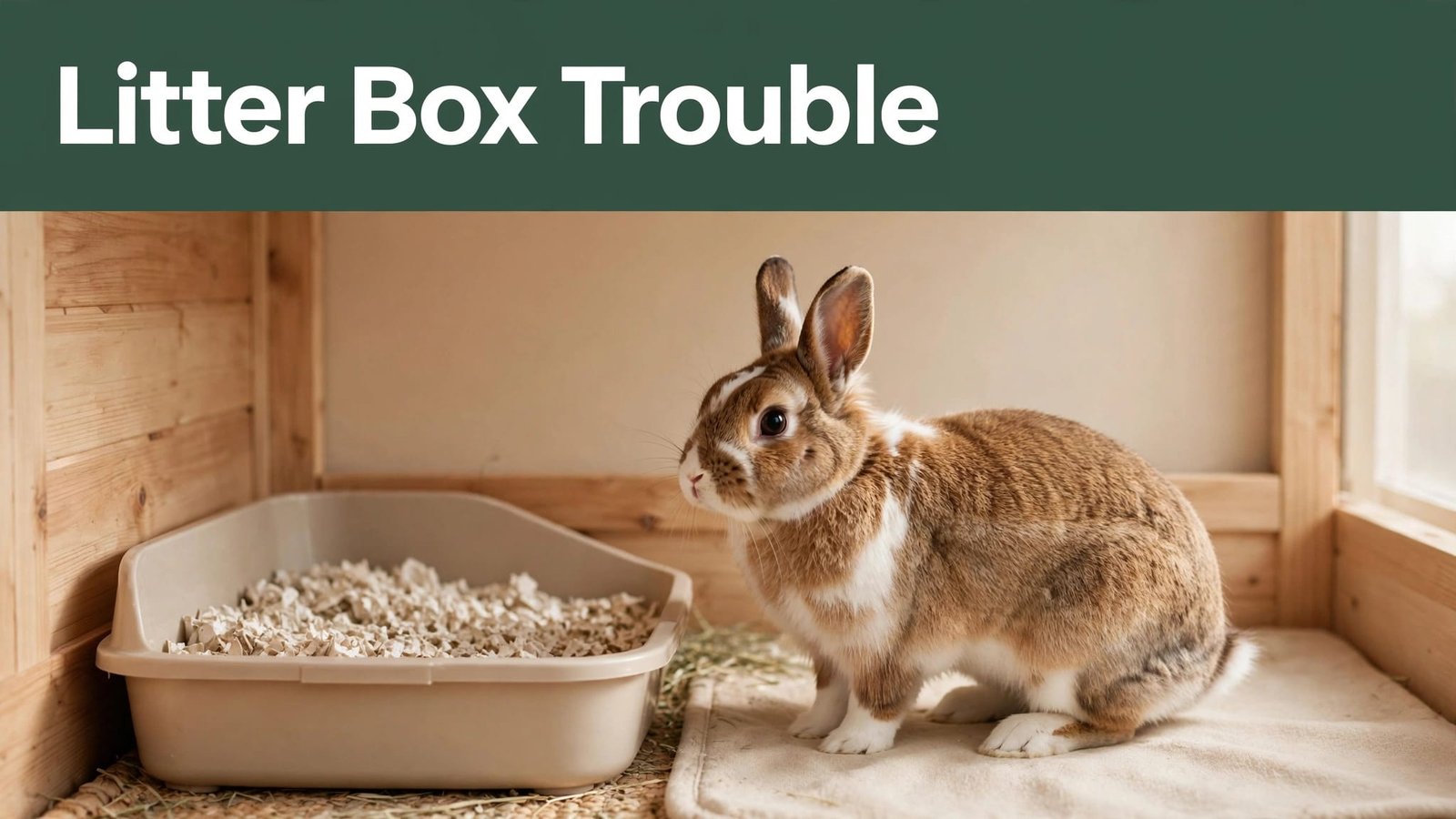
Litter box accidents are common, and they usually have a clear reason. Your bunny isn’t being naughty or trying to make a mess. Something about the setup, routine, territory, stress level, or health may have changed.
If you’re asking, “Why Is My Rabbit Peeing Outside the Litter Box?”, start with the basics and watch for sudden changes. A roomy, clean box in the right corner fixes many problems, but a rabbit who suddenly stops using the box may need veterinary care.
A calm reset, a smaller space, and a little patience can help your long-eared friend get back on track.
Why Is My Rabbit Peeing Outside the Litter Box?
Rabbits often choose one corner for pee and most of their droppings. That natural habit makes litter training possible, but it doesn’t mean every bunny learns overnight. The Rabbit Litter Training FAQ recommends putting the box where your rabbit already prefers to go.
First, think about your rabbit’s history. A bunny who has never used a box reliably may need more training space and a better setup. A previously trained rabbit who suddenly starts peeing elsewhere needs a closer look.
Hormones can also play a part. Intact rabbits may spray urine or leave droppings around a room to claim territory. Spaying or neutering often improves litter habits, along with preventing accidental litters.
Small household changes can cause a setback too. A new pet, visitors, moved furniture, a dirty box, a new room, or a changed schedule may make your bunny choose a different bathroom corner.
Common litter box and behavior problems
The litter box may be too small, dirty, or poorly placed
Tiny corner trays look cute, but many rabbits outgrow them fast. Your bunny needs room to turn around, sit fully inside, eat hay, and use the bathroom without hanging over the edge.
A large open cat litter box, shallow storage tub, or low-entry pan is often a better fit. Put it in the corner your rabbit already uses, even if that isn’t the corner you would have picked.
Keep the box away from a water bowl or bottle that can spill. Remove wet litter and dirty hay each day. Most single-rabbit boxes need a full refresh about once a week, or sooner when they smell damp or fill quickly.
Stress, territory, and changing hormones can cause accidents
Territorial marking looks different from an ordinary training accident. An unspayed or unneutered rabbit may spray on walls, leave scattered droppings, or mark more after entering a new room or meeting another rabbit.
Moving house, guests, bonding sessions, a new pet, and too much free-roam space too soon can also make a bunny feel unsettled. Keep routines simple, introduce changes slowly, and give your rabbit familiar places to rest.
Talk with a rabbit-savvy veterinarian about spaying or neutering if your bunny is intact. Never punish accidents. Shouting, tapping a rabbit’s nose, or chasing them to the box can make a fearful bunny even more stressed.
A sudden change may point to a health problem
A rabbit that suddenly pees outside the box may be in pain. Urinary trouble, bladder problems, arthritis, sore feet, reduced mobility, obesity, and other illnesses can make the box hard to use.
Call a veterinarian promptly if you notice straining, dribbling urine, blood, a strong urine change, a wet rear, red or irritated skin, poor appetite, fewer droppings, lethargy, or signs of pain. UC Davis lists straining, blood in urine, lethargy, and appetite loss as warning signs that can point to illness.
Litter training tips don’t replace an examination when your bunny’s behavior changes suddenly.
How to fix rabbit litter box accidents with a simple reset
A simple reset gives your rabbit a clear bathroom area again. Start in one rabbit-proofed room or an exercise pen instead of allowing full free roam right away.
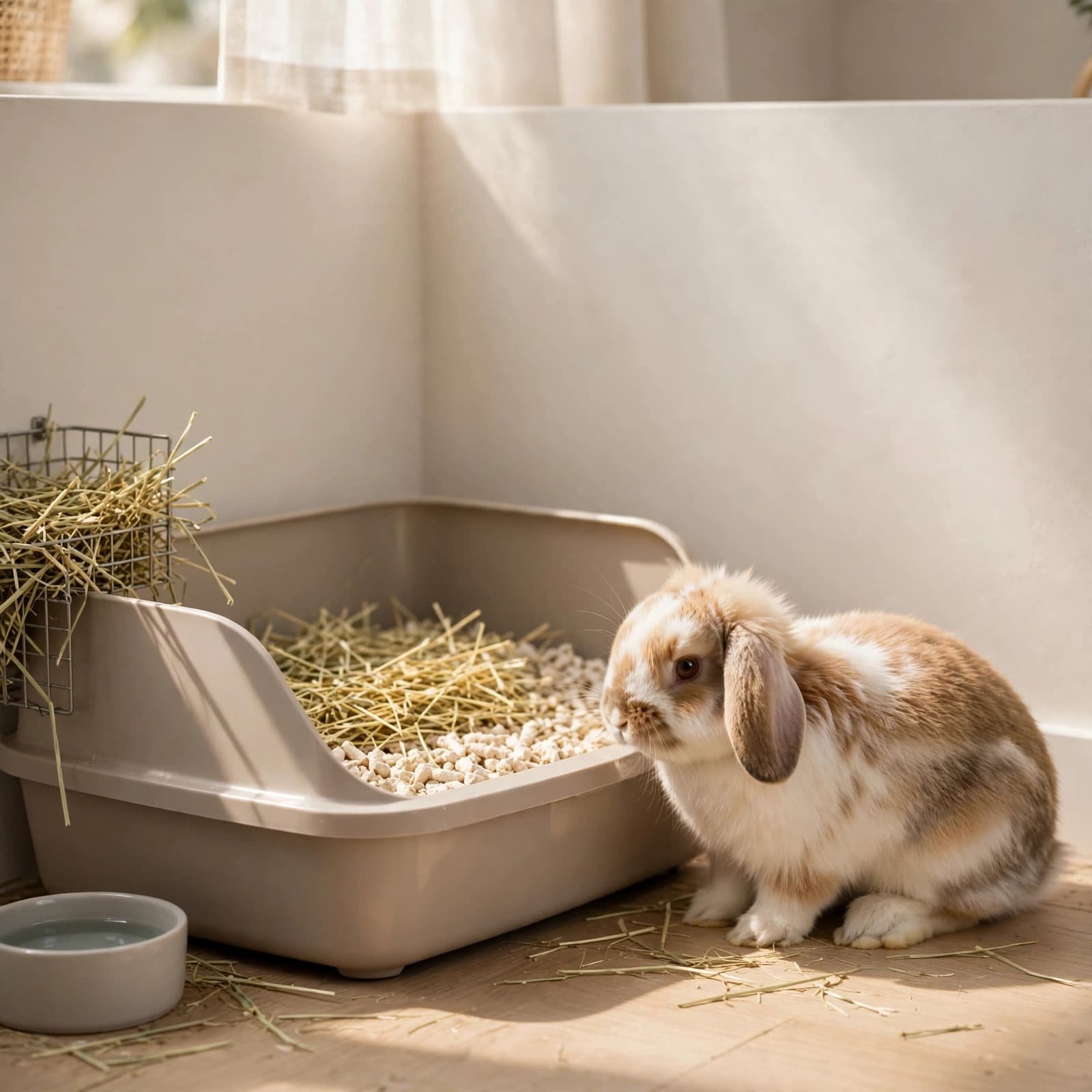
Use this easy routine for a few days or longer if needed:
- Put the litter box in the corner where your bunny has been peeing.
- Blot fresh urine with a paper towel, then place the towel in the litter box.
- Move stray droppings into the box so the scent points your rabbit to the right place.
- Keep hay available in or above the box, and keep the water area dry.
- Offer quiet praise or one tiny rabbit-safe treat when your bunny uses the box.
The House Rabbit Society’s litter training advice also recommends rewarding rabbits for using the box. Once your bunny is reliable in one area, open one more rabbit-proofed room. Add another box before accidents begin.
Clean accidents without erasing the training clues
Move the scent-marked paper towel and a few stray droppings into the litter box first. Then clean the floor well so your rabbit isn’t drawn back to the same spot.
Warm water and a mild rabbit-safe cleaner are usually enough for everyday messes. A diluted white vinegar solution can help loosen dried urine residue on plastic boxes. Rinse thoroughly and let the area dry before your bunny returns.
Skip bleach, heavy perfumes, and strongly scented sprays around rabbits. Their noses are sensitive, and strong odors can make the bathroom area less inviting. A spare litter box is helpful while the main box is being washed and dried.
Use more than one box when your rabbit has more space
More boxes do not mean litter training failed. They often mean your bunny has a larger home and needs an easy bathroom spot nearby.
Add a second or third box under a favorite table, near a nap area, or in a newly opened room. For bonded rabbits, start with at least two roomy boxes in separate corners. Shared boxes fill fast and may make one bunny feel crowded.
Senior rabbits and bunnies with arthritis, sore hocks, or limited mobility need a low-entry option. Put it close to their favorite resting place so getting to the box doesn’t require a big hop.
Choose a safer litter box setup for better habits
Your rabbit doesn’t need an expensive bathroom setup. A roomy container, dry footing, safe litter, and fresh hay are enough for most bunnies.
Choose an open box with a solid floor that is easy to clean. A shallow layer of unscented paper-based litter or rabbit-safe compressed wood pellets can absorb urine. Add hay on top, or use a hay-only box if that works better for your bunny.
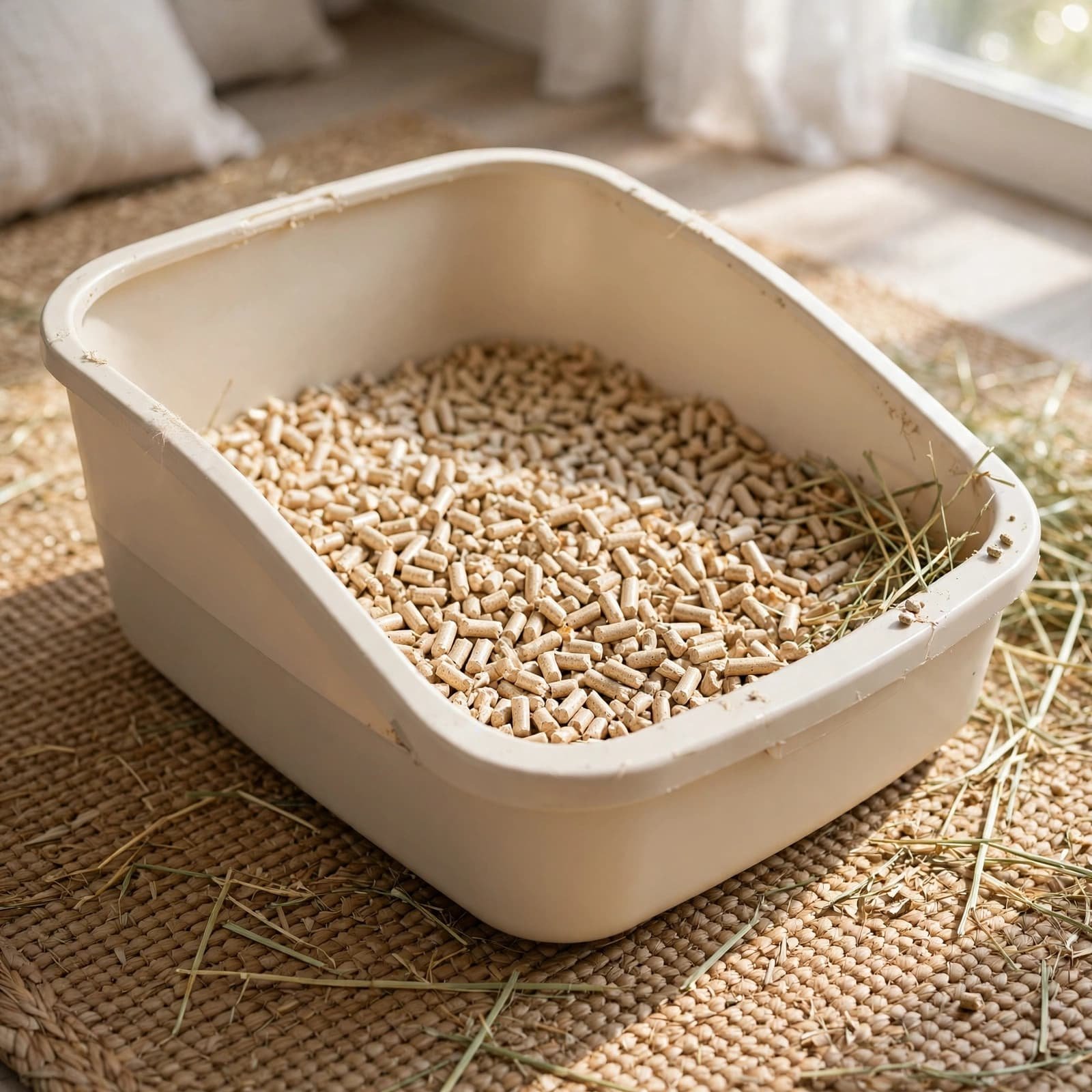
Avoid clumping cat litter, clay litter, silica crystals, corn cob litter, cedar, pine shavings, perfumes, and harsh chemicals. Rabbits may nibble litter while eating hay, so simple and unscented is the safer choice.
Why hay belongs in or above the litter box
Rabbits often pee and poop while eating. It sounds funny, but it gives you a useful training tool. Fresh hay gives your bunny a reason to return to the litter box throughout the day.
Timothy hay, orchard grass, and meadow hay are common choices for adult rabbits. Put a generous handful at one end of the box, or use a hay rack mounted directly above it.
A rack can reduce waste, but your rabbit should still be able to pull hay down easily. Remove wet or soiled hay every day and replace it with fresh hay. A box should smell like clean hay, not stale bedding.
Are pee pads a safe solution for rabbit accidents?
Pee pads can be a temporary backup during short travel or a limited cleanup situation. They are not the best everyday toilet setup for most rabbits.
A chewing bunny can swallow the absorbent material inside a pad. That can create a serious blockage risk. If you use one, choose an unscented pad, secure it where your rabbit can’t pull at it, and inspect it often for bite marks.
Replace pads quickly when damp. Wet pads can hold odor, bacteria, and ammonia. A proper litter box with rabbit-safe litter and hay is more natural, easier to manage, and more dependable over time.
When should a veterinarian check your rabbit’s litter habits?
A veterinary visit matters most when a rabbit who was reliably trained suddenly stops using the box. Don’t wait it out if your bunny strains, dribbles urine, has blood in the urine, develops urine scald, stops eating, produces fewer droppings, or seems weak and uncomfortable.
Rabbits can hide illness well. By the time they look unwell, they may need prompt care. Mobility problems, dental pain, urinary disorders, obesity, and reproductive hormones can all affect litter habits.
A sudden bathroom change plus reduced appetite or fewer droppings is a health concern, not a training problem to solve at home.
What to observe before the appointment
Write down when the accidents started and where they happen. Note how often your rabbit urinates, whether water intake changed, and whether appetite, droppings, movement, or behavior look different.
Bring details about the litter type, box size, cleaning routine, diet, free-roam space, and recent household changes. Let the veterinarian know whether your bunny is spayed or neutered.
These small details can help separate a setup problem from a medical issue.
Choose a rabbit-savvy veterinarian
Rabbits aren’t small cats or dogs. They have different digestive, dental, pain-management, and medication needs. A veterinarian who regularly sees rabbits is the better choice for routine visits and urgent problems.
If your bunny has new accidents or possible incontinence, Rabbit Advocates recommends a bunny-savvy veterinarian. Find a rabbit-experienced clinic before an emergency happens, and keep its contact information somewhere easy to find.
Keep good litter habits going after the reset
Once your bunny is using the box reliably, keep the routine steady. Don’t remove extra boxes too quickly, especially in a large home or a bonded pair’s space.
Clean wet litter and dirty hay daily. Refresh the box before it becomes smelly or damp. Keep the box in a familiar spot, and avoid moving furniture or expanding free-roam space all at once.
A clean, roomy bathroom corner is a comfort item for many rabbits. Your bunny may eat hay, relax, and spend time there even when they don’t need to pee.
A calmer routine for you and your bunny
Most rabbit litter box accidents improve with a few practical changes. Rule out illness first when the behavior is sudden, then make the box roomy, easy to enter, clean, and full of fresh hay.
Place the box in your rabbit’s chosen corner, limit free roam during retraining, and open up more space slowly. Accidents are part of learning, never a reason for punishment.
Patience and consistency help your bunny feel safe enough to build better litter habits.