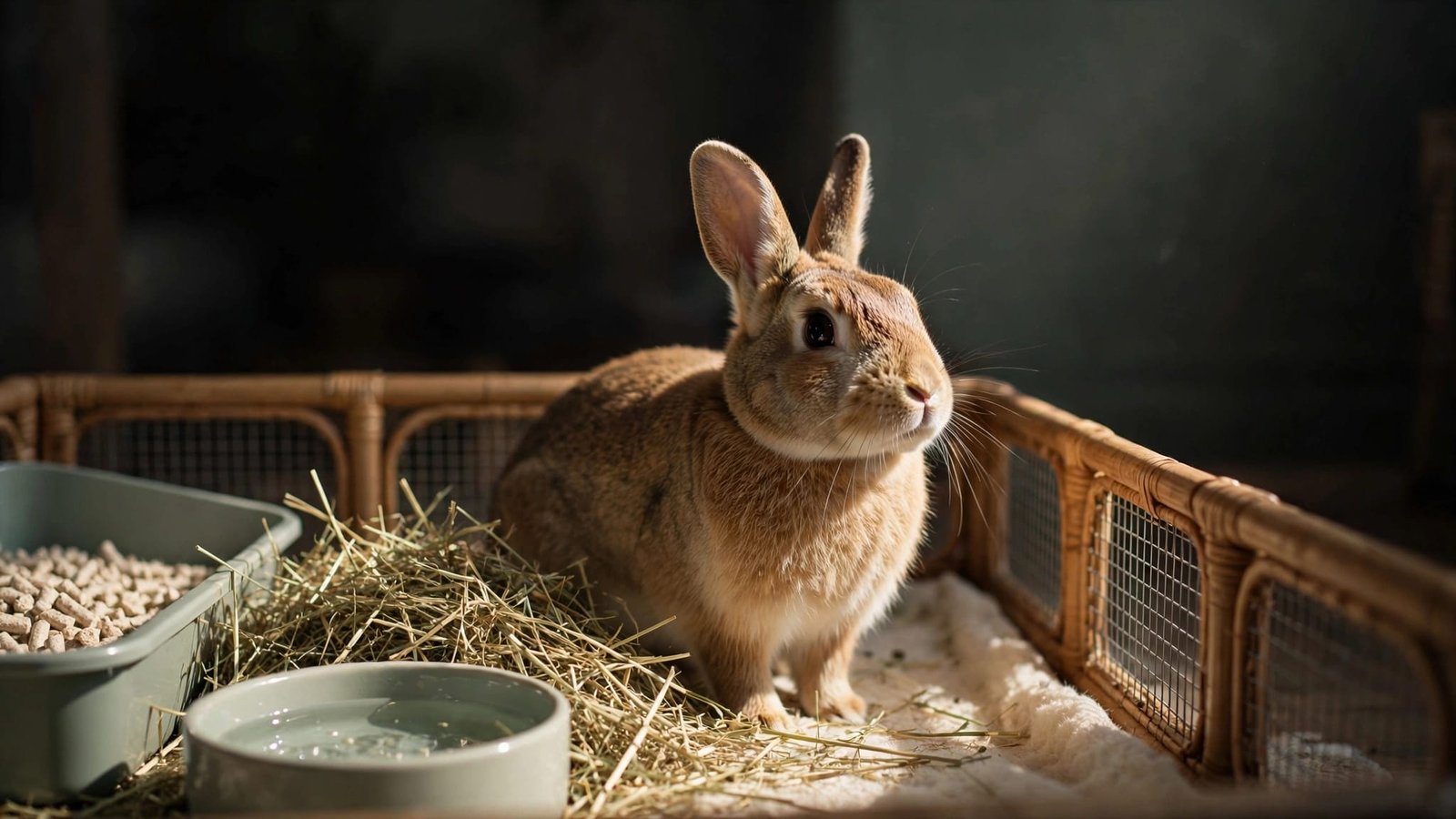
Your bunny can be hopping around one minute and sitting still the next. How do you know what’s normal for your pet rabbit? A simple rabbit daily care routine helps you notice the small things: whether your furry friend is eating hay, drinking water, using the litter box, and acting like themselves.
You don’t need a complicated schedule. Start with a morning check, spend time together during the day, and check in again before bed. Once you know your rabbit’s usual habits, changes become much easier to spot.
Rabbit daily care checklist: morning and evening
Think of this as a routine you can adjust around your day. Your rabbit needs access to hay and water between check-ins, not only at mealtimes. Keep a steady feeding schedule for familiar foods.
Your morning check
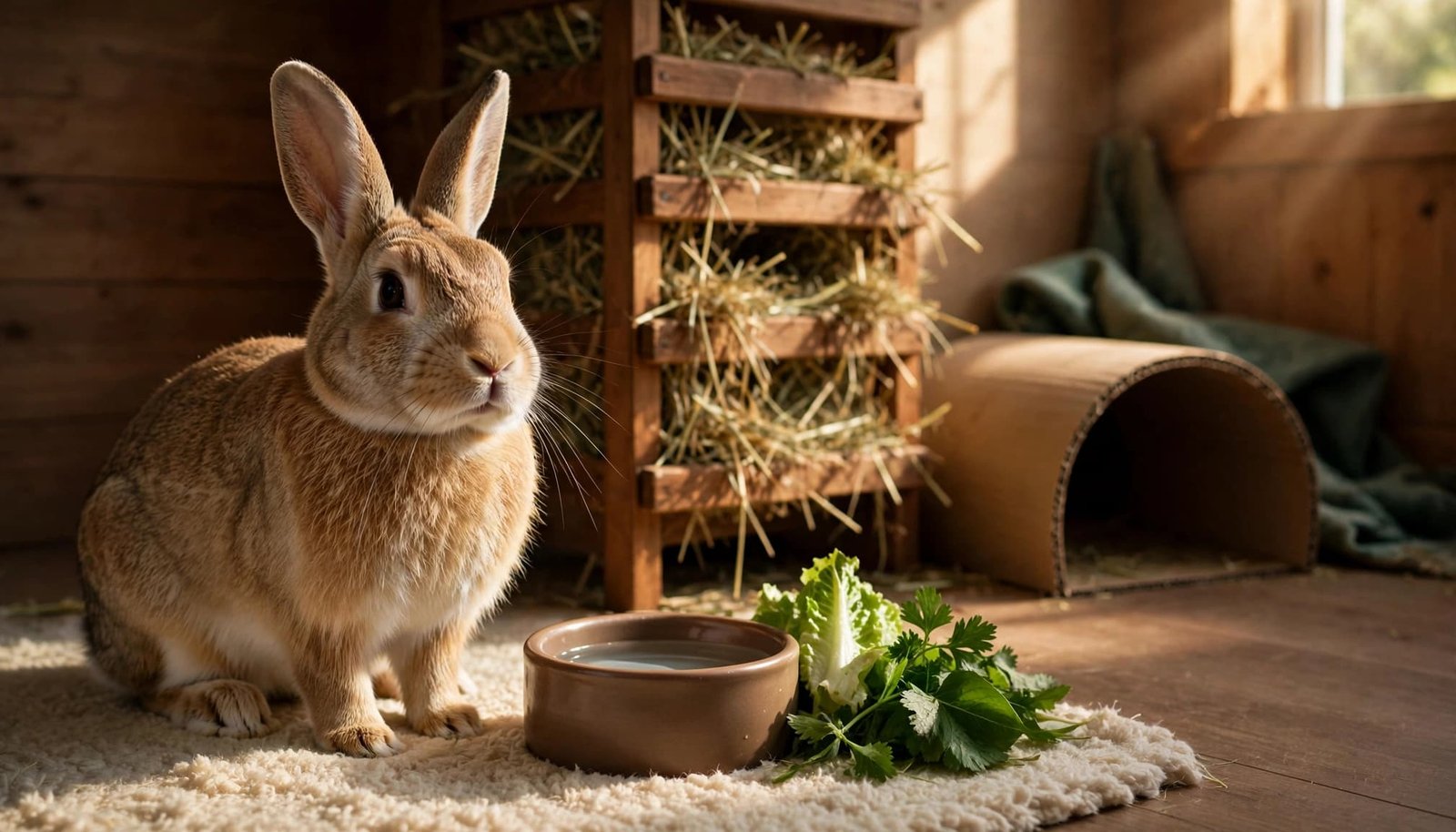
Before breakfast gets busy, take a few minutes to:
- Top up fresh hay and make sure your bunny can reach it easily.
- Replace the drinking water and check that the bowl or bottle is clean and working.
- Offer your rabbit’s usual measured food, including familiar greens if they’re part of the diet.
- Check the litter box. Are there droppings, and do they look usual for your rabbit?
- Remove damp litter, spoiled food, or anything unsafe that appeared overnight.
You can combine several tasks. Refreshing hay near the litter area, for example, gives you a chance to see what your rabbit ate and what they left behind.
Your evening check
Set aside exercise time so your bunny can explore while you spend some relaxed time nearby. This also provides mental stimulation. Then check the hay, water, litter area, and food again. As a quick health check, notice whether your rabbit is moving comfortably and showing interest in usual activities.
A quick note on your phone can help: “ate hay, drank, droppings looked usual, enjoyed tunnel.” You don’t need a detailed diary. A few familiar patterns make this routine easier, especially when more than one person shares the tasks.
Feed hay first, then plan the extras
A healthy rabbit diet is pleasantly simple. For most adult rabbits, grass hay is the main food, with leafy greens and a measured portion of plain pelleted food alongside it. Keep clean drinking water available too. If you’re sorting out a new feeding routine, My Rabbit Place has a plain-language guide to what to feed rabbits.
Keep fresh grass hay within reach
Common options include timothy hay, orchard hay, and meadow hay. Refill the supply whenever it runs low, and replace hay that’s wet or dirty. Your bunny should be able to stop for a munch throughout the day.
Hay’s long fibers help keep digestion moving. Chewing it also helps wear down teeth that continue growing, supporting dental health. The RSPCA’s rabbit health guidance places hay or grass at the center of the diet for those reasons.
Look at the grass hay pile when you do your checks. A full rack tells you hay is available, but it doesn’t tell you how much your rabbit ate. If hay intake suddenly drops, speak with a rabbit-experienced veterinarian.
Keep greens and pellets familiar
Build the rest of your rabbit diet around washed, rabbit-safe fresh greens that your bunny already tolerates. Romaine and cilantro are examples. Add new fresh greens one at a time in small amounts, so it’s easier to notice a change in appetite or droppings. House Rabbit Org’s diet guidance recommends variety among leafy greens, but there’s no need to introduce a whole salad at once.
Choose plain pelleted food made for rabbits rather than mixes with colorful pieces, seeds, or nuts. Measure the serving of pelleted food instead of continually topping up the bowl. Portion needs differ with age, weight, and health, so ask your veterinarian about your rabbit’s amount. Young or unwell rabbits may need a different plan. Fruit is an occasional small treat, never a replacement for hay.
Make fresh water an easy daily habit
Some rabbits drink from a sturdy bowl; others already know how to use a bottle. Whichever you use, check it each day to ensure your rabbit has fresh water. A bottle can stop dispensing, and a bowl can collect hay or get tipped over. Refresh it with fresh water, wash the container regularly, and keep it where your bunny can reach it.
It helps to notice how much your rabbit usually drinks without trying to hit one number every day. Water intake can vary with food and activity. If you’re curious about a starting estimate, the rabbit daily water intake estimator uses body weight and activity level. Your rabbit’s habits and your veterinarian’s advice matter more than a calculator result.
Give your rabbit room to move and things to do
Your bunny needs space for more than a food bowl and a nap. Make their home area comfortable for hopping, stretching, resting, and finding a quiet place to relax.
Set up a comfortable home base
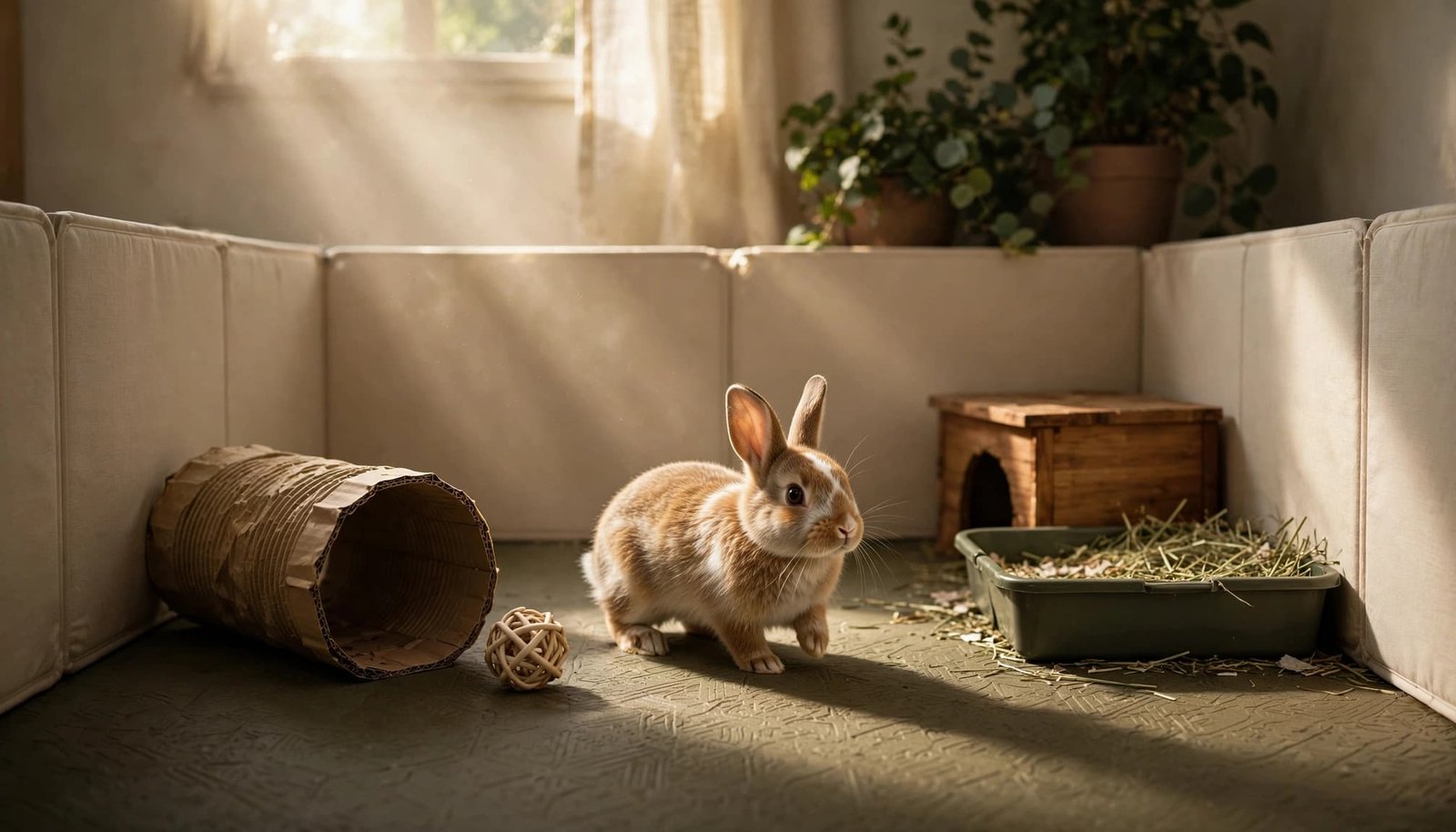
Start with solid flooring, a dry resting spot, a hiding place, hay, water, and an accessible litter box. Watch how your rabbit uses the space. If they slip while turning, try a different surface with better grip.
Rabbit housing needs differ between a small rabbit, a giant breed, and an older bunny who moves less easily. Look beyond a cage label and consider enclosure size, focusing on usable space where your rabbit can move freely. The House Rabbit Society’s care primer is a helpful starting point when you’re planning a home setup with solid flooring.
Make playtime safe and fun
Offer daily exercise and supervised exercise time in a rabbit-safe area. Check it first for electrical cords, unsafe plants, narrow gaps, and tempting furniture corners. Use barriers where needed, then offer better things to investigate: a cardboard tunnel, a hide box, or safe chew toys.
These options provide mental stimulation. Stay nearby during exercise time as your rabbit explores a new space. Rabbits are social animals, and relaxed company can help them feel secure.
Some bunnies race straight through a tunnel; others prefer to inspect it for a few days. Let rabbit socialization happen at your bunny’s pace. Both approaches are fine! Regular exercise time and a little variety provide mental stimulation and more ways for your long-eared friend to act like a rabbit.
Keep litter habits simple
Place a roomy litter box where your rabbit tends to toilet, with hay easy to reach nearby. A low entry may help a rabbit who struggles to step into a taller box. Choose rabbit-appropriate litter, such as paper bedding if it suits your rabbit, and avoid strongly scented products.
During your daily check, remove damp patches and soiled hay from the litter box. Refresh it when needed, and clean nearby surfaces if your bunny misses. A clean, familiar toilet area is more pleasant for both of you.
Litter training can take patience. If your rabbit keeps choosing another corner, notice the pattern before rearranging everything. Try placing a box in a safe, preferred spot. Sudden changes in toilet habits deserve attention too, especially alongside changes in eating or behavior.
Notice health changes before they become easy to miss
Rabbits are prey animals, so they may hide discomfort, which makes small observations in your checklist important. You don’t have to diagnose your bunny. You just need to notice when they aren’t acting like themselves.
Learn your rabbit’s usual patterns
During a health check, notice how eagerly your rabbit approaches food, how often they visit the hay, and what their droppings usually look like. Watch their usual posture, movement, and interest in play. Grooming time is also a chance to look for dirty fur, sore-looking areas, or anything else unusual.
A health check is more useful when you compare your rabbit with their own baseline than with somebody else’s. One bunny greets you at the door; another waits until the room is calm. Learn your furry friend’s version of normal.
Know when to call your veterinarian
If your rabbit stops eating, produces noticeably fewer droppings, seems weak, or behaves in a way that worries you, contact a rabbit-experienced veterinarian promptly for veterinary care. Don’t wait for the next scheduled check or try to solve a sudden appetite change with treats.
Keep the clinic’s number somewhere easy to find. It’s also helpful to know where you’d call when your regular veterinarian is closed. A simple note about what changed, and when you first noticed it, makes that conversation easier.
Add a few tasks beyond the daily checklist
Daily care covers the essentials. A flexible reminder for grooming and upkeep helps you remember tasks that don’t fit into every morning.
Check the setup and grooming needs
Look over toys, tunnels, and barriers regularly, including chew toys that support mental stimulation. Remove anything damaged or unsafe, and clean the larger living area as needed. Check your rabbit’s coat for tangles and loose fur; rabbit grooming may need more attention when they’re shedding.
Take a look at their nails, too. If you’re unsure how to trim them safely, ask a rabbit-experienced veterinarian or trained rabbit handler to show you. There’s no need to guess your way through a wriggly bunny’s first nail trim.
Review the routine as your rabbit changes
Your pet rabbit’s needs may change as they grow older or develop a health concern, including their food, daily exercise, or setup. Ask your veterinarian to plan suitable veterinary care and grooming, and discuss when to schedule an annual check-up.
When several people care for the same rabbit, a shared note helps everyone offer the agreed food portions. The rabbit weekly meal planner can help organize familiar meals, but check portions with your veterinarian rather than treating any planner as a prescription.
Key takeaways for new rabbit owners
- Keep fresh grass hay and clean water available, and check what your rabbit actually uses.
- Offer familiar greens and measured pellets in portions that suit your bunny.
- Make room for daily movement, safe chewing, hiding, and relaxed time together.
- Watch appetite, droppings, and behavior. Call a rabbit-experienced veterinarian when something changes.
The easiest routine is one you can repeat. A few calm check-ins give you useful information without turning every day into a long list of chores.
Frequently asked questions
How much exercise does my indoor rabbit need?
Give your rabbit daily access to a safe area where they can hop, explore, and rest. The right routine depends on their health, mobility, and living space. If your bunny has limited room or trouble moving, ask a rabbit-experienced veterinarian for advice tailored to them.
Do I need to change my rabbit’s food every day?
Refresh hay and water every day, and remove spoiled greens or soiled food. You can offer a variety of safe greens over time, but introduce changes gradually. A familiar diet also makes it easier to notice when your rabbit’s appetite is different.
What should I do if my rabbit won’t eat hay?
First, check that the hay is fresh, dry, and easy to reach. You can offer another suitable grass hay gradually. If your rabbit has suddenly stopped eating hay, or is eating less overall, contact a rabbit-experienced veterinarian promptly.
A caring routine starts with paying attention
Your first rabbit daily care checklist doesn’t have to be perfect. Keep hay and water ready, make time for movement, and learn what your bunny normally eats and does.
Those small checks add up. Knowing your rabbit’s usual habits helps you give them comfortable everyday care and notice when they need extra help. Keep your daily care routine simple and steady.