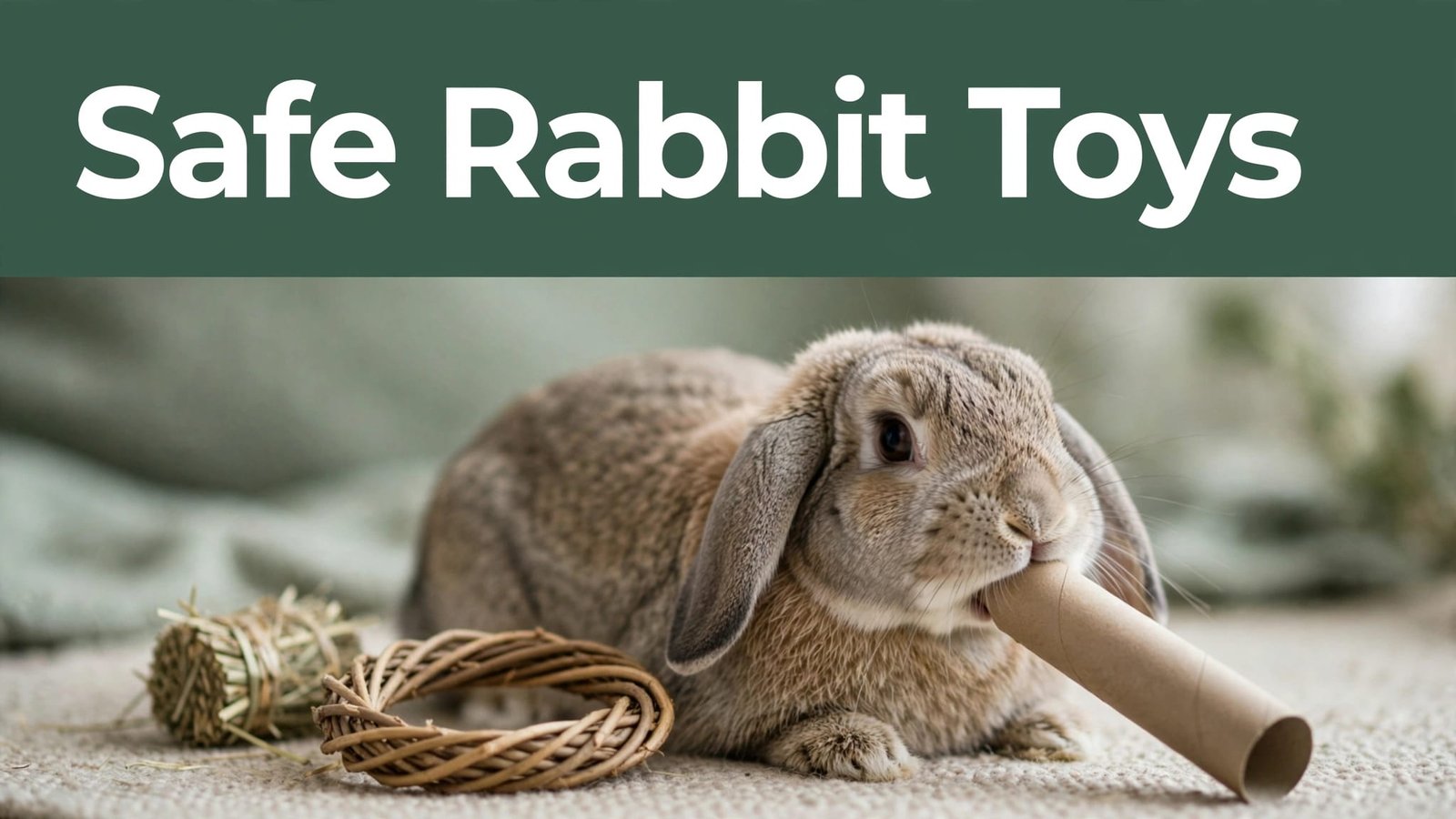
Rabbits need chances to chew, toss, dig, and search for food. Wondering what toys are safe for rabbits? You can start with plain cardboard and a few simple, inexpensive choices.
Your bunny may love a willow ring and ignore a ball. That’s okay! Toys add interest, but they don’t replace daily exercise, unlimited grass hay, fresh water, or proper care. Start with what your rabbit likes to do.
What toys are safe for rabbits? Start with simple choices
Plain cardboard, untreated willow or applewood, and sturdy toys made for rabbits are good starting points. A pet-store label isn’t a safety check, though. Look at each toy’s material, size, finish, and construction before your bunny gets a turn.
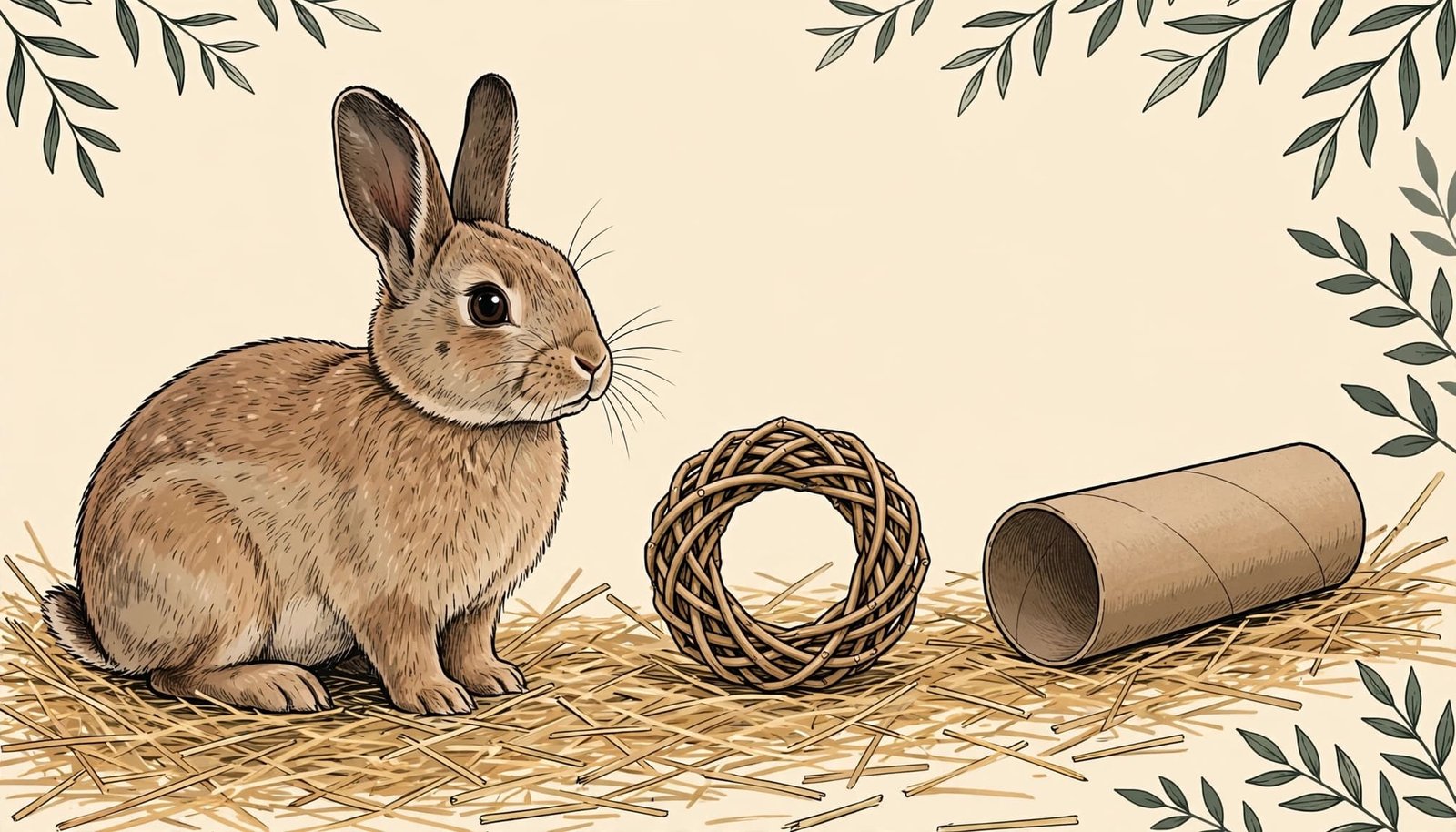
Choose chew toys made from untreated wood, hay, or plain cardboard
Try untreated applewood, willow, hay toys, or a plain cardboard tube. Check cardboard for tape, staples, and glossy coatings. Choose wood you know is untreated rather than a branch that may have been sprayed.
Chewing is normal, but toys are enrichment, not a meal. Keep unlimited grass hay, such as timothy or orchard hay, available for fiber and everyday chewing. If your rabbit eats noticeable amounts of cardboard or wood, remove it and ask a rabbit-savvy veterinarian for advice.
Offer balls, rings, and tubes for tossing and nudging
A lightweight willow ring or sturdy cardboard tube can be fun to pick up and toss. Some rabbits would rather push a ball across the floor. Both count as play!
Choose a toy your rabbit can move easily. It should have smooth edges, no loose attachments, and no pieces small enough to swallow. Skip anything that starts breaking apart as your bunny plays. You don’t need a noisy toy to keep a curious rabbit busy.
Safe rabbit toys for digging, hiding, and foraging
Chew toys are only one option. The Rabbit Welfare Association & Fund’s enrichment guidance also includes tunnels and hideouts. Give your bunny room to explore, and keep every play spot clean, dry, and easy to leave.
Make a digging box or add a roomy tunnel
Fill a stable cardboard box with plain shredded paper or hay. Set it where your rabbit can hop in and out without tipping it over. If the filling gets damp or dirty, replace it.
A tunnel or hideout offers another way to explore. Pick one with enough space for your rabbit to turn around comfortably. A cardboard hide with two openings gives your bunny another way out, too. Avoid stringy fabric, especially if your furry friend pulls threads or chews soft materials.
Turn familiar hay and greens into a simple forage game
Scatter some of your rabbit’s usual hay in a clean box, or tuck familiar leafy greens among it. Searching through the hay makes an everyday meal a little more interesting. There’s no need to add extra food to make the game work.
Use part of a normal meal, keep treats limited, and introduce any new greens gradually. Your bunny should still be able to reach their regular hay and fresh water easily. If the forage box becomes wet or soiled, clear it out before the next round.
How to spot unsafe materials and toy hazards
When deciding what toys are safe for rabbits, watch what your rabbit does with them. A gentle nudger and a determined chewer can use the same toy very differently. Check a new item before play, then watch how it holds up.
Avoid unknown coatings, loose strings, and small detachable parts
Leave toys with unknown paints or finishes, exposed glue, brittle plastic, bells, or dangling strings out of your bunny’s space. Pull gently at attached pieces. If one comes loose, your rabbit may be able to pull it off and swallow it.
Simple materials are easier to check. Small Pet Select’s guide to rabbit toys lists untreated willow, applewood, hay, and plain cardboard among its options. If you can’t tell what a toy contains, choose a simpler one and ask a rabbit-savvy veterinarian.
Inspect toys often and remove anything damaged
Take a quick look when you refresh hay and water. Check wood for splinters, cardboard for soggy or sharp edges, and tunnels for fraying. Remove worn toys that leave pieces small enough to swallow.
Wash reusable toys with mild soap when needed, rinse well, and let them dry fully. Replace dirty paper or hay in a dig box. If your rabbit may have swallowed plastic, string, or another harmful item, contact a veterinarian promptly. Don’t wait to see whether the toy turns up later.
Choose and rotate rabbit toys around your bunny’s habits
You don’t need a cupboard full of toys. Try one chew toy, one tossing option, and a place to dig or explore. Watch which activities your bunny chooses before buying more.
Set up play in a rabbit-proofed space
Cover or block electrical cords, move unsafe plants and household items, and check gaps behind furniture. Give your rabbit room to hop, with secure footing and a hideout nearby. Hay and fresh water should stay easy to reach, even during a forage game.
Supervise new toys until you know how your rabbit uses them. A cardboard tube that’s fine for one bunny may need removing if yours tears off and eats large pieces. A safe room matters as much as the toys you put in it.
Keep favorites, refresh worn toys, and skip forced play
An ignored toy isn’t a failure. It may be in the wrong spot, or your rabbit may prefer pushing things to tossing them. Move it, try a different safe shape, or offer a fresh plain cardboard box.
Rotate a few options rather than putting everything out at once. Keep the favorites while they’re in good condition. If your bunny persistently tries to eat a toy or damages it in an unsafe way, remove it. Let your long-eared friend show you what play they enjoy.
A few good toys go a long way
The best rabbit toys are simple, suited to your bunny’s habits, and checked often. Cardboard, untreated wood, a digging box, and a roomy hideout give you plenty of ways to begin.
Start with a few safe choices and watch how your rabbit plays. Keep what works, and remove anything that becomes damaged or unsafe.