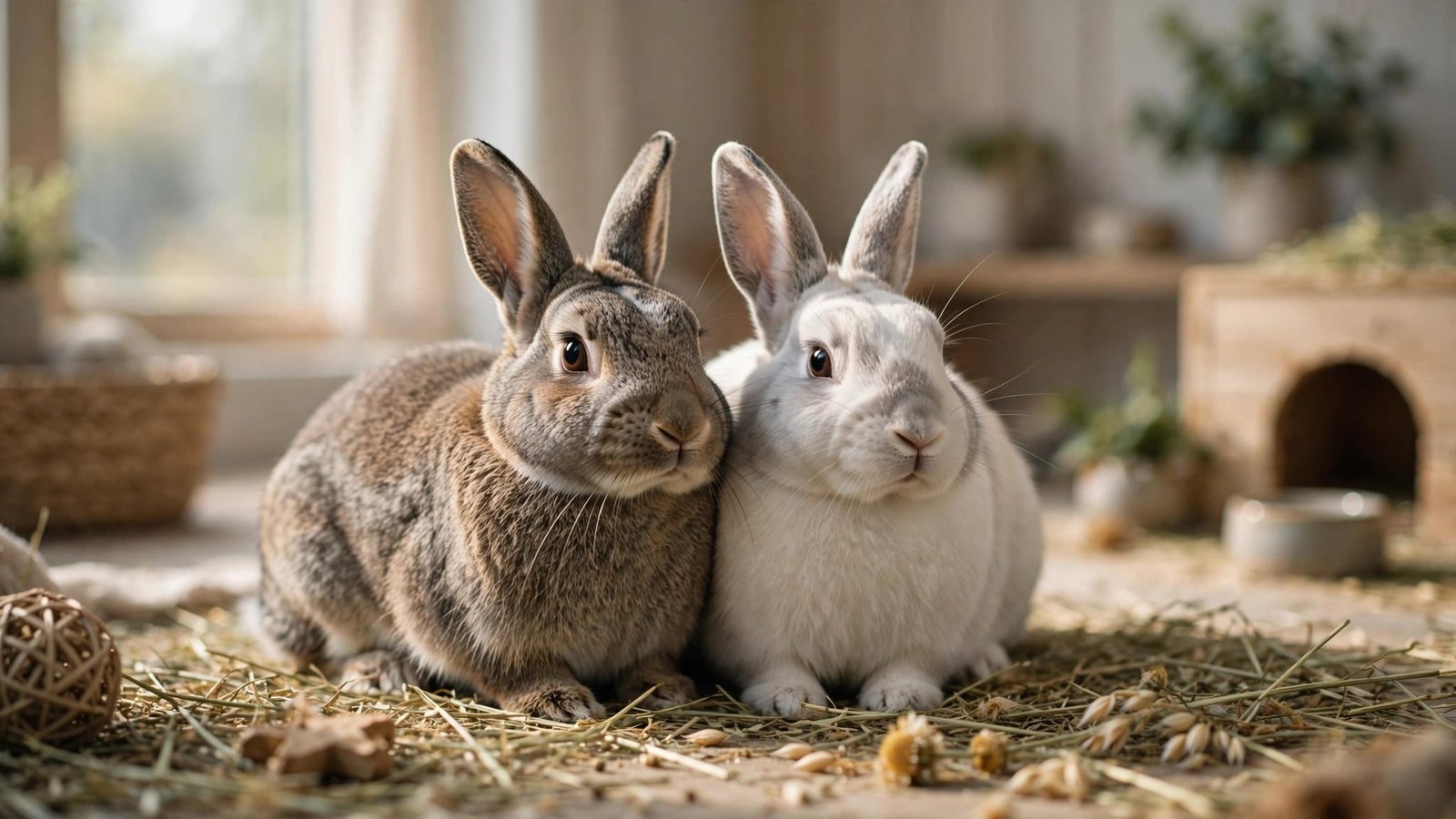
Your bunny may love your company, but they also have social needs that cuddles can’t fully meet. So, can rabbits live alone? Some need to live singly for health reasons or because bonding is difficult, but a compatible rabbit companion is preferred for most.
If you already have a solo bun, there’s no need to panic or rush an introduction. Start by learning what rabbit friendship offers and how to support your bunny’s individual needs.
Key Takeaways
- Most rabbits benefit from a carefully bonded companion rabbit, even when they enjoy spending time with people.
- Health concerns or difficult bonding situations may mean a rabbit needs to live alone for health reasons, temporarily or longer term.
- Single rabbits need regular human interaction, generous space, enrichment, and close attention to changes in appetite and behavior.
Why Do Rabbits Need Rabbit Companionship?
Domestic rabbits are social animals. A well-matched pair can share everyday comfort in ways that people can’t fully provide.
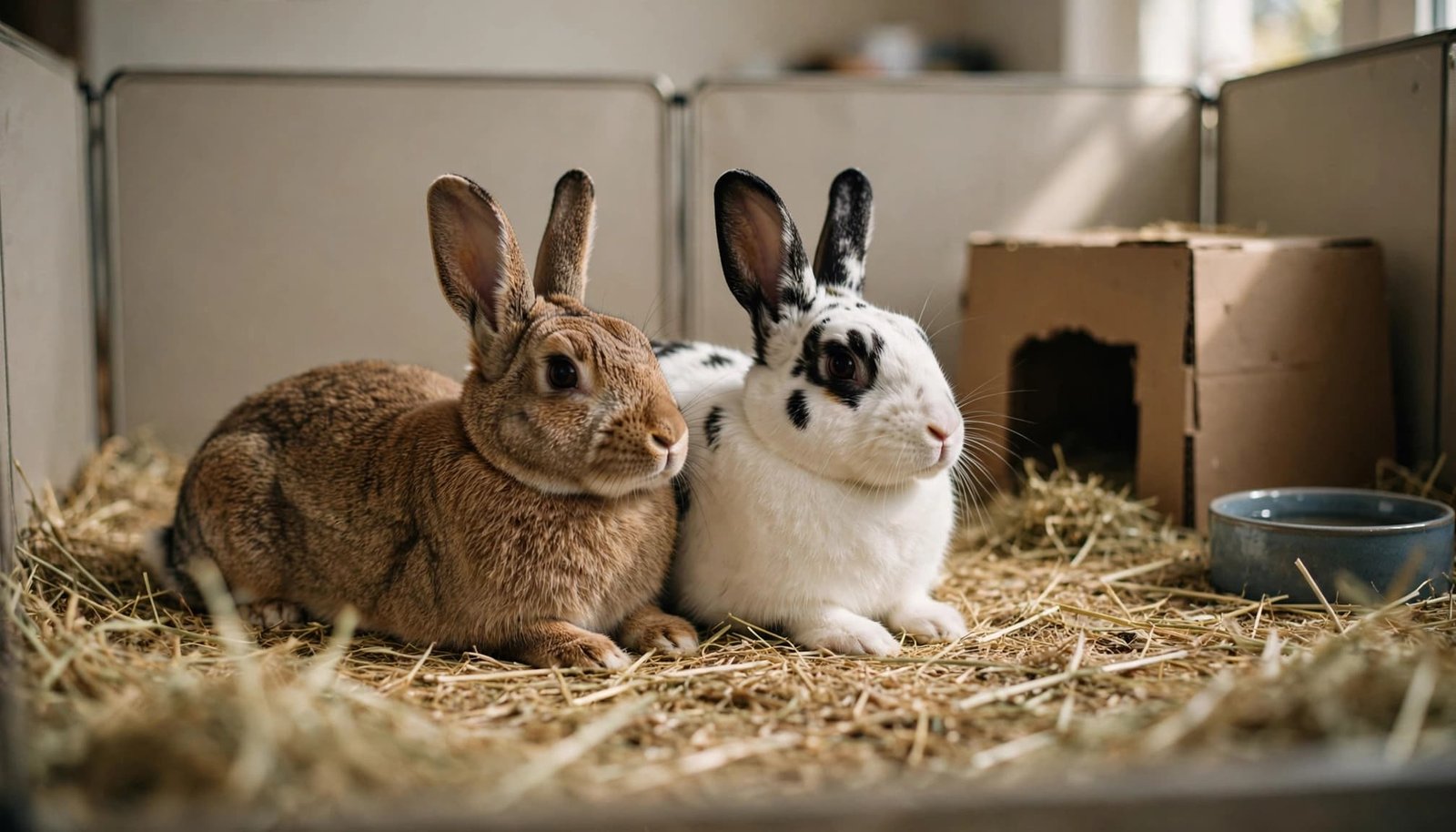
What a bonded friend offers
Bonded rabbits often rest together, groom each other, and explore their surroundings side by side. Their companion is there during your workday, overnight, and whenever you’re busy.
The RSPCA’s rabbit companionship guidance recommends keeping rabbits with another friendly rabbit. The important word is friendly. Two unfamiliar bunnies aren’t automatically companions, and putting them together without preparation can lead to injuries.
For prospective owners, adopting an already-bonded pair can make things easier. Ask the rescue about their relationship, health, and whether neutering and spaying have been completed before bringing them home.
Where human company fits
Your house rabbit can form a lovely bond with you. They may follow you, ask for forehead strokes, or settle beside your feet.
That relationship matters, but human interaction can’t replace rabbit companionship. You can’t groom, communicate, or stay beside your bunny like another rabbit.
Even bonded rabbits need gentle human interaction. Daily time together helps you build trust and notice when something changes.
When Can Rabbits Live Alone?
Domestic rabbits may sometimes need to live alone for health reasons. The decision should protect their wellbeing rather than follow a fixed rule.
When bonding hasn’t worked
One unsuccessful bonding attempt, or failed bond, doesn’t prove your bunny can never have a friend. Hormones, pain, unfamiliar surroundings, and an unsuitable match can all affect introductions.
A rabbit-experienced rescue can help assess compatibility and plan supervised meetings in neutral space. Ask about their bonding support before adopting a second rabbit. You’ll also need safe, separate housing while introductions are underway.
Stop unsafe encounters rather than letting an aggressive rabbit fight until they “sort it out,” and get guidance. Some rabbits may need to remain single after careful assessment, especially when repeated introductions cause serious distress or aggression.
When health or loss changes the plan
Illness, recovery, or veterinary treatment may affect whether rabbits can safely share a space. Follow your veterinarian’s advice before separating an established pair, since separation can also be stressful.
An elderly rabbit with health problems may need an individual plan rather than a rushed bonding process. Older bunnies don’t automatically need to live alone; age isn’t the only consideration.
After a companion dies, watch the surviving rabbit’s eating, droppings, and activity closely. Keep familiar routines and offer calm company. A rescue and rabbit-experienced vet can help you consider a companion rabbit when your bunny’s health and circumstances allow.
How Can You Tell How Your Bunny Feels?
Look at your rabbit’s usual behavior over time. One nap, one chewed rug, or one happy hop doesn’t tell the whole story.
Signs of comfort and contentment
A comfortable rabbit usually eats well, produces normal droppings, grooms, and shows interest in their surroundings. They may stretch out, flop onto their side, investigate toys, or do joyful jumps called binkies.
Some bunnies are naturally reserved. Choosing to sit near you can be a meaningful sign of trust, even without cuddles.
These behaviors are encouraging, but they don’t prove that living alone is the best arrangement. Keep reviewing your rabbit’s social opportunities, health, space, and daily routine.
Changes that deserve attention
Watch for behavioral changes, such as new hiding, reduced curiosity, repeated bar biting, or excessive grooming. Our guide to signs of a depressed rabbit covers changes worth watching.
These signs alone can’t tell you whether your rabbit is lonely. Dental trouble, digestive problems, pain, and other illnesses can look similar.
Reduced eating and fewer droppings need prompt veterinary attention. Don’t wait until tomorrow or assume your rabbit only needs more company.
Check hay intake, the water bowl, litter-box output, movement, and posture morning and evening. Knowing your bunny’s normal habits makes changes easier to spot.
How Much Attention Does a Single Rabbit Need?
There’s no reliable daily attention quota that suits every rabbit. Your bunny’s personality, health, living space, and response to interaction all matter.
Make company part of everyday life
Build human interaction into your house rabbit’s daily routine. Offer regular opportunities throughout the day rather than relying on one quick visit. Morning and evening often work well because rabbits are commonly active around these times.
Give your bunny calm one on one attention by sitting on the floor while they explore. You can read, talk softly, or offer gentle forehead strokes if they enjoy them. Let your rabbit choose whether to approach or rest.
Long periods alone with little stimulation deserve a rethink. Pair company with activity and environmental stimulation, not just visits.
Let your bunny set the pace
Many rabbits dislike being picked up, even when they enjoy affection. Keep social time at floor level and avoid chasing or pulling them out of hiding.
Look for willing interaction: approaching you, nudging your hand, or settling beside you. Our guide to how rabbits show affection can help you recognize these small moments.
If your work schedule leaves little room for daily company, consider whether an already-bonded pair would better suit your household.
Give Your Solo Bun Space and Interesting Activities
A single rabbit still needs generous room to hop, stretch, explore, and rest. Provide a safe, usable area where they can free roam. Having one bunny doesn’t make a small cage a suitable full-time home.
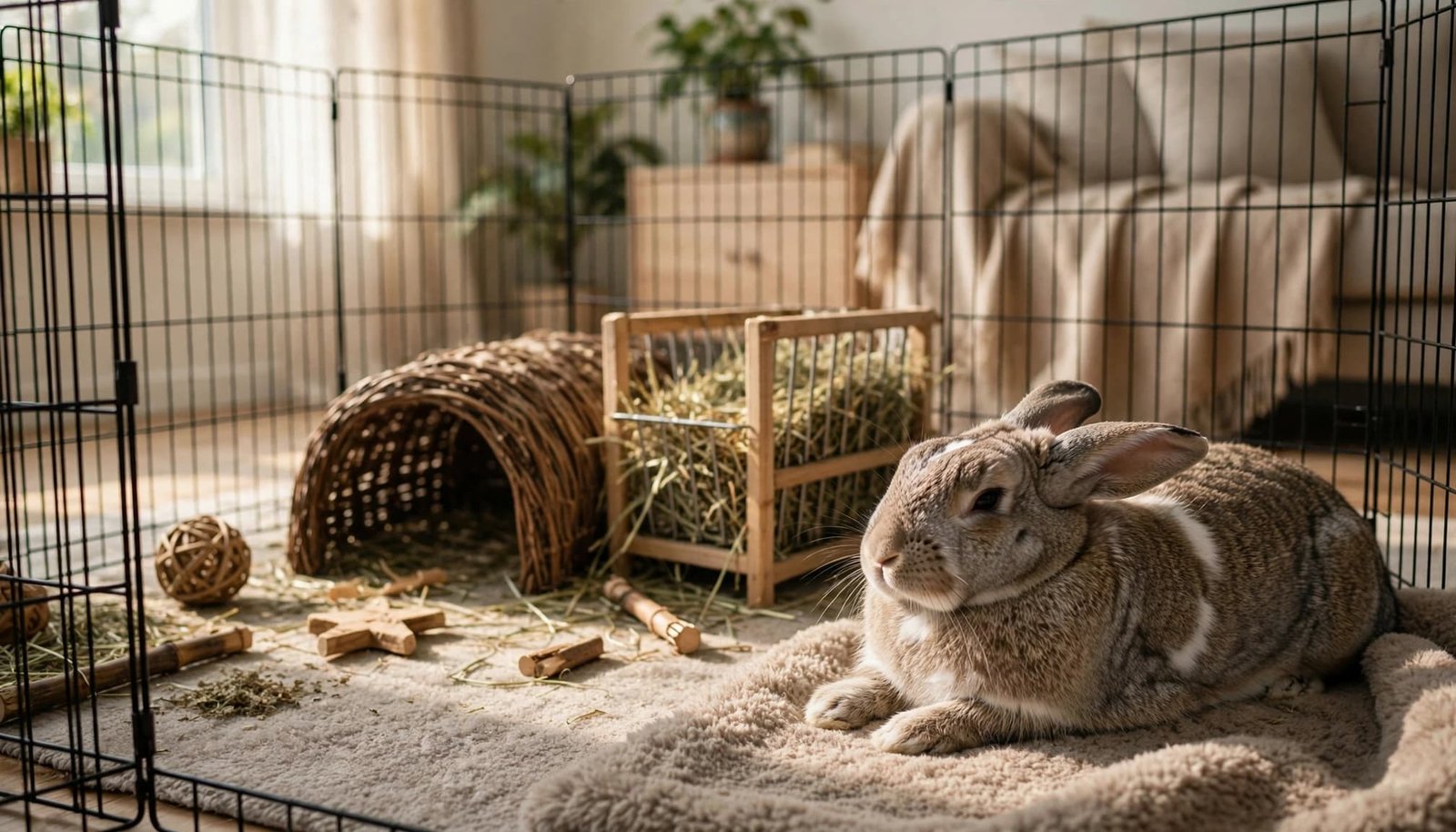
For an outdoor rabbit, the Rabbit Welfare Association & Fund’s outdoor housing recommendation is at least 3 metres by 2 metres, with 1 metre of height, for two average-sized rabbits. Domestic rabbits need generous room, so don’t simply halve that floor space for one rabbit.
Our indoor rabbit space guide explains how to plan usable room around your bunny’s size and mobility.
Provide solid flooring with secure rugs or mats for grip. Add a hideout, tunnel, safe chew toys, and a digging box with plain paper for environmental stimulation. Cardboard boxes with two exits give your bunny somewhere to retreat without feeling cornered.
Rotate a few toys rather than changing the whole setup at once. You can tuck part of their usual hay or greens into safe foraging spots.
Watch how your rabbit uses the space. Remove items that break into unsafe pieces or encourage excessive swallowing. Enrichment supports social care, but toys can’t replace companionship.
Is Outdoor Living Suitable for a Single Rabbit?
Outdoor housing adds challenges, especially when your bunny lives alone. An outdoor rabbit may get less company when it’s cold, dark, or raining.
The House Rabbit Society’s guide to outdoor and indoor hazards identifies predator attacks as a major outdoor danger. Dogs, cats, foxes, and other animals can threaten rabbits, even around an enclosure.
An outdoor setup needs a predator-resistant hutch and run, secure fastenings, protection against digging, and dry shelter. Heat, storms, frozen water, insects, and local disease risks also need planning with your vet.
In winter, schedule visits and spend calm time with your outdoor rabbit in their sheltered area, providing regular human interaction. Refresh enrichment and check water, bedding, appetite, and droppings more often during difficult weather.
Indoor living often makes companionship and health monitoring easier, while toys and varied activities provide environmental stimulation. Bunny-proof cords, remove unsafe plants, and keep other pets away from your rabbit’s safe area.
If outdoor conditions make regular interaction difficult, review the housing arrangement rather than accepting isolation.
Keep Diet and Veterinary Decisions Simple
Social wellbeing depends on physical comfort too. A rabbit who’s hungry, in pain, or unwell won’t benefit fully from extra playtime.
Is hay, grass, and water enough?
Hay and water are essential, and hay and grass should form the main part of an adult rabbit’s diet. Keep fresh water available, but don’t assume these alone provide a complete feeding plan.
PDSA’s rabbit feeding advice includes hay, leafy greens, and a small amount of rabbit nuggets each day.
Offer familiar foods consistently and introduce changes gradually. Young rabbits and rabbits with health problems may need different portions or foods. Ask your vet before removing pellets entirely or making a major diet change.
Can an elderly rabbit be neutered?
Neutering and spaying can prevent accidental breeding and reduce hormone-related behaviors that may complicate bonding. These procedures also offer health benefits, particularly for female rabbits.
Oxbow Animal Health’s spaying and neutering guidance notes that benefits often outweigh risks, even in older adult rabbits. That doesn’t establish whether surgery is suitable for your individual bunny.
A rabbit-experienced veterinarian should assess overall health, existing conditions, and the proposed procedure, especially for older bunnies. Ask about any recommended tests, anesthesia monitoring, pain relief, and recovery care.
Neither “too old” nor “always safe” is a useful blanket answer.
Should You Feel Guilty About Having One Rabbit?
Guilt doesn’t help your bunny, but an honest care review does. Some rabbits can manage with a carefully supported routine, though companionship remains the preferred goal.
If bonding has failed or your options are limited, focus on what you can improve now. Provide space, regular interaction, enrichment, and veterinary care. Revisit companionship with professional support if circumstances change.
If you’re choosing your first rabbit, ask a rescue about adopting an established pair, so your bunny has a companion rabbit from the start. You’ll still need daily care time and a budget for two rabbits, including veterinary treatment.
Your rabbit’s needs matter more than proving you’re a perfect owner. Thoughtful adjustments are part of good bunny care.
Frequently Asked Questions
Can a rabbit be happy living alone?
Some rabbits may need to live alone, but most benefit from a compatible rabbit companion. If your bunny is single, provide regular interaction, plenty of space, enrichment, and close health monitoring.
Can I replace a rabbit companion with human attention?
Your company can build trust and enrich your rabbit’s day, but it can’t fully replace the companionship of another rabbit. If you have one bunny, make calm, regular interaction part of their routine.
Should I get another rabbit right away?
Not necessarily. First consider your rabbit’s health and circumstances, and ask a rabbit-experienced rescue or vet for guidance on choosing a compatible companion and planning introductions.
What should I do if my rabbit’s companion dies?
Keep familiar routines and watch your rabbit’s appetite, droppings, and activity closely. Offer calm company, and ask a rabbit-experienced vet or rescue when it may be appropriate to consider another companion.
Help Your Rabbit Feel Safe and Connected
Most rabbits benefit from a compatible rabbit friend. When solo living is necessary, consistent care and regular social opportunities become especially important.
Give your bunny room to explore, respect their choices, and make regular human interaction part of their routine. Watch for changes in eating or behavior. A rabbit-experienced rescue or vet can help you plan companionship without rushing your long-eared friend.