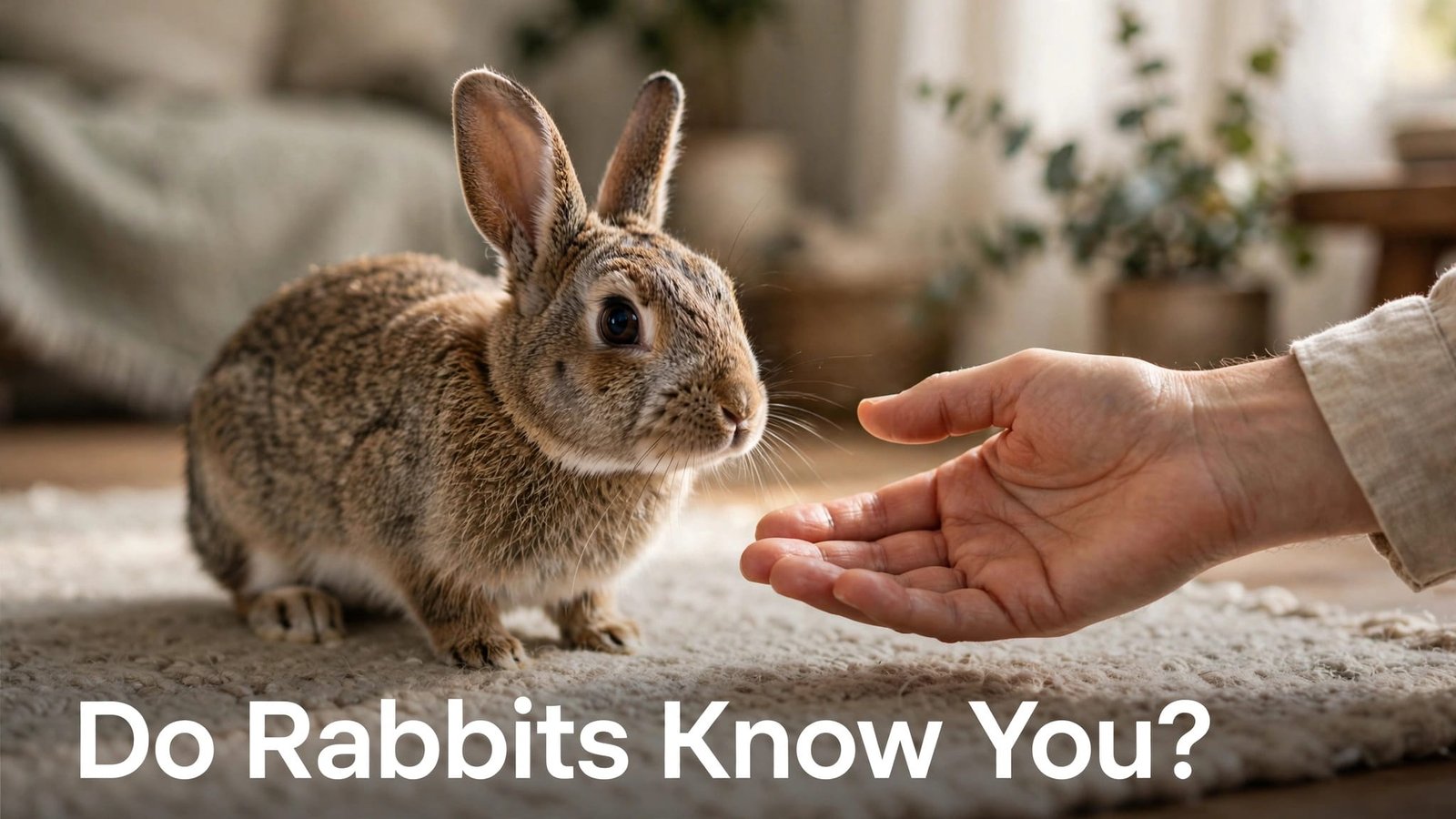
The query “rabbit recognize owners” has a simple answer: yes, your rabbit can know you as a familiar person, even when its greeting is easy to miss.
Your rabbit can recognize us as familiar people through smell, sounds, sight, and repeated experiences. Approaching you, accepting attention, or relaxing nearby can suggest familiarity and comfort, but no single behavior proves either.
Your bunny doesn’t need to come running every time you enter the room. Start with the small things they choose to do around you.
Key takeaways
- Your rabbit learns about you through several senses and repeated experiences.
- Choosing to stay close can tell you more about comfort than accepting a treat.
- A familiar person can still startle a rabbit by approaching suddenly.
- Calm routines and respect for your bunny’s space help build trust.
How do rabbits recognize their owners?
Repeated care helps your rabbit learn familiar humans, though individuals may respond differently. Your smell, movements, sounds, and care routine all become part of daily life.

Familiar people become part of a familiar routine
Feeding hay, refreshing water, and spending quiet time nearby give your bunny repeated opportunities to learn about you. Pleasant interactions can make your presence something they welcome.
Your rabbit may approach when you sit down or become interested when you head toward the food cupboard. Those responses have context. An approach before dinner may involve food expectations, while choosing to rest beside you offers a different clue about comfort.
Recognition and trust are different
Recognizing someone doesn’t mean enjoying everything that person does. Your bunny may happily investigate your slippers but move away when you reach down.
Your rabbit can recognize you and still dislike being picked up. Avoiding a lift doesn’t mean they’ve forgotten their person.
Trust depends on what your rabbit expects next. If your hands often lead to unwanted handling, they may hesitate around them. Giving your bunny control over ordinary interactions helps them feel safer.
How your rabbit sees you
Rabbit vision is different from human vision. It favors awareness of the surroundings over a sharp view of every nearby detail.
A wide view helps your bunny notice movement
Your rabbit’s eyes sit on the sides of their head. This gives them a wide field of view, useful for spotting movement and possible predators while grazing.
A review of rabbit eye anatomy explains that rabbits can achieve almost 360 degrees of vision by moving their eyes and tilting their head upward. That doesn’t mean they see everything clearly at once. Their far vision helps them notice movement at a distance. A broad field of view alone doesn’t show whether rabbits recognize themselves in a mirror.
Fine detail and nearby distances are harder to judge. Near vision is less precise, so nearby blurry objects may be harder to assess. Your rabbit also uses smell and whiskers when investigating something close to their face.
A small blind spot can explain a sudden jump
Your bunny has a blind spot close in front of their nose. Rabbit.org’s explanation of rabbit vision describes this gap in their otherwise broad visual field.
A hand suddenly appearing near that area can startle your rabbit, even when it belongs to someone familiar. Reaching down from overhead can also feel threatening to a prey animal.
Speak gently before approaching. Move slowly where your bunny can notice you, and let them investigate. Sitting nearby gives them a chance to approach without someone looming above them.
Why scent matters when you come home
Smell helps your rabbit gather information about people, objects, and other animals. Your bunny may investigate your hands, trouser legs, or shoes before settling beside you. Sniffing their own poops helps rabbits investigate familiar surroundings. It doesn’t tell you exactly what they remember about a person.
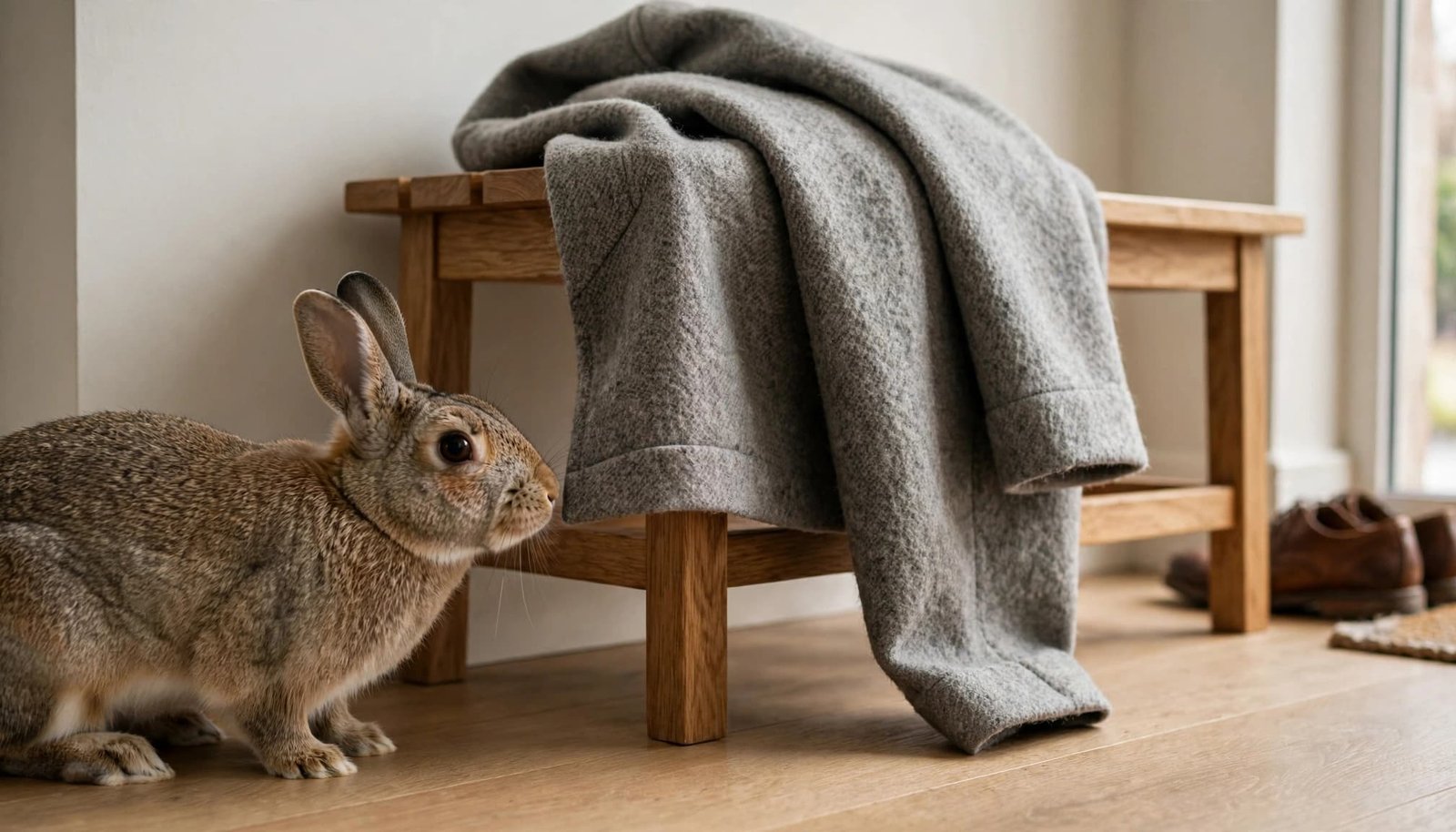
Your clothes can carry unfamiliar odors after you’ve handled a dog or cats, or visited a pet store. Perfume, cleaning products, and food smells can change what your rabbit encounters, too. Extra sniffing or hesitation doesn’t, by itself, mean they’ve stopped recognizing you.
Give your bunny room to investigate instead of moving your hands toward their face. Wash your hands after handling other animals or food, especially before feeding or providing care.
You may also notice chinning, when your rabbit rubs the underside of their chin against something. Rabbits have scent glands there and use them for marking. Chinning your hand can happen during a friendly interaction, but scent marking alone doesn’t prove affection.
What sounds and memory can tell you
Rabbits can learn familiar cues, but a response doesn’t always mean what people assume. A pause or hop alone isn’t proof of understanding, so don’t bunnopomorphize, a playful term for reading human-like meaning into bunny behavior.
Names can become meaningful sound cues
Your rabbit can learn that a particular sound predicts something pleasant. Their name may become associated with attention, food, or an enjoyable interaction.
A response might be an ear movement, a pause, or a hop toward you. Personality, surroundings, hearing, and reward history all affect what you notice.
Responding to a name doesn’t establish a human-like understanding of identity. Our guide to how rabbits recognize their names explains this distinction and offers gentle training advice.
Remember that food packaging and your movements can attract attention alongside spoken words.
Recognition research answers narrower questions
Scientific research can help explain rabbit learning without answering every question about your relationship.
K. L. Hoffman’s 2013 study of rabbit object recognition describes a task based on rabbits’ tendency to investigate novel objects and scent-mark them with their chins.
The study tested object recognition, not whether rabbits recognize themselves or identify humans as caretakers from another species. Avoid anthropomorphizing its results by assigning them human motives.
For everyday care, focus on your rabbit’s normal behavior and the experiences they associate with people.
Signs your rabbit feels safe with you
Look at your bunny’s whole body and what happens before and after an interaction. One gesture can have several meanings.
Relaxing nearby is worth noticing
A rabbit who voluntarily stretches out, grooms, eats hay, or rests near you is showing comfort in that situation. Some bunnies settle closer as they become more confident.
Personality varies by rabbit. Giant rabbits can be outgoing or reserved, just like smaller bunnies.
A loose body and normal activity are helpful clues. Freezing with tense muscles and wide eyes is different, even when your rabbit stays still.
Binkies, those playful jumps and twists, usually accompany excitement or comfort. Enjoy them, but don’t bunnopomorphize every binky into a human-style greeting.
Choosing contact can show growing trust
Your bunny may nudge you, lower their head for petting, or lick your hand. These can be friendly social behaviors when your rabbit approaches willingly and stays relaxed.
Context still matters. A nudge can request attention, but a stronger push may ask you to move. Accepting food doesn’t automatically mean a rabbit welcomes touch.
Our guide to how rabbits show affection covers these signals in more detail. Notice whether your rabbit stays, leans into attention, or chooses to leave.
Help your bunny build a familiar, comfortable routine
You don’t need a special product to help your rabbit become comfortable with you. Predictable, low-pressure time together is a good place to start.
Sit on the floor in a rabbit-safe area while your bunny explores. Keep access to their hideout open. In a home with other rabbits, each rabbit may have a different comfort level and routine with people. Let them sniff your clothes or pass by without immediately reaching for them.
When your rabbit welcomes interaction, offer a gentle forehead stroke and pause. If they move away or turn their head, stop. Respecting that choice helps your hands become less worrying.
Small food rewards can support pleasant experiences. Use a little of their usual pellets or a tiny portion of a familiar leafy green, counted within their daily food. Never restrict hay or water to encourage attention.
Keep necessary care calm, too. Prepare grooming supplies before handling, and avoid making every approach lead to a nail trim or pickup.
If you’ve just brought your bunny home, our advice for your rabbit’s first week can help you establish a gentle routine. There’s no required timetable for closeness. Your rabbit’s comfort matters more than a quick cuddle.
Frequently asked questions
Why does my rabbit run away when I arrive?
Your rabbit may be startled by footsteps, a door opening, or a sudden movement. They may also expect handling they don’t enjoy. Give them space and approach calmly. Running away doesn’t prove they don’t recognize you. Sudden withdrawal alongside reduced eating, abnormal droppings, or other changes needs prompt veterinary attention.
Does my bunny recognize me if they never lick me?
Licking isn’t a requirement for recognition or a good relationship. Your rabbit may prefer sitting nearby, exploring around you, or accepting occasional head rubs. Some rabbits simply don’t groom people. Pay attention to your bunny’s habits, since different bunnies may show comfort in different ways.
Can several people bond with the same rabbit?
Yes, your rabbit can become comfortable with more than one person. Each household member should spend calm time nearby and respect the bunny’s space. Different routines can lead to different responses toward each person. Children need supervision and should let the rabbit approach instead of chasing or lifting them.
Familiarity grows through everyday care
Your bunny may recognize us without offering an obvious greeting. Their everyday choices, especially approaching willingly and relaxing nearby, help you understand how comfortable they feel.
Keep your routine gentle and give your bunny room to choose contact. Trust grows through familiar, positive experiences, and quiet company can be a lovely part of your relationship.