
Your new bunny may spend their first evening hiding instead of greeting you, and that’s often normal. During your rabbit’s first week at home, feeling safe matters more than becoming friendly right away.
Rabbits are prey animals, so unfamiliar sounds, smells, and people can make them cautious. We recommend a calm home base, familiar food, and gentle company while you watch their eating and bathroom habits. Start with a comfortable setup, then let your long-eared friend choose the pace.
Day 1: Set Up a Calm Home Base
Choose a roomy, secure space
Begin with an exercise pen or a rabbit-proofed part of one room. Baby gates or secure furniture barriers can block unsafe areas, but your bunny shouldn’t be able to squeeze through or climb over them.
Choose a quiet corner where your rabbit can see everyday family life without loud music, barking dogs, or constant footsteps. Keep other pets outside the space while your bunny settles in.
Provide a clear 4- to 6-foot stretch for hopping and running, with extra room for their supplies. A small cage alone won’t offer enough exercise space. Any cage used as a resting area must allow full standing and at least two hops.
Flatweave washable rugs help with traction. Avoid wire-bottom cages, which can hurt your rabbit’s feet and cause sore hocks. Our room-by-room rabbit-proofing tips cover cords, plants, and other household hazards.
Make hiding feel safe
A plain cardboard box with two bunny-size doorways makes an easy hideout. Two exits let your rabbit leave without feeling cornered.
Treat this as a no-touch space. Don’t pull your bunny out or reach inside to pet them.
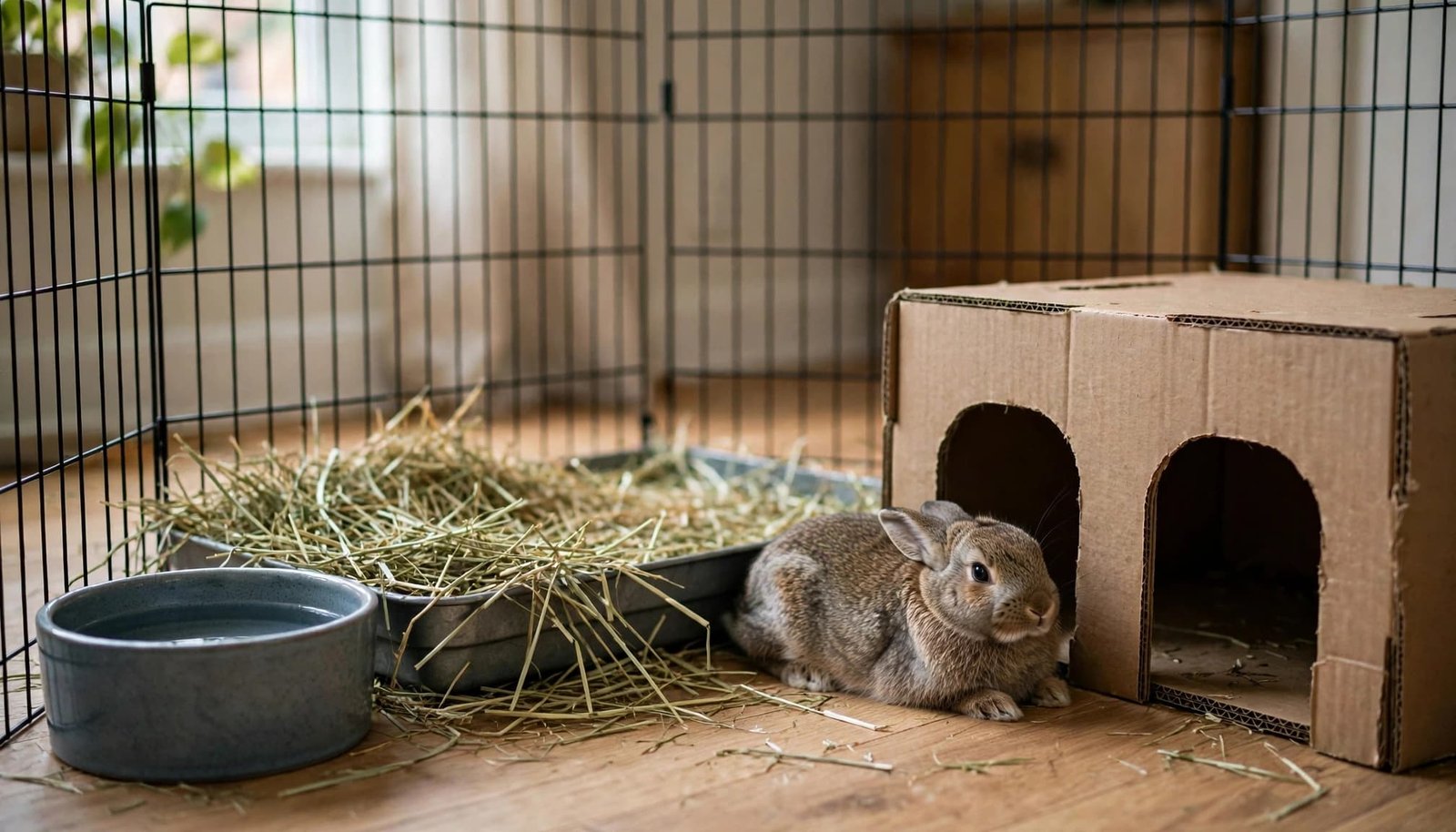
Keep hay, water, and the litter box nearby so your rabbit doesn’t need to cross an unfamiliar room for essentials.
The First 24 Hours: Keep Things Familiar
Let your rabbit settle without visitors
Place the carrier inside the prepared area, open the door, and let your bunny come out when ready. Keep the room calm and postpone introductions to excited visitors.
Hiding, freezing briefly, or retreating when you move can be normal fear responses. Some rabbits explore immediately; others wait until the house becomes quieter.
Watch without hovering. A cautious bunny should still eat and produce droppings. PDSA’s guidance on reduced appetite explains that stress can affect eating, but appetite loss still needs attention.
Keep food and water familiar
Continue the same pellet brand and usual portions your rabbit ate before coming home. Keep their familiar, age-appropriate hay and greens rather than introducing several new foods.
For most adult rabbits, timothy, orchard grass, or meadow hay should stay available throughout the day. Young rabbits have different dietary needs, so don’t switch a youngster straight to an adult feeding plan.
Use heavy ceramic or sturdy glass bowls for food and water. Lightweight plastic bowls are easy to toss or tip. Keep fresh water available at all times, away from anything that could spill into the litter.
Notice whether hay disappears and droppings appear. You don’t need exact measurements yet, but these observations help you learn your bunny’s normal routine.
Days 2 and 3: Build Trust at Floor Level
Sit on the floor near your rabbit’s space and let them approach. Reading or talking softly gives your bunny a chance to investigate without pressure.
Don’t reach into the pen to catch or pet a shy rabbit. Move calmly when replacing supplies, and avoid following them into their hideout.
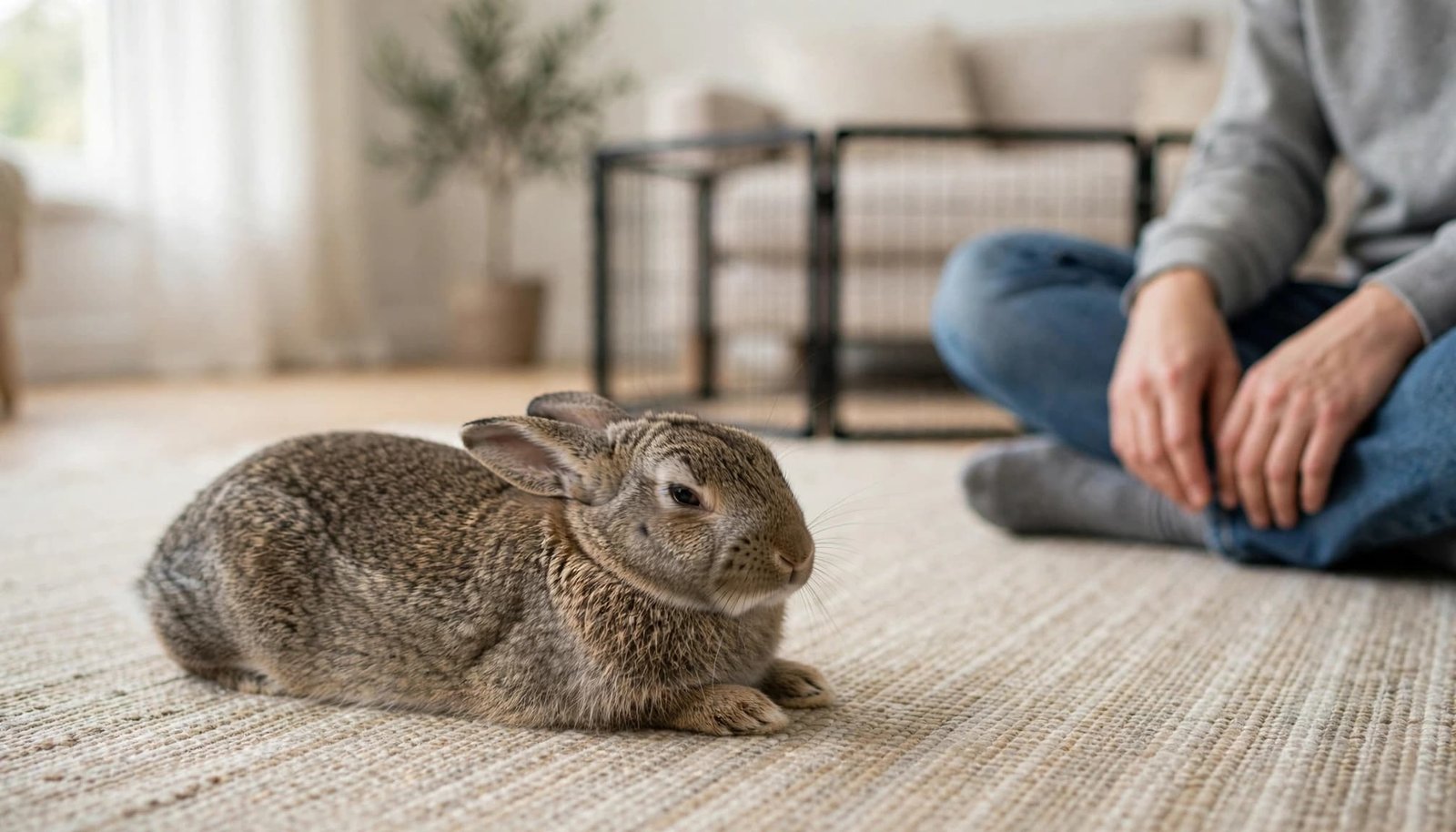
A sniff, nose nudge, or moment spent sitting nearby is progress. If your rabbit stays relaxed, offer a gentle forehead stroke. Stop if they pull away, freeze, or leave.
Small rewards can help. Use a pellet from their daily portion or, for an adult already eating greens, a sprig of parsley or carrot-top. A tiny apple sliver is an occasional treat, but familiar pellets are a simpler first-week choice.
There’s no required day for starting pickup practice. Many rabbits never enjoy being held, and forced cuddles can make bonding harder. If lifting is necessary for care, support the chest and hindquarters together, hold securely, and stay low. Never lift by the ears or scruff.
Children should sit quietly while an adult supervises. Teach them to let the bunny come closer and leave freely. Floor-level companionship is safer and kinder than carrying a nervous rabbit around.
Help Your Rabbit Find the Litter Box
First-week accidents are common. Your bunny may mark the new home or choose one or two bathroom corners while learning the space.
Set out one or two roomy litter boxes. A large, open cat litter box or shallow storage tub often works better than a tiny corner tray. Your rabbit needs room to turn around and sit fully inside.
Use unscented paper-based litter or compressed wood pellets labeled safe for rabbits. Avoid clumping cat litter, clay litter, silica crystals, corn cob litter, and cedar or pine shavings.
Put fresh grass hay at one end, or in an accessible rack above the box. Many rabbits like to munch while using their bathroom spot. Keep the water bowl close enough to find, but separate enough to prevent soggy litter.
If your rabbit repeatedly uses another corner, move the box there. Place stray droppings and a urine-marked paper towel in the tray, then clean the accident calmly.
Diluted distilled white vinegar can loosen urine residue on compatible surfaces and reduce lingering bathroom smells. Avoid natural stone, then rinse and dry the area before your bunny returns.
Scoop wet litter and remove dirty hay daily. Never punish accidents. Our step-by-step rabbit litter training guide helps you build these habits without rushing your furry friend.
Days 4 to 7: Build an Easy Daily Routine
Keep care predictable
Feed, refresh water, and clean at roughly the same times each day. Predictable care helps your rabbit learn what to expect.
Morning and evening, notice their appetite, droppings, movement, and interest in their surroundings. Rabbits often become more active around dawn and dusk, so a midday nap alone isn’t concerning.
Look for small comfort signs: eating while you’re nearby, grooming in the open, stretching out, or exploring a little farther. Your bunny doesn’t need to show every sign by day seven.
Our daily rabbit care routine gives new owners a simple way to keep these checks manageable.
Add freedom a little at a time
Your rabbit doesn’t need access to the whole house on day one. A roomy pen or safe room makes food, water, and the bathroom easier to find.
Once your bunny is exploring confidently and using the litter box more reliably, offer supervised access to one adjoining rabbit-proofed area. Keep the original home base available.
Add another litter box before expanding farther. If accidents increase or your rabbit seems overwhelmed, return to the smaller familiar area temporarily.
Some rabbits benefit from this limited setup for the first week or two. Limited space should still be roomy enough for movement and play, rather than confinement in a small cage.
What Your Rabbit’s Body Language Means
Your bunny’s posture can offer helpful clues, especially when you consider eating and droppings alongside it.
| What you notice | What it can mean |
|---|---|
| Hiding or freezing when you approach | Your rabbit feels cautious and needs more space. |
| Gentle tooth chattering during relaxed petting | Often called tooth purring, this can mean contentment. |
| Stretching out or flopping onto one side | Usually a comfort sign when breathing and responsiveness are normal. |
| Zoomies or twisting jumps called binkies | Your bunny is feeling playful. |
| Loud tooth grinding with a tense, hunched posture | Possible pain that needs prompt veterinary advice. |
A relaxed loaf position is normal. Loafing alone doesn’t mean your rabbit is hurting.
Shaking or vibrating can happen with overheating, fear, or pain, so don’t assume your bunny is simply hot. Check the surroundings and seek veterinary advice if trembling persists or comes with other changes.
Our guide to recognizing rabbit pain signs helps you spot changes that deserve attention.
When Should You Contact a Rabbit-Savvy Vet?
A shy rabbit may hide but still eat, poop, and move around when the room is calm. A rabbit who stays withdrawn and stops eating needs help.
Contact a rabbit-experienced veterinarian promptly for these warning signs:
- Your rabbit stops eating, refuses familiar foods, or produces noticeably fewer, smaller, or no droppings.
- They stop drinking, especially alongside poor appetite, or become unusually lethargic, weak, or hunched.
- Loud tooth grinding, a swollen-looking belly, or repeated uncomfortable position changes suggest pain.
- Open-mouth breathing, obvious breathing difficulty, collapse, or watery diarrhea requires emergency care.
Vets Now’s rabbit gut stasis guidance explains why appetite loss, hunching, and bloating can become urgent. Gut stasis means digestion has slowed or stopped.
A new home can explain cautious behavior. It doesn’t make stopped eating or missing droppings safe to wait out.
Don’t wait 24 hours to see whether a non-eating or weak rabbit improves. Call as soon as you notice the problem.
Not seeing your bunny drink isn’t the same as knowing they refuse water. Watch bowl levels and food intake, but don’t delay a call when other warning signs appear.
For transport, use a secure carrier with a towel for grip. Don’t give human medication or force-feed without veterinary instructions.
After the First Week: Keep Expectations Gentle
Some rabbits become comfortable within days. Others need weeks, and a cautious adult may need months to build trust. Immediate friendliness isn’t a measure of successful care.
Personality also matters. A bunny who prefers sitting beside you can enjoy your company without wanting lap time.
If your rabbit is young, hormonal behavior may appear around six months, sometimes earlier. Spraying urine, mounting, or guarding space can affect litter habits and interactions.
Discuss spaying or neutering with a rabbit-savvy veterinarian. It can reduce some hormonal behaviors, but patient handling and a safe routine still matter. Sudden aggression with appetite or movement changes deserves medical attention.
A Comfortable First Week Starts With Patience
Your rabbit’s first week at home is a chance to build trust through familiar food, safe space, and gentle company.
Watch eating and droppings more closely than friendliness. Give your bunny room to approach, explore, and rest without pressure.
Those first curious nose nudges will come on your rabbit’s own schedule. A steady routine helps your long-eared friend feel at home.