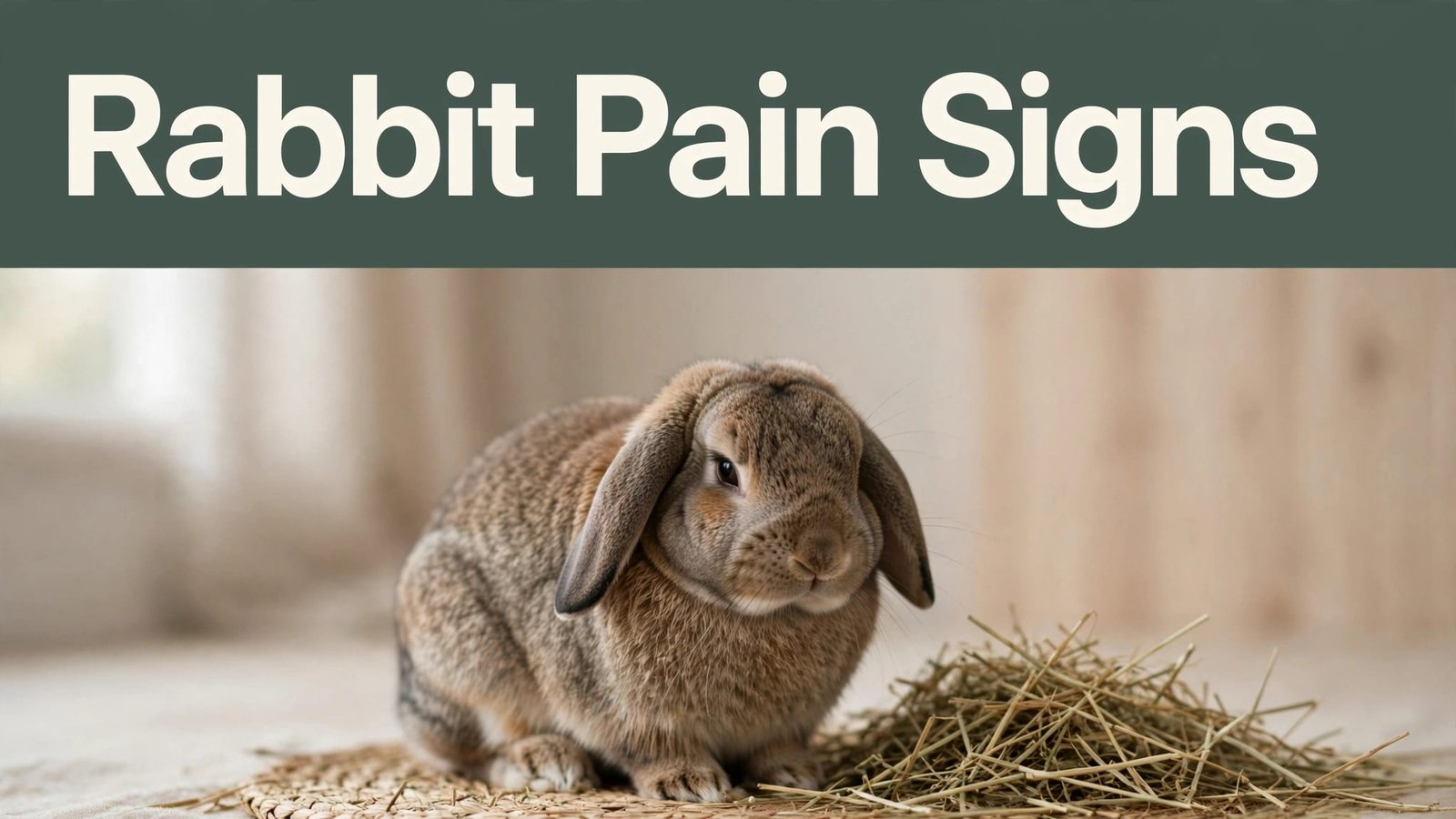
Rabbits are masters at looking normal when something hurts. Your bunny may still sit near you or nibble a little hay, even when they’re uncomfortable.
That’s why knowing signs that your rabbit may be in pain matters so much. A small change in eating, pooping, posture, or personality can be your first clue that your long-eared friend needs help.
Why rabbits hide pain so well
Prey animals try not to look weak
In the wild, a rabbit that looks injured can attract attention from predators. Pet rabbits still have that instinct. They may hide, stay still, or act more reserved instead of making obvious sounds. This instinct helps explain why rabbits are so good at hiding pain.
This can be worrying for new rabbit owners. By the time a bunny looks clearly sick, they may already need prompt veterinary care. Trust a sudden change in routine, even if you cannot see an injury.
Learn what is normal for your bunny
Every rabbit has their own habits. Some are bold and busy. Others are quiet but still love their hay, grooming time, and favorite hiding spot.
Paying attention to normal rabbit behavior makes changes easier to spot. Check your rabbit’s hay, water, eating habits, litter-box output, movement, and mood every morning and evening. These checks don’t replace a veterinary exam, but knowing how much hay your rabbit should eat makes it easier to spot a real change in appetite.
A rabbit who is always shy may simply be shy. A rabbit who suddenly hides, stops grooming, and eats less may be telling you something is wrong.
Signs of pain you may notice at home
Watch their posture and movement
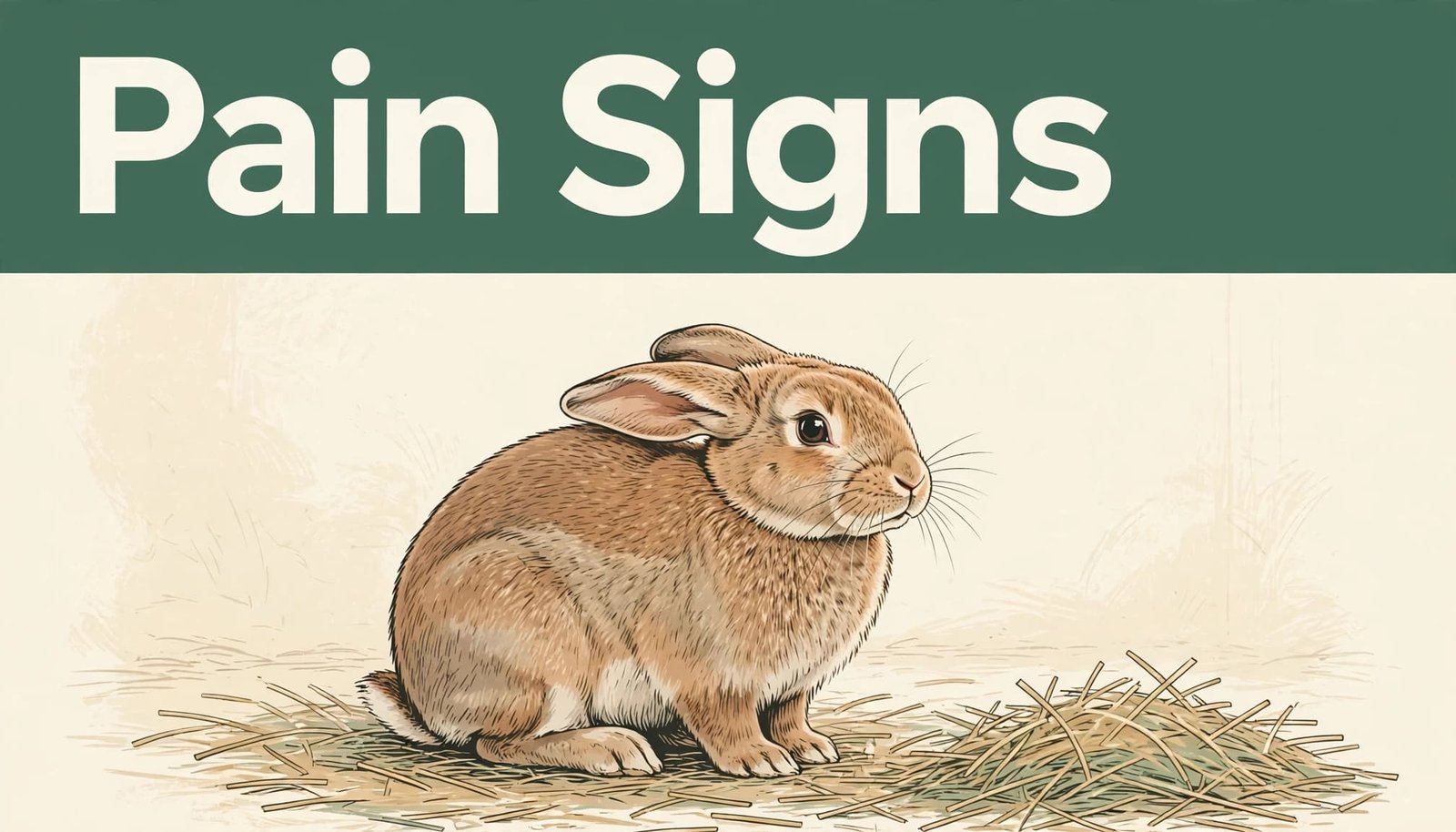
A painful rabbit often makes themselves look smaller. They may sit in a hunched posture with their feet tucked close, press their stomach to the floor, or keep changing positions without getting comfortable.
Other rabbit pain signs can include moving slowly, refusing to hop onto a familiar platform, limping, or sitting in one spot for a long time. Some rabbits become grumpy when touched. A normally friendly bunny may run away, nip, or guard one area of their body.
Consider their body language as a whole, including posture, movement, grooming, and reactions to touch. Look for changes in grooming, too. A rabbit in pain may stop grooming and develop a dull or messy coat. Some over-groom one sore area instead.
Why teeth grinding is different from happy tooth purring
Soft, gentle tooth purring often happens when your rabbit is relaxed while you pet them. Their body usually looks loose, comfortable, and calm. They may have half-closed eyes and continue to eat or groom normally.
Painful teeth grinding is louder and more forceful. It often comes with a hunched posture, low energy, hiding, reduced appetite, or wide eyes. This type of grinding can happen with dental issues, gastrointestinal pain, arthritis, injury, or other health problems.
The sound alone can’t diagnose the cause. The full picture matters. If your bunny is grinding teeth and acting unlike themselves, call a rabbit-savvy veterinarian.
See also: Rabbit Teeth Grinding: Happy Purr or Pain Warning
Appetite and rabbit poop are urgent clues
A rabbit that stops eating needs a call
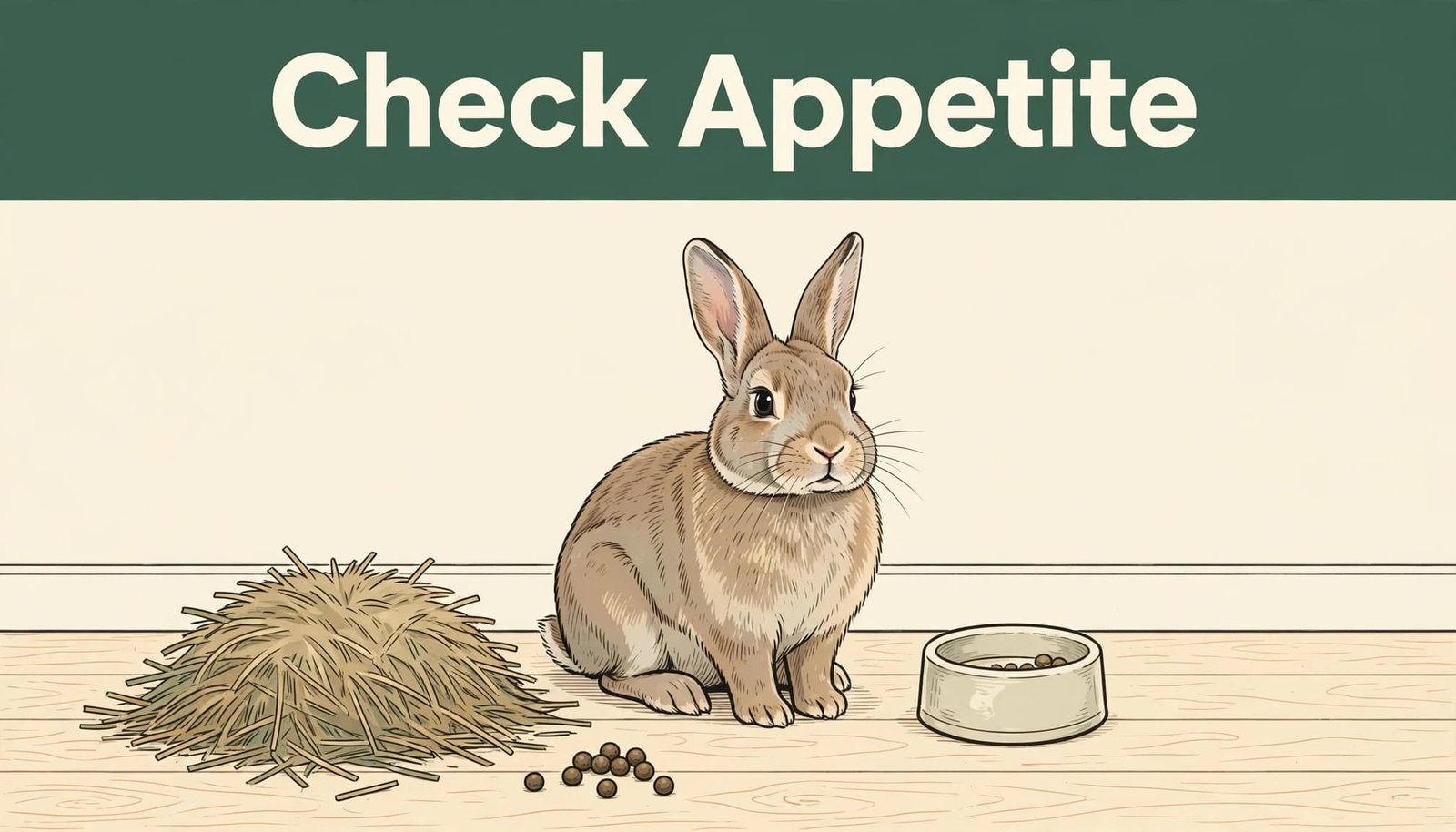
Rabbits need regular fiber intake to keep their digestive system moving. A bunny that suddenly turns down fresh hay, pellets, greens, and favorite foods has a meaningful change in eating habits, not simple pickiness.
Lack of appetite can be linked to pain, dental trouble, stress, illness, or gut stasis. The University of Illinois College of Veterinary Medicine advises urgent assessment when a rabbit has reduced appetite for more than four hours, refuses treats, or has reduced or abnormal fecal output.
Call early. Do not wait until the next day to see whether your rabbit feels better.
Check the litter box, not only the food bowl
Healthy rabbits leave many dry, round fecal pellets each day. There is no perfect poop size for every bunny, but you will learn your rabbit’s normal pattern.
Smaller, drier, fewer, or missing droppings can point to a problem. So can a messy bottom, repeated uneaten soft cecotropes, or diarrhea. Pain can slow the gut, and a slow gut can make pain worse.
The Rabbit Welfare Association and Fund explains gut slowdown warning signs, including appetite loss and poop changes. These signs need veterinary attention, not home experiments with treats or tummy remedies.
When to call an emergency vet for rabbit pain
Signs that need emergency care now
Call an emergency clinic right away if your rabbit has any of these signs:
- They refuse food and have few or no droppings.
- Their belly looks bloated, feels hard, or they press it tightly to the floor.
- They are weak, collapsing, struggling to breathe, or showing laboured breathing.
- They have watery diarrhea, blood, a serious injury, or a painful-looking eye.
- They are grinding their teeth loudly and cannot settle.
Tell the clinic that your rabbit may be in pain and has changes in appetite or droppings. Call before leaving if possible and ask whether the hospital treats rabbits. The House Rabbit Society lists stopped eating or pooping, hunching, grinding teeth, and hiding as reasons to call promptly.
Keep your bunny quiet in a secure carrier with a towel for grip. Offer hay and water if they want them, but don’t delay the trip to try new foods.
Signs that still need a timely appointment
Not every concern means a middle-of-the-night drive. Still, call your regular rabbit veterinarian the same day if your bunny is eating less, dropping food, choosing only soft foods, limping, avoiding a jump, or acting painful when they pee.
A wet chin, drooling, food falling from the mouth, or avoiding hay can point to dental pain. Reduced grooming, sudden hiding, and a new dislike of touch can also matter, especially when they happen with appetite or poop changes.
Don’t try to diagnose your rabbit by pressing their belly or repeatedly handling sore legs. Gentle observation gives your veterinarian better information and causes less stress for your bunny.
What a rabbit-savvy veterinarian may check
The exam looks for the cause of pain
Pain management matters, but identifying why your rabbit hurts matters too. A veterinarian may examine the teeth, ears, eyes, joints, abdomen, skin, and bladder. They may recommend X-rays, bloodwork, or other tests if they suspect a blockage, dental disease, urinary problem, injury, or another illness.
Vets can also use facial clues, and grimace scales may add useful context without diagnosing pain on their own. The Rabbit Grimace Scale looks at features such as eye shape, cheek shape, whisker position, and ear position. These grimace scales are useful alongside an exam and your notes about behavior.
Never give human pain medication
Do not give paracetamol, ibuprofen, aspirin, or leftover pet medication unless a rabbit-experienced veterinary professional has prescribed it and explained the dose. Rabbits need medication choices based on their weight, condition, hydration, and the cause of pain.
Veterinarians may use medications such as meloxicam or buprenorphine when appropriate to provide pain relief. Your clinic should explain exactly how to give any medicine, what side effects to watch for, and when to call back.
A rabbit’s normal body temperature is about 100.5 to 104 F, according to the MSD Veterinary Manual. A temperature outside that range can be serious, but don’t rely on touching the ears to judge it. Ask your veterinarian whether and how to take a temperature safely.
Key Takeaways for New Rabbit Owners
- Rabbits hide discomfort, so a change from your bunny’s normal behavior is important.
- Loud teeth grinding, hunching, hiding, and reduced movement can all be rabbit pain signs.
- Less hay intake, fewer droppings, or no droppings can become an emergency quickly.
- A bloated belly, weakness, breathing trouble, watery diarrhea, or collapse needs emergency veterinary care.
- Keep a rabbit-savvy vet and an emergency rabbit clinic in your phone before you need them.
- Never give human medication or force-feed a rabbit that is bloated, weak, struggling to breathe, or unable to swallow.
Frequently Asked Questions
Can I tell for sure if my rabbit is in pain?
You cannot always tell for sure at home, because many rabbit pain signs overlap with fear, stress, and illness. Look for several changes together, such as hiding plus reduced eating, or teeth grinding plus a hunched posture.
When your gut says your bunny is not acting right, call the vet. It is always better to ask early than wait for obvious symptoms.
Why is my rabbit lying with their stomach on the floor?
A rabbit may rest low to the floor when relaxed, especially in a favorite cool spot. The concern is a tense, tucked posture that looks uncomfortable or comes with not eating, reduced poop, teeth grinding, or frequent repositioning.
A rabbit with abdominal pain may press their belly down because it feels more comfortable. Treat this as urgent if appetite or droppings have changed.
Should I force-feed a rabbit that will not eat?
Do not syringe-feed a rabbit that is bloated, very weak, struggling to breathe, severely painful, or unable to swallow. An obstruction and other serious conditions need veterinary assessment first.
Call a rabbit-savvy veterinarian for guidance. They can tell you whether assisted feeding is safe for your rabbit’s situation and explain the next steps.
A Small Change Can Be the First Clue
Your rabbit doesn’t need to cry out for pain to be real. A quieter bunny, changes in eating habits, a full food bowl, or a different litter box pattern can be enough reason to pay attention.
The most helpful habit is simple: know your bunny’s normal routine, then act quickly when it changes. Early veterinary care and appropriate pain relief can help your rabbit feel comfortable again.