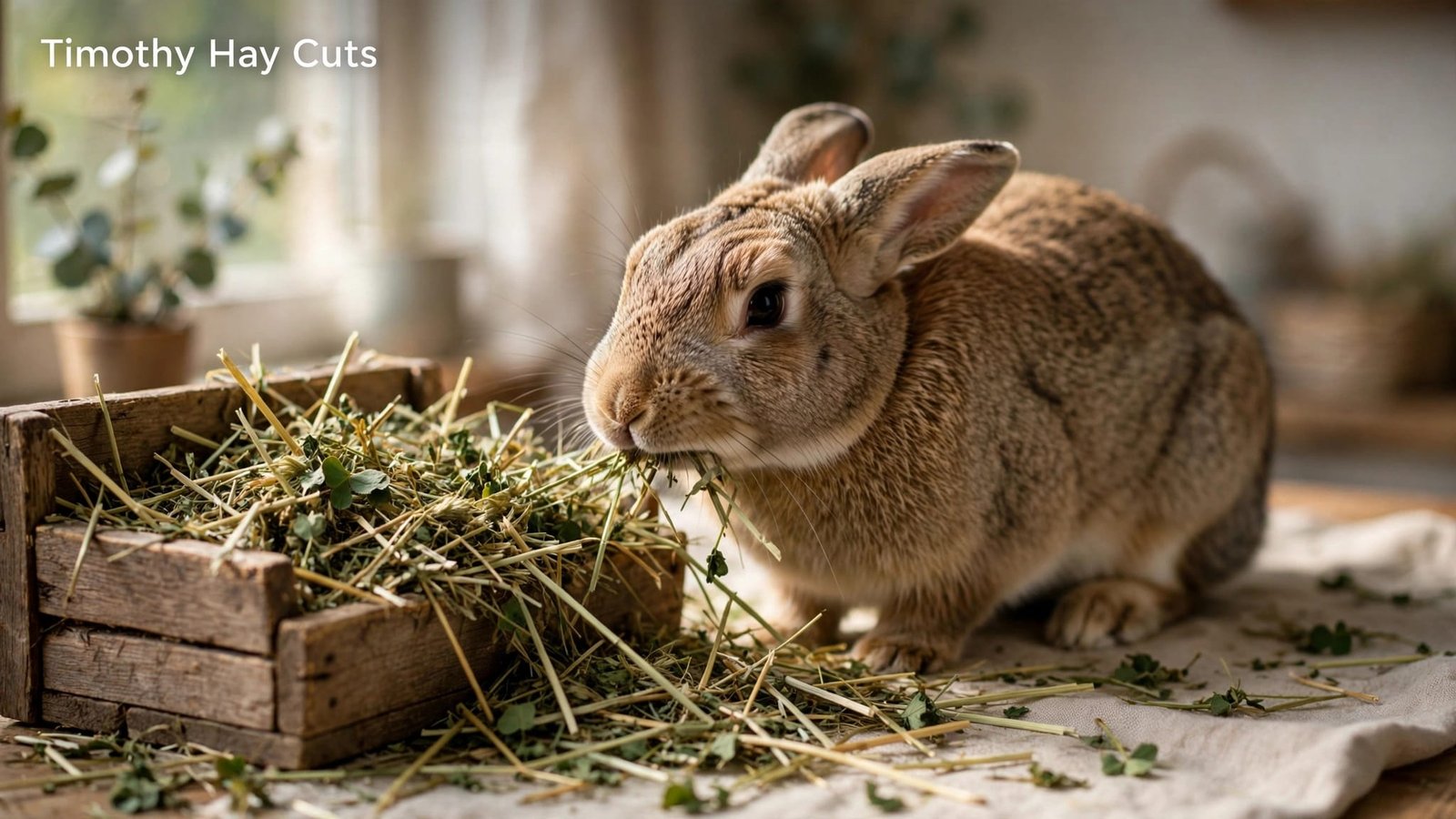
Choosing the wrong Timothy hay cut can feel worrying when your rabbit’s daily diet depends on eating plenty of hay.
Second-cut Timothy is a practical starting point for many healthy adult rabbits because it commonly combines leaves and stems. First or later cuttings can also work when the hay is fresh, suitable, and something your rabbit willingly eats.
The cutting label suggests a typical texture, but it can’t guarantee how a particular bag will look or taste. Your rabbit’s age and health also shape the overall feeding plan, so start with texture preferences rather than assuming one cut suits every bunny.
Key Takeaways
- Second-cut Timothy is a practical starting point for many healthy adult rabbits, but first or third cut can also work if the hay is suitable and your rabbit eats it.
- Cutting labels suggest texture, not guaranteed quality or a rabbit’s preference. Check what your rabbit actually eats and which pieces they leave behind.
- Choose fresh hay with a texture your rabbit accepts, and consider the full diet rather than using a hay cut to address age, weight, or health needs.
- During a change, monitor eating habits and stool size and consistency. Ask a rabbit-savvy veterinarian about feeding, chewing, or individual nutritional concerns.
Compare 1st cut vs 2nd cut vs 3rd cut Timothy hay for rabbits
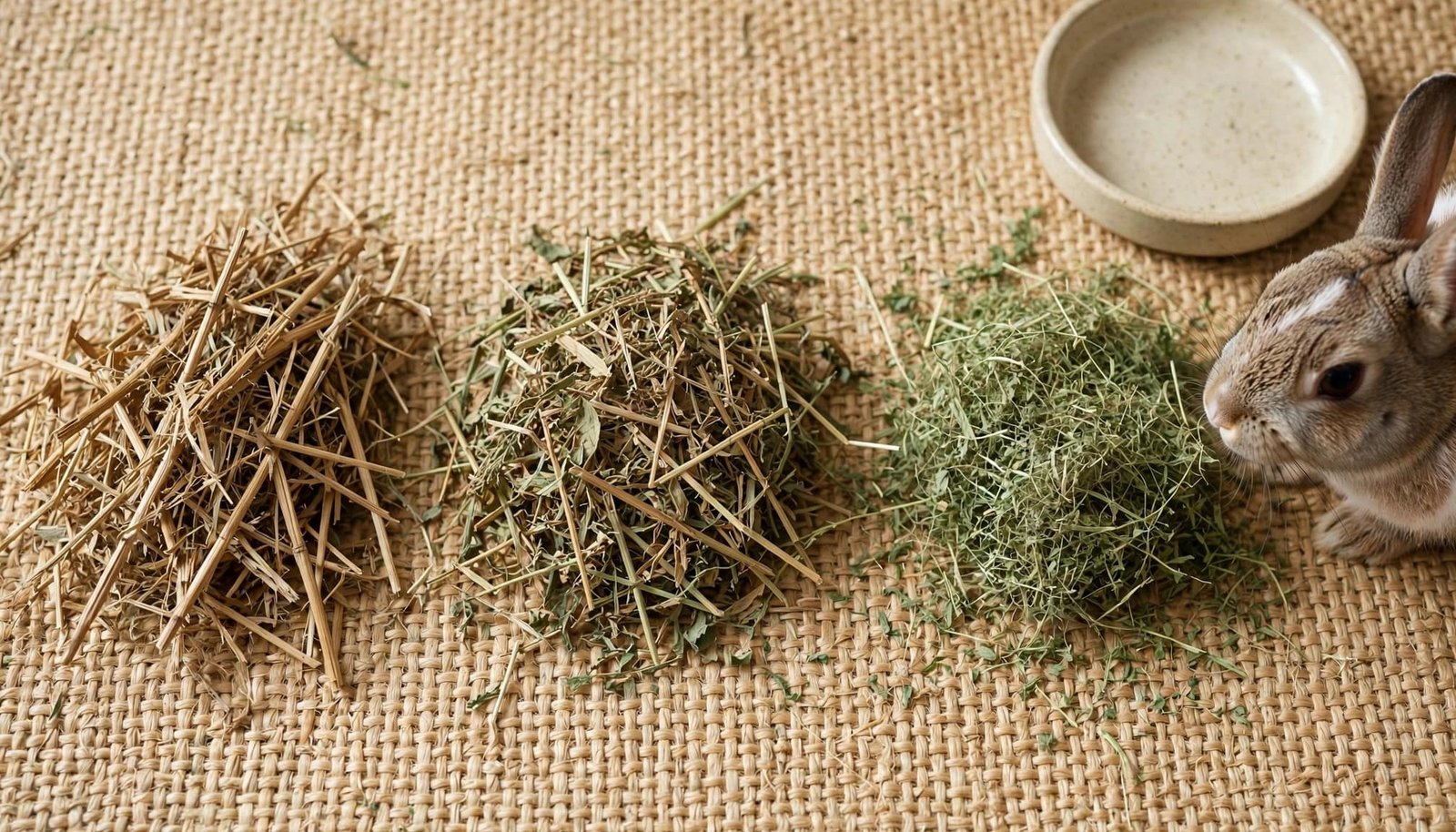
Each harvest of timothy grass can vary in stalk thickness, so the cuts usually differ most in texture. Rabbits, guinea pigs, and other herbivorous small animals often have similar texture preferences, but individual tastes vary.
These descriptions help narrow your choices, but individual batches vary. Our guide to choosing Timothy hay for rabbits covers the broader buying decision, including why your rabbit’s acceptance matters more than a familiar label.
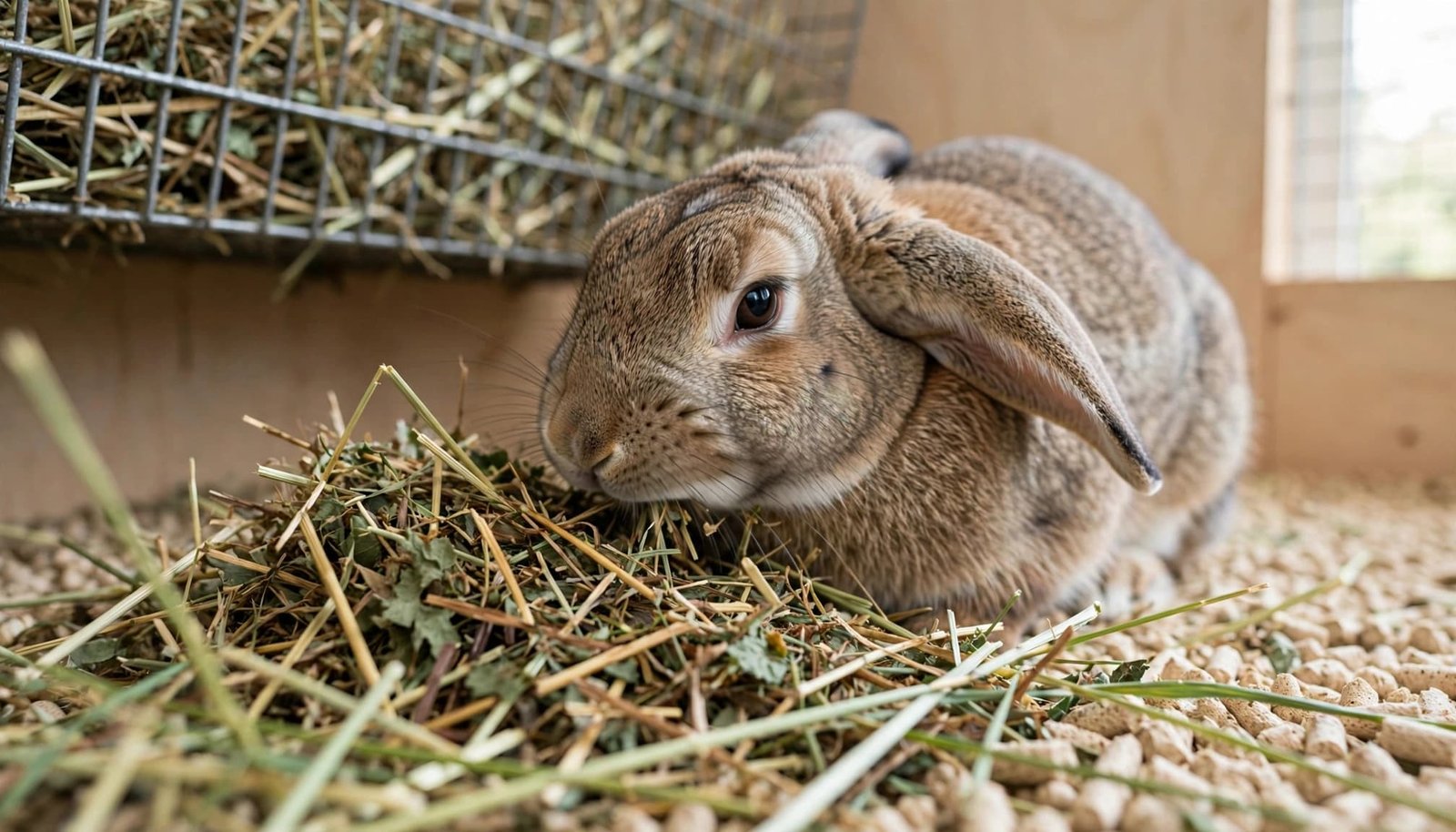
First cut is often coarse and stemmy
First-cut Timothy commonly includes longer, crunchier stems. If your rabbit enjoys working through substantial strands, that texture may be appealing. The coarse stems provide crude fibre for healthy digestion and help grind teeth, including constantly growing rabbit teeth.
Pay attention to what gets eaten, however. Pulling hay out of a feeder doesn’t necessarily mean your rabbit is consuming much of it. Some rabbits scatter the stems while choosing the leafy pieces, so the amount on the floor can give a misleading impression.
A rabbit who comfortably eats first cut doesn’t need a different cut simply because another option feels softer in your hand. Likewise, a stemmy bag isn’t automatically a better match for a rabbit who leaves most of those stems behind.
Use the texture description to anticipate your rabbit’s response, then judge whether the hay becomes a regular part of their eating routine.
Second cut offers a balanced starting point
Second-cut Timothy often has a mixture of stems and softer leaves. That combination makes it a reasonable starting choice when you don’t yet know your healthy adult rabbit’s preferences.
Here, “balanced” describes the texture. It doesn’t mean choosing this harvest takes care of every nutritional decision.
Second cut often offers dependable nutritional value, with moderate crude protein and digestible fibre. Your rabbit still needs an appropriate overall feeding plan. Rabbit.org’s rabbit diet guidance puts hay at the center of daily feeding, with other foods playing supporting roles.
Although it is a useful first purchase, it isn’t a requirement. If your rabbit already enjoys another suitable forage, there may be little reason to replace it. Similarly, an unappealing bag doesn’t become the right choice merely because its label sounds like the middle-ground option.
Third cut tends to be softer and leafier
Third-cut Timothy tends to contain finer, softer material with more leafy pieces and a soft green colour. Some selective eaters prefer that feel, especially when they regularly leave tougher strands untouched.
Still, softness alone doesn’t tell you whether a bag is fresh or whether your rabbit will enjoy it. A fine-textured hay can remain uneaten, while a coarser option may be a favorite.
Consider this late harvest as another texture choice rather than an automatic upgrade. You don’t need to progress through the cuts or eventually settle on the softest one.
Also, keep your expectations tied to the individual bag. Enjoying one batch doesn’t guarantee that every later purchase with the same cutting label will have an identical feel. Your rabbit’s preference may stay consistent even when the hay doesn’t.
Choose the Timothy hay cut your rabbit will actually eat
The right cut is one your rabbit can comfortably make part of everyday eating. A sensible choice combines a suitable hay type, an appealing texture, and a feeding plan that fits your rabbit.
That decision also needs a broader view. Pellets, treats, and other foods can affect how much interest your rabbit shows in hay, so consider the whole diet rather than judging the bag alone.
Match the texture to your rabbit, not just the label
Start with your rabbit’s established habits. Do they eat both leafy pieces and stems, or repeatedly leave the coarsest material? Does a particular texture remain popular across different bags?
Those observations are more useful than assuming all rabbits should enjoy the same cut. They can also help you distinguish a consistent preference from disappointment with one purchase.
Timothy grass is a standard choice, but rabbits vary in how well they tolerate its texture. Orchard grass is often softer and leafier, while meadow hay can offer a mixture of textures. A rabbit who willingly eats an appropriate alternative doesn’t need Timothy simply for its name.
You can also judge whether variety helps maintain interest. Some rabbits enjoy more than one suitable variety, while others reliably favor a familiar texture.
The useful outcome is consistent hay eating, not winning your rabbit over to the cut you expected to buy. Once you know which textures work, shopping becomes less dependent on broad claims printed on the package.
Use age and health to guide the whole diet
Age helps determine your rabbit’s overall nutritional needs, but it doesn’t assign a required Timothy cut. There isn’t a dependable age-based sequence that makes first cut appropriate for youngsters, second cut for adults, and third cut for seniors.
For healthy adults, Rabbit.org recommends unlimited grass hay as the foundation of feeding. A mid-season cut can fit that plan, but another suitable cut or forage may fit just as well. Overall daily intake should match your rabbit’s ideal body size.
Growing rabbits need a feeding plan that supports development. Alfalfa may have a place in that plan because it has substantially higher calcium and protein levels than grass varieties. It’s a legume hay, and it isn’t usually the main everyday hay for healthy adults.
An older rabbit doesn’t automatically need finer hay either. If your senior rabbit comfortably eats a familiar texture, age alone isn’t a reason to replace it. We have another article outlining tips about what to try if your rabbit stops eating hay.
Health concerns call for individual advice. A rabbit-savvy veterinarian can assess body condition alongside body size, nutritional needs, and dental concerns. Choosing a different cut shouldn’t become your entire weight-management or feeding plan.
That distinction matters because a hay label describes only one part of the diet. It can’t tell you whether your rabbit’s full combination of foods suits their life stage or medical needs.
Check hay freshness and monitor your rabbit during a change
Your buying decision continues after you’ve chosen a cut. The package description gives you a starting point, while the actual hay and your rabbit’s response determine whether the purchase works.
Keep the focus on freshness, suitability, and regular eating. A preferred cut or familiar supplier can make shopping easier, but neither removes the need to assess each new bag.
Inspect every bag before you buy
First, read what the package identifies. Timothy, orchard grass, meadow hay, and alfalfa aren’t interchangeable names for the same food.
Then consider whether the description matches the texture you’re trying to buy. A cutting label can help set expectations, but terms like “soft” don’t describe every strand. Marketing claims such as “premium cut timothy hay” also don’t show the actual leaf-to-stem ratio, so inspect the hay when possible.
Look for a fresh smell and a natural green colour, but don’t rely on appearance alone. Fresh, dust-free hay is essential for limiting respiratory irritants around small animals with sensitive airways.
Package size deserves attention too. While you’re learning your rabbit’s preferences, a manageable purchase can be more useful than committing to a large supply of an unfamiliar texture. Once a hay becomes a dependable choice, you can make a better judgment about larger packages.
Compare price per pound rather than the sticker price alone. Different package weights can make two similarly priced bags very different purchases.
However, value also depends on acceptance. A low price offers little benefit if much of the hay remains uneaten. A rabbit scattering hay doesn’t automatically mean the entire purchase is wasted; distinguish what they eat from what they move around.
Keep freshness and willingness to eat ahead of claims about a premium cut. The practical question is whether the hay you receive supports your rabbit’s normal feeding routine.
Introduce new hay gradually and watch appetite
During a change, your rabbit’s everyday eating pattern matters more than whether the new bag looks appealing to you. Notice actual grazing rather than relying only on the appearance of a well-filled feeder.
A full feeder tells you that hay is available. It doesn’t tell you how much your rabbit has eaten.
Likewise, scattered hay can make consumption difficult to judge. Looking at which pieces remain can help you understand whether your rabbit enjoys the mixture or consistently selects only one part of it.
In a home with several rabbits, observe each bunny individually. Shared access to hay doesn’t establish that every rabbit likes the same texture or eats a similar amount. One enthusiastic hay eater can make the group’s feeding area look busier than another rabbit’s habits would suggest.
A brief note about the hay type, cut, and texture your rabbit enjoys can make future purchases easier. Record the features that matter rather than treating a single successful bag as a permanent guarantee.
Keep the wider feeding routine in view as well. Track stool size and consistency during a diet transition to check that digestion stays steady. Interest in pellets or treats doesn’t tell you whether hay is playing its intended role in the diet. If you’re uncertain about your rabbit’s feeding needs or chewing comfort, a rabbit-savvy veterinarian can help you assess the whole picture.
Frequently Asked Questions
Which Timothy hay cut is best for rabbits?
Second-cut Timothy is a practical starting point for many healthy adult rabbits because it often has a mix of stems and leaves. First or third cut can also be suitable if your rabbit enjoys the texture and eats it regularly.
Is third-cut Timothy hay better for picky rabbits?
Third cut tends to be softer and leafier, which some selective eaters prefer. Texture alone doesn’t guarantee that your rabbit will eat the hay, so judge each bag by your rabbit’s response.
Does a rabbit’s age determine which hay cut to buy?
Age helps guide the overall feeding plan, but it doesn’t assign a required Timothy cut. Growing rabbits may need a plan that includes alfalfa, while a senior rabbit doesn’t automatically need finer hay.
How can I tell if my rabbit is eating enough hay?
Watch your rabbit graze and check which pieces remain instead of relying on a full feeder or a pile of scattered hay. In a home with several rabbits, observe each one individually and monitor stool size and consistency during a diet change.
What should I check when buying Timothy hay?
Confirm the hay type, inspect its texture when possible, and look for a fresh smell and natural green colour. Consider package size and price per pound, but prioritize whether your rabbit will eat the hay.
Choose Hay Your Rabbit Will Keep Eating
Second-cut Timothy is a useful starting point for many healthy adults. An earlier or later cut may be a better match for an individual rabbit’s texture preferences.
Your most useful rule is to choose fresh, suitable hay that your rabbit comfortably and willingly eats. Keep appropriate grass hay available every day rather than treating the cutting label as the final decision.
Let regular eating guide your purchases, and get veterinary advice when you have concerns about feeding, chewing, or individual nutritional needs.
We recommend Kaytee Brand Timothy Hay as it consistently has the best reviews, offers very good value for the cost and that their animals love it.
We only recommend top-rated, affordable products you can trust. As an Amazon Associate, I may earn from qualifying purchases through the affiliate links above at no extra cost to you. Thank you for supporting our work.