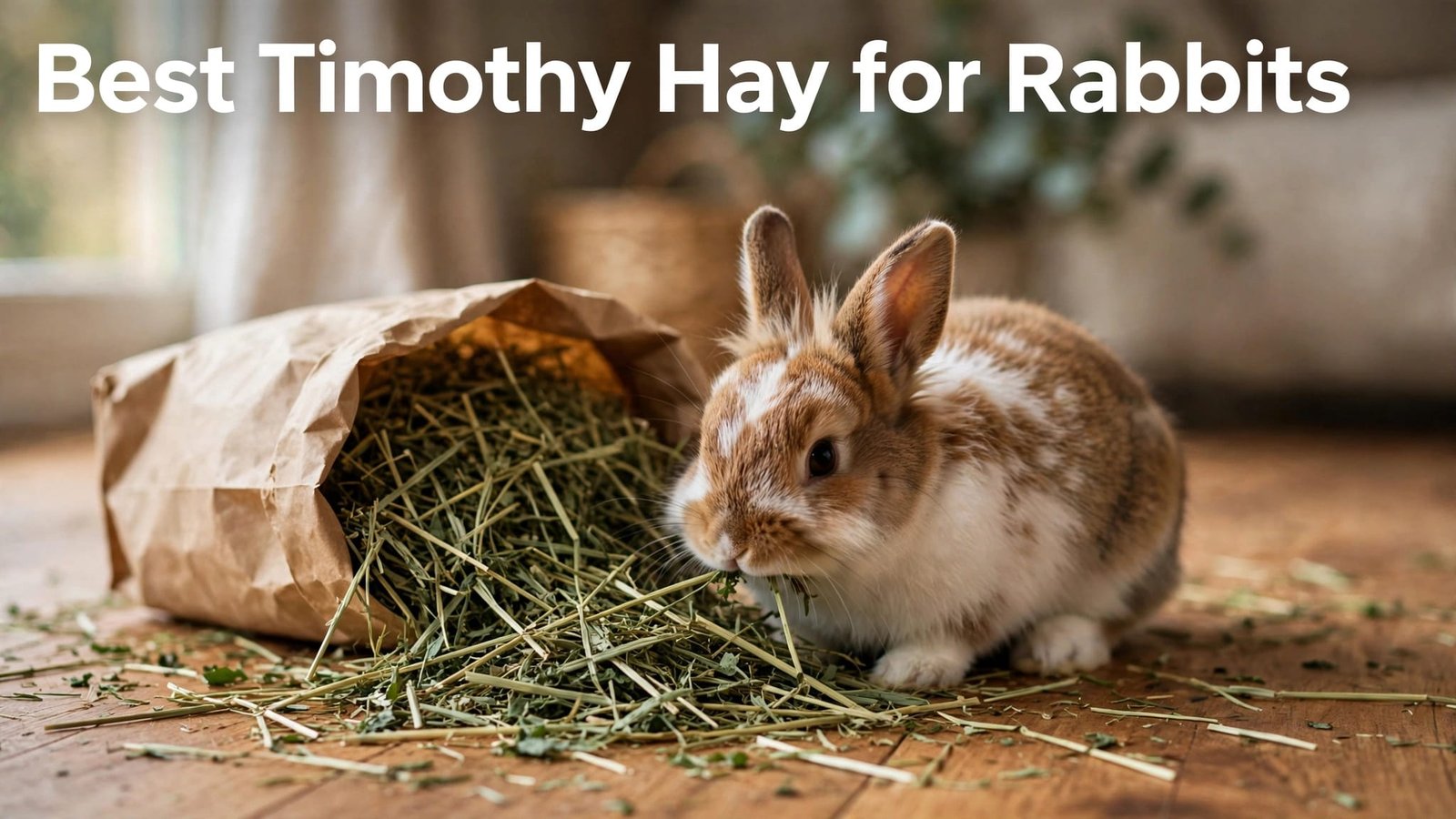
Most healthy adult rabbits do well with fresh grass hay, and Timothy is a dependable everyday choice. When you’re choosing timothy hay for rabbits, freshness and your bunny’s preference matter more than a brand name or cutting label.
A suitable bag should contain clean, dry, fresh-smelling hay that your rabbit willingly eats. Comparing texture, package size, and value can help you avoid buying a large supply your furry friend leaves untouched.
Start with the hay itself, then choose a package that fits your rabbit’s appetite and your storage space.
Key Takeaways
- Choose Timothy hay that’s clean, dry, grassy-smelling, and appealing to your rabbit. Inspect each bag because texture can vary between batches.
- Cutting labels describe general texture patterns, not fixed quality grades. Your rabbit’s appetite and chewing comfort matter more than choosing a particular cut.
- Keep fresh grass hay available, store it in a cool, dry, airy place, and replace hay that becomes wet, dirty, stale-smelling, or moldy.
- Introduce new hay beside familiar hay and watch your rabbit’s appetite and droppings. Sudden changes need prompt veterinary attention.
- Age and health can affect a rabbit’s feeding plan, but they don’t determine a required Timothy cutting. Ask a rabbit-savvy veterinarian about individual needs.
Best Timothy Hay for Rabbits: What to Look for When You Buy
Choose Timothy hay with long strands, a pleasant grassy smell, and a texture your bunny enjoys chewing. No single brand is best for every rabbit.
The House Rabbit Society’s diet guidance lists Timothy among suitable grass hays for adult rabbits. Its long-strand fiber supports digestion, and chewing hay supports normal dental wear for rabbits’ continuously growing teeth.
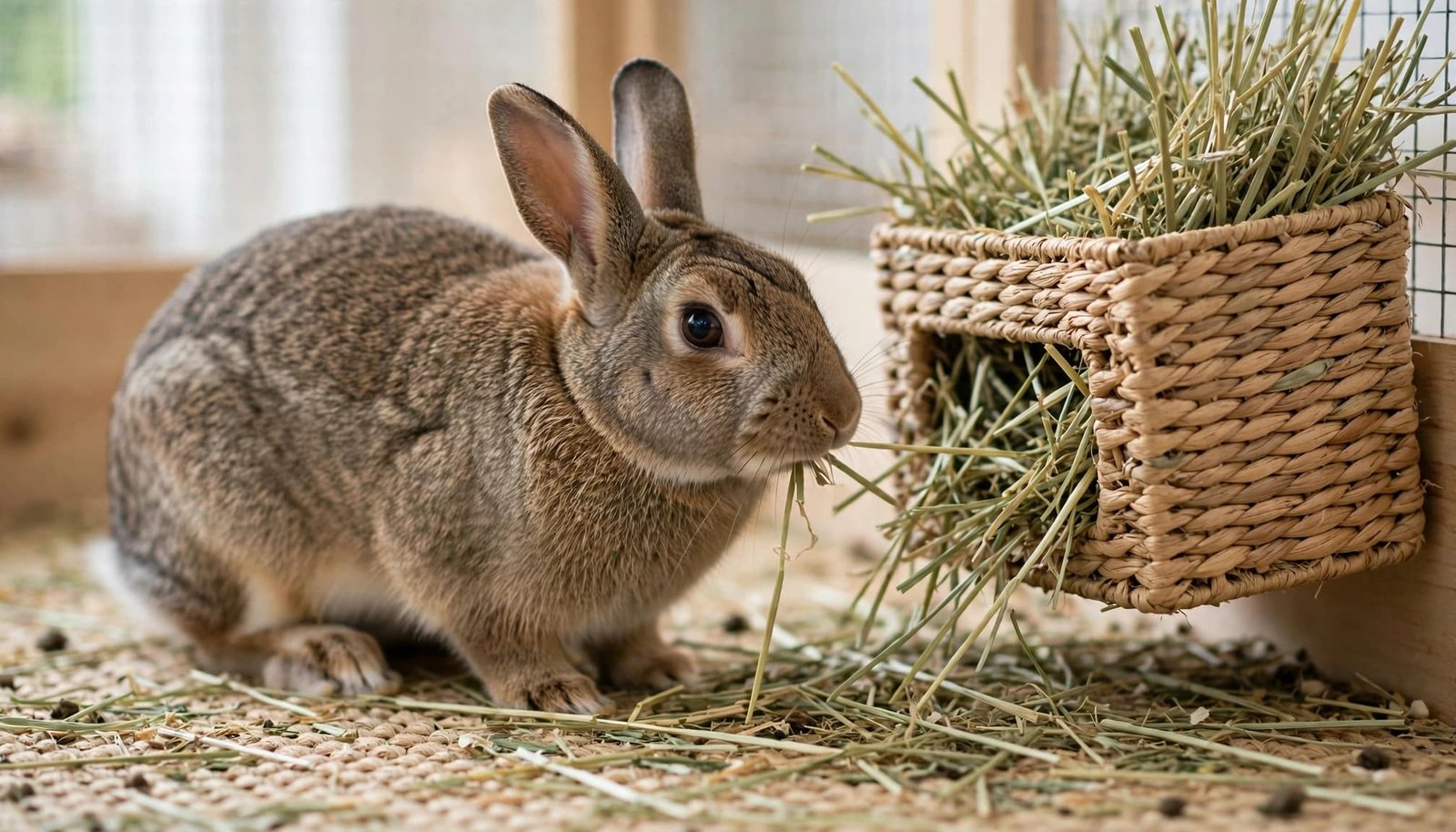
Compare Timothy hay brands and package details
Oxbow and Small Pet Select are two brands you can compare. Neither is a universal winner. Your rabbit may happily eat one brand’s hay but prefer a different texture in another batch.
Compare the stated hay type, cutting if listed, package weight, packaging, and delivered price per pound. Include shipping when working out the cost. Customer feedback about dust, crushed strands, and consistency can help you spot recurring concerns, although reviews can’t guarantee your particular bag.
A smaller package and one-time purchase are sensible when trying unfamiliar hay. Once your bunny reliably eats it, compare a subscription or subscribe and save option. Check the seller’s current terms and savings before signing up.
Choose a quantity you can keep dry and fresh. Before buying a 35 lb package, consider your storage space and whether your rabbit will finish it while the hay is fresh. A bulk purchase loses its value if much of it becomes stale before your rabbit eats it.
Check the hay itself, not just the label
Once you open the package, smell and handle a handful. Good hay feels dry and smells grassy. Its color may include green and golden strands; a little natural variation doesn’t make it poor quality.
Avoid hay that smells musty, feels damp, contains visible mold, or releases excessive dust when handled. Moldy hay should be discarded, rather than sorted for pieces that look usable.
Look for plenty of recognizable strands rather than a bag mostly filled with tiny fragments. Leaves and seed heads are normal parts of hay.
Inspect each new bag, even when buying a familiar brand. Weather, harvest conditions, and handling can change the texture between batches.
Which Timothy Hay Cut Is Right for Your Rabbit?
The 1st cutting, 2nd cutting, and 3rd cutting are successive harvests. They aren’t fixed quality grades, and a higher number doesn’t automatically mean better hay. For further info we have this article on Timothy Hay Cuts with more help on how to choose.
Use the cutting label as a starting point. Your bunny’s chewing habits and willingness to eat matter more.
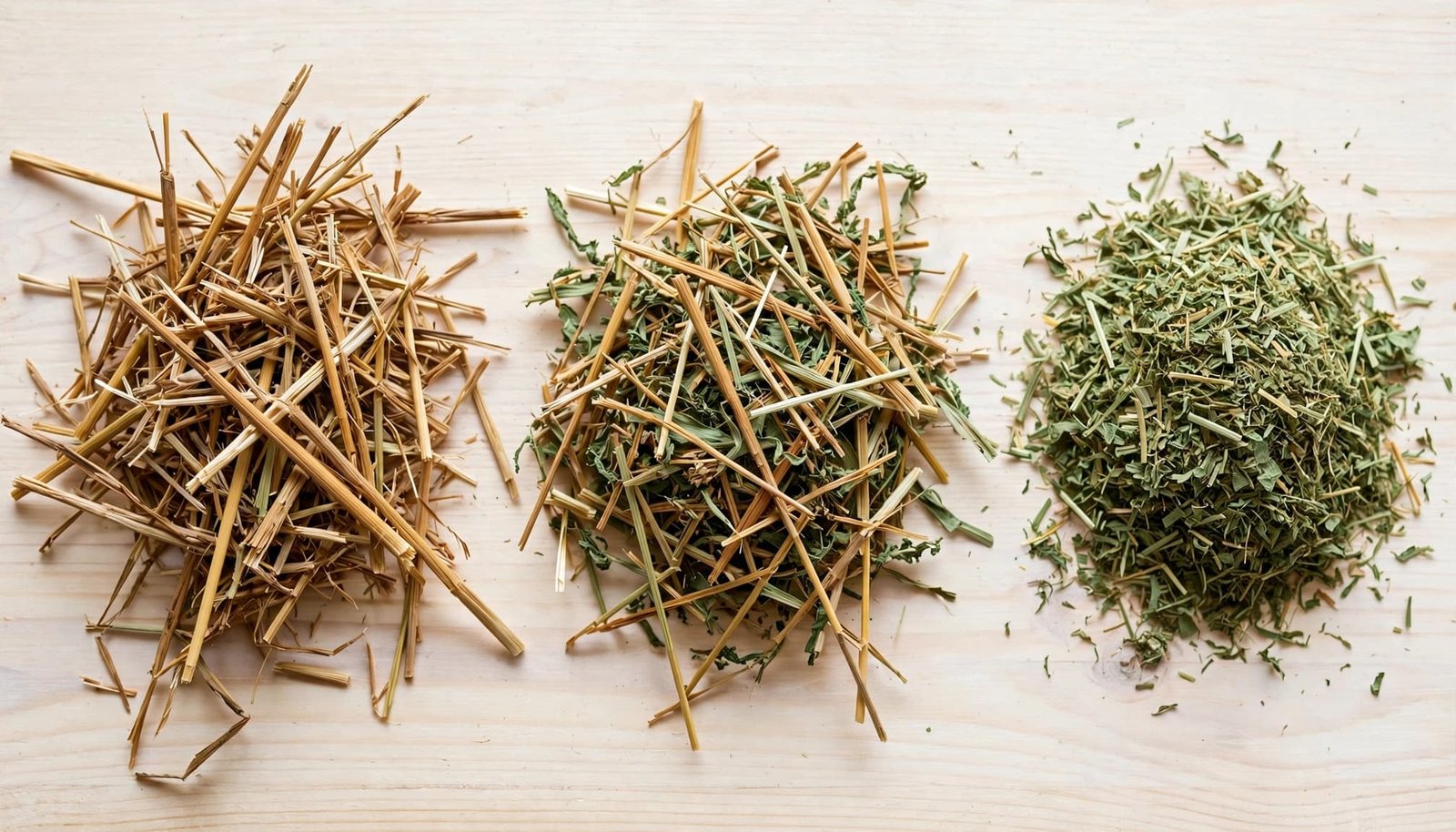
Choose a texture your rabbit likes to chew
Hay from the earliest cutting is often coarser and stemmier. It may appeal to a rabbit who enjoys pulling apart long, crunchy stalks.
Second cut timothy hay commonly offers a balance of stems and softer leaves. It’s a practical starting point when you don’t yet know your rabbit’s preferences, but it isn’t a universal best choice.
Hay from the final cutting is often finer, softer, and leafier. Some selective eaters enjoy it, but it isn’t automatically the right choice for every picky bunny.
These are general patterns. Harvest conditions and suppliers can produce noticeably different results under the same cutting label. Look at what arrives, then watch what your rabbit eats.
You don’t need to persuade a happy hay eater to accept a different cutting simply because its label sounds better.
Try another grass hay if Timothy isn’t a favorite
If your healthy rabbit has never been enthusiastic about Timothy, another suitable grass hay may help. The San Diego House Rabbit Society’s hay guide includes orchard and meadow hay among adult-rabbit options.
Orchard grass is often softer and leafier. Meadow hay can offer varied textures because it contains different grasses. Oat hay commonly has thicker stems and seed heads.
You can offer a little alongside familiar hay to learn what your bunny enjoys. Keep the usual supply available during the change.
A rabbit who consistently eats fresh orchard grass doesn’t need to switch to Timothy just for the name. However, a sudden refusal of previously enjoyed hay needs veterinary attention.
How to Keep Timothy Hay Fresh and Encourage Your Rabbit to Eat It
Keep suitable free-choice hay available throughout the day and night. Rabbit.org’s feeding guidance recommends unlimited fresh hay for adult rabbits.
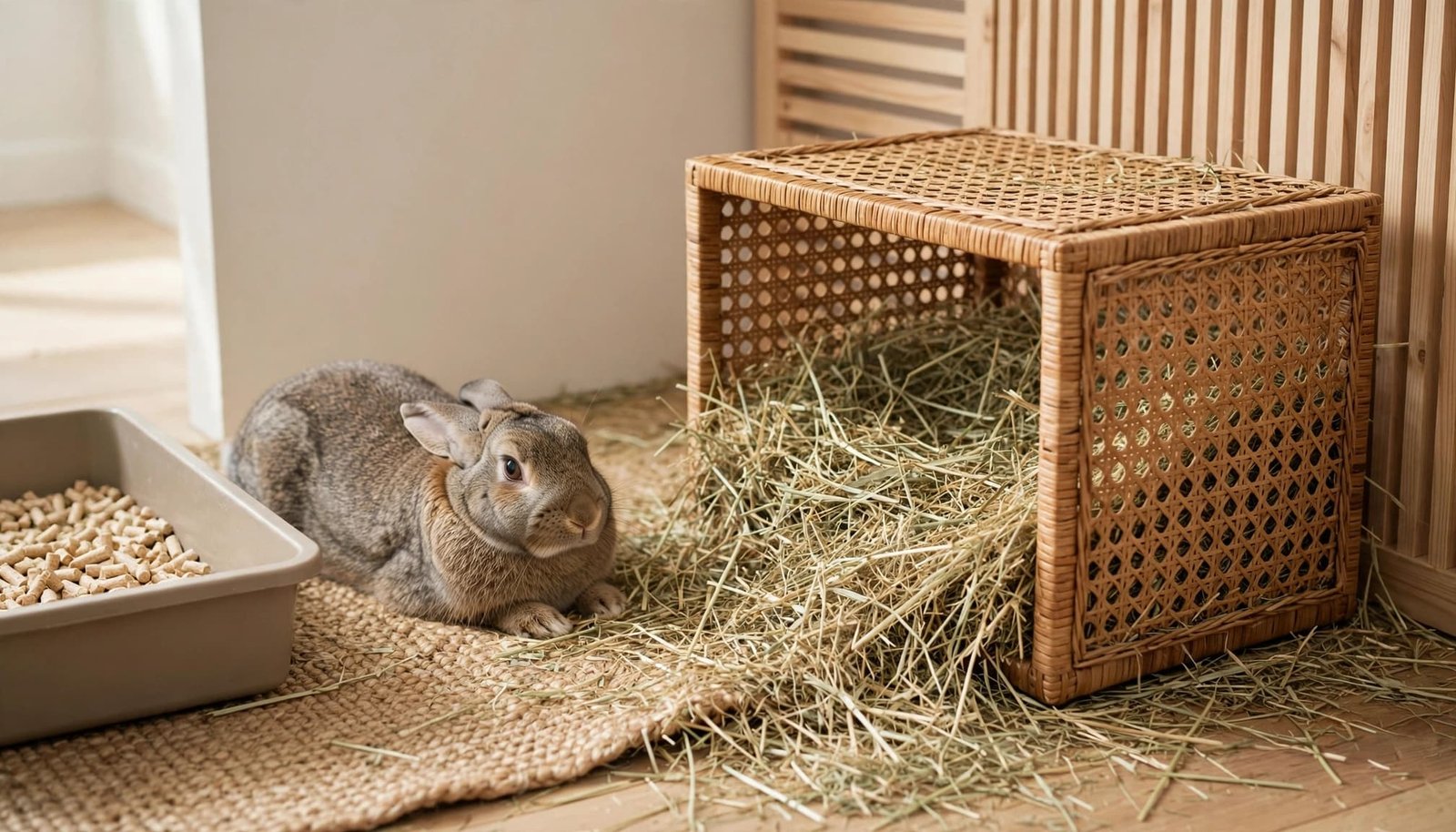
Place it in a clean, easily reached feeder or beside the litter area. Many bunnies enjoy eating while using their litter box. Keep the eating supply separate from wet or dirty litter.
Offer fresh handfuls regularly, even when some hay remains. Don’t make your bunny finish soiled or unappealing leftovers first.
A full feeder doesn’t prove your rabbit is eating enough. Watch how much hay disappears and whether your bunny produces their usual droppings.
Switch hay gradually and store it the right way
Offer a small amount of new hay beside the familiar type. This gives your rabbit time to investigate its smell and texture without losing access to food they already enjoy.
Watch appetite and droppings during the change. If your bunny eats less, don’t keep removing familiar foods to force acceptance.
Store the main supply somewhere cool, dry, and airy. A paper bag, clean cardboard box, or breathable container can work. Avoid damp floors, steamy rooms, direct sunlight, and tightly sealed storage that could trap moisture.
Keep older hay separate when opening a new bag. Don’t mix stale-smelling leftovers into fresh hay, and discard anything that becomes wet, dirty, or moldy.
Know when Timothy hay may not fit your rabbit’s needs
Growing rabbits, pregnant or nursing rabbits, and bunnies with weight or health concerns, such as a history of bladder stones, may need an individualized feeding plan. This example doesn’t mean any particular hay prevents or treats the condition.
Alfalfa is a legume hay with more protein and calcium than common grass hays. It can suit growing rabbits or certain special needs, but it isn’t usually the main everyday hay for healthy adults. See also: When Can Baby Rabbits Eat Timothy Hay.
Your rabbit-savvy veterinarian can help you choose suitable hay and supporting foods for these situations. Don’t assume that softer hay alone will solve a feeding problem.
Sudden appetite changes need prompt attention. Contact your veterinarian if your rabbit eats much less hay or produces fewer droppings. If your bunny stops eating, seek urgent veterinary care rather than waiting for another bag to arrive.
What Cut of Hay for Your Rabbits Age?
Your rabbit’s age helps guide their overall diet, but it doesn’t determine a required Timothy cutting. There isn’t a dependable rule that young rabbits need first cut, adults need second cut, and seniors need third cut.
Choose the overall feeding plan for your bunny’s life stage. Then choose a hay texture they can comfortably and willingly eat.
Young and growing rabbits
A growing bunny has different nutritional needs than a mature rabbit. Alfalfa hay may be part of their feeding plan, while grass hay can help them become familiar with future adult foods.
Don’t choose third-cut Timothy simply because it feels soft, or first cut because it looks more substantial. Neither label tells you whether the whole diet supports growth.
Keep familiar foods available when bringing a young rabbit home. Moving house and changing every food at once can make it harder to notice appetite problems.
As your bunny approaches an adult diet, follow veterinary guidance about reducing richer foods. Introduce grass hay gradually rather than replacing the familiar supply overnight.
Healthy adult rabbits
For a healthy adult, second-cut Timothy is a practical starting option because it commonly combines leaves and stems. First cutting is also suitable when your bunny enjoys its coarser texture.
Third cutting may appeal to an adult who prefers finer hay. Still, judge the individual batch and the amount eaten rather than treating softness as proof of quality.
Long-term acceptance matters more than choosing one cutting forever. You can offer suitable grass hays together if your rabbit enjoys variety.
Keep pellets and treats in appropriate portions so they don’t crowd out hay. If weight is a concern, ask your veterinarian to review the full diet and advise on weight management. Changing hay alone isn’t a complete plan. Don’t withhold necessary food to make your rabbit accept a particular cutting.
Senior rabbits and rabbits with dental concerns
An older rabbit doesn’t automatically need softer hay. If your senior bunny comfortably eats their familiar Timothy hay cut, age isn’t a reason to change it.
Always make hay easy to reach, especially if movement is becoming difficult. A low, accessible feeding area can help your bunny continue their usual grazing routine.
A new preference for soft leaves, dropped food, drooling, or weight loss deserves a dental assessment. Choosing third cutting may make eating easier for some rabbits, but it doesn’t treat dental disease.
If your rabbit cannot manage loose hay, your veterinarian should plan suitable nutritional support. Hay cubes or pellets shouldn’t automatically replace loose hay without that guidance.
Frequently Asked Questions
Which Timothy hay cut should I choose for my rabbit?
Second-cut Timothy is a practical starting point because it commonly has a balance of stems and leaves. First and third cuttings can also suit a rabbit, depending on the texture they enjoy and the hay in that batch.
How can I tell if Timothy hay is fresh?
Fresh hay feels dry and smells grassy, with a mix of green and golden strands. Avoid hay that smells musty, feels damp, has visible mold, or releases excessive dust.
How should I introduce a new hay?
Offer a small amount of new hay beside the familiar type, and keep the usual supply available. Watch your rabbit’s appetite and droppings during the change.
How should I store Timothy hay?
Keep it somewhere cool, dry, and airy, such as in a paper bag or clean cardboard box. Keep it away from damp floors, steamy rooms, and direct sunlight, and discard hay that becomes wet, dirty, or moldy.
When should I contact a veterinarian about my rabbit’s hay intake?
Contact your veterinarian if your rabbit eats much less hay or produces fewer droppings. If your rabbit stops eating, seek urgent veterinary care. Also see: My Rabbit Won’t Eat Timothy Hay – 6 tips to stop picky eating.
Choose Hay Your Bunny Will Keep Eating
The best timothy hay for rabbits is clean, dry, fresh-smelling, and appealing enough for regular eating. A familiar brand or preferred cutting can make shopping easier, but neither replaces inspecting the bag and watching your bunny’s appetite.
Keep fresh hay available every day, store your supply away from moisture, and replace wet or dirty handfuls. Choose a manageable package size while learning which textures your rabbit enjoys.
Your bunny’s steady grazing is more useful than a premium-looking label. A suitable bag earns its place in your routine when your rabbit happily returns for another mouthful.