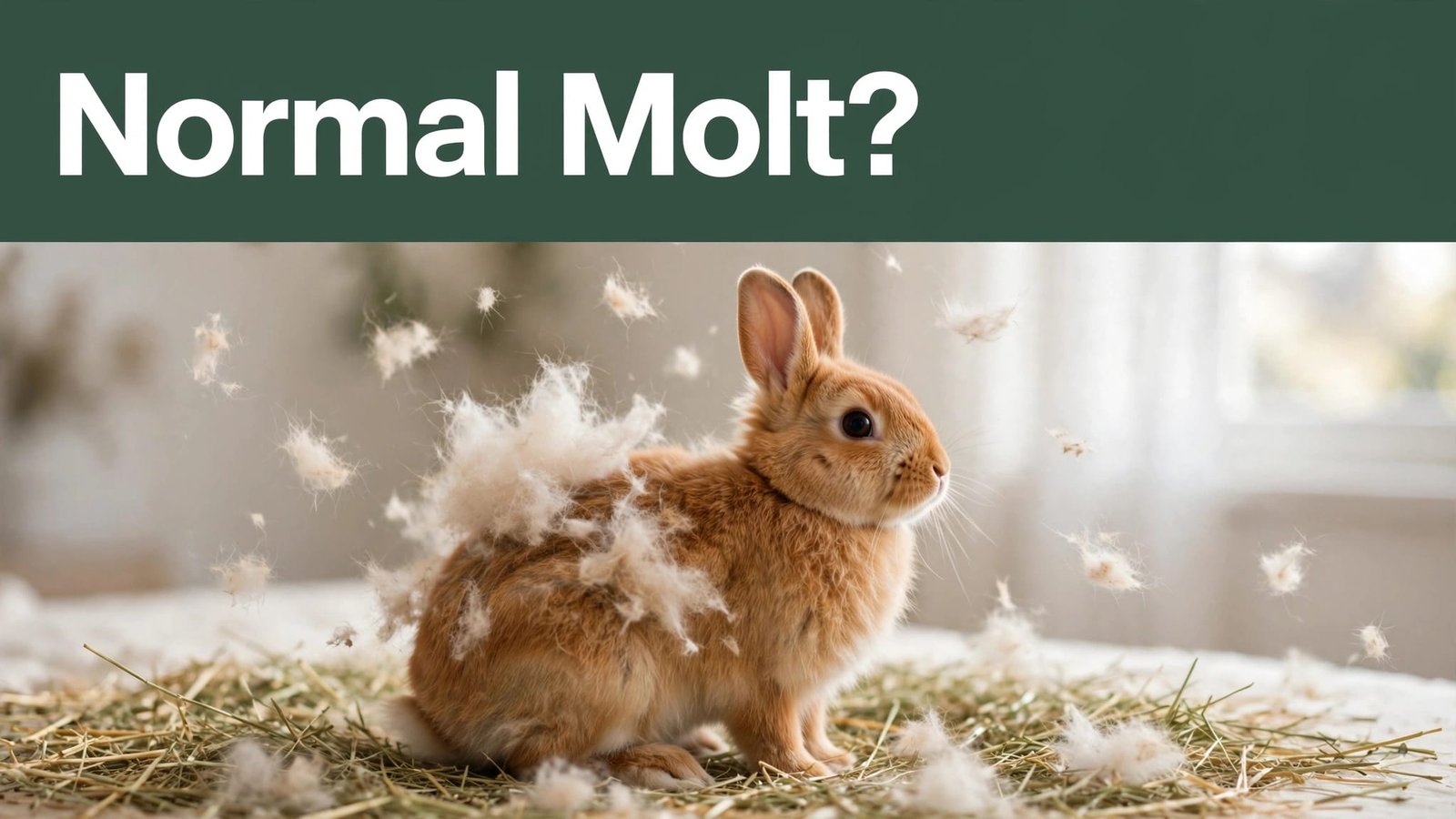
Heavy shedding is often a normal seasonal molt, so loose fur around your bunny’s home doesn’t always mean something is wrong. Still, if you’re asking, “why is my rabbit shedding so much,” it’s smart to look at the whole picture, not only the fur.
Sudden fur loss can also be linked to skin trouble, parasites, stress, poor grooming, or another health problem. Swallowed loose fur and reduced eating deserve attention, so keep an eye on hay intake and droppings during a big molt.
Why Is My Rabbit Shedding So Much?
Shedding alone is usually not an illness. Rabbits naturally lose old fur as their coats change, a process known as moulting. Indoor lighting, temperature shifts, age, stress, and coat type can all affect how noticeable it is.
A healthy molt should not leave sore skin, big bald patches, intense itching, or a bunny who seems unwell.
Seasonal molting can leave loose fur everywhere
Many rabbits shed heavily when changing from a winter coat to a summer coat, then again as cooler weather returns. Some shed slowly over several weeks. Others seem to drop fur everywhere at once.
Long-haired rabbits, including Lionheads and Angoras, need closer coat checks because loose fur can tangle quickly. You may notice tufts lifting from the coat or fur coming away in your hands during gentle petting.
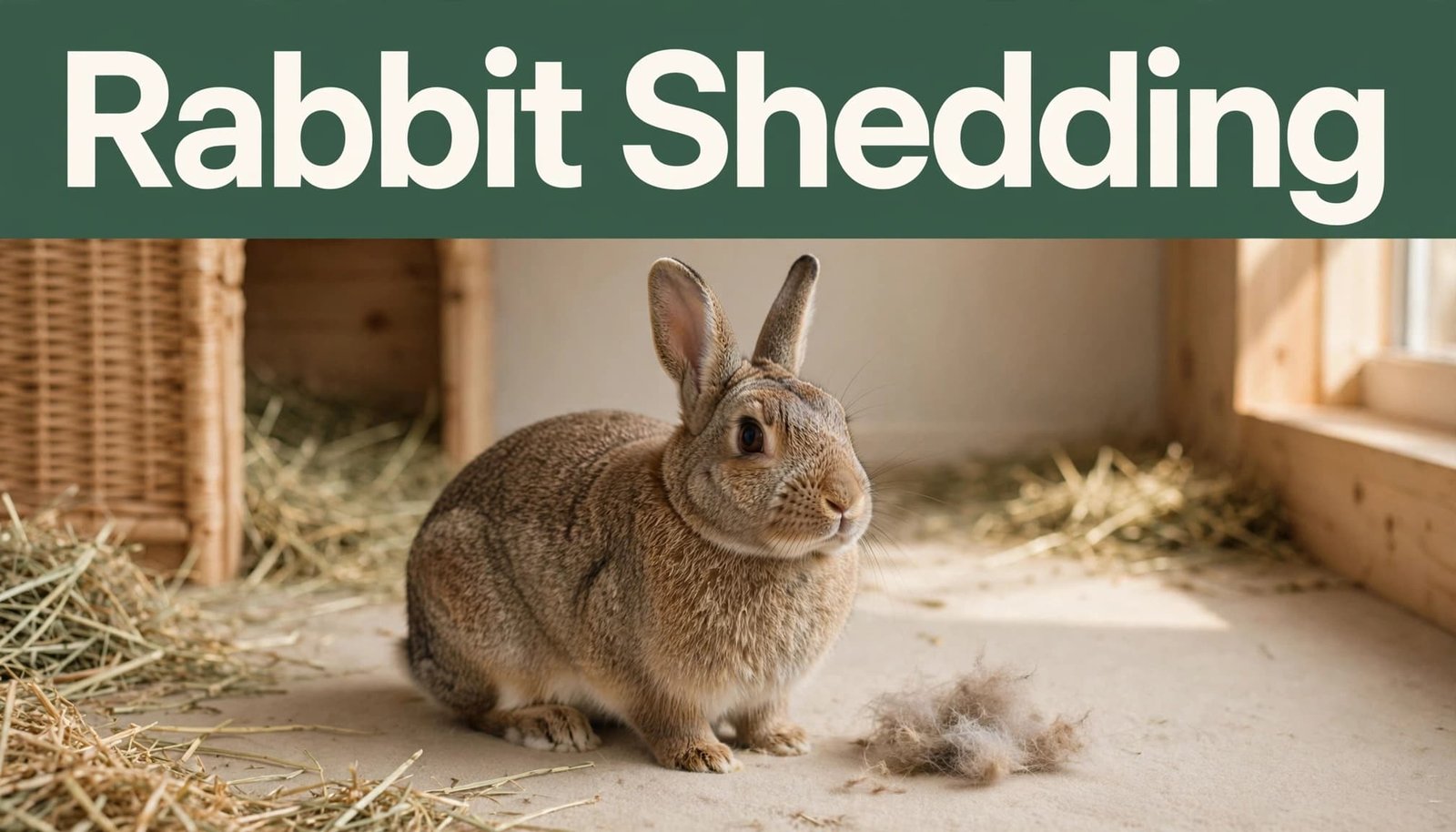
Health problems can look like ordinary shedding
Normal shedding does not cause scabs, redness, dandruff, sores, or severe scratching. Fur pulling, head shaking, ear discharge, fleas, mites, and ringworm also need veterinary advice.
Dental pain, arthritis, obesity, or illness can make a rabbit groom less. The coat may then look dirty, greasy, or matted. A change in grooming habits is worth checking, especially if your furry friend is less active or hiding more than usual.
How to Tell Normal Rabbit Shedding From a Health Problem
A normal molt leaves the skin looking healthy. Your rabbit should still eat hay, drink, move around, groom, and produce their usual amount of droppings.
Sudden hair loss with behavior changes is different. Reduced appetite, smaller droppings, hiding, lethargy, a hunched posture, or signs of pain need prompt advice from a rabbit-savvy veterinarian.
Check the coat, skin, litter box, and behavior
During heavy shedding, check behind the ears, under the chin, around the legs, on the belly, near the scent glands, and beneath the tail. These tucked-away spots are easy to miss.
Compare your bunny’s hay intake, water drinking, energy, and fecal output with their normal routine. Fur-linked droppings can happen during a molt. Repeated strings of droppings plus poor appetite, fewer droppings, or unusual quietness are more concerning.
Loose fur is common during a molt. A rabbit who stops eating or produces very few droppings needs attention right away.
When heavy shedding needs a rabbit-savvy vet
Seek urgent veterinary care if your rabbit stops eating, produces very few or no droppings, seems painful, has a bloated belly, becomes unusually quiet, or has trouble breathing.
Make an appointment for persistent itching, sores, parasites, unexplained bald spots, or a dirty rear. Don’t use human medicines, flea products, or home parasite treatments unless your veterinarian tells you they are safe for your rabbit.
Safe Ways to Manage Excess Rabbit Fur at Home
A simple grooming routine can make shedding season much easier. Brush gently in the direction of hair growth, especially when loose fur is lifting away from the coat.
Keep sessions short and use a secure, non-slip surface, such as a folded towel on the floor. Your fingers are often the safest first tool for feeling where loose fur ends and skin begins.
Choose gentle tools and avoid dangerous shortcuts
A soft brush and fine-toothed comb can help lift loose fur and check for small tangles. A soft-tipped slicker brush may help with the outer coat, but don’t use it to dig into a knot.
If loose fur begins to tangle, follow these safe rabbit fur mat removal tips. Never pull hard on a mat or slide scissors underneath it. Rabbit skin can be pulled up inside the knot, especially around the belly, legs, and rear.
Tight mats, sheet mats, sore skin, and dirty rear fur need a rabbit-savvy veterinarian or experienced professional.
Keep grooming calm and protect the digestive system
Try one or two minutes at a time. Give your bunny a break, a head rub if they enjoy it, or a rabbit-safe leafy green afterward.
Stop if your rabbit freezes, struggles, thumps, hides, grunts, or bites. Grooming shouldn’t become a battle. Unlimited grass hay, fresh water, daily movement, and regular brushing are simple ways to support normal digestion during a heavy molt.
How to Reduce Shedding and Prevent Coat Problems
You can’t stop a normal molt, but you can stop loose fur from turning into tangles. Check the coat daily during a heavy shed. Long-haired rabbits often need brushing several times each week, or more when needed.
Keep bedding and flooring dry, clean the litter area often, and introduce diet changes slowly. Regular nail trims and gentle coat checks can also reveal lumps, sores, parasites, or urine-soaked fur early.
Build a simple coat-check routine
Keep grooming supplies nearby so you can do a quick check after your rabbit eats hay or settles down to rest. Look at hidden areas before fur becomes packed or damp.
Keep the rear clean and dry. A dry bath or powder is not a replacement for proper cleaning or veterinary care, especially around wet, sore, or contaminated skin.
Support a healthy coat with the right daily care
A balanced rabbit diet centers on unlimited grass hay, fresh water, appropriate leafy greens, measured pellets, and limited treats. Hay supports digestion and natural tooth wear, too.
Skip oils, supplements, essential oils, and household allergy products marketed as shedding fixes. Avoid scented sprays, diffusers, and dusty products around your rabbit’s living area.
A Healthy Rabbit Can Shed a Lot
A seasonal molt can make a healthy rabbit shed an impressive amount of fur, especially if they have a long coat. Healthy skin, normal eating, and normal droppings are the reassuring signs to watch for.
Brush gently, offer plenty of hay and water, and check your bunny’s behavior each day. Early attention to bald patches, irritated skin, pain, reduced eating, or reduced fecal output makes coat and digestive concerns much easier to manage.