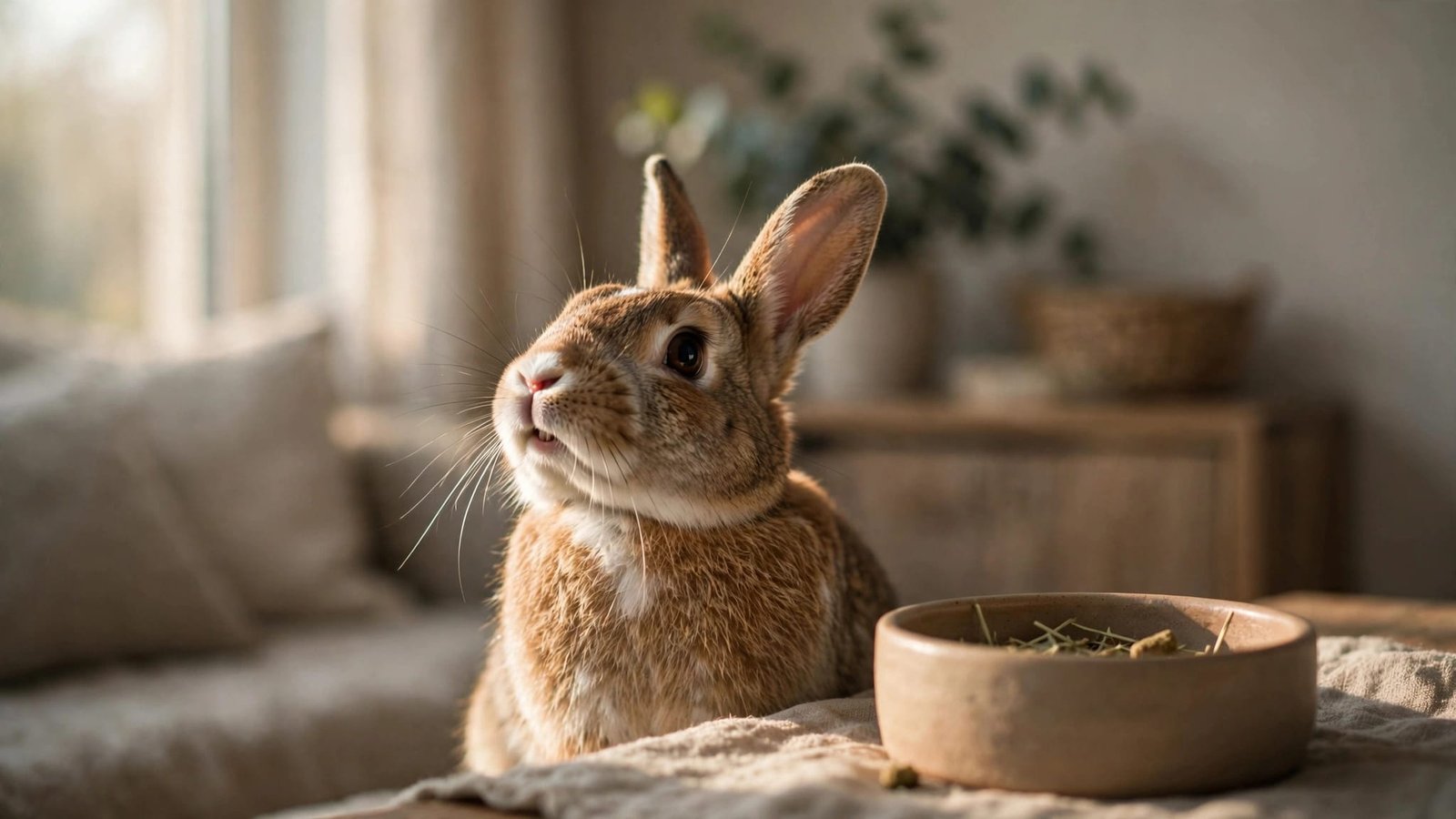
A tiny honk, a gentle tooth click, or a sudden thump can leave a new bunny owner wondering what happened. Rabbits make sounds to communicate. Rabbit sounds offer helpful clues, while watching your pet’s body language is a useful part of rabbit care for a new owner.
Some noises come with excitement or relaxation. Others deserve a closer look, especially when your bunny is eating less or behaving differently.
Start by listening to the sound and watching the whole rabbit.
A Quick Guide to Common Rabbit Sounds
The same rabbit noises can have different behavioral meanings depending on your rabbit’s posture and situation. A bunny approaching their food bowl gives you different clues than one sitting hunched in a corner.
For pet rabbits, changes in their usual rabbit vocalizations matter, especially alongside other symptoms, as SpectrumCare’s guidance on rabbit vocalization changes explains.
Use this table as a starting point, rather than a diagnosis.
| Sound | Possible meaning | What to check |
|---|---|---|
| Soft honking | Excitement, social interest, or hormones | Movement, surroundings, and normal breathing |
| Gentle tooth clicking | Relaxation or contentment | A loose body and normal appetite |
| Harsh tooth grinding | Pain or discomfort | Hunching, hiding, or eating less |
| Grunting or growling | Annoyance or a warning | Tension, guarding, or attempts to move away |
| Foot thumping | Fear, alertness, or frustration | Nearby noises, animals, or changes |
| High-pitched screaming | Extreme distress | Immediate danger, injury, or illness |
| Wheezing or noisy breathing | A possible breathing problem | Breathing effort and nasal discharge |
Your rabbit’s usual habits are the best comparison. You don’t need to identify every tiny noise immediately.
Honking and Other Friendly Bunny Messages

What does a rabbit honking sound mean?
A rabbit honking sound is often soft and low. Owners may describe it as a little “oink” or hum.
You might hear bunny honks when your rabbit approaches you, circles your feet, or gets excited about food. Honking can also be linked to courtship and hormones, especially in rabbits that aren’t spayed or neutered.
Some owners may describe a similar soft, low vocalization as a clucking sound. Labels vary, so look at your rabbit’s body language for context.
The Spruce Pets’ guide to rabbit communication basics includes soft honking among rabbit vocalizations. Look for an interested, active bunny with comfortable breathing rather than assuming every honk means happiness.
Can a quiet rabbit still be happy?
Absolutely. Some rabbits make noticeable sounds, while others rarely give you anything to hear.
Your bunny may show comfort by stretching out, grooming, exploring, or choosing to rest beside you. A playful leap and twist, called a binky, is another familiar happy behavior.
You can also watch for these signs of a happy rabbit as you learn your pet’s personality.
Let your rabbit choose how close to come. Sitting beside you can be a lovely sign of trust without any noise at all.
Rabbit Purring or Painful Tooth Sounds?
What does happy tooth purring sound like?
This gentle sound comes from slight tooth movement, unlike a cat’s purr. It may sound like faint clicking, light teeth chattering, or a soft grinding noise.
You might notice it during gentle head rubs. Your bunny’s body usually looks loose and comfortable, and their eyes may be partly closed.
Keep petting gentle and let your rabbit move away whenever they want. A rabbit choosing to stay near you gives you useful context.
Normal eating, grooming, and movement also help you judge whether those little tooth sounds fit a relaxed moment.
When Should Tooth Sounds Prompt Attention?
Loud sharp teeth grinding can mean your rabbit is uncomfortable. It may happen with dental trouble, digestive pain, an injury, or another health problem.
Watch for a hunched posture, reduced appetite, fewer droppings, hiding, or reluctance to move. A sudden change in grooming can matter, too.
Loudness is only one clue. Even a faint tooth sound deserves attention when your rabbit is eating less or acting unwell.
Our guide to what rabbit teeth grinding means covers the difference in more detail.
Contact a rabbit-savvy veterinarian if the sound is persistent or comes with concerning changes. You don’t need to work out the cause before calling.
Grunting, Growling, and Foot Thumping
Why is my rabbit grunting at me?
A short grunt or low growl may be one of your rabbit’s aggressive noises, but it doesn’t mean they’re generally aggressive. Often, your bunny is simply asking for space. You might hear it when you reach into their enclosure, move something nearby, or try to pick them up.
Look for a tense body, lunging, or your rabbit turning away. Pause and give them room instead of continuing the interaction.
Grunts can also be social or hormone-related, as Peqaboo’s explanation of social and hormonal rabbit sounds describes. The surrounding behavior helps you tell the difference.
Don’t punish a warning sound. It gives you a chance to change what you’re doing before your bunny feels more uncomfortable.
Why do rabbits thump their back feet?
A thump, or foot stomping, is made by striking the ground with a hind foot, one of your rabbit’s back feet. It can be surprisingly loud for such a small pet!
Rabbits often thump when frightened, startled, or alert to something nearby. Frustration can also play a part.
Check for an unfamiliar animal, a sudden noise, or something that changed in the room. Your rabbit may have heard or smelled something you missed.
Offer access to a familiar hideout and keep the area calm. Avoid reaching in for a cuddle while your bunny is tense. Repeated unexplained thumping deserves a closer look at their comfort and health.
What Do Squeaks, Whimpers, and Screams Mean?
Owners use different words for small rabbit noises, including squeaks and whimpers. Those labels alone can’t tell you whether your bunny is frightened, uncomfortable, or making a brief social sound.
Notice what happened just before the noise. Were they being handled? Did something startle them? Are they trying to escape?
Stop an interaction if your rabbit looks distressed. Give them a safe place to settle, without blocking their exit.
Rabbit screaming needs immediate attention. A high-pitched scream can signal extreme distress, including severe fear, pain, or perceived imminent danger.
Remove any immediate threat if you can do so safely. If there’s an injury, weakness, abnormal breathing, or an unexplained scream, contact an emergency veterinary service that treats rabbits. Keep handling calm and minimal while arranging help.
When Noisy Breathing Needs Veterinary Advice

A sound that follows each breath deserves more attention than a brief honk during play. Wheezing, repeated snuffling, or clicking with breathing may signal respiratory issues.
Watch your rabbit at rest without leaning over or disturbing them. Notice whether their chest or belly is working harder than usual. Check for nasal discharge and changes in appetite or energy.
Respiratory infection is one possible cause, but a sound alone can’t identify the problem. Dental or nasal problems can also affect breathing.
Guidance on rabbit behavior and vocalizations flags persistent honking alongside nasal discharge or breathing distress as a reason for veterinary assessment.
Open-mouth breathing or obvious difficulty breathing is an emergency. Seek veterinary help immediately rather than waiting for the noise to stop.
A rabbit that stops eating or produces very few or no droppings also needs urgent advice. Don’t wait for a dramatic sound, because an unwell rabbit may become unusually silent.
For new or repeated breathing noises, contact an exotic pet vet experienced with rabbits promptly. Let them decide how soon your bunny needs an examination.
How to Respond Without Worrying Your Bunny
When you hear unfamiliar rabbit sounds, calm observation is part of everyday rabbit care and is often more helpful than immediately picking your pet up.
Watch their posture, movement, and breathing. Ears held back can fit several moods, so pair that clue with the rest of their body. A loose, stretched-out rabbit looks different from one frozen low to the ground.
These simple steps can help:
- Pause handling and reduce nearby noise.
- Check whether your rabbit is eating, moving, and producing normal droppings.
- Note when the sound happens and whether it follows each breath.
- Contact your vet if the sound is new, persistent, or paired with illness signs.
A short recording can help your vet hear what you mean, provided it doesn’t delay urgent care.
Keep track of rabbit behavior changes alongside the noise. Appetite, grooming, and activity often tell you more than the sound’s name.
Key Takeaways
- Soft honks and gentle tooth purring can fit normal social or relaxed moments.
- Grunts and thumps ask you to look at your bunny’s surroundings and comfort.
- Harsh grinding, screaming, and abnormal breathing deserve attention, especially with other changes.
- A quiet rabbit can still be happy, and a sick rabbit may make no sound.
Frequently Asked Questions About Rabbit Sounds
What sound do bunnies make when they’re happy, and is it normal for mine to be quiet?
Some rabbits honk or purr softly when they’re content, while others make almost no noise. Each bunny is different, so look for relaxed resting, curiosity, normal eating, and regular droppings. A sudden drop in activity or appetite matters more than whether your bunny honks regularly.
Why does my rabbit click their teeth when I stroke them?
Gentle clicking during petting often fits tooth purring, especially with a relaxed body. Give your bunny the choice to stay or leave. If clicking becomes harsh or comes with tension, reduced appetite, or unusual behavior, stop petting and seek veterinary advice.
Should I worry about a new sound if my rabbit seems normal?
A brief sound during excitement may be harmless, but note when it happens and whether it repeats. New noises that follow breathing, continue at rest, or become more frequent deserve a vet call. Normal behavior is reassuring, but it doesn’t explain every unfamiliar noise.
Getting to Know Your Bunny’s Voice
Understanding your bunny gets easier as you learn their everyday habits. Listen to the noise, then check their whole behavior before deciding what it means.
Give warning sounds space and respond promptly to signs of pain or breathing trouble.
Your long-eared friend doesn’t need to be chatty or make noises often to communicate with you. Those small, everyday clues can help you provide calmer, kinder care.