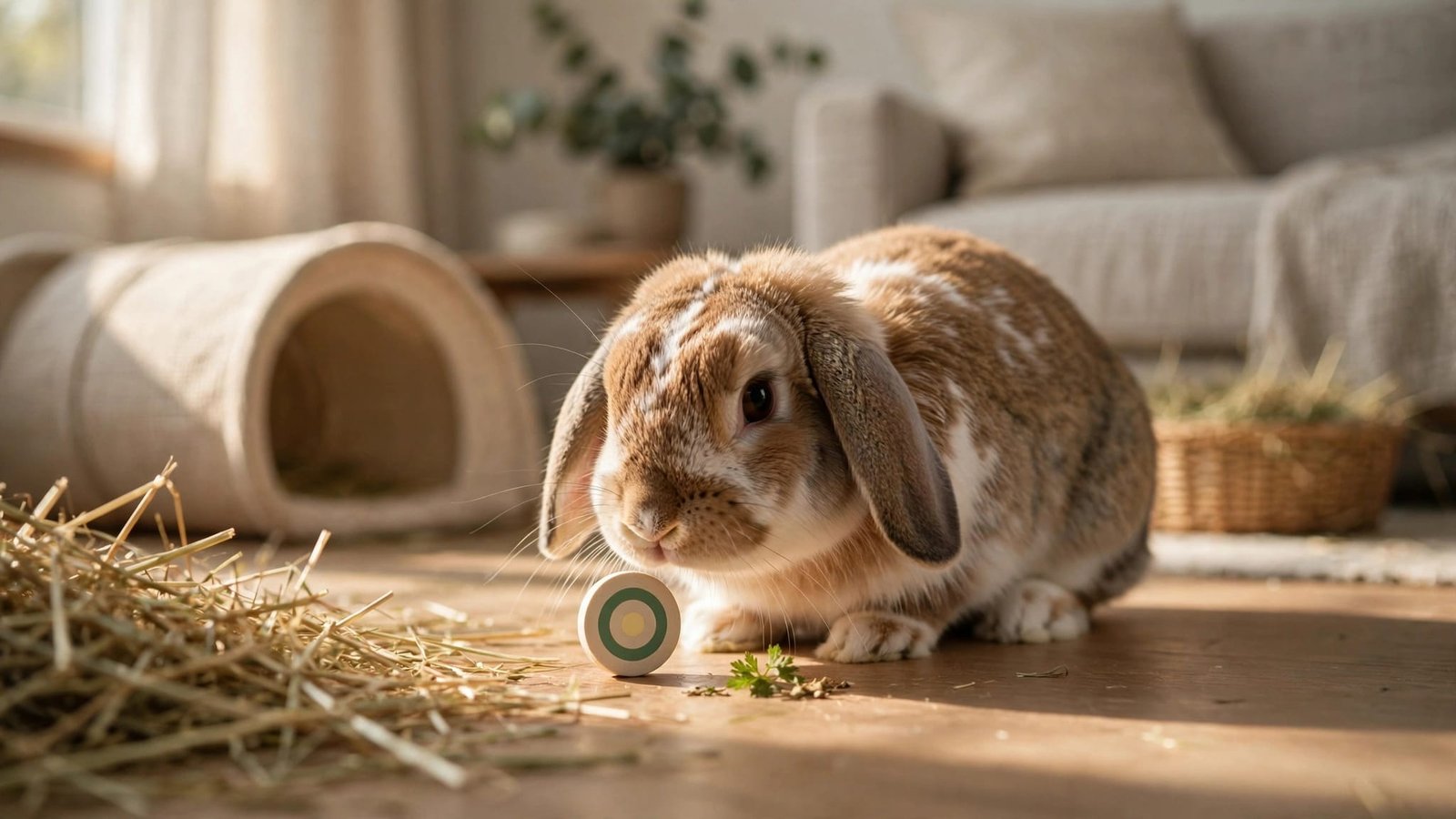
Yes, your bunny can learn tricks, and a simple nose touch is a lovely place to start. A happy rabbit may enjoy it, but a shy bunny can learn at their own pace. Rabbit training works best with tiny rewards, short sessions, and plenty of freedom to hop away.
You don’t need fancy equipment or a pet rabbit who already loves attention. A quiet space and a little patience can help your long-eared friend enjoy learning with you.
Start with one easy game, then let your rabbit’s interest guide the next step.
Key Takeaways
- Begin with one or two minutes of practice in a familiar, quiet space.
- Reward small steps with familiar food, counted within your rabbit’s daily portions as part of a balanced diet.
- Try name recognition, nose touches, gentle turns, or exploring a tunnel.
- Keep hay available, allow your bunny to leave, and never force or punish them.
Can Rabbits Learn Tricks?
Rabbits can learn to connect a cue or action with a pleasant reward. That reward might be a small piece of familiar leafy green, a pellet from their usual portion, or attention they welcome.
This is positive reinforcement training: rewarding something you’d like your rabbit to do again. Rabbit.org’s rabbit training guidance recommends this gentle approach.
Your pet rabbit might enjoy following a target, coming closer when called, or stepping onto a mat. Everyday actions make useful beginner tricks because you’re building on something your rabbit already does. The same gentle approach can help with litter training, though this article focuses on tricks.
There’s no need to compare your pet with a rabbit in a video. A shy bunny choosing to approach you is making progress, too.
If your rabbit is still settling in, begin with building trust with a shy rabbit. Comfortable time together comes before asking for tricks.
Set Up Gentle Training Sessions
A good training session starts before the first reward. For house rabbits, choose a time when your bunny is awake, interested, and comfortable around you.
Choose a Quiet Space With Good Footing
Sit on the floor in a familiar, open, bunny-proofed area rather than inside a small rabbit hutch. A secure rug or washable mat gives your rabbit better footing than a slippery floor.
Move electrical cords and unsafe objects out of reach. Rabbits are prey animals, so keep a hideout nearby and leave a clear route to it.
Start with one or two minutes. That’s enough for a few pleasant attempts without turning playtime into a long lesson.
Leave your bunny alone while they’re resting, eating, or using the litter box. Wait for a better moment rather than interrupting them.
Prepare Small, Familiar Rewards
Use food your rabbit already eats comfortably. Tiny pieces of tolerated fresh vegetables, such as romaine or cilantro, can work, along with pellets from their normal daily allowance.
Prepare the portions before you begin so you aren’t reaching into a rustling bag each time.
Special rabbit treats aren’t necessary. Keep rewards within your rabbit’s usual portions to support a balanced diet. Our daily rabbit feeding guide explains the place of hay, greens, pellets, and occasional treats.
Keep high quality hay and fresh water available throughout. Never skip meals or restrict water to encourage cooperation.
Petting can be a reward only when your rabbit welcomes it.
Teach Your Bunny Their Name and a Gentle Recall
Name training is a friendly first game because you can reward attention before asking your rabbit to move anywhere.
Use the same calm voice each time. Say the cue once, then give your bunny a moment to respond.
Begin by Rewarding Attention
Sit close enough that your rabbit knows you’re there without feeling crowded. Say their name softly, and watch their body language for signs they’re comfortable and interested.
If they glance toward you, pause, or turn their head, promptly offer a tiny reward. You don’t need to wait for them to hop over.
Repeat a few times while they’re interested, then finish. Small responses count.
Keep your hands still before calling, and leave food packaging out of sight. Otherwise, your rabbit might be responding to your movement or the treat bag rather than the name.
Invite Them to Come Closer
Once your bunny regularly notices their name nearby, sit a little farther away. Reward a step toward you, then gradually reward a closer approach.
Add a simple word such as “come” when they’re already moving toward you. Keep the distance easy at first.
Change one thing at a time. Practicing farther away and in a new room together can make the game harder.
Never call repeatedly, chase your rabbit, or catch them when they arrive. Coming over should lead to something pleasant, with room to leave again.
Try a Simple Nose-Touch Game
A nose touch gives your bunny an easy action to repeat. It can later help them follow you through a simple route.
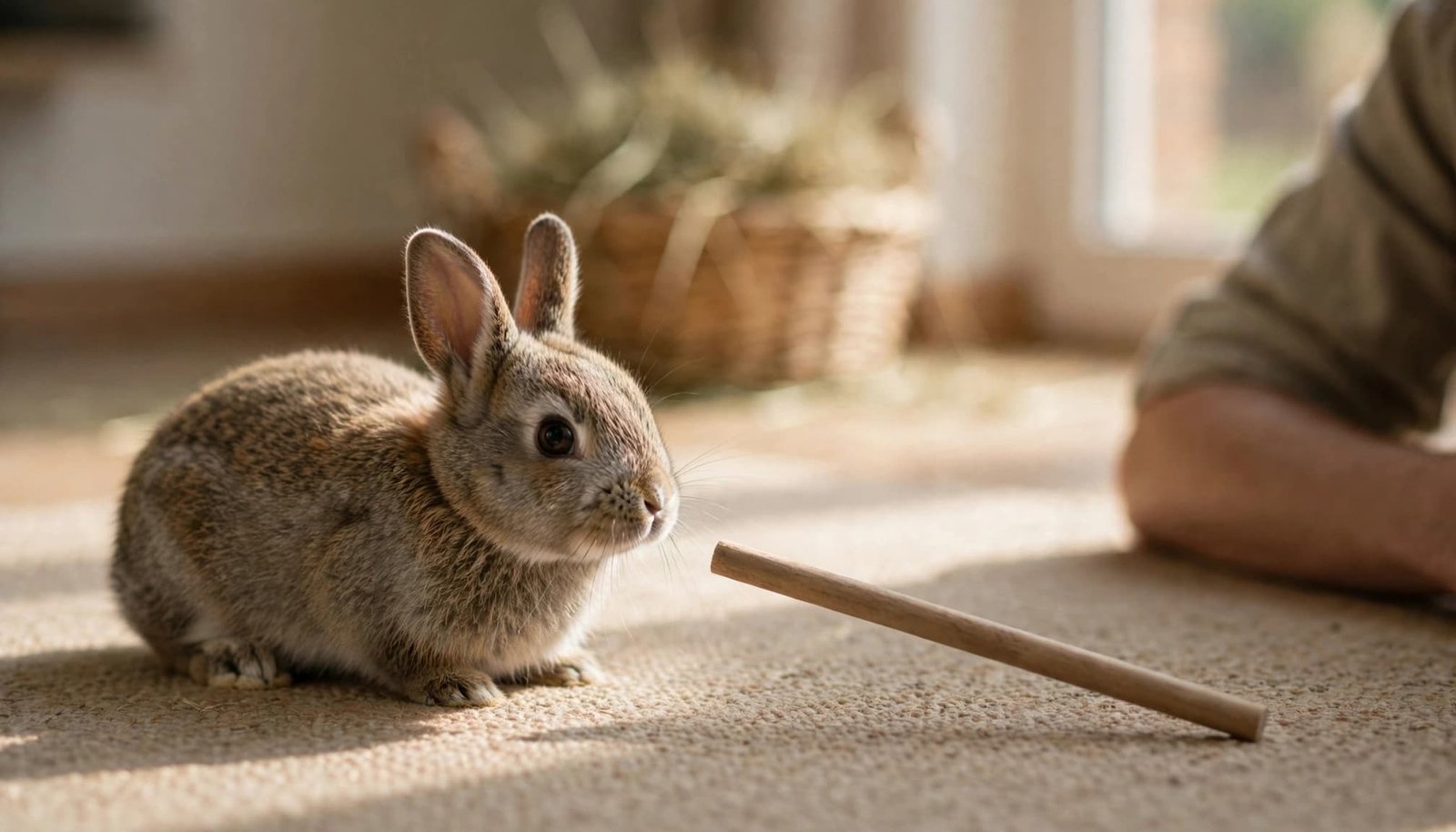
Use a smooth wooden spoon as your target. Check that it’s clean, undamaged, and free of sharp edges.
- Hold the rounded end still near your rabbit, slightly to the side where they can notice it. Let them investigate voluntarily.
- When their nose touches it, say a soft “yes” and immediately offer a tiny reward.
- After several comfortable touches, move the target a little farther away. Reward one small step toward it before expecting more.
Your “yes” helps identify the action that earned the reward. Keep the word gentle and consistent.
Don’t tap the spoon against your rabbit’s nose or keep moving it away as they approach. Make success easy.
Remove the target between attempts. If your bunny wants to chew it rather than touch it, pause and offer a suitable chew toy separately.
Teach a Gentle Turn on the Floor
A simple turn can be fun for a rabbit who already follows a reward or target comfortably.
Start with your bunny standing on secure footing. Move the target slowly in a broad curve beside them.
Reward the first small turn of their head or body. On later attempts, encourage a slightly longer curve. Build toward a comfortable circle over several sessions.
Once the movement is familiar, say “turn” just before guiding them. Gradually make your guiding movement smaller so your rabbit has a chance to respond to the word.
Keep the circle roomy. Avoid tight twisting, fast repetitions, or holding food high enough that your bunny has to stretch awkwardly.
This game should look like ordinary, comfortable movement. If your rabbit has pain, balance problems, or mobility difficulties, ask a rabbit-savvy veterinarian which activities are suitable.
A nose touch may be a better choice for your furry friend.
Explore Tunnels and a Simple Home Base
Gentle exploration gives your bunny a chance to investigate at their own pace. You don’t need jumps or a complicated obstacle course.
Let Your Bunny Investigate a Tunnel
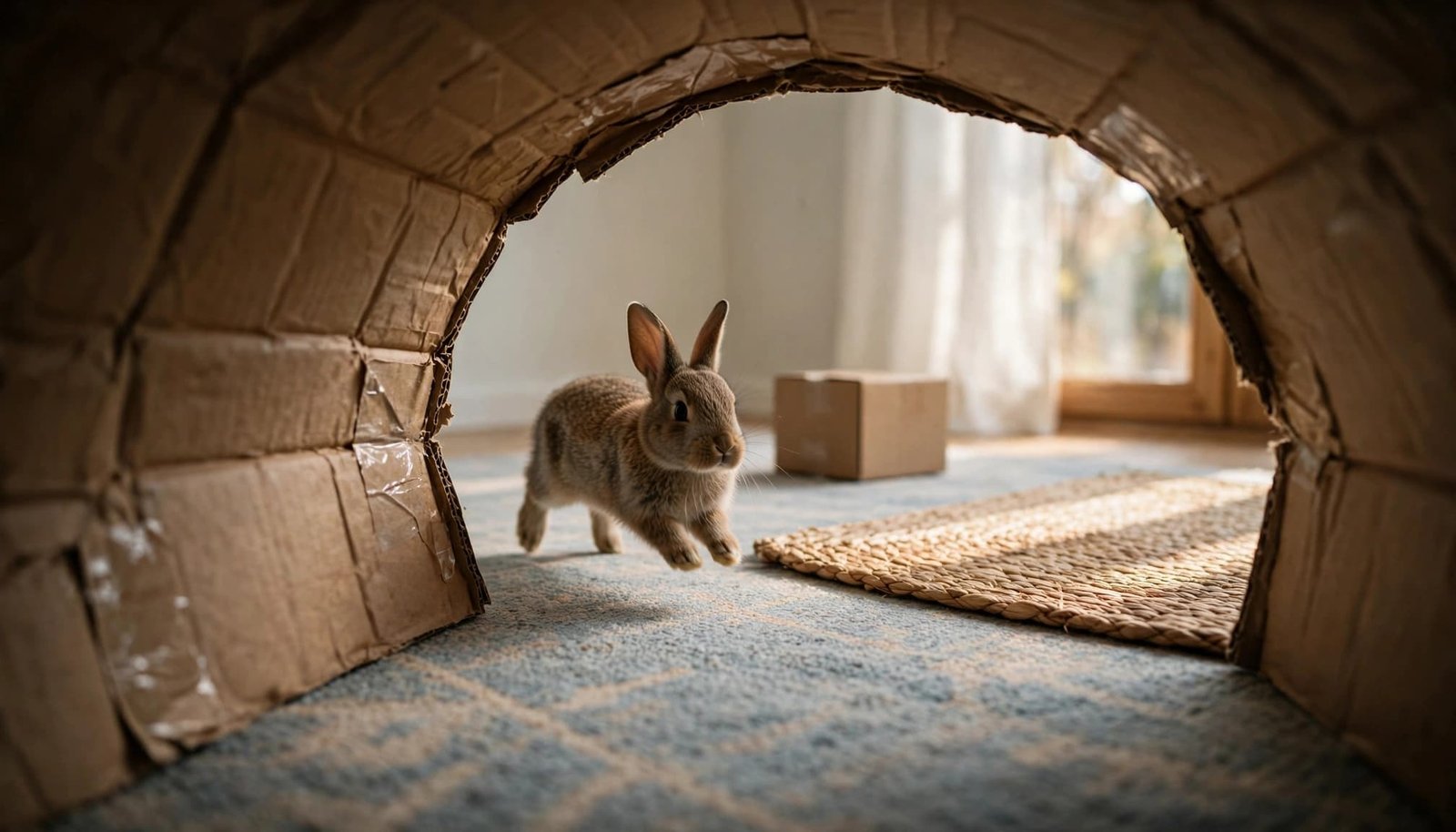
A tunnel can support your rabbit’s natural instinct to explore while offering gentle mental stimulation.
Choose a wide, stable tunnel with clear openings. Plain cardboard should have no tape, staples, or glossy coatings.
Place it in your rabbit’s usual play area, leaving enough running space around it and keeping fresh water nearby. Let them sniff it first, then reward interest near the entrance.
Next, reward a step inside. When your bunny is comfortable, offer a reward near the far opening and let them choose to walk through.
Don’t push them inside or block the entrance behind them. Some rabbits need several relaxed visits before exploring.
Our guide to safe rabbit chew toys includes suitable enrichment materials. Remove cardboard if your bunny starts eating noticeable amounts.
Teach Them to Step Onto a Mat
A small, secure mat can add variety to playtime alongside familiar rabbit toys. Reward your rabbit for looking at it, approaching it, and eventually placing their front feet on it.
Then reward all four feet on the mat. Take your time between these steps.
Once your bunny approaches reliably, add a short cue such as “mat.” Say it before they step on, then reward the arrival.
Keep early visits brief. You aren’t asking your rabbit to stay still for a long period.
Later, a familiar mat can become the starting point for another easy game. Keep it clean, flat, and free of loose threads.
What to Do When Your Rabbit Loses Interest
A missed response gives you information. Your bunny’s body language may show they’re distracted, tired, unsure, or ready to do something else.
Make the next attempt easier. Move closer, return to a familiar area, or reward a smaller step. If that doesn’t help, finish calmly and try another day.
If your rabbit walks away, let the session end. Following them into a hideout can make the next invitation less appealing.
Never scold, spray water, restrain your bunny, or withhold food after an unsuccessful attempt.
Watch your rabbit’s usual behavior rather than judging one missed trick. Sudden behavioral changes in appetite, droppings, movement, or willingness to interact need more attention.
If your bunny eats less or produces fewer droppings, contact a rabbit-savvy veterinarian promptly. Training can wait while you check their health.
Rabbit Training FAQ
How Long Does It Take to Teach a Rabbit a Trick?
There’s no guaranteed timetable. Your rabbit may understand one step quickly and need many short sessions for the next.
Look for small progress, such as approaching a target more readily. Keep practicing the easy version until your bunny seems comfortable before adding distance or another step.
Do I Need a Clicker?
No. A soft, consistent word such as “yes” can help mark the action you’re rewarding.
Say it as the action happens, then promptly give the reward. A clicker is optional. If the sound startles your rabbit, choose a quieter marker rather than asking them to tolerate it.
Should I Pick Up My Rabbit After They Come?
For these games, reward your bunny on the floor and let them leave. Avoid making every successful approach lead to handling.
When lifting is necessary for care, the RSPCA’s rabbit care guidance advises supporting the back and bottom and keeping all four feet supported against your body. Ask your veterinarian to demonstrate if you’re unsure.
Keep Training Friendly and Simple
Your pet rabbit’s first trick can be as small as noticing their name or touching a target. Voluntary participation matters more than completing a whole routine.
Choose one easy game, offer tiny rewards, and stop while your rabbit is comfortable. With gentle practice, these little lessons can become an enjoyable part of your time together.