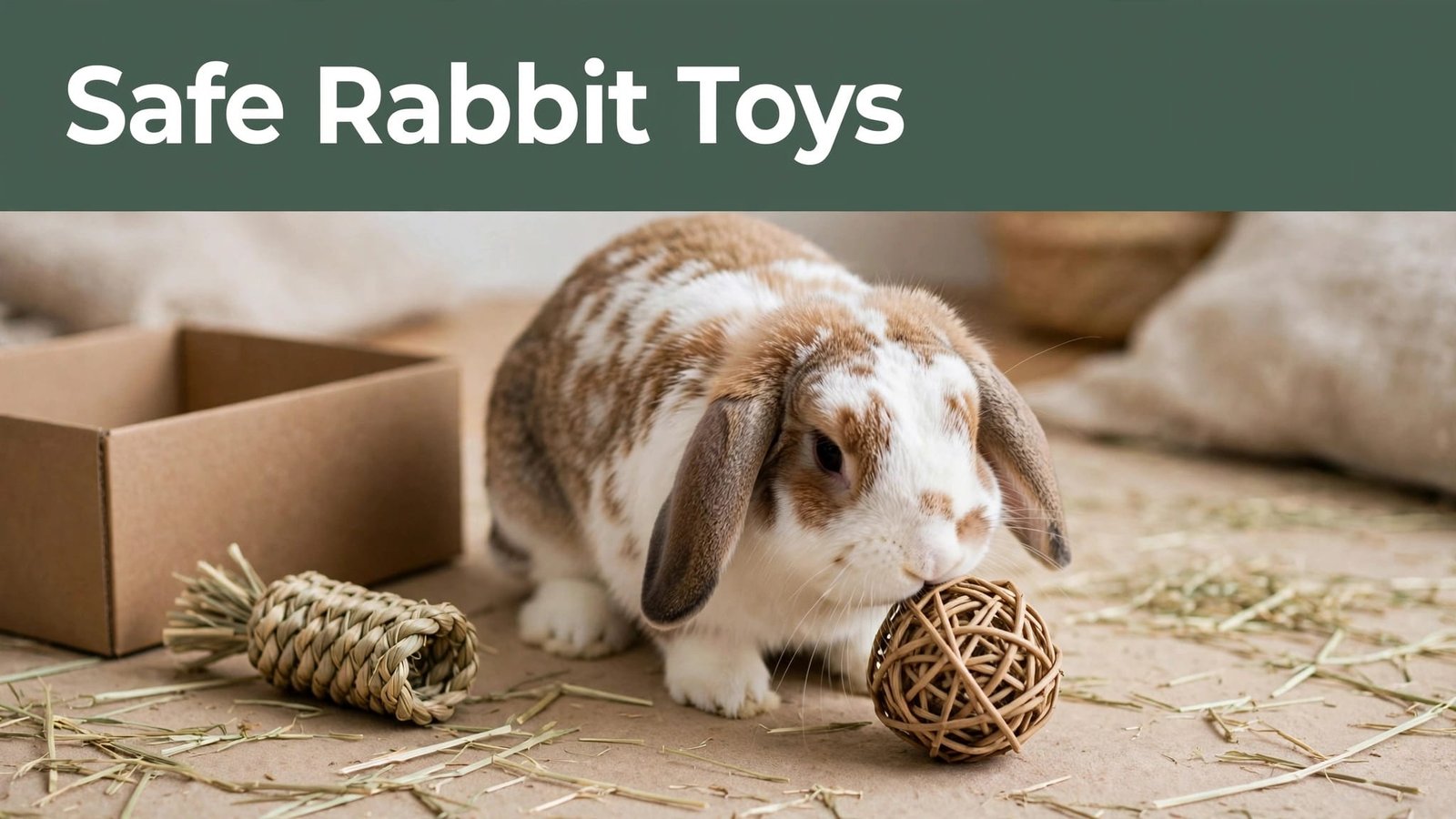
A good rabbit toy gives your bunny a chance to chew, toss, dig, or search for food. Those little activities let your furry friend act like a rabbit. Finding safe chew toys for rabbits can sometimes feel a bit overwhelming with all the options out there. Also, you want to watch out for possibly toxic materials that are sometimes overlooked by large manufacturers.
You don’t need a cupboard full of supplies to find safe toys for rabbits. A cardboard box might be a hit, while a store-bought ball gets ignored. Your rabbit’s preferences matter.
Start with a few simple ideas, then check each toy as carefully as you watch your bunny play.
Safe Rabbit Toys for Chewing, Tossing, Digging, and Foraging
Match the toy to what your rabbit already enjoys. The RSPCA’s rabbit toy ideas include options for natural behaviors such as chewing and digging. Toys add interest, but they don’t replace daily exercise, a safe space, unlimited grass hay, fresh water, or proper care.
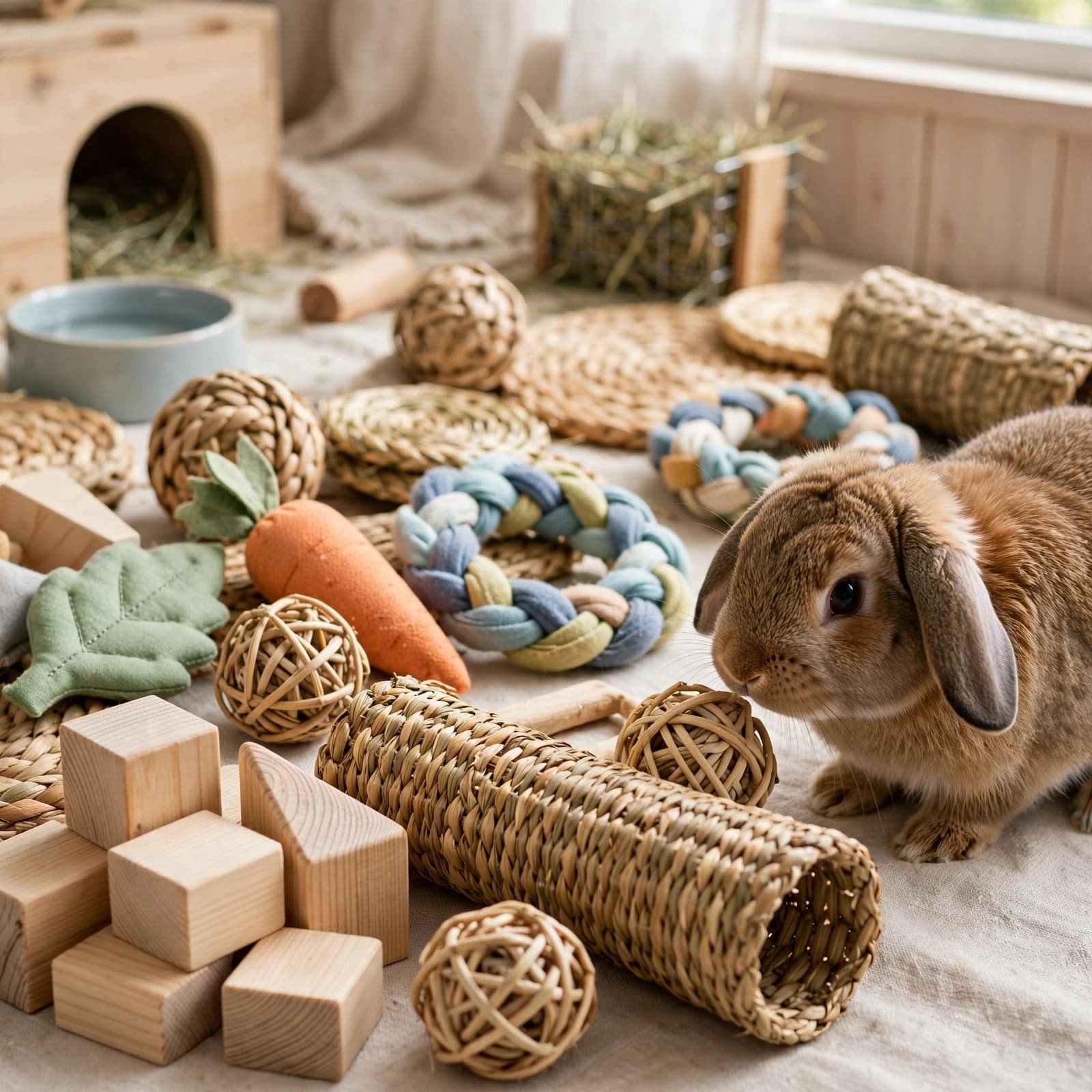
Chew toys made from rabbit-safe materials
Try untreated applewood, willow, hay toys, or plain cardboard without tape, staples, or glossy coatings. Chewing is normal for rabbits, but toys aren’t a substitute for hay. Keep grass hay available throughout the day as your bunny’s main source of chewing and fiber. Chew toys alone won’t prevent dental problems.
Tossing toys that invite active play
Some bunnies like pushing a ball. Others pick up a willow ring or sturdy cardboard tube and toss it aside. Choose lightweight toys made for rabbits that your pet can move easily. Avoid sharp edges, loose parts, and pieces small enough to swallow. A toy doesn’t need to make noise to be fun.
Dig boxes and tunnels for natural exploring
Fill a stable cardboard box with plain shredded paper or hay for an easy digging spot. Add a roomy tunnel or hideout so your rabbit can move through and turn around comfortably. Keep the materials clean and dry. Skip stringy fabric, especially if your bunny likes to chew soft things.
Simple forage toys that make mealtime engaging
Scatter part of your rabbit’s usual hay or familiar leafy greens in a clean box. You can also hide a small amount of familiar food among the hay. Use part of a normal meal, keep treats limited, and introduce new foods gradually. Your bunny should still have easy access to plenty of hay and water.
How to Choose Safe Chew Toys for Rabbits
Simple toys are often easier to check than toys with lots of moving pieces. Before adding anything to your rabbit’s space, look at its size, materials, and construction. Think about how your bunny plays, too. A determined chewer may need a different option than a rabbit who mostly nudges toys around.
Check materials, coatings, and small parts
Choose sturdy, untreated materials made for small animals. Avoid unknown paints or finishes, glue, brittle plastic, loose strings, bells, and parts your rabbit could pull off and swallow. A toy labeled for pets isn’t automatically right for every bunny, so give it a close look before playtime.
Cardboard and wood are for enrichment, not for eating as a meal. Oxbow’s guide to rabbit chew materials advises removing these items if a rabbit eats noticeable amounts. If you’re unsure about a material or your bunny’s chewing habits, choose a simpler toy and ask a rabbit-savvy veterinarian.
Inspect toys often and remove damaged pieces
Take a quick look when you refresh hay and water. Check wooden toys for splinters, cardboard for sharp or soggy edges, and tunnels for fraying. Pull gently at attached pieces to see whether anything has loosened. Remove a toy once wear leaves parts small enough to swallow.
Wash reusable toys with mild soap when needed, rinse them well, and let them dry fully before putting them back. Replace paper or hay in a dig box when it’s damp or dirty. Regular checks help you keep a favorite toy available without leaving a worn-out version in your bunny’s space.
Make a Toy Routine Your Rabbit Will Actually Use
You can make playtime interesting without buying a large collection. Set out a few different options, then notice what your rabbit chooses. An ignored toy isn’t a failure. It may be in the wrong spot, or your bunny may prefer a different way to play. Remove anything that leads to unsafe chewing.
Rotate toys and watch what your rabbit enjoys
Keep a chew toy, a tossing option, and a place to explore available. Store a few extras and swap them in now and then. If your rabbit shreds cardboard, offer a fresh plain box. If they push a willow ring, try another safe shape.
The House Rabbit Society shares toy ideas beyond chew sticks, including objects rabbits can toss. Let your bunny decide what counts as fun. Don’t force interaction or keep offering a toy they try to eat.
Place toys in a safe, easy-to-reach play area
Give your rabbit room to hop between toys, with secure footing and a hideout nearby. A stable, washable mat can help on a slippery floor. Keep hay and fresh water within easy reach, even during a forage game.
Bunny-proof the area before playtime. Cover or block electrical cords, move unsafe plants and household items, and check for gaps behind furniture. Supervise new toys until you know how your rabbit uses them. If your bunny starts pulling threads, breaking plastic, or swallowing toy pieces, remove the item right away and contact your vet if you think something was eaten.
A Few Good Toys Go a Long Way
Safe toys for rabbits support the chewing, tossing, digging, and food searching your bunny already wants to do. The best choices are simple, suited to your rabbit’s habits, and checked often.
Start with a few options and watch what your long-eared friend enjoys. Keep the favorites, change what isn’t working, and remove anything that becomes damaged or unsafe.