
Your bunny can see when some light is available, but they can’t see in complete darkness. Wondering whether rabbits see in dark conditions? Understanding rabbit vision can help you decide if a lamp or other ambient light is needed overnight.
A comfortable evening setup doesn’t need special equipment or bright lights. Let’s look at how your bunny sees and how you can make your furry friend’s space feel safe after sunset.
Key Takeaways
- Rabbits can use available light in low light conditions, but they can’t see in complete darkness.
- A familiar layout, clear paths, and secure footing help pet rabbits move comfortably.
- A gentle daytime and nighttime routine supports animal welfare without keeping bright lights on around the clock.
Can Rabbits See in Complete Darkness?
Complete darkness means there’s no light available for the eyes to detect. Your rabbit can’t see objects under those conditions, even if they seem confident moving around. Rabbits don’t have a tapetum lucidum that lets them see without light.
A dim room is different, and light through a window or open doorway may give your bunny enough to see. Their broad field of view creates a wide visual field. Still, a blind spot and less precise depth perception can make nearby objects harder to judge.
Rabbits are crepuscular animals, active around dawn and dusk. As a prey animal, your bunny uses hearing, smell, and whiskers to explore familiar spaces. Moving confidently doesn’t mean they can see everything.
Keep this distinction in mind when introducing a new enclosure. Give your rabbit supervised time to explore while you can clearly see the area. Let them get familiar with it before expecting them to manage it in complete darkness overnight.
How Does Rabbit Vision Work in Low Light?

Rabbit eyes work in daylight and dim conditions
The retina is the light-sensitive tissue at the back of the eye. It receives light and helps turn it into visual information your rabbit’s brain can use. Rod cells help the eye respond to dim light. Cone cells work best in brighter conditions and support color vision. Cone cells also help the eye pick up details in brighter light.
A chapter on rabbit eye anatomy and vision explains that rabbit vision includes both daylight and low-light sight. The scientific terms are photopic and scotopic vision, but you don’t need to remember them.
The useful point is simple: rabbits can use their eyes when lighting is dim. That ability still depends on light reaching the retina.
Rabbit vision favors broad awareness over fine detail. Their visual acuity, or ability to see fine detail, is limited, but their visual field is broad. This gives them a wide field of view and helps them notice movement around them. Within that field of view, they still have a small blind spot near the nose. Their depth perception can also be less precise when judging nearby distances.
Do rabbits have a tapetum lucidum?
You may hear that rabbits have a reflective layer behind their retina called a tapetum lucidum. That explanation isn’t accurate for rabbits.
The Merck Veterinary Manual’s eye anatomy guidance says rabbits typically lack this reflective region. Cats and dogs have a tapetum lucidum, which helps them make better use of available light.
Your bunny’s low-light vision doesn’t depend on a tapetum lucidum. They also don’t have a special eye feature that lets them see when no light is present.
How to Keep Your Bunny Comfortable After Sunset
For indoor rabbits, familiar daytime and evening conditions help support a natural light cycle. A safe evening space starts with familiar surroundings. Think about what your rabbit can reach, where they can retreat, and whether their usual routes stay clear.
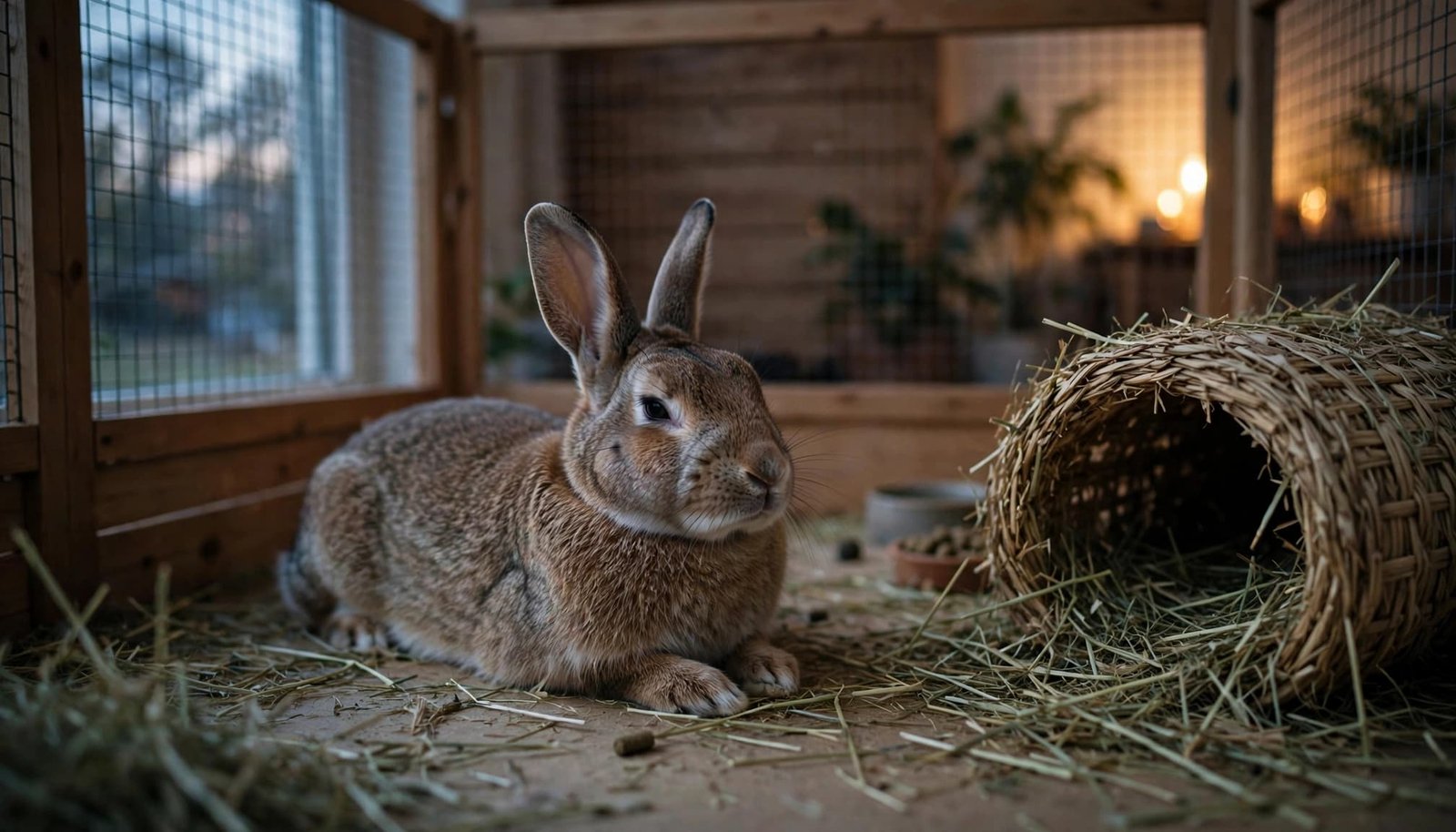
Keep the essentials in familiar places
Keep hay, water, the litter box, and a hideout in a predictable base area. Your rabbit shouldn’t have to search unfamiliar corners for a drink.
Leave clear paths between those essentials. A sturdy cardboard hideout with two openings gives your bunny somewhere to retreat without feeling cornered. Remove tape and staples before offering it.
Rotate a few toys instead of rearranging the whole enclosure at once. When you do change the layout, let your rabbit investigate while you’re nearby.
This is especially helpful for a new bunny who’s still learning where everything belongs.
Make the floor safe before turning lights down
Secure footing supports animal welfare, so choose solid flooring with washable rugs or mats that won’t slip. Check coverings for loose threads, curled edges, or damage your rabbit might chew and swallow.
Block electrical cords, stairs, narrow gaps, and unsafe plants. Our guide to rabbit-proofing your home can help you check the space at floor level.
Room to move matters too. Avoid crowding the main hopping area with toys or bowls.
If ordinary ambient light isn’t enough to check your rabbit overnight, use gentle, indirect artificial lighting. Keep it outside chewing reach, protect its cable, and don’t point a bright lamp into their resting area.
What About Shorter Winter Days?
In winter, your rabbit’s room may become dim earlier. Where practical, let ordinary daylight reach the living area during the day to support a natural light cycle, while providing shade and preventing overheating beside windows.
If the room stays gloomy, ordinary artificial lighting can provide ambient light during the day. Let evenings become calmer rather than leaving bright overhead lights on all night. There’s no single bulb brightness or timetable that suits every home.
Rabbits may be active at dawn and dusk, so their sleep activity cycle won’t necessarily match a human bedtime. For outdoor rabbits, shorter days also make regular checks important. Plan calm visits to check water, bedding, appetite, droppings, and enclosure safety, all important for animal welfare. Good vision can’t protect a rabbit from predators or cold.
Common Questions About Rabbit Vision
Does my rabbit need a night-light?
A night-light isn’t automatically necessary. Consider your rabbit’s familiarity with the space and whether you need gentle light for checks. A protected layout remains important either way.
Should I wake my rabbit when I turn the lights off?
You don’t need to disturb a resting bunny. Avoid sudden handling or noisy rearranging, and leave their hideout and usual paths accessible.
What if my rabbit starts bumping into things?
New difficulty moving through a familiar area deserves attention. Visual acuity means how clearly your rabbit sees detail, and changes in vision can have different causes. Contact a rabbit-experienced vet if your bunny starts colliding with objects, squinting, or showing eye discharge. Don’t assume a lighting change is the whole explanation.
A Familiar Space Makes Evenings Easier
Rabbits can see in dim conditions, but complete darkness leaves their eyes without needed light. A gentle day-to-evening routine can follow a natural light cycle. Brighter rooms still aren’t a substitute for safe surroundings.
Keep the layout familiar, provide comfortable footing, and remove hazards to support animal welfare. These basics give your bunny a comfortable space for evening exploring and rest.