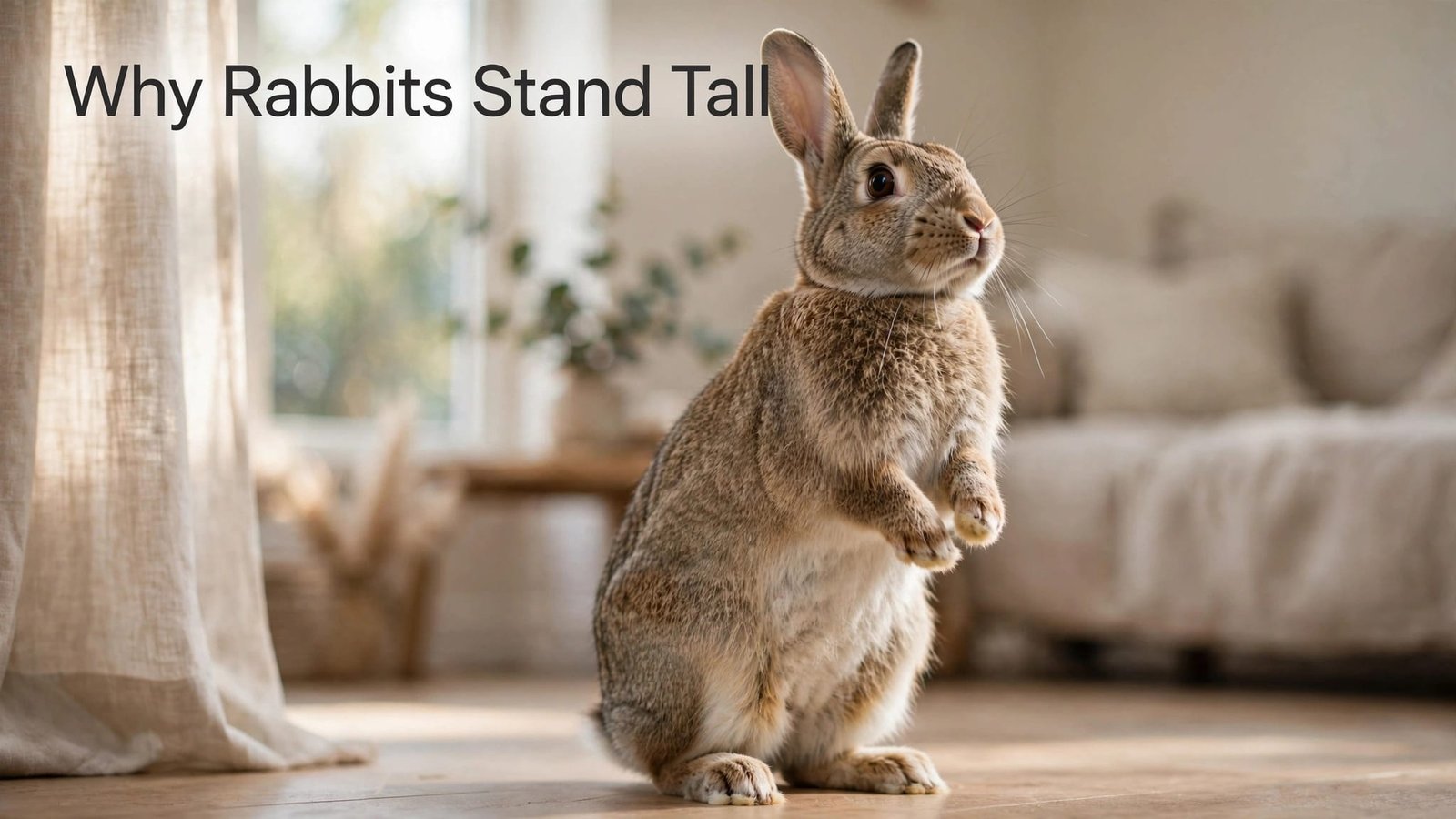
Your rabbit stands on its hind legs to get a better view, investigate something unfamiliar, or ask for food and attention. This upright pose is usually normal behavior, especially when your bunny returns to exploring, eating, or resting afterward.
It can look like your long-eared friend is keeping watch over the whole room! Understanding what happens before and after the pose helps you work out what your bunny needs.
Why Your Rabbit Stands on Its Hind Legs
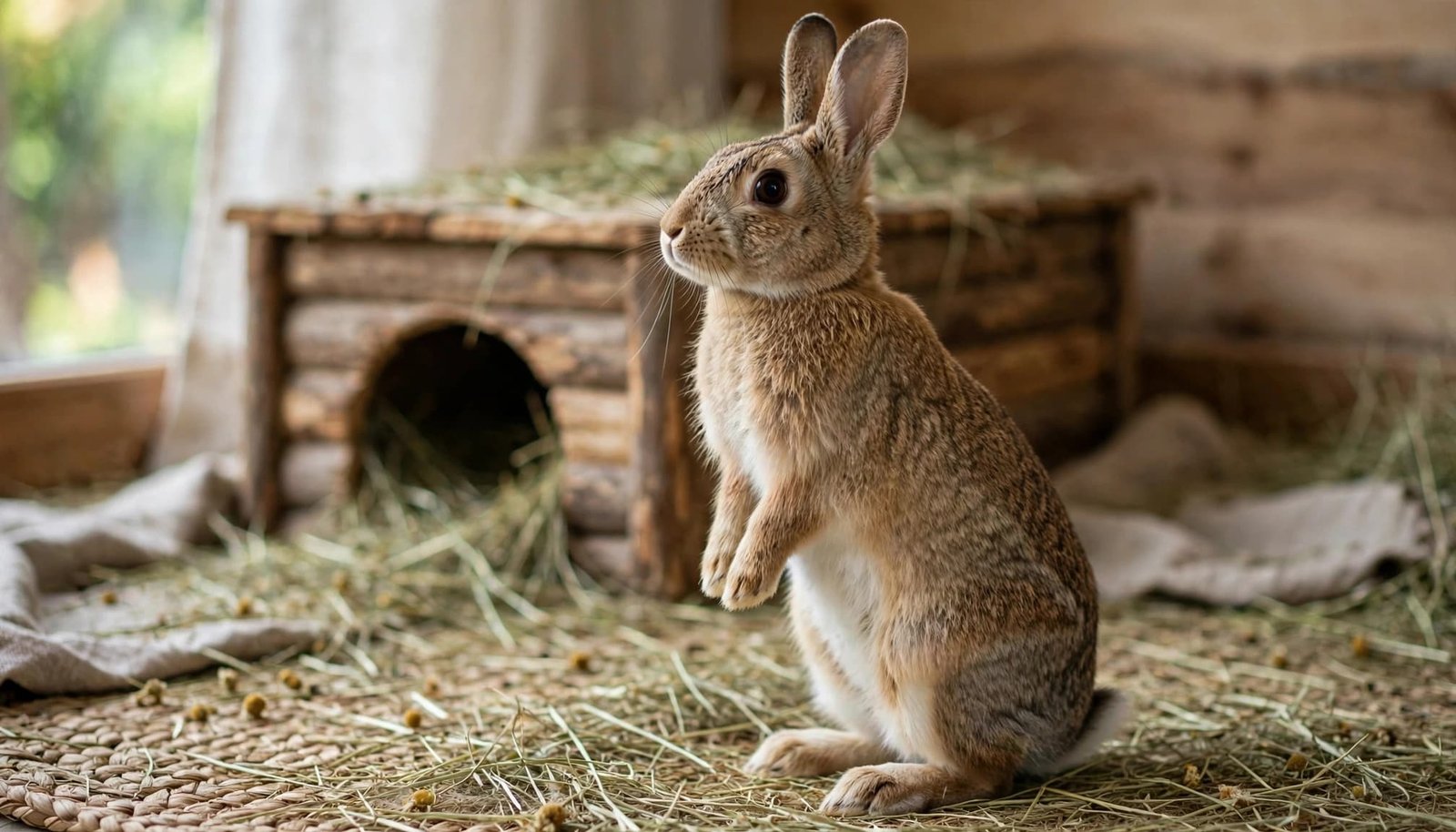
Getting a Better Look
Standing upright raises your rabbit’s head above its usual floor-level view. You might notice this when someone enters the room, a door opens, or an unfamiliar sound catches their attention.
This behavior is often called periscoping. Your bunny pauses, lifts its front paws, and surveys the surroundings before deciding what to do next.
Domestic rabbits retain behaviors linked to their wild relatives. Their prey-animal instincts help explain why they stay interested in nearby movement, even in a comfortable home.
An upright rabbit may simply be curious about something beyond the edge of its pen.
Expecting Food or Attention
Your rabbit also learns your daily routines. Walking toward the pellet container or rustling familiar packaging can bring your bunny straight onto its back feet.
If standing up regularly gets a treat, your rabbit may repeat it. Sometimes, your bunny wants you to notice them or come closer.
Keep treats small and suitable for rabbits. You can wait for a calm moment with all four feet down before offering one.
Keep hay and water freely available. Your bunny shouldn’t have to perform a behavior to receive these essentials.
Is Your Bunny Curious or Worried?
Standing upright doesn’t tell you everything about your rabbit’s mood. Look at the whole body and what happens next.
Signs Your Rabbit Is Calm and Curious
A curious bunny may stand briefly, sniff the air, and then hop toward whatever caught its interest. Returning to hay, grooming, or settling nearby also helps you understand the moment.
Notice whether the body looks loose rather than stiff. Your rabbit’s usual personality matters too. A cautious bunny may watch longer than a confident explorer.
Our guide to what rabbit ear positions mean can help you read those smaller signals alongside posture.
Signs Your Rabbit Needs Space
A worried rabbit may become tense, freeze, thump, or retreat after looking around. Wide, watchful eyes and tightly held muscles add useful context.
Give your bunny a clear route to a familiar hideout. Lower nearby noise and let them decide when to come out.
Avoid reaching down suddenly or picking them up to provide reassurance. Sitting nearby at floor level is often a gentler option.
Ear position alone isn’t enough, especially with lop-eared rabbits. Movement, posture, and the situation tell you more together.
Give Your Rabbit Room to Stand Naturally
Your rabbit needs enough headroom to rise fully without its ears brushing the enclosure roof. Aurora Veterinary Hospital’s rabbit care and behavior guidance includes standing upright and stretching out among basic housing considerations.
That headroom should be part of a roomy living area, with space for hopping and exploring too.
Provide secure, nonslip footing so your bunny can move confidently. Keep loose rugs flat and remove items that could topple when nudged.
Standing also puts more objects within reach. Move electrical cords, houseplants, food bags, and other unsafe items away from your rabbit’s area.
Let your bunny stand voluntarily. Don’t pull the front paws upward or hold food so high that your rabbit has to stretch awkwardly. Floor-level games and hay-based enrichment provide plenty of fun without encouraging an uncomfortable pose.
When Should You Contact a Vet?
An occasional upright pose in an otherwise active rabbit usually doesn’t need intervention. A sudden change in movement deserves more attention.
Contact a rabbit-experienced veterinarian if your bunny starts limping, repeatedly loses balance, or avoids movements they previously managed comfortably.
Reduced appetite or fewer droppings also needs urgent veterinary advice. Don’t wait overnight for these changes to resolve.
You don’t need to interpret every movement perfectly. Learning your bunny’s normal habits makes changes easier to notice, and our guide to puzzling rabbit habits covers other everyday behaviors.
Key Takeaways
- Standing on the hind legs commonly helps your rabbit investigate its surroundings.
- Food routines and attention can also encourage the upright pose.
- Read posture alongside movement, ears, and what happens next.
- Provide safe footing, enough headroom, and somewhere your bunny can retreat.
Frequently Asked Questions
Does Standing Up Mean My Rabbit Is Happy?
Standing up alone doesn’t prove happiness. Your bunny may be curious, expectant, or cautious. Comfortable resting, normal eating, and relaxed exploration give you more context about how they’re feeling.
Why Does My Rabbit Stand Up Against Me?
Your rabbit may be investigating you or asking for something associated with your presence, such as food or attention. Pause and watch what happens next. A gentle approach doesn’t automatically mean your bunny wants to be picked up.
Is It Normal if My Rabbit Rarely Stands Up?
Yes. Rabbits vary in how often they use this posture. If your bunny moves comfortably, eats normally, and explores in other ways, infrequent standing alone isn’t a reason for concern. A sudden change matters more.
Understanding Your Bunny’s Upright Pose
When your rabbit stands on its hind legs, start by noticing what caught its attention. A nearby sound, familiar food routine, or new object can explain the moment.
Give your bunny room to choose whether to investigate or retreat. Gentle observation helps you understand your furry friend without interrupting their natural behavior.