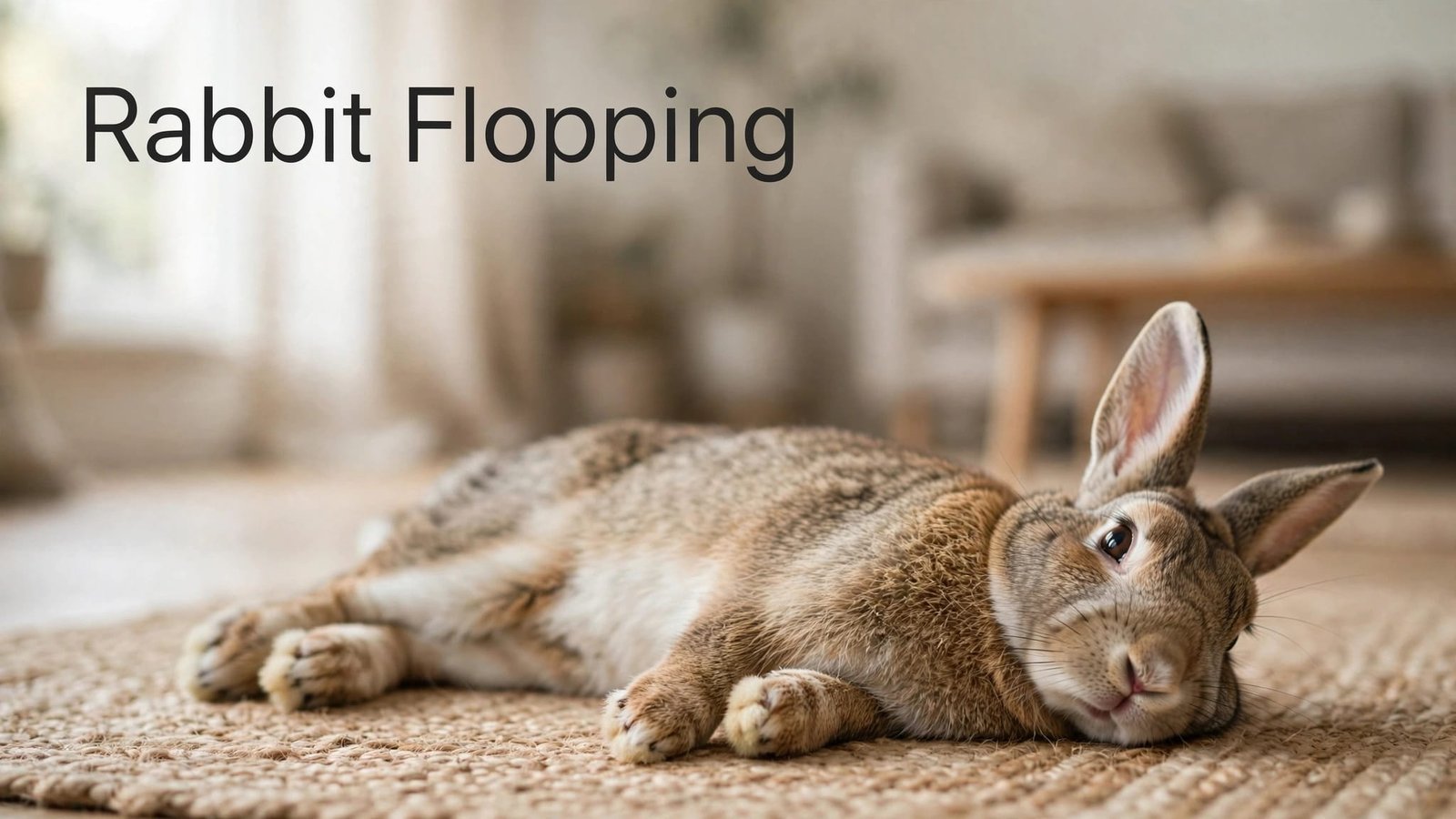
Rabbit flopping usually means your bunny feels relaxed, content, and safe enough to rest on their side. That sudden tumble can look alarming, especially when you’re a new rabbit owner, but a bunny who gets up normally is usually simply happy and comfortable!
The important difference is control and recovery: a comfortable bunny breathes easily and returns to standing without trouble. Weakness or difficulty breathing needs urgent care, so start by looking at the whole rabbit.
Key Takeaways
- A voluntary side flop usually means your rabbit feels comfortable.
- Normal breathing, responsiveness, eating, and movement help distinguish rest from illness.
- Collapse, inability to stand, or breathing trouble needs emergency veterinary care.
What does rabbit flopping mean?
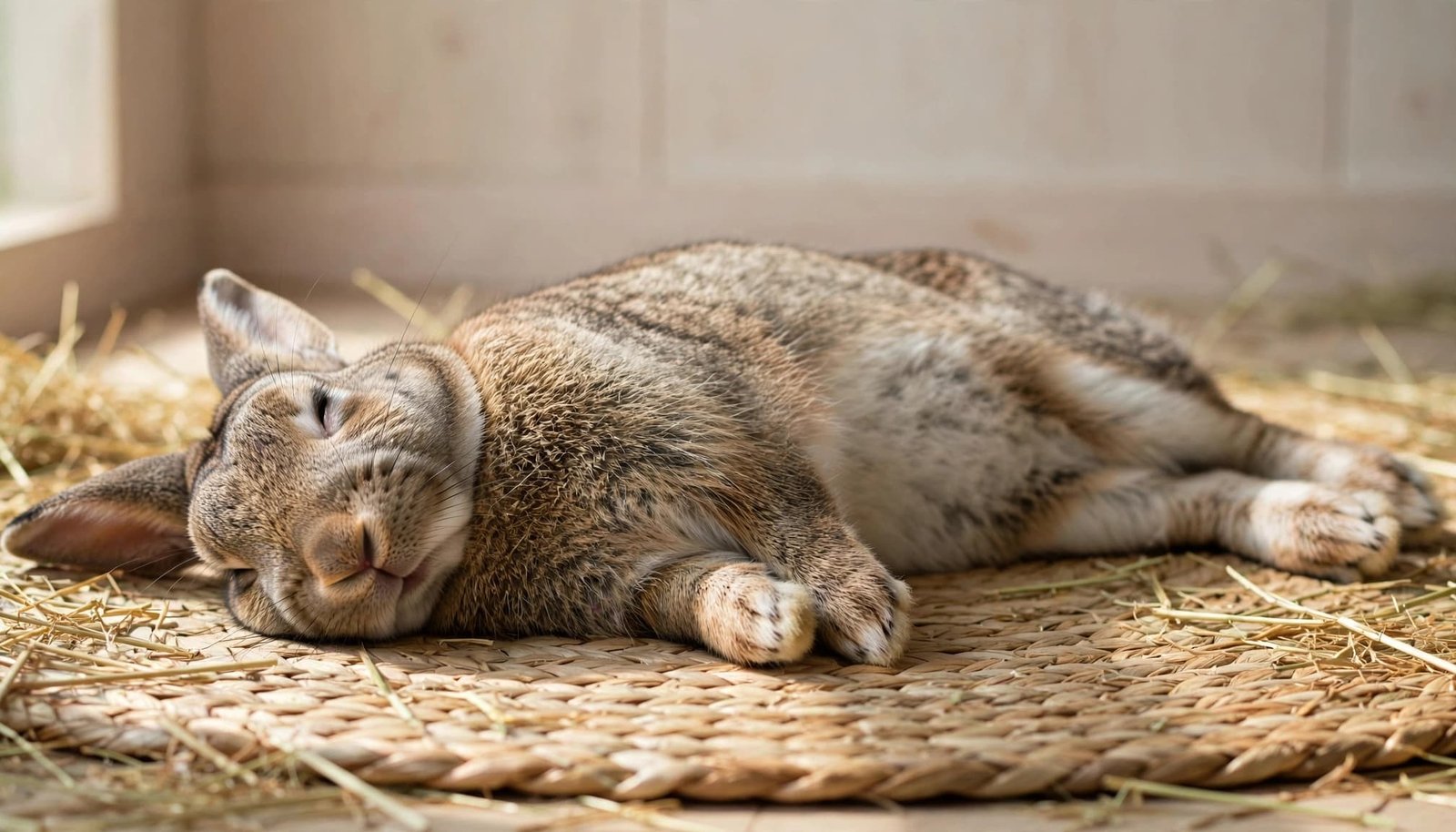
A bunny flop is a sudden drop or roll onto the side, occasionally continuing onto the back. Some owners call the stretched-out posture the “lamb chop.” It can look dramatic, but a normal flop is controlled and voluntary.
Your bunny feels safe
As a prey animal, your rabbit can communicate comfort through body language. A voluntary flop may show they feel safe and happy.
A flop near you can be a lovely sign of trust. It doesn’t automatically invite a belly rub, though. Let your rabbit choose whether they want attention.
Your bunny is settling after play
A flop after a binky, the joyful jump with a twist, often follows excitement. After a “bunny 500,” or burst of zoomies, your bunny may be tired but content.
Owners sometimes interpret flopping in front of another rabbit as a mild, non-aggressive insult: “Look how much happier I am than you.” Treat that as a playful interpretation, not proof of their intentions. If tension between rabbits is frequent, ask a rabbit-savvy clinician whether spay or neuter status may be a factor.
Is it a normal flop or a medical emergency?
These differences help you decide when your bunny needs help. Some owners call a brief, controlled drop a “fake flop”; normal breathing and recovery matter more than the label.
| What you notice | Comfortable flop | Possible emergency |
|---|---|---|
| Movement | Quick, voluntary roll | Uncontrolled fall or repeated collapse |
| Breathing | Comfortable and regular | Labored or open-mouth breathing |
| Getting up | Rises and moves normally | Tries but cannot stand |
| Other habits | Normal eating and droppings | Reduced appetite or fewer droppings |
Inability to rise is an emergency, even if your rabbit looks peaceful.
Watch breathing and movement first
Observe without shaking your bunny or forcing them to stand. Speak softly and watch for their usual response.
Seek emergency care for screaming, complete limpness, repeated jerking, persistent shaking, drooling, or foaming. These can accompany a seizure or another serious problem. Tiny sleep twitches alone aren’t the same as sustained, uncontrolled movements.
Look beyond the resting position
A sick rabbit may have little muscle tone, struggle to breathe, and repeatedly fail to get up. Eating or drinking may decrease beforehand.
Grunting and thumping can express anger, fear, or frustration. Grunting when another rabbit approaches may be an attempt to defend territory. Soft tooth purring often accompanies comfort; loud teeth grinding with hunching or appetite loss suggests pain. Our guide to recognizing rabbit pain signs covers these differences.
What is floppy bunny syndrome?
Floppy bunny syndrome, also called floppy rabbit syndrome, causes sudden generalized weakness or flaccid paralysis. Your rabbit may lose strength in their legs and neck.
Unlike voluntary rabbit flopping, this collapse is uncontrolled. Signs may develop over 1 to 12 hours, with no particular breed or age consistently affected.
What can cause sudden weakness?
The Unusual Pet Vets’ floppy bunny syndrome guide describes several possible causes. These include low calcium, blood sugar or potassium; low body temperature or blood pressure; dehydration; E. cuniculi infection; spinal damage; selenium deficiency; and toxins.
Sometimes the cause remains unidentified. Testing helps your vet choose treatment.
What should you do before and after treatment?
Call an emergency vet immediately. Use a secure, towel-lined carrier and minimize handling. Note when symptoms began, recent eating and droppings, medications, and possible toxin exposure. Record a short video only if it won’t delay care.
Don’t give human medicines or syringe-feed a weak rabbit without veterinary instructions, especially if swallowing or breathing is affected.
Vet-directed nursing care can be intensive. Some protocols use Critical Care feeds every 2 to 6 hours, totaling 60 ml/kg over 24 hours. Your vet must set the preparation and amount. Care may also include bedding changes every 2 hours, repositioning every 2 to 3 hours, and approved gentle massage. These aren’t instructions to start treatment yourself.
Frequently Asked Questions
Why does my rabbit flop onto their back?
A voluntary roll can briefly carry your bunny onto their back. Comfortable breathing and normal movement afterward are reassuring.
Never place your rabbit on their back to make them relax. The resulting immobility can be a fear response, not contentment.
Why doesn’t my rabbit flop near me?
Your bunny may prefer another resting position or need more time to feel secure. A lack of flops doesn’t prove unhappiness.
Spend quiet time at floor level and let them approach. Our guide to how rabbits show affection describes other reassuring bonding behaviors.
Can a rabbit survive floppy bunny syndrome?
Yes, recovery is possible. Calder Vets describes a rabbit treated for floppy rabbit syndrome.
Your bunny’s outlook depends on the cause and severity. There’s no single recovery timetable, and prompt veterinary treatment matters.
Enjoy the flop, know the warning signs
A relaxed flop is usually a sweet sign that your bunny feels safe. Comfortable breathing, normal eating, and easy movement help you recognize healthy rest.
If your rabbit cannot stand, collapses repeatedly, or struggles to breathe, seek emergency veterinary care. You don’t need to identify the cause before calling.