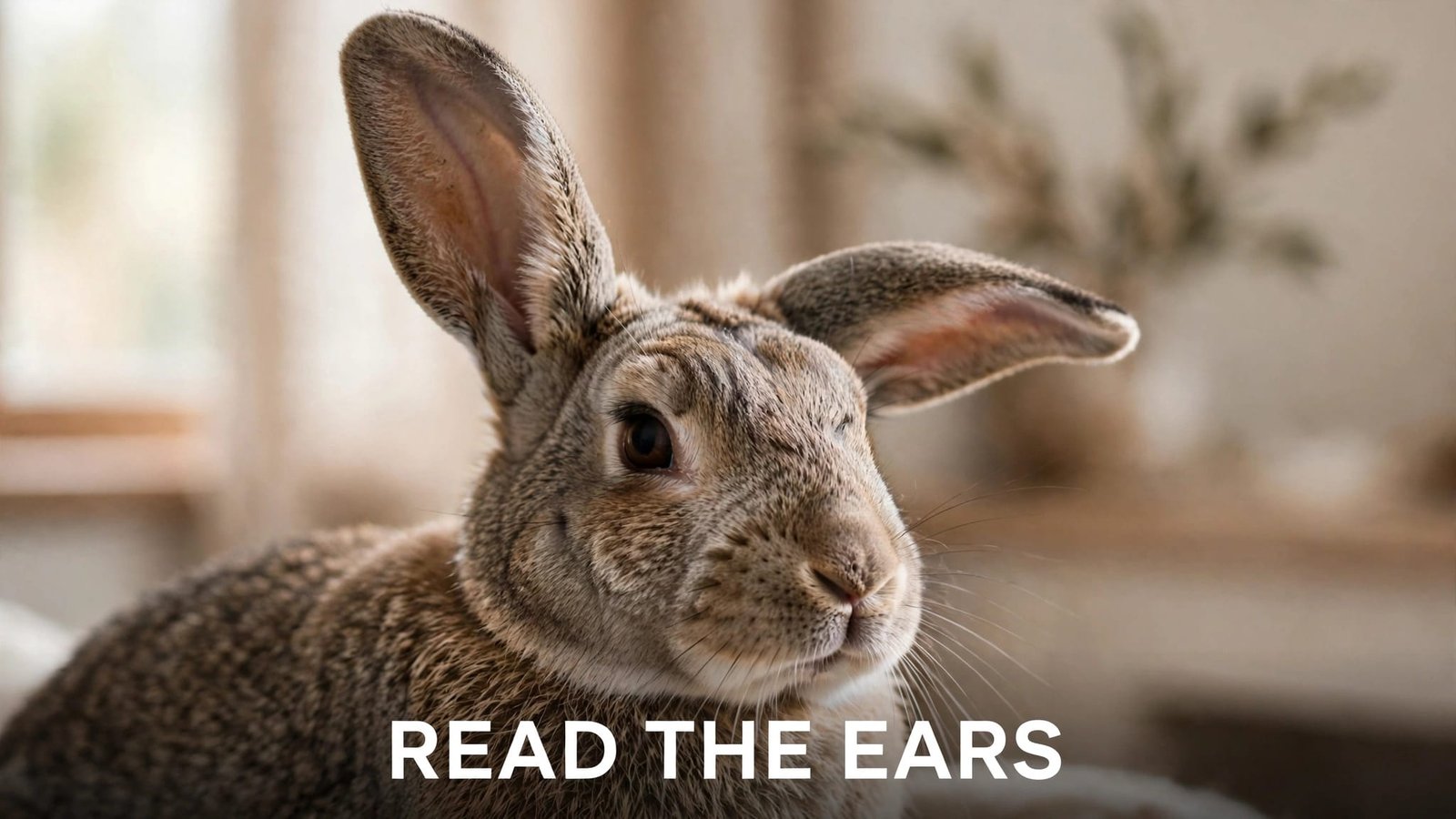
Your bunny’s ears can change position while the rest of their body barely moves. Understanding rabbit ear positions helps you spot comfort, curiosity, fear, and possible discomfort.
The most helpful clue is the whole bunny: ears held back can mean a relaxed nap or worry, while an upright, curious posture can suggest comfort. Read the signal alongside your rabbit’s posture and surroundings.
Key Takeaways
- Read your rabbit’s ears alongside their posture, eyes, movement, and surroundings. One ear position can have different meanings depending on the whole picture.
- Loose upright ears often accompany calm behavior, while tightly pinned ears can signal fear or tension. Flat ears can mean rest or worry, so look for other clues.
- Occasional ear shaking may happen during play or when your rabbit wants space. Repeated shaking, especially with scratching, can be a sign of an ear problem.
- Lop-eared rabbits naturally have drooping ears, but sudden changes or symptoms such as discharge, head tilt, or loss of balance need veterinary attention.
Common Rabbit Ear Positions and Their Meanings
Rabbits can swivel their ears up to 270 degrees to locate sounds. Their hearing is much more sensitive than ours, especially at higher frequencies, so your bunny may react to a sound you can’t hear.
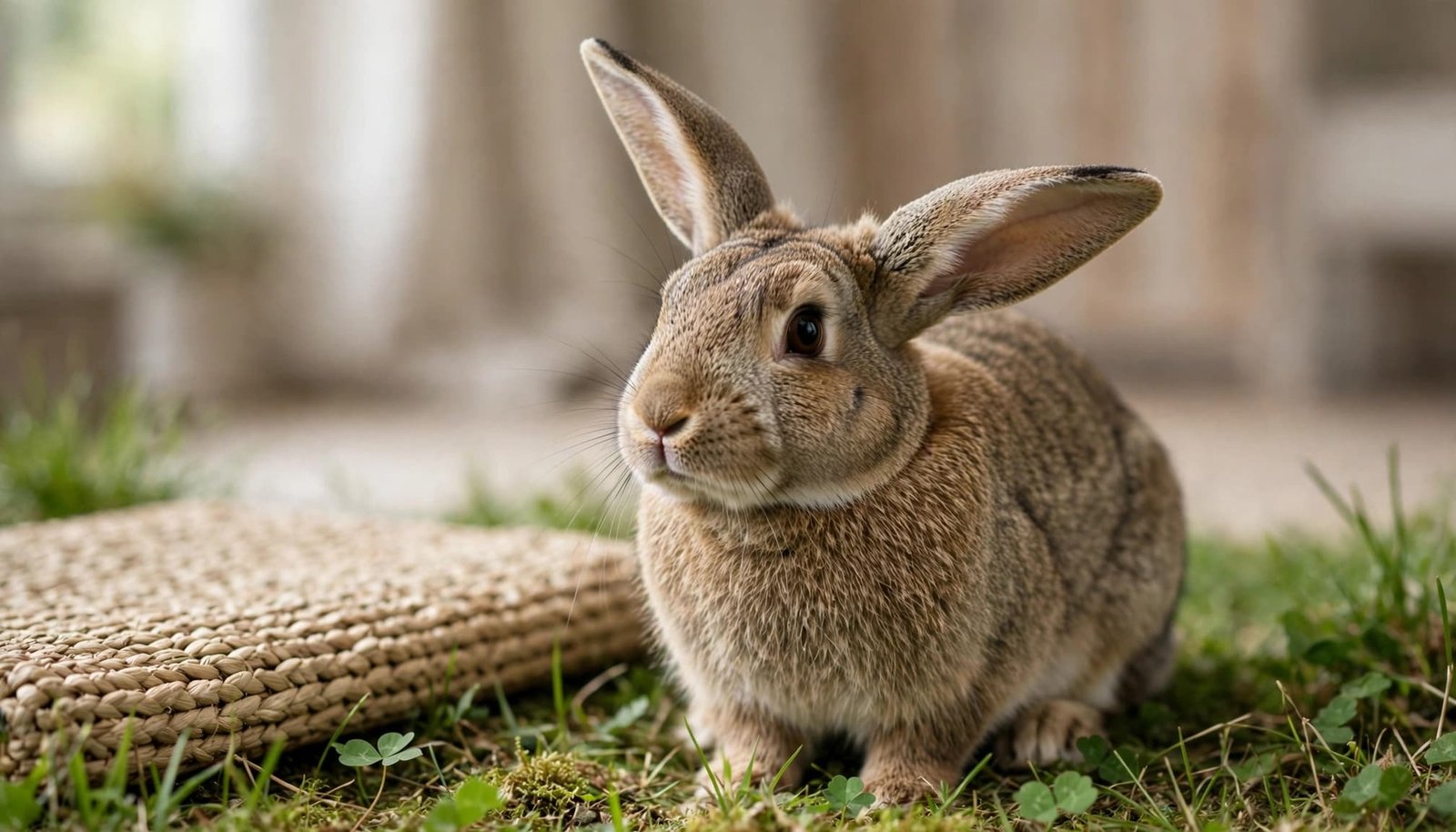
Upright, loose, and wide apart
For upright-eared rabbits, this is a common calm position. An upright posture looks loose, with ears comfortably spaced rather than stiff. Your bunny may sit nearby, eat hay, or stand on its hind legs to watch the room.
Flat along the back and touching
Ears resting along the back, sometimes touching or crossing, often accompany loafing or rest. A loose posture and partly closed eyes suggest your bunny feels safe.
Held back but separated or tightly pinned
Ears lying back without touching can signal fear. Ears pressed back over the shoulders can also appear in nervous or aggressive rabbits. Tension, growling, or lunging helps clarify the message.
Pointing forward
Your rabbit may face a new toy or unfamiliar sound. It may rise on its hind legs to get a better look.
One ear up and one down
This often means your rabbit is resting while keeping one ear tuned to the room. A rabbit lounging in a sunny patch may look sleepy but stay alert.
Horizontal “airplane ears”
Ears held out sideways can signal excitement or interest. Airplane ears can help your rabbit pick up surrounding sounds. Check whether your rabbit is happy and exploring or standing tense before deciding what they mean.
Is Your Rabbit Relaxed or Frightened?
Flat ears can be confusing, especially when you’re getting to know your bunny. Whether the ears touch is a clue, but it doesn’t settle the question.
Use these whole-body clues alongside what happened just before the change.
| Clue | More likely relaxed | More likely frightened |
|---|---|---|
| Posture | Loose loaf, stretched legs, or a comfortable flop | Tight crouch or body pressed low |
| Eyes | Soft-looking or partly closed | Wide and watchful, often alert |
| Movement | Grooming, resting, or calmly eating | Freezing, hiding, retreating, or thumping |
| Nose | Often slower movement during rest | May twitch quickly or pause during freezing, especially when nervous |
Stillness alone doesn’t mean comfort. A frightened rabbit may freeze, and a flat posture can signal fear or rest. Look at several signs together, including what happened just before the change.
If your bunny looks tense, stop petting, reduce noise, and leave a clear route to a hideout. Don’t chase them or pull them out for reassurance.
Our guide to signs of a happy rabbit covers other helpful comfort cues.
What Does Ear Shaking Mean?
Shaking ears once in a while can be normal. The situation and what your bunny does afterward help you understand it.
A happy wiggle or mini binky
A quick shake followed by a hop, jump, or playful dash can be a small burst of excitement. You may see it during playtime or when your bunny explores a favorite space.
A binky is a jump, often with a twist. Loose, lively movement helps distinguish playful shaking from discomfort.
A request for space
If your bunny shakes during petting and then moves away, they may be saying they’ve had enough. Pause and let them choose whether to return.
Repeated shaking, especially with scratching, needs a different response. Don’t assume your rabbit is playing if the movement keeps happening while they’re otherwise resting.
Understanding Lop-Eared Rabbit Signals
Lop-eared rabbits have less control over their ears because of their drooping shape. Some can rotate them or lift them slightly, but they can’t fold them back like rabbits with erect ears.
For a lop-eared bunny, watch for small changes at the ear base alongside eye and nose movement, posture, and activity. Hanging ears are normal and don’t automatically mean sadness or fear.
Learn your lop-eared rabbit’s everyday pattern while they eat, explore, and rest. Notice how they look when relaxed, so a new change is easier to spot.
They also need extra attention to ear health. Folded ears can restrict airflow, and some rabbits have narrower ear canals. Research on rabbit ear health identifies lop ears as a risk factor for ear disease.
Our lop-eared rabbit care guide explains their everyday care needs.
When Ear Changes Need a Vet
A sudden change in your rabbit’s usual ear position deserves attention. This is especially true if one normally upright ear stays drooped or your bunny seems uncomfortable, nervous, or frightened.
Frequent head shaking, repeated scratching at the ears, redness, crusts, swelling, odor, or discharge can point to ear mites or infection. Hastings Veterinary Hospital’s guide to rabbit ear mites describes scratching, shaking, and ear crusting as warning signs.
Contact a rabbit-savvy veterinarian promptly for these symptoms. A head tilt, loss of balance, refusal to eat, or fewer droppings needs urgent veterinary advice.
Don’t put cotton swabs into the ear canal, pull away crusts, or use unprescribed ear drops. Treatment depends on the cause.
Never pull or lift a rabbit by their ears. Their ears are delicate, and handling them this way causes pain and can injure them.
Frequently Asked Questions
What do flat ears mean in rabbits?
Flat ears can accompany rest, especially when they touch and your rabbit has a loose posture and partly closed eyes. Ears held back can also signal fear, so check your rabbit’s whole body and what happened just before the change.
What does it mean when a rabbit has one ear up and one down?
Your rabbit may be resting while keeping one ear tuned to the room. They can look sleepy and still stay alert to sounds.
Why is my rabbit shaking their ears?
A brief shake followed by a hop or playful dash can happen during a burst of excitement. If shaking repeats, especially with scratching, contact a rabbit-savvy veterinarian.
When should I contact a vet about my rabbit’s ears?
Contact a rabbit-savvy veterinarian for frequent head shaking, repeated ear scratching, redness, crusts, swelling, odor, or discharge. A head tilt, loss of balance, refusal to eat, or fewer droppings needs urgent veterinary advice.
Helping Your Bunny Feel Understood
Rabbit ear positions become easier to read as you learn your bunny’s normal habits. Consider its ears alongside posture, eyes, nose movement, and context; an alert rabbit may look different when relaxed.
Give a worried rabbit space, enjoy happy moments, and take sudden changes seriously. Gentle observation helps you understand what your bunny needs without making it feel pressured.