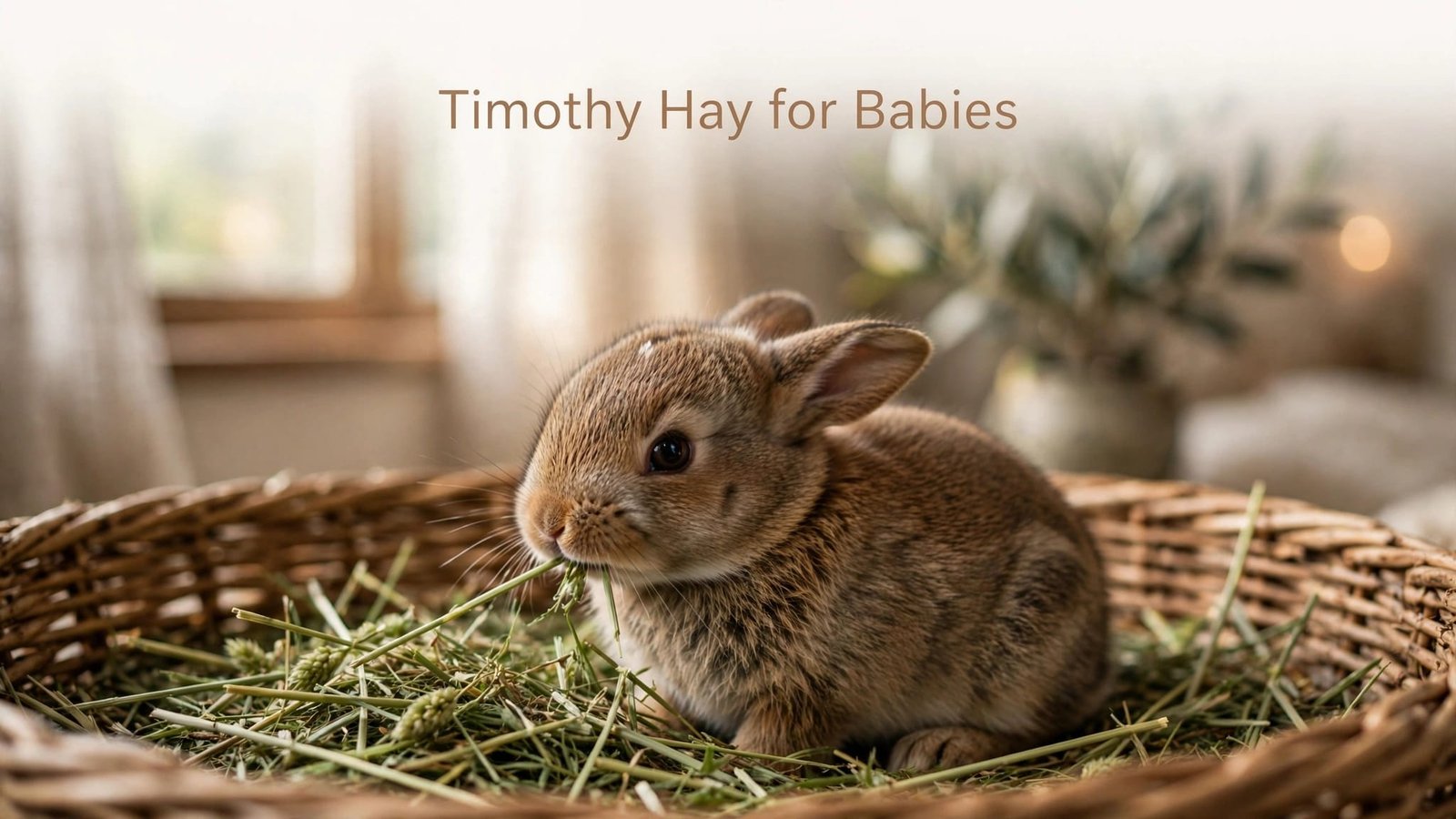
Changing your young rabbit’s hay can feel worrying when you’re unsure whether you’re moving too soon or taking away food they still need.
Baby rabbits can begin exploring Timothy hay when they start eating solid food independently. Alfalfa may remain part of their growth regimen, so nibbling Timothy doesn’t mean they’re ready to switch completely to adult feeding.
Your bunny’s age, body condition, and health matter more than a single birthday or the cutting number printed on a bag.
Start by separating two decisions: introducing a suitable grass hay and making it your rabbit’s main hay.
Key Takeaways
- Baby rabbits can explore Timothy hay once they eat solid food independently, but that doesn’t mean they’re ready for an adult feeding plan.
- Alfalfa may remain part of a growing rabbit’s diet because it generally has more protein and calcium than common grass hays.
- Timothy cutting labels describe general texture patterns, not age-based feeding stages or nutritional readiness.
- Choose clean, dry hay your rabbit willingly eats, and ask a rabbit-savvy veterinarian about changes involving growth, weight, illness, or trouble chewing.
Alfalfa vs. Timothy Hay: What your growing rabbit needs
Alfalfa and Timothy have different nutritional profiles. Alfalfa hay is a nutrient-dense legume hay, while Timothy is a grass hay commonly offered to healthy adult rabbits. Neither is universally best for every life stage.
Why baby rabbits are often offered alfalfa
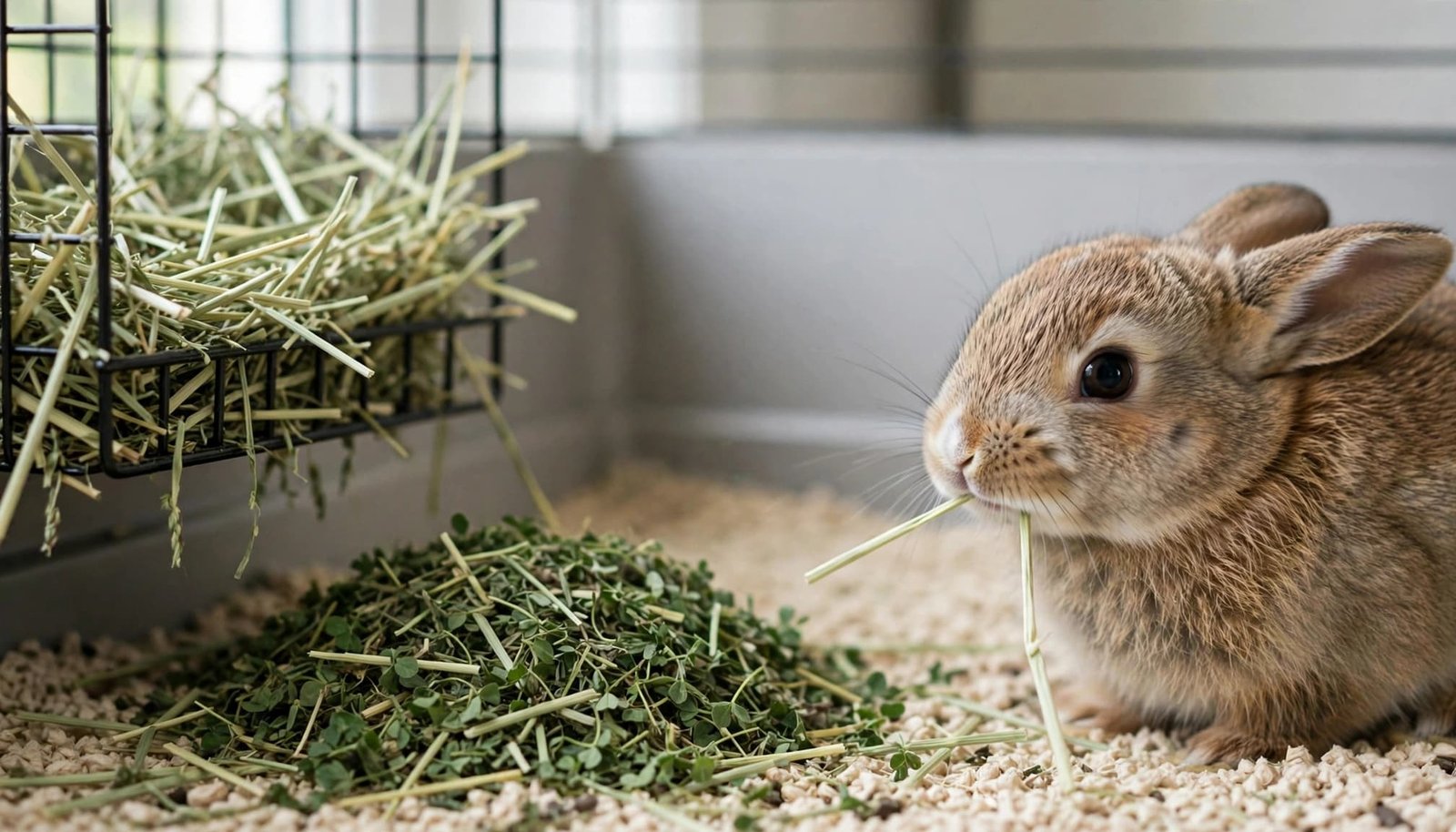
Growing rabbits have different nutritional needs than mature rabbits. Alfalfa generally contains more protein and calcium than common grass hays, which explains its place in many growth feeding plans.
San Diego Rabbits’ young-rabbit hay guidance describes alfalfa’s role in supporting growth and also includes Timothy and orchard hay among options offered to youngsters.
However, that doesn’t make an alfalfa-only approach a universal requirement. Your rabbit’s feeding plan should reflect their development and condition. A young rabbit who is underweight or unwell needs individual veterinary guidance rather than a hay choice based on age alone.
How Timothy hay fits into an adult rabbit’s diet
For many healthy adults, Timothy is a suitable everyday grass hay. The House Rabbit Society’s diet guidance also lists orchard, oat, meadow hay, and other grass hays as adult options.
Hay provides fiber for digestive health and helps reduce the risk of GI stasis. Chewing helps wear down continuously growing rabbit teeth and supports dental health, though it can’t prevent all dental issues.
If your bunny reliably enjoys orchard grass or another appropriate grass hay, you don’t need to force a preference for Timothy. A familiar hay they willingly eat is more useful than a particular name they reject.
When can baby rabbits eat Timothy hay?
Your baby rabbit can explore Timothy hay while learning to eat solid food independently. Nibbling grass strands offers natural enrichment and encourages foraging.
Rabbit.org recommends introducing hay as soon as baby rabbits can eat on their own. That supports early familiarity with hay, but it doesn’t mean a youngster should immediately follow an adult feeding plan.
The distinction is trying Timothy versus relying on Timothy as the main hay. Your bunny can become familiar with a grass hay while alfalfa remains part of their growth plan. Alfalfa-based pellets provide concentrated calories, while Timothy offers roughage to explore; sugary treats aren’t a substitute.
This matters because enthusiasm for a new food doesn’t establish nutritional readiness. A rabbit who enjoys Timothy may still have growth-related needs that differ from those of a healthy adult.
Likewise, an adult-looking coat or larger body doesn’t provide a complete nutritional assessment. Your veterinarian can consider development, body condition, and health together when advising how the feeding plan should change.
Avoid connecting this decision to a required Timothy cutting. First, second, and third cutting describe harvests and commonly associated textures. They aren’t stages your rabbit must progress through as they grow.
A soft third-cut bag doesn’t automatically meet a baby’s growth needs. Equally, coarse first-cut strands don’t make a hay more appropriate for a particular age. See our article on different cuts for further info on this.
For your youngster, keep the two questions separate: whether Timothy is a suitable hay to explore and whether their overall nutrition is ready for adult feeding. The first can happen before the second.
How to switch from alfalfa to Timothy hay without upsetting your rabbit
Think about the change as an adjustment to your rabbit’s overall nutrition. Alfalfa and Timothy differ in nutrient density, so replacing one with the other deserves more thought than choosing between two package designs.
A gradual approach should follow a feeding plan suited to your rabbit, especially when growth, weight, or illness affects their needs.
Separate texture preference from nutritional needs
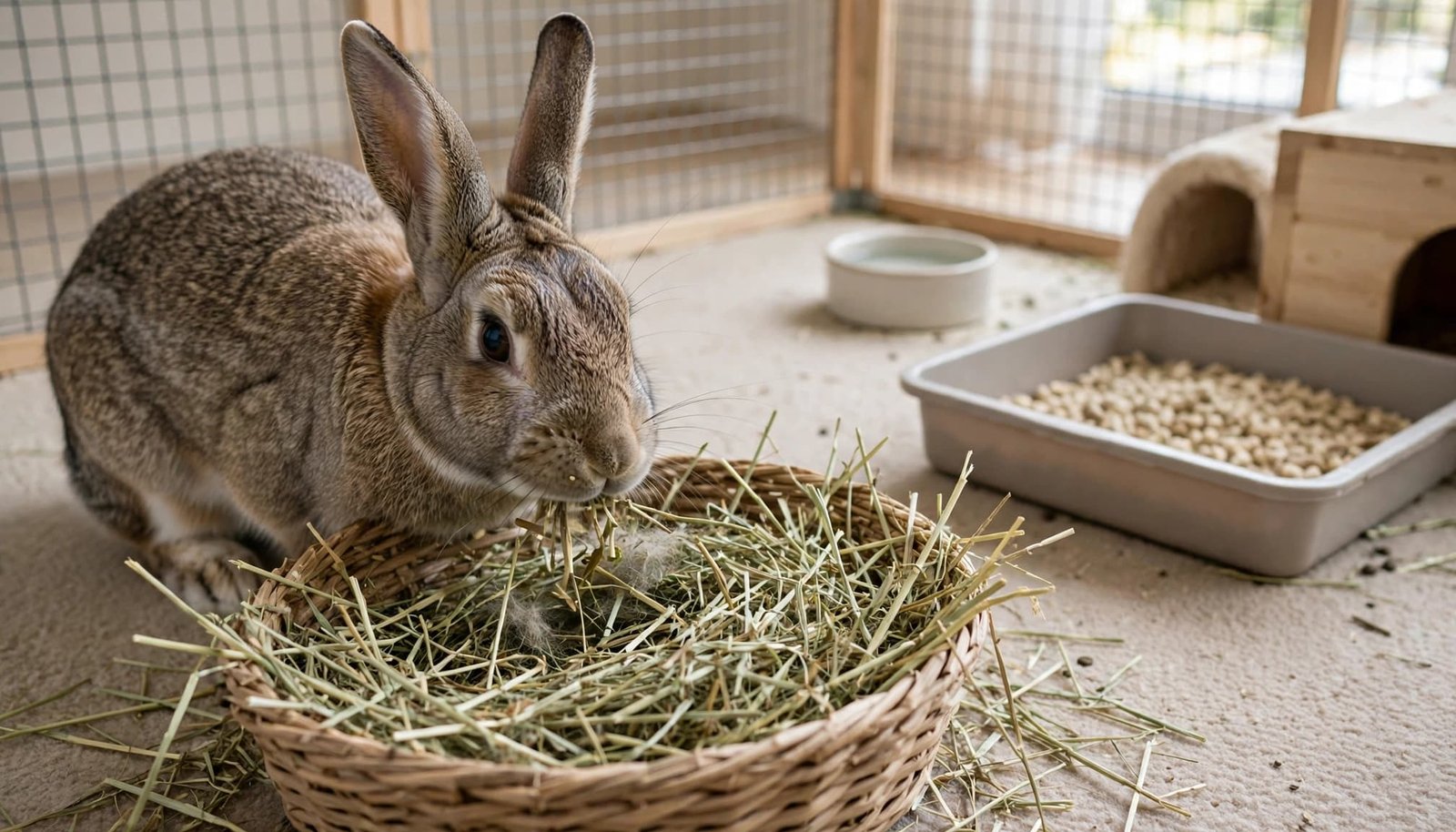
Your bunny may prefer alfalfa’s leafy texture, a particular grass hay, or the feel of one batch over another. However, preference alone doesn’t tell you which nutritional plan is appropriate.
Timothy itself varies. First cutting commonly contains coarser stems, second cutting often combines leaves and stems, and third cutting tends to be finer and leafier. These are general patterns, not guarantees.
Choose an appealing texture within the feeding plan your rabbit needs. Regardless of the cut or stem texture, prioritize consistent fiber intake to support digestive balance. Don’t use a cutting label as a substitute for deciding whether alfalfa still belongs in that plan.
Offer fresh hay daily to encourage regular consumption during the transition away from alfalfa.
Match the change to your individual rabbit
A healthy youngster approaching adult feeding has different needs than an underweight rabbit or one recovering from illness. For that reason, the same alfalfa-to-Timothy plan won’t suit every bunny.
An Exotic Veterinary Doctor can offer individualized advice about reducing richer hay and supporting your rabbit’s condition. This is particularly useful when you’re uncertain about growth or weight.
During the transition, watch your rabbit’s intake. Reduced intake can be a warning sign of GI stasis. If your rabbit has a loss of appetite, seek professional guidance promptly.
Introduce fresh greens gradually and keep treats limited while establishing consistent grass hay intake. The goal is a sustainable adult feeding routine with suitable hay your rabbit accepts. Completing the switch to one named grass matters less than choosing an appropriate long-term meal plan.
Choose fresh hay your rabbit will keep eating
Once Timothy fits your rabbit’s feeding plan, freshness and acceptance matter more than buying the largest bag. Our guide to choosing Timothy hay for rabbits covers cuts, textures, and package choices in more detail.
Inspect the hay rather than trusting the label
Look for a clean, dry product with a pleasant grassy smell. Avoid visible mold, damp patches, heavy dust, and musty odors. Hidden mold can cause serious respiratory irritation.
Color alone isn’t a reliable quality grade. A suitable bag can contain both green and golden strands, and texture varies between harvests and batches. Bright packaging or a familiar brand doesn’t replace inspecting the contents.
Likewise, second cutting isn’t automatically superior to first or third cutting. The useful choice is a fresh, suitable batch with a texture your bunny willingly chews.
A manageable package or sampler can help you explore preferences without committing storage space to a large supply. Compare package size with what you can keep in good condition.
Protect freshness after opening
When you store hay, choose a location that’s cool, dry, and airy, such as a paper bag or clean cardboard box. Keep it away from damp floors, steamy rooms, and direct sunlight.
Storage matters because a good bag can deteriorate after purchase. Don’t keep hay that becomes wet, dirty, or moldy, and don’t mix spoiled handfuls back into the clean supply. Knowing how to safely store hay helps prevent waste and spoilage.
Rotate safe tunnels or paper rolls with hay inside to provide enrichment and support your rabbit’s instinctual foraging behavior.
Before buying in bulk, ask whether you have a cool, dry place to store hay. A lower price per pound offers little benefit if moisture damages part of the purchase. A smaller amount stored well can be a more practical choice.
Our top picks for your young rabbit.
Many young rabbits eat an alfalfa-based diet as they grow. The timing and amount depend on development, body condition, and veterinary advice.
Ask your veterinarian whether Oxbow Alfalfa Hay is right for your rabbit and how much to offer.
An alfalfa-based pellet like Oxbow Essentials Young Rabbit Food may suit a young rabbit. Follow the feeding directions and your veterinarian’s guidance.
Frequently Asked Questions
When can a baby rabbit start eating Timothy hay?
A baby rabbit can explore Timothy hay when they can eat solid food independently. This doesn’t mean Timothy should immediately replace alfalfa or become their main hay.
Should baby rabbits eat alfalfa or Timothy hay?
Alfalfa generally contains more protein and calcium than common grass hays, so it may be part of a growing rabbit’s feeding plan. The right plan depends on the rabbit’s development, body condition, and health.
Does a baby rabbit need a certain Timothy hay cutting?
No. First, second, and third cutting describe general differences in texture, not stages a rabbit must follow as they grow. Choose a fresh, suitable hay your rabbit will eat within their feeding plan. See our article 1st cut vs. 2nd cut vs. 3rd cut Timothy Hay
When should a hay change prompt a veterinary visit?
Ask an Exotic Veterinary Doctor for guidance when growth, weight, or illness affects your rabbit’s feeding plan. Chewing difficulty, drooling, a wet chin, or repeatedly dropping food may point to dental issues and needs veterinary attention. A sudden loss of appetite can be urgent and may signal GI stasis, so seek veterinary care promptly. We have some tips you can take a look at in our 6 Tips for When Your Bunny Won’t Eat Hay.
Help your bunny grow into an adult hay diet
Your baby rabbit can become familiar with Timothy before they’re ready for a fully adult feeding plan. Alfalfa may still support growth, while Timothy or another suitable grass hay becomes part of their longer-term feeding routine.
Keep nutritional needs and hay preference separate when making decisions. Choose fresh hay your bunny comfortably accepts, and let a rabbit-savvy veterinarian guide changes involving growth, weight, or health concerns.
You don’t need to find a perfect cutting or make Timothy the winner over every other grass hay. Your goal is a balanced nutritional plan and a hay supply your rabbit willingly returns to.
We only recommend top-rated, affordable products you can trust. As an Amazon Associate, I may earn from qualifying purchases through the affiliate links above at no extra cost to you. Thank you for supporting