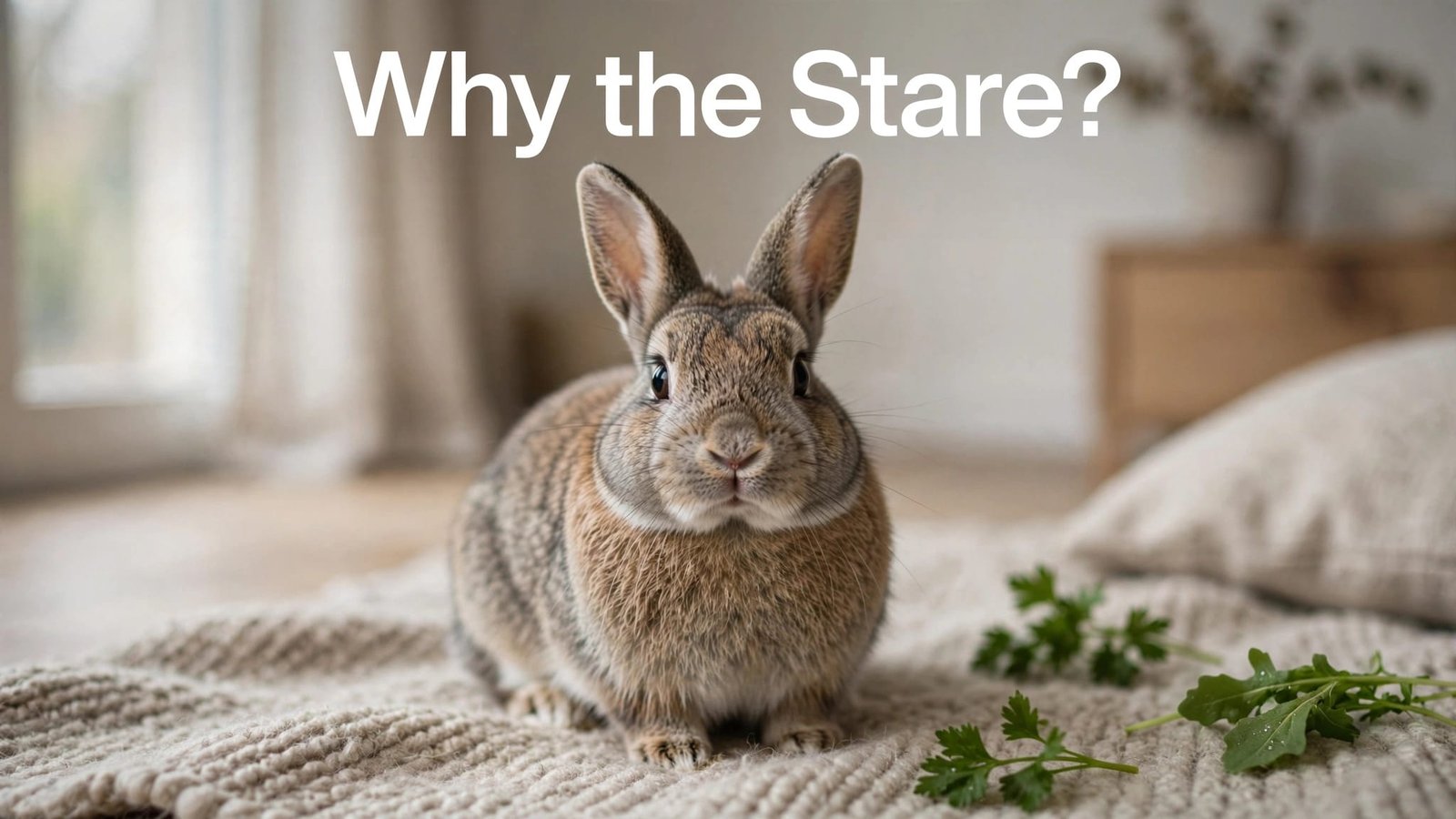
If you’ve searched “rabbit staring at owner,” your rabbit may be curious, expecting something, or keeping an eye on their surroundings.
Your rabbit may be watching you for food, attention, or comfortable company, and sometimes they may be resting with their eyes open. Read the stare alongside their ears, stance, appetite, and droppings, because sudden changes or signs of illness need advice from a veterinarian.
You don’t need to decode every glance to understand your bunny. Start with what’s happening around them and whether their behavior looks normal for them.
Key Takeaways
- A relaxed bunny watching you is usually showing ordinary curiosity or comfort.
- Ears, eyes, and rabbit body language, including the way they hold themselves, tell you more than a stare alone.
- Appetite loss, unusual tiredness, fewer droppings, or poor responsiveness need prompt veterinary attention.
Why Your Rabbit Keeps Watching You
Waiting for food or attention
Your bunny learns your routines. Getting up from the sofa, opening a cupboard, or approaching their feeding area can become a familiar food cue.
A stare followed by approaching or nudging you with their nose may be attention seeking, a request for company. Nudging can also mean you’re blocking their path, so notice what happens next. Licking is a clearer sign of friendly grooming and affection.
You can offer calm company without handing out extra treats every time those lovely eyes find you.
Feeling safe or staying alert
If your rabbit settles nearby while you sit quietly, they may simply enjoy your company. A loose body, grooming, and normal eating support that reading. Our guide to how rabbits recognize their owners covers other familiar responses.
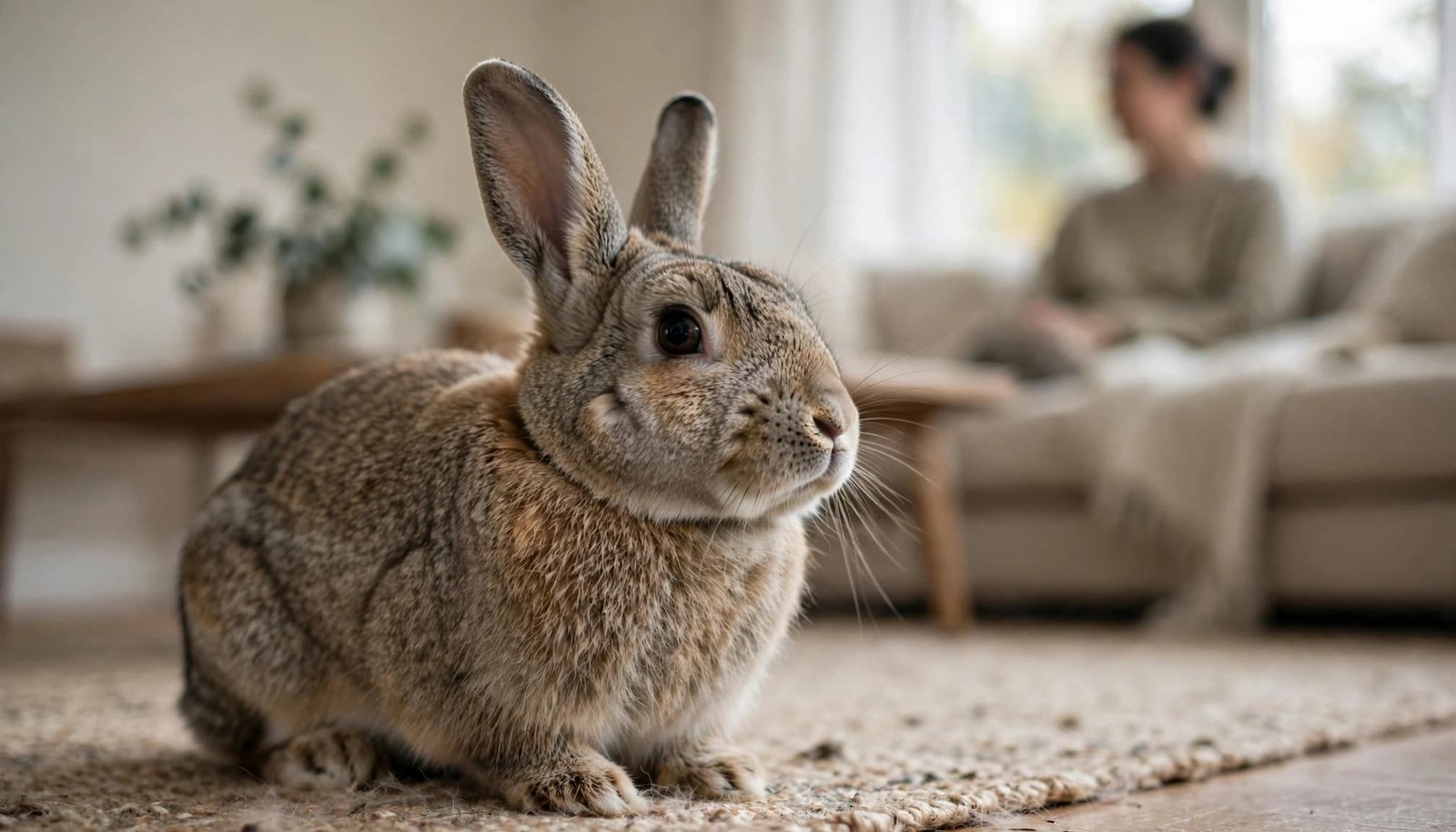
A tense, watchful rabbit may be stressed, especially if their pupils are dilated. Rabbits are prey animals, so sudden movements or unfamiliar sounds can put them on high alert and make them freeze.
Sit at floor level, lower the noise, and leave a clear route to a hideout. Let your bunny choose whether to approach.
Read Rabbit Staring Alongside Body Language
The RSPCA’s rabbit body-language guide explains why rabbit body language depends on the whole posture.
Use these combinations as clues, rather than judging one feature alone.
| What you notice | What it can mean |
|---|---|
| Ears close together and pointing outward, partly closed eyes, legs tucked under | Likely relaxed and comfortable. |
| Ears pressed flat against the back, pupils dilated, tense body | Worried or stressed; your bunny may hide. |
| Ears forward and an intense stare at one spot | High alert, perhaps after noticing movement or sound. |
| Boxing with the front paws | Very unhappy and asking for distance. |
| Showing teeth with a tense, defensive stance | Extreme fear and a final warning to back away. |
A fixed stare can also mean high alert, so check for a sound or movement nearby.
PDSA also identifies flattened ears as a possible stress sign, with boxing and showing teeth among stronger warnings.
Ears resting backward can accompany comfortable rest, too. With lop-eared rabbits, body position and behavior are especially useful. Our guide to different rabbit ear positions gives you more context.
Could Your Rabbit Be Sleeping or Getting a Better Look?
Sleeping with their eyes open
Rabbits can sleep with their eyes open, so a bunny apparently staring into space may be resting. A comfortable position, steady breathing, and a normal response when they wake are reassuring clues.
Rabbits also have a translucent third eyelid, called the nictitating membrane, which helps protect the eye. Open eyes don’t mean your bunny is actively watching you throughout sleep.
Don’t poke or startle them to test this. Instead, notice whether they resume normal activity afterward.
Looking sideways and judging distance
Your rabbit’s eyes sit on the sides of their head. This gives them a broad view, so they can watch you without facing you directly.
Some rabbits make small, deliberate head movements or sway while assessing an object. This is called parallaxing, and it helps them judge distance.
Brief scanning differs from a persistent head tilt, falling over, or uncontrolled movements. Those changes need veterinary attention, especially if they’re new.
When Does Staring Need Veterinary Attention?
A prolonged stare alone doesn’t mean your rabbit has neurological problems. Stress, changes in vision or hearing, and ordinary rest can all affect how they watch their surroundings.
However, inner ear infections and neurological problems, including seizures, can cause an abnormal stance, balance, awareness, or movement. Don’t dismiss those signs as a quirky habit.
Contact a rabbit-experienced vet urgently if you notice:
- Your rabbit has a loss of appetite or stops eating, produces fewer or no droppings, or becomes unusually lethargic.
- Loud tooth grinding accompanies a hunched, tense posture.
- A persistent head tilt, loss of balance, rolling, or seizure-like movements develop.
- Your bunny becomes difficult to rouse, collapses, or struggles to breathe.
The San Diego House Rabbit Society highlights appetite loss and lethargy as important illness warnings. Loud grinding can indicate pain, unlike gentle tooth purring during relaxed petting.
Rabbits hide sickness well. Ask your veterinarian about sudden behavior changes, even when the signs seem subtle. Our guide to recognizing rabbit pain signs offers more help.
FAQs About Your Rabbit’s Stare
Why does my rabbit stare at me at night?
If you searched “rabbit staring at owner,” your bunny may be awake and interested while you’re winding down. Rabbits are often active around dawn and dusk. Check their position and usual routine rather than assuming nighttime staring means something is wrong.
Does staring mean my rabbit loves me?
Rabbit eye contact alone doesn’t prove affection. Voluntary approaches and choosing to relax beside you are stronger rabbit trust signs that your bunny feels comfortable. A reserved rabbit may also show trust through occasional licking, even without seeking lots of contact.
Get to Know Your Bunny’s Normal
Your rabbit’s stare makes more sense when you notice the whole bunny. Comfortable posture and normal eating are reassuring, while monitoring for tension or changes in appetite can help you spot a problem.
Enjoy those curious looks from your long-eared friend. If watching turns into unusual stillness, poor responsiveness, or reduced eating, contact your vet promptly.