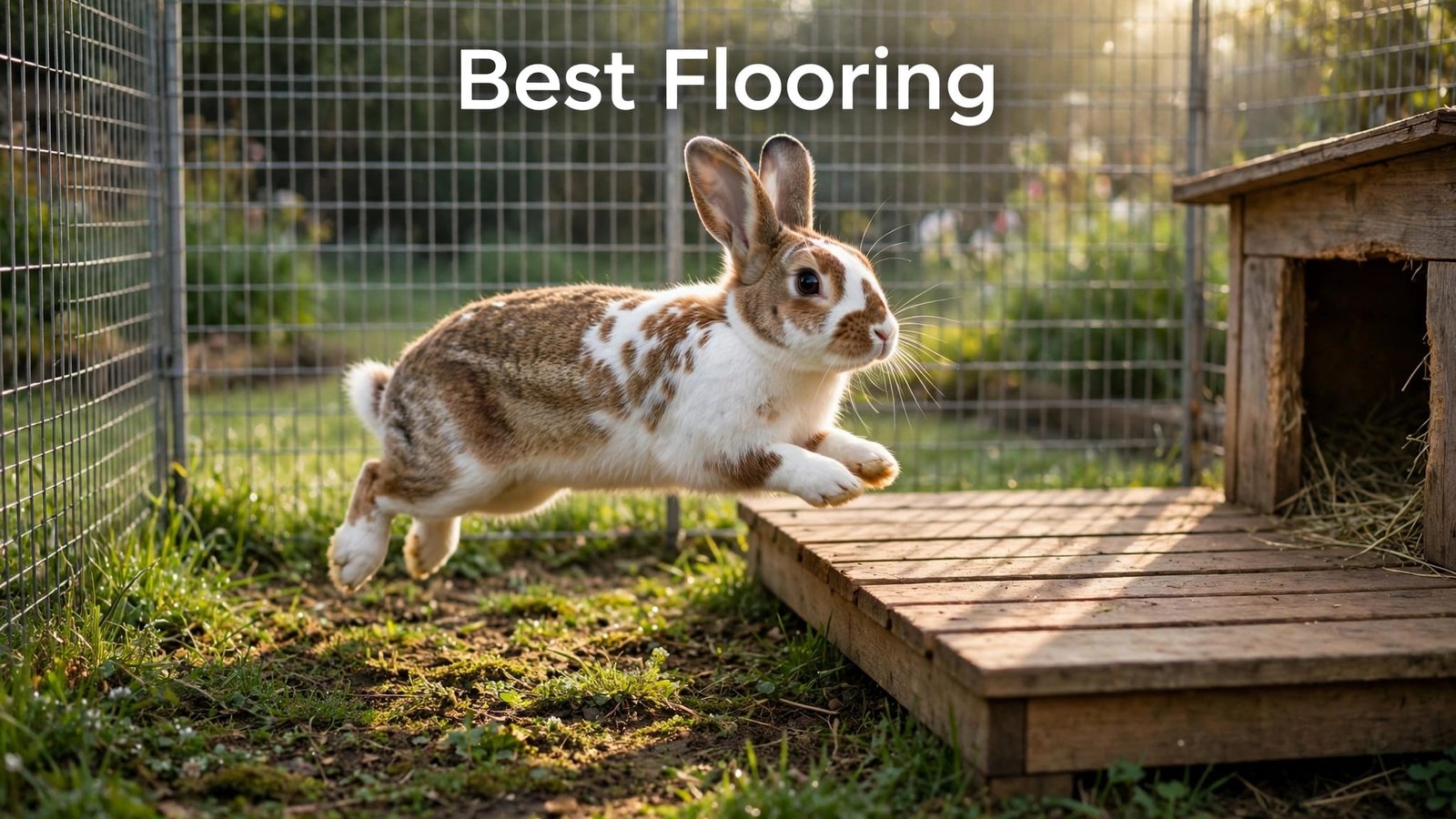
Keeping your bunny’s outdoor floor comfortable, dry, and secure can be tricky, especially when your yard changes with the weather.
A mix of suitable natural ground and a stable, dry resting area usually works best. Choose surfaces based on your rabbit’s mobility, your yard, and how easily you can keep the run clean.
Grass or soil can provide a natural surface, while a solid, dry area gives your rabbit a comfortable place to rest.
Start with how your rabbit will use the finished enclosure, then choose surfaces that support comfortable hopping and resting.
Key Takeaways
- A mix of suitable natural ground and a stable, dry resting area usually gives rabbits comfortable places to move and rest.
- Choose surfaces for good traction, drainage, comfort, and ease of cleaning. Keep coverings flat, secure, and easy to lift and inspect.
- Protect the full connected enclosure, including the shelter, run, corners, doorways, and tunnels, against digging in and out.
- Check for holes, dampness, sharp edges, shifting surfaces, and changes in your rabbit’s movement before outdoor sessions and after repairs or moving the run.
- Adjust the setup for your rabbit’s mobility and for heat, rain, and cold, and move your rabbit indoors when outdoor conditions are unsafe.
How to Choose the Best Flooring for Outdoor Rabbit Run Setups
Before choosing a material, consider traction, comfort, drainage, shade, washing access, and digging protection. Your rabbit should move confidently without slipping, stepping over loose edges, or resting on damp ground.
Measure the usable floor in your exercise run after placing the litter box, hideout, hay, and water. A roomy-looking run can leave surprisingly little hopping space once everything is inside.
Treat the shelter, run, and connectors as one habitat. The Rabbit Welfare Association & Fund’s outdoor rabbit housing guidance is a helpful starting point for planning that complete space. A good surface in the main run won’t solve an awkward or uncomfortable connection to the shelter.
Grass and soil offer natural footing, but need regular checks
Grass gives your bunny somewhere to explore and graze, while natural ground offers a different texture beneath their feet. It can work well when the ground is even, suitable for grazing, and protected against digging.
Use untreated grass without harmful plants mixed through it. If your rabbit isn’t used to grazing, introduce grass gradually and keep hay available. Watch their appetite and droppings as their diet changes.
Before outdoor time, look for holes, muddy patches, uneven areas, and gaps beneath the run’s edges. Pay extra attention after rain or whenever you move the run.
Moving onto fresh grass also changes how the run meets the ground. Reassess every lower edge rather than assuming the previous fit still applies.
Your rabbit will still need somewhere dry to rest. A grass-only floor becomes less useful when the patch your bunny normally settles on is wet or churned up.
Concrete and paving slabs are easy to clean, with comfort tradeoffs
A solid base can make it easier to see waste and reach the surface when you wash the run. However, you still need to assess its texture, condition, and comfort before making it your rabbit’s everyday floor.
Choose stable footing without sharp edges, rocking slabs, or slippery sections. Plan where wash water will go so it doesn’t collect beneath bedding or flow into the shelter.
For rabbit cage flooring, linoleum or sheet vinyl may suit a protected, sheltered patch if the surface is waterproof and non-absorbent. Ceramic tiles are hard and can be slick, so secure a grippy layer over them and keep its edges out of reach. Avoid treated wood where rabbits can chew it unless you’ve verified its safety.
Give your bunny a separate, dry, comfortable sleeping space rather than relying on bare hard flooring throughout. Check conditions in sunny, cold, and wet weather, and provide shade that remains useful as the sun moves.
It also helps to separate two different uses of paving. Slabs used to protect an enclosure boundary have a security role. Slabs inside the living area are a walking surface, so comfort and traction matter there too.
A secure base and a comfortable floor need to work together.
Compare mats, artificial turf, and other added surfaces carefully
An added covering should solve a clear problem, such as poor grip or an uncomfortable resting spot. Before buying mats, artificial turf, or another covering, consider how you’ll inspect, wash, dry, and replace it.
Look for a surface that stays flat and secure. Loose corners, raised joins, and edges your rabbit can pull up create extra problems. Avoid loose-loop coverings that could catch nails.
Don’t assume a product is suitable outdoors simply because it looks soft. Consider weather resistance, drainage underneath, and whether you can lift it to inspect the base.
Watch how your own rabbit uses it. Remove a covering if your bunny chews pieces off, swallows material, catches their nails, or repeatedly pulls it loose. No material should be treated as completely chew-proof.
A covering also needs to stay dry. If it hides dampness or makes cleaning harder, change the arrangement rather than layering more material over the problem.
Build a floor that balances comfort, drainage, and digging protection
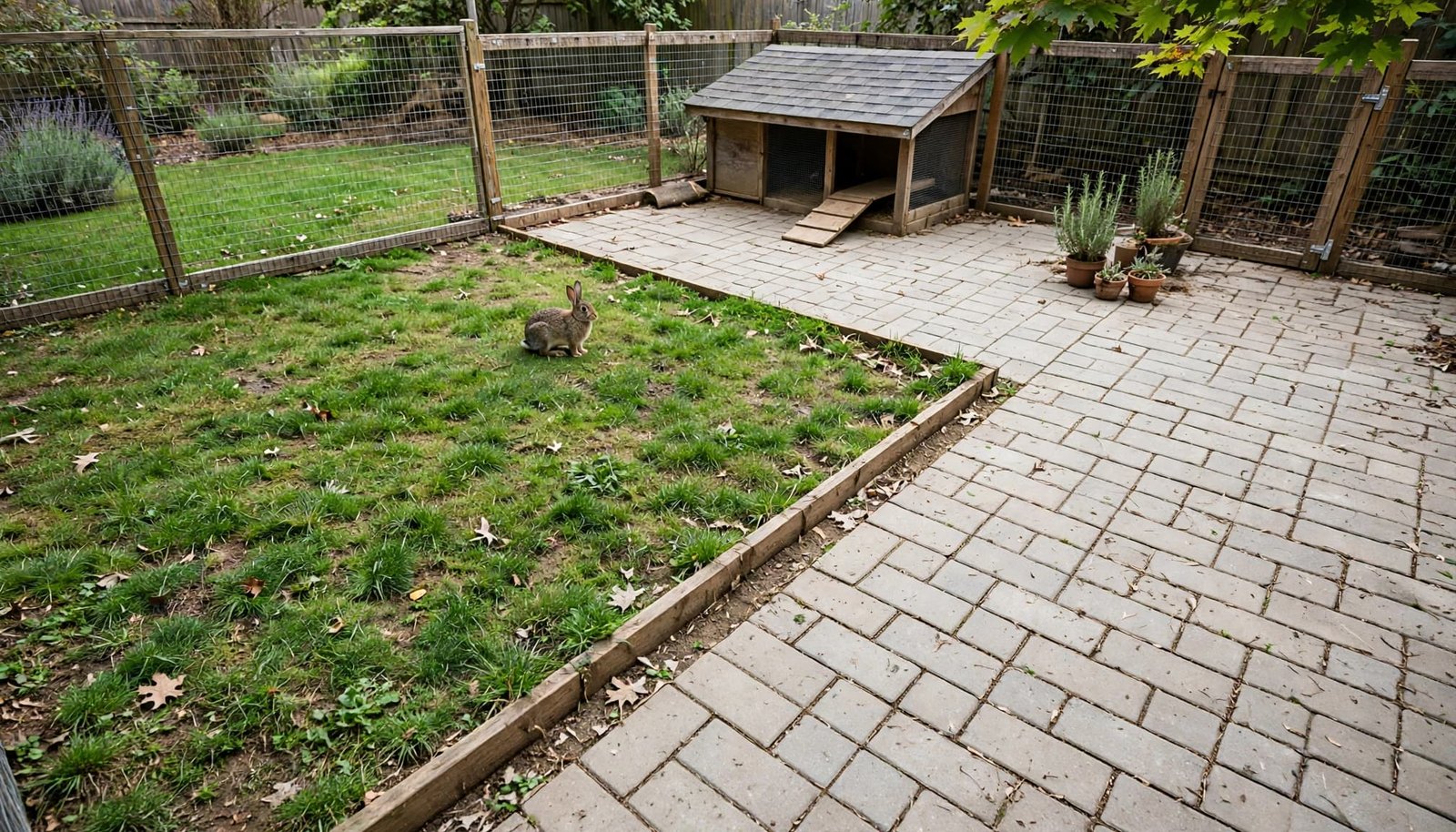
You don’t have to cover the whole run with one material. A mixed layout can give your rabbit different places for movement and rest while making daily care more manageable.
Where your yard allows, combine suitable natural ground with a sheltered, solid resting area. Keep the route between them stable and easy to use. The RSPCA’s rabbit environment guidance places shelter, exercise space, and places to hide within the same housing plan.
Keep digging barriers under the whole connected enclosure
Plan for your rabbit digging out and predators digging in. Ground protection needs to include the shelter, run, and joining sections, with attention to corners and doorways.
Carry mesh protection continuously across vulnerable joins, corners, and doorways. A properly installed mesh apron or suitable paving slabs can help protect the boundary. Keep protective wire separate from the surfaces where your bunny hops or lies down. Wire flooring isn’t an appropriate resting surface.
The Rabbit Awareness Action Group’s guidance on housing rabbits outdoors highlights digging as a natural behavior to consider when housing rabbits on grass. Your layout needs to account for that behavior throughout the run.
An ordinary garden fence doesn’t provide complete underground or overhead protection. Filling one hole also leaves the rest of the boundary unchanged.
Pay attention to connections that are easy to overlook. A protected run can still have a vulnerable section beneath its shelter or tunnel. Think of the boundary as one continuous line, including the parts hidden behind supplies or difficult to reach.
If inspecting a section requires dismantling several panels, improve access before that becomes your regular maintenance routine.
Make entrances, resting spots, and cleaning access practical
Arrange the floor around your rabbit’s size, health, and mobility. Level access may be easier for an older or less-mobile bunny than a ramp, especially when the route leads to hay, water, or shelter.
Look at thresholds and doorways from your rabbit’s level. A narrow entrance or raised edge can make a useful section difficult to reach. Keep both sides of each connection clear.
Your litter box, hideout, and feeding area shouldn’t block the hopping route. Bonded rabbits also need enough space to rest separately when they choose. An accessible toilet tray can support toilet training, and rabbit-safe wood pellets absorb pee. Remove poo during routine checks.
Inside the hut, provide a dry resting area with protected airflow. Dry straw can add insulation, while hay should remain available as food. Weather covers shouldn’t block ventilation openings or leave the shelter closed off when its doors are shut.
Our guide to choosing a rabbit hutch covers various tips on keeping the area safe.
Finally, leave room for your own care routine. You should be able to remove bedding, lift the litter box, and reach every corner without chasing your rabbit or taking the run apart.
Check and maintain your rabbit run floor through every season
The best flooring for your outdoor rabbit run needs ongoing care, not just a good installation. Rain, digging, chewing, and everyday wear can change a surface that previously worked well.
Supervise outdoor time and stay close enough to notice discomfort or damage. When supervision ends, return your bunny to an appropriately sized, rabbit-proofed indoor living area.
Inspect for holes, damp spots, sharp edges, and shifting surfaces
Before each outdoor session, check the full run. Look at lower edges, corners, doorways, shelter joins, and connectors rather than checking only the main patch of floor.
Watch for fresh digging, holes, loose panels, damaged fasteners, gaps, and exposed sharp material. Check the barrier mesh for damage or lifting. Inside, look for standing water, muddy ground, loose coverings, and slabs or other surfaces that have shifted. See our article on Safe Outdoor Rabbit Enclosures.
Recheck everything after moving the run or changing any part of it. A new position can create a gap beneath an edge even when the run itself hasn’t been damaged.
Move your rabbit somewhere secure before making repairs. Deal with the cause, not only the visible result. Recurring dampness may need a change to drainage or shelter protection rather than another layer of litter.
Then inspect the whole setup again before outdoor access resumes. Repairing one section can disturb a nearby connection.
Also watch your rabbit’s movement. Reluctance to cross a surface, repeated slipping, or a change in gait can point to sore hocks or pododermatitis. Speak with a rabbit-savvy veterinarian about foot soreness or movement changes.
Clean the surface and adjust for heat, rain, and cold
Remove wet litter, waste, and leftover fresh food promptly. Keep hay dry and water clean, accessible, and away from areas where litter or soil regularly gets kicked into it.
Lift removable coverings during washing so you can see what’s underneath. Let the base and covering dry before putting everything back. A tidy top surface can still hide moisture below. If pee soaks through a covering or leaves the base damp, remove the material and let the area dry.
After rain, inspect roof seams and the edges above doorways. A small leak can leave the resting area damp even when most of the shelter stays dry.
In warm weather, follow the shade across the run. Your bunny needs enough shaded space to settle comfortably, not just a narrow corner. Keep ventilation openings clear and protected against rain.
Cold weather brings different tasks, including keeping bedding dry and drinking water unfrozen. Covers must protect against weather without trapping stale air inside.
Move your rabbit to a suitable indoor space whenever heat, storms, freezing conditions, or persistent damp make outdoor time unsafe. Changing the floor alone won’t make unsuitable weather comfortable.
Adjust the arrangement as your rabbit’s needs change, too. A route that suited a young, active bunny may need easier access later.
Frequently Asked Questions
What flooring works best for an outdoor rabbit run?
A combination of suitable natural ground and a stable, dry resting area usually works well. Choose surfaces that give your rabbit secure footing and that you can inspect and clean.
Are concrete or paving slabs suitable for rabbits?
They can provide a solid surface that’s easier to wash, but check that slabs are stable and not sharp or slippery. Give your rabbit a separate, dry, comfortable place to rest, and keep any grippy covering secure with its edges out of reach.
How can I protect an outdoor rabbit run from digging?
Protect the complete connected enclosure, including the shelter, run, corners, doorways, and joining sections. A properly installed mesh apron or suitable paving slabs can help protect the boundary, while wire should stay separate from surfaces where your rabbit walks or rests.
How often should I check my rabbit’s outdoor flooring?
Check the full run before each outdoor session, and recheck it after moving the run or making repairs. Look for holes, damp spots, loose coverings, sharp edges, and surfaces that have shifted.
What should I do if my rabbit slips or avoids part of the floor?
Check the surface for poor grip, raised edges, dampness, or other changes, and adjust or remove an unsuitable covering. Reluctance to cross a surface, repeated slipping, or a change in gait can point to sore hocks or pododermatitis, so speak with a rabbit-savvy veterinarian about these signs.
Choose flooring that works for your bunny every day
A mixed surface can work well when it gives your rabbit stable footing, a dry resting place, and digging protection around the entire connected setup. Choose a combination that suits your yard, your bunny’s needs, and the care routine you can maintain.
Keep outdoor time supervised and inspect the complete setup regularly. Comfortable flooring matters most when your rabbit can reach it easily and use it safely through changing conditions.