
Rabbits need a diet built around grass hay, fresh leafy greens, clean water, and small portions of rabbit-safe treats. Because they have sensitive digestive systems, foods that are healthy for people may not be suitable for them.
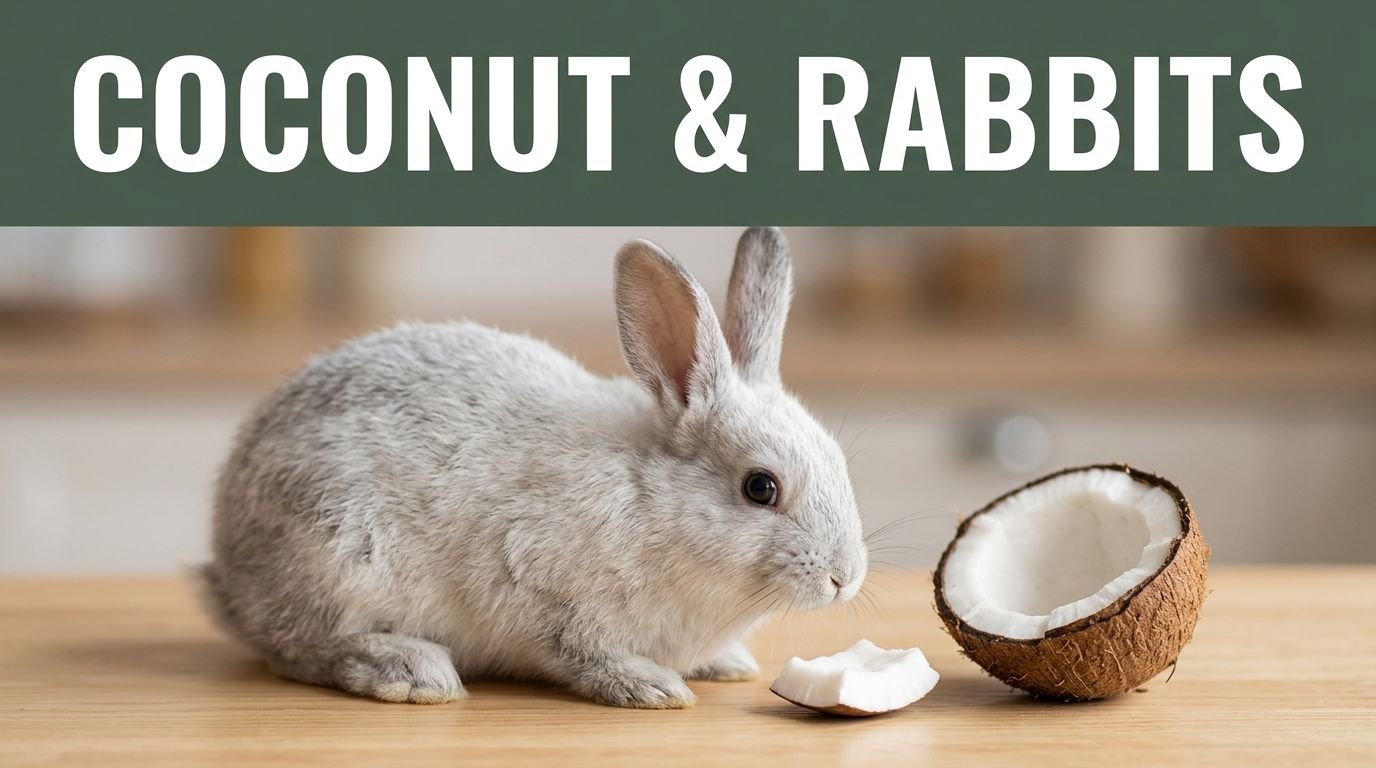
Coconut is one food that often raises questions. It has a rich, creamy texture and contains plenty of fat and calories. While a small bite is unlikely to poison a rabbit, coconut isn’t a suitable regular treat. Its high fat, sugar, and calorie content doesn’t match what a rabbit’s digestive system needs.
This guide explains the risks of coconut, including coconut meat, water, oil, and shells. It also covers safer treats and the basics of a balanced rabbit diet.
Can Rabbits Eat Coconut?
Rabbits can technically eat a tiny amount of plain coconut meat, but it’s best not to offer it. Coconut isn’t toxic in the same way as certain poisonous plants, yet it provides little nutritional value for rabbits and may cause digestive problems.
A rabbit’s digestive system works best with foods that are high in fiber and low in fat. Grass hay should make up most of the diet because it supports healthy gut movement and helps wear down continuously growing teeth. Coconut has the opposite nutritional profile. Its flesh contains a large amount of fat and calories, along with natural sugar and only a modest amount of fiber.
Because of this, coconut may cause:
- Soft stools or diarrhea
- Gas and bloating
- Weight gain
- Reduced appetite
- Dental problems from excess sugar
- Gastrointestinal stasis in serious cases
Gastrointestinal stasis occurs when the movement of food through the digestive tract slows or stops. This condition can become life-threatening and requires prompt veterinary care.
A small accidental nibble may not cause a problem, but purposely feeding coconut isn’t worth the risk. Rabbits have plenty of safer treat options that better suit their nutritional needs. 
Coconut’s Nutritional Content
Coconut contains several nutrients that can benefit people. The white flesh is high in calories and fat, including medium-chain triglycerides. It also contains minerals such as manganese, magnesium, and potassium. Coconut water has fewer calories than the flesh and provides electrolytes.
These qualities don’t make coconut a good food for rabbits, though. Rabbits need a high-fiber diet with limited fat and sugar. Their digestive systems rely on fiber to keep food moving and to support healthy gut bacteria. Coconut doesn’t provide enough fiber to balance its fat and calorie content.
The difference between human nutrition and rabbit nutrition matters here. A food can be nutritious for people while still being a poor choice for a rabbit. Hay, leafy greens, and carefully selected vegetables meet a rabbit’s needs much better than fatty foods such as coconut.
Risks of Feeding Coconut to Rabbits
High fat and calories
Coconut flesh is calorie-dense and contains a significant amount of fat. Rabbits aren’t built to process large amounts of dietary fat. Frequent exposure can contribute to weight gain and may place extra stress on the liver.
Overweight rabbits also face a higher risk of mobility problems, dirty bottoms, and other health concerns. A small piece may not create an immediate issue, but regular servings can disrupt a healthy diet.
Digestive upset
The combination of low fiber and high fat can upset a rabbit’s gut. Signs may include loose stool, gas, bloating, or a reduced appetite. In some cases, digestive upset can progress to gastrointestinal stasis.
Contact a veterinarian promptly if your rabbit stops eating, produces very few droppings, seems painful, becomes unusually quiet, or develops a swollen abdomen. Rabbits need regular food intake to keep their digestive systems moving.
Sugar and dental concerns
Coconut contains natural sugars, even though it may seem less sweet than many fruits. Too much sugar can encourage weight gain and disrupt the balance of bacteria in the digestive tract. Sugary foods may also contribute to dental problems when offered too often.
Rabbit teeth grow continuously, so rabbits need plenty of coarse, fibrous hay to wear them down. Coconut doesn’t provide the right texture or fiber for this job.
Processed coconut products
Coconut milk, coconut cream, coconut oil, sweetened coconut flakes, baked goods, and other coconut-based products are also poor choices. Many contain added sugar, salt, preservatives, or other ingredients that rabbits shouldn’t eat. Coconut oil is especially high in fat and offers no benefit that a rabbit can’t get from a proper hay-based diet.
Can Rabbits Eat Coconut Shells?
Rabbits shouldn’t chew or eat coconut shells. The shell is hard, difficult to digest, and may damage the teeth. Pieces can also create a choking or intestinal blockage hazard if a rabbit breaks them off and swallows them.
Hay and safe, untreated wooden chew toys are better choices for natural tooth wear. Avoid painted, varnished, glued, or chemically treated wood. If your rabbit has chewed a large piece of shell or shows signs of pain, choking, or digestive trouble, contact a veterinarian.
Can Rabbits Drink Coconut Water?
Coconut water isn’t a suitable drink for rabbits. It contains natural sugar and lacks the fiber rabbits need. Although it may hydrate people, it can cause digestive upset in rabbits and add unnecessary calories to their diet.
Fresh, clean water is all your rabbit needs for hydration. Provide it in a sturdy bowl or a clean bottle, and replace it regularly. Water should always be available alongside hay and fresh greens. 
What to Do if Your Rabbit Eats Coconut
If your rabbit takes one small bite of plain coconut, remove the remaining food and monitor them. Most rabbits won’t develop a serious problem after a tiny accidental taste, but each rabbit may react differently.
Watch for:
- A change in appetite
- Fewer or smaller droppings
- Diarrhea or unusually soft stool
- Gas or a swollen belly
- Hunched posture
- Low energy or signs of pain
Call your veterinarian if any of these symptoms appear, especially if your rabbit stops eating or stops producing droppings. Don’t give additional treats while you monitor your rabbit. Offer hay and fresh water instead.
Safer Treats for Rabbits
Treats should make up only a small part of a rabbit’s diet. Hay remains the main food, while fresh greens provide variety and extra nutrients. Introduce any new food slowly and offer only one new item at a time. This makes it easier to identify the cause of digestive upset.
Small portions of fruit
Fruit can be an occasional treat because it contains natural sugar. Suitable choices include:
- Apple with the seeds and core removed
- Blueberries
- Strawberries
- Small pieces of banana
- Melon in a small portion
Give only a bite-sized serving, a few times a week at most. Remove uneaten fruit before it spoils.
Rabbit-safe vegetables
Many rabbits enjoy vegetables such as:
- Bell peppers
- Cucumber
- Zucchini
- Small amounts of broccoli
- Carrot tops
Carrots themselves are high in sugar compared with leafy greens, so offer them as an occasional treat rather than a daily staple.
Fresh herbs
Parsley, cilantro, basil, and mint can add flavor and variety to a rabbit’s meals. Wash herbs before serving, and introduce them gradually if your rabbit hasn’t eaten them before.
Safe chew toys
Untreated applewood and other rabbit-safe wooden toys can provide enrichment and support natural chewing behavior. Check toys often and remove them if they splinter or become too small to use safely.
How to Provide a Balanced Rabbit Diet
A healthy adult rabbit’s diet should contain unlimited grass hay, such as timothy, orchard, or meadow hay. Hay supports digestion, provides fiber, and helps control tooth growth. It should be available throughout the day.
Fresh leafy greens can make up another regular part of the diet. Romaine lettuce, cilantro, parsley, kale, and other suitable greens can be offered in appropriate portions. Variety is helpful, but new vegetables should always be added gradually.
Your rabbit should also have constant access to fresh water. Wash the water bowl or bottle often, and check daily to make sure it works properly.
Pellets can provide supplemental nutrition, but they should be measured rather than left out in unlimited amounts. The right portion depends on your rabbit’s age, size, health, and life stage. Young, elderly, pregnant, or unwell rabbits may have different needs.
Fruit and other sweet treats should remain limited. Avoid bread, crackers, cereal, candy, cookies, processed snacks, and foods made with coconut. Rabbits should never receive meat or other animal-based foods.
Regular exercise also supports a healthy weight and normal digestion. For personalized feeding guidance, ask a rabbit-savvy veterinarian about your pet’s specific needs.
FAQ
Is coconut toxic to rabbits?
Coconut isn’t generally considered poisonous to rabbits, but it isn’t a healthy treat. Its high fat, sugar, and calorie content can lead to digestive upset and weight-related problems.
What should I do if my rabbit eats a small amount of coconut?
Remove the coconut and monitor your rabbit for changes in appetite, droppings, energy, or behavior. Contact a veterinarian if your rabbit develops diarrhea, bloating, pain, or reduced appetite. Seek prompt help if they stop eating or producing droppings.
Are coconut flakes safe for rabbits?
Sweetened or processed coconut flakes are not safe choices because they may contain added sugar, preservatives, or other ingredients. Plain coconut flakes still contain too much fat and sugar for a suitable rabbit treat.
Can rabbits have coconut milk or coconut oil?
Rabbits shouldn’t have coconut milk, coconut cream, or coconut oil. These products are high in fat, and some also contain added sugar or other ingredients that can upset a rabbit’s digestion.
What treats are safer than coconut?
Small portions of rabbit-safe fruits, vegetables, and fresh herbs are better options. Strawberries, blueberries, bell peppers, cucumber, zucchini, parsley, and cilantro can all add variety when served in suitable amounts.
What should a rabbit eat every day?
Unlimited grass hay should form the main part of the diet. Rabbits also need fresh water, suitable leafy greens, and a measured amount of pellets when appropriate. Fruit should remain an occasional treat.
Conclusion
Coconut may be a healthy ingredient for people, but it doesn’t belong in a rabbit’s regular diet. The flesh is high in fat and calories, coconut water contains sugar without useful fiber, and the shell can damage teeth or cause a blockage.
Stick with unlimited hay, fresh water, suitable greens, measured pellets, and small portions of rabbit-safe treats. If your rabbit accidentally eats coconut, monitor their appetite and droppings, then contact a veterinarian if anything seems abnormal. A simple, fiber-rich diet is the safest way to support your rabbit’s digestion, teeth, weight, and overall health.
I found this “don’t eat” as a surprise also:

