What Can Bunnies Eat? A Simple Guide for Beginners
If you’ve ever looked at your bunny while you’re eating and thought, “Can my rabbit have some of that?” you’re definitely not alone.
Rabbits love to eat, and they can seem pretty convincing when they’re begging for a bite of whatever you happen to be holding. But rabbits have very different nutritional needs than people do, and some foods that are perfectly harmless to us can make a rabbit sick.
So, what can bunnies eat?
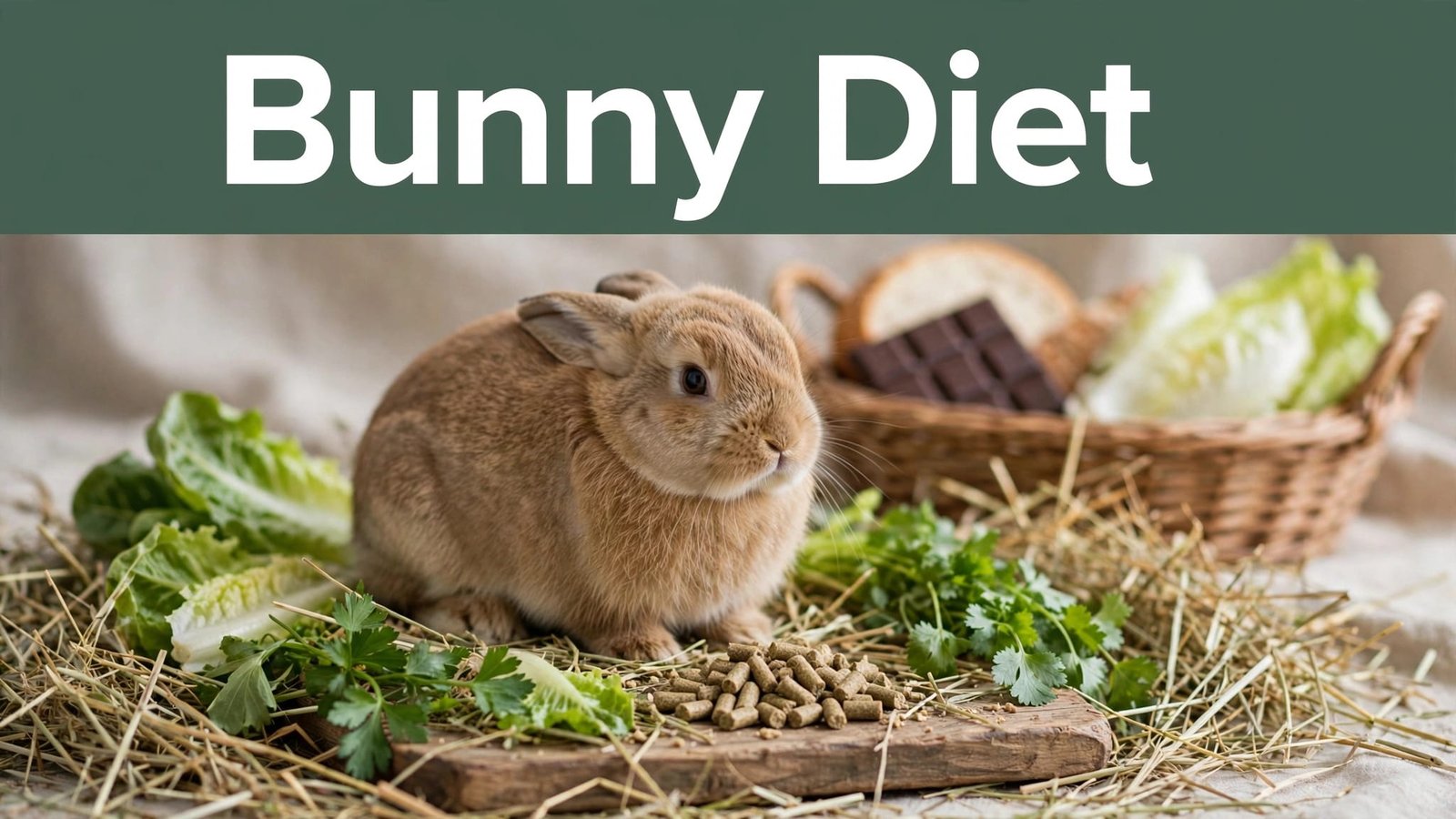
The good news is that a healthy rabbit’s diet doesn’t have to be complicated. The foundation is actually pretty simple: unlimited grass hay, fresh water, a measured amount of good-quality rabbit pellets, and fresh leafy greens. Fruits and other treats can be added in small amounts, but they shouldn’t make up a large part of the diet.
Let’s take a closer look at what belongs in your rabbit’s bowl—and what should stay out of it.
What Can Bunnies Eat Every Day?
For most adult rabbits, hay should be the biggest part of the diet.
Hay
A constant supply of good-quality grass hay is one of the most important things you can give your rabbit. Timothy hay is a popular choice, but other grass hays can work well too.
Hay provides fiber, which is extremely important for a rabbit’s digestive system. The constant chewing also helps keep those continuously growing rabbit teeth worn down.
And yes, unlimited really does mean unlimited. Your rabbit should have access to fresh hay throughout the day.
If you’re trying to figure out how much hay your rabbit actually needs, our Rabbit Hay Calculator can help.
Fresh Water
Rabbits should also have access to clean, fresh water at all times.
Some rabbits prefer a bowl while others use a water bottle, and there’s nothing wrong with using whichever method your rabbit is comfortable with—as long as the water is changed regularly and the container stays clean.
Rabbit Pellets
Pellets can be a useful part of a rabbit’s diet, but they’re not meant to replace hay.
A common mistake is giving a rabbit a large bowl of pellets and allowing them to eat as much as they want. Depending on the rabbit’s age, size, and health, the appropriate amount can vary.
Our Rabbit Pellet Calculator can help you get a starting point for the right amount.
Leafy Greens
Fresh greens can add variety and important nutrients to your rabbit’s diet.
Romaine lettuce, cilantro, parsley, and several other rabbit-safe greens and herbs can be good choices.
The key is variety and moderation. If you’re introducing a food your rabbit has never eaten before, start with a small amount and see how they handle it.
What Foods Should Rabbits NOT Eat?
This is where things get a little more interesting.
There are plenty of foods that rabbits should never eat, along with some foods that aren’t necessarily poisonous but simply aren’t good choices for them.
Chocolate is an obvious one to avoid. Rabbits also shouldn’t be given meat, dairy products, candy, cookies, chips, or other heavily processed human foods.
Bread and cereal aren’t good rabbit foods either. They may seem harmless because rabbits can eat grains in the wild, but a pet rabbit’s digestive system is designed around a high-fiber diet—not a diet full of processed carbohydrates.
If your bunny managed to steal a little piece of bread, don’t panic. But bread shouldn’t be something you intentionally feed your rabbit. You can read more in Can Rabbits Eat Bread?.
Other foods you should keep away from rabbits include:
- Chocolate
- Candy and sugary treats
- Bread
- Cereal
- Chips and salty snacks
- Meat
- Dairy products
- Cookies and pastries
- Foods containing lots of added sugar or salt
Can Rabbits Eat Vegetables?
Yes! Vegetables can be a healthy part of a rabbit’s diet.
Some good choices include:
- Romaine lettuce
- Cilantro
- Parsley
- Bell peppers
- Fresh herbs
- Other rabbit-safe leafy greens
One thing to remember is that not every vegetable is rabbit-safe.
Onions, garlic, potatoes, mushrooms, and iceberg lettuce are examples of foods you should avoid or be very cautious about.
If you’re unsure about a particular vegetable, it’s better to check before giving it to your rabbit. We have more information in Can Rabbits Eat Bell Peppers?.
You can also use our Rabbit Greens Calculator to get an idea of how much fresh greens may be appropriate.
-
Can Bunnies Eat Fruit?
Here’s where rabbits—and their owners—can get themselves into trouble.
Rabbits can eat some fruit, but fruit should be considered a treat rather than a regular part of their diet.
Small amounts of apple, strawberries, blueberries, and banana can be offered occasionally. However, fruit is naturally high in sugar, so giving your rabbit large portions isn’t a good idea.
You should also remove apple seeds and avoid fruit pits. Canned fruit with added sugar is another food that’s better left off the menu.
Think of fruit the same way you’d think of dessert for yourself: a little can be enjoyable, but you wouldn’t want it to become the main course.
And if you’re trying to keep treats under control, our Rabbit Treat Calculator can help.
What About Fresh Herbs?
Fresh herbs are another great way to give your rabbit some variety.
Basil, cilantro, dill, mint, oregano, and parsley can all be suitable choices for rabbits when offered in appropriate amounts.
Just make sure the herbs are fresh and clean. Don’t feed your rabbit anything moldy, wilted, or contaminated with chemicals.
You should also be careful with plants and herbs picked from outside. Unless you know exactly what the plant is and how it was grown, it’s safer not to feed it to your rabbit.
Can Rabbits Eat Plants From the Garden?
This one requires a little more caution.
Some plants growing in a garden can be perfectly fine for rabbits, while others can be extremely dangerous.
For example, carefully washed carrot tops, romaine lettuce, dandelion greens, and certain herbs can be good choices. But plants such as foxglove, lilies, tulips, and tomato leaves should not be fed to rabbits.
There’s another problem with garden plants: pesticides and other chemicals.
Even if you know a particular plant is safe for rabbits, don’t assume that a plant picked from a lawn, roadside, or treated garden is safe to eat.
Can Rabbits Eat Human Food?
This is one of the most common questions rabbit owners ask.
The short answer is: most human food isn’t appropriate for rabbits.
Rabbits don’t need meat, cheese, crackers, pasta, chips, candy, cookies, or other foods made for people.
There are a few exceptions in the sense that some foods we eat—such as certain plain vegetables and small portions of fruit—are also safe for rabbits.
But it’s important to remember that a food being safe doesn’t necessarily mean it’s a good everyday food.
For example, your rabbit might happily eat a tiny piece of fruit, but that doesn’t mean you should give them fruit every morning for breakfast.

cute bunny What Can Bunnies Eat If They Have a Sensitive Stomach?
Some rabbits seem to handle every food you give them without a problem. Others have much more sensitive digestive systems.
If your rabbit has a sensitive stomach, the safest approach is usually to keep things simple and avoid constantly introducing new foods.
Fresh hay and clean water should remain the foundation of the diet. Stick with foods your rabbit already handles well, and introduce anything new gradually.
Avoid suddenly changing your rabbit’s entire diet, giving rich treats, or feeding produce that isn’t fresh.
If a particular food consistently causes soft stools or other digestive problems, stop feeding it and talk with your veterinarian if the problem continues.
What About Baby Rabbits?
Baby rabbits have different nutritional needs than adult rabbits, so you shouldn’t automatically feed a young rabbit exactly the same diet as an adult.
A baby rabbit’s mother’s milk is important when the mother is available. As the rabbit grows, age-appropriate hay and young-rabbit pellets become important parts of the diet.
New foods should generally be introduced slowly rather than suddenly giving a young rabbit a huge variety of vegetables and treats.
This is especially important because young rabbits have developing digestive systems.
A Simple Way to Think About Your Rabbit’s Diet
If all of this information feels like a lot, here’s an easy way to remember it:
Hay first. Greens for variety. Pellets in the right amount. Fruit and treats occasionally. Fresh water always.
And when you’re tempted to give your bunny something from your plate, stop and ask yourself whether it’s actually something a rabbit is designed to eat.
Rabbits don’t need a complicated diet. In fact, the healthiest rabbit diets are often pretty simple.
The biggest mistake isn’t usually failing to find enough foods your rabbit can eat. It’s giving them too many foods they shouldn’t eat—or giving healthy foods in quantities that are too large.
When in doubt, stick with the basics and introduce new foods slowly.
And if you’re trying to figure out how much your particular rabbit should be eating, we can help you put everything together with various calculators on our home page.