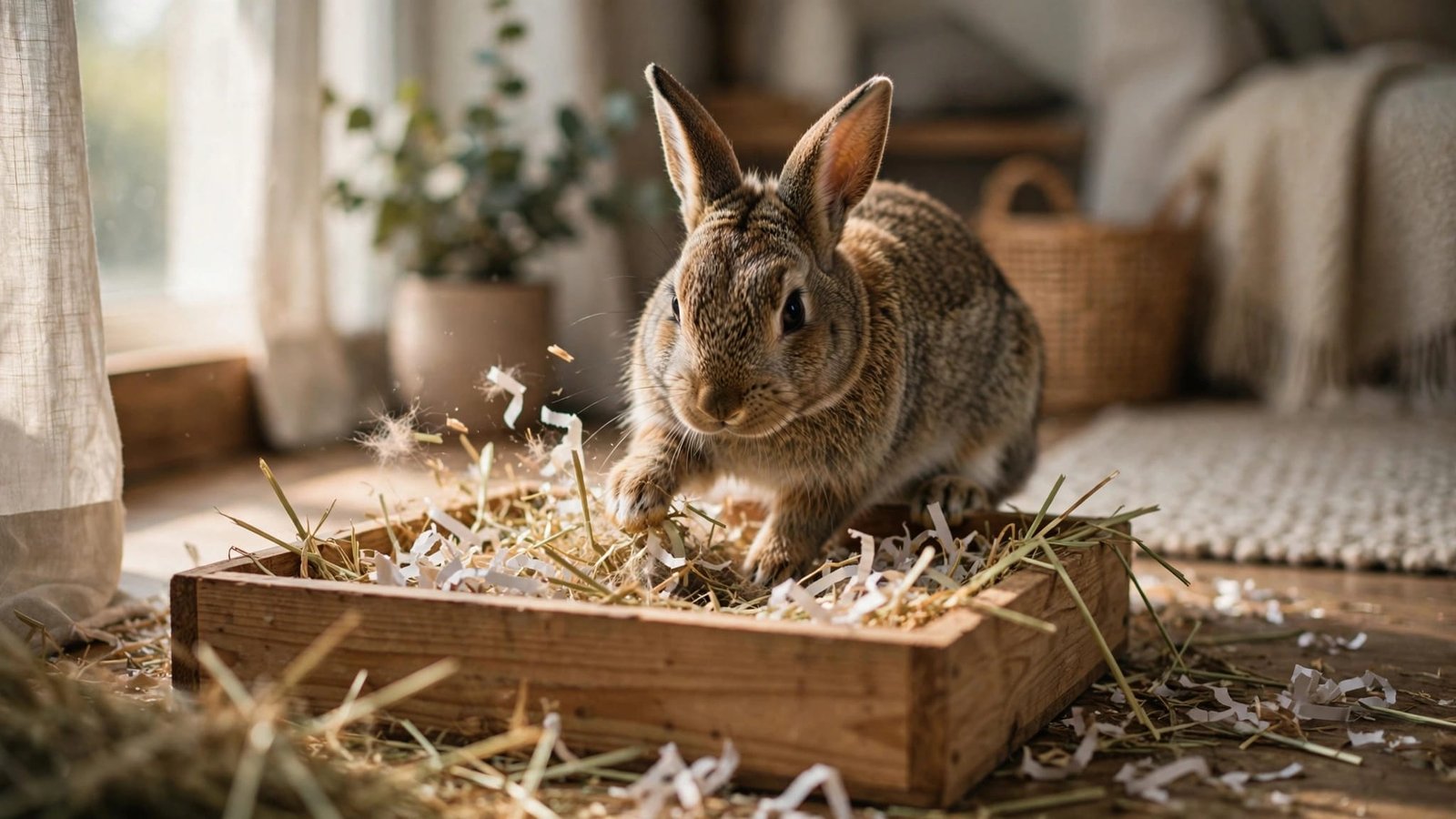
Your bunny can turn a quiet corner into a digging project surprisingly quickly! Rabbit digging is natural behaviour, even when the chosen spot happens to be your carpet or freshly planted garden.
For new rabbit owners, those busy paws can raise a few questions about boredom, hormones, and escape risks. You can protect your home while giving your furry friend a safe place to dig.
Start by understanding what your rabbit is trying to do, then offer an outlet that works for both of you.
Key Takeaways for New Rabbit Owners
A little digging is usually nothing to worry about. Keep these beginner basics in mind:
- Digging is instinctive, so give your bunny somewhere safe to enjoy it.
- A stable box with plain shredded paper or fresh hay makes an easy indoor digging area.
- Outdoor rabbits need secure housing and supervision because they can dig under boundaries.
- Spaying or neutering may reduce hormone-related digging, but it won’t remove the natural instinct.
Sudden changes deserve a closer look, especially when your rabbit also eats less, produces fewer droppings, or seems uncomfortable.
Why Digging Is Natural
Burrowing is part of being a rabbit
Domestic rabbits have inherited digging instincts from their wild European ancestors. Wild European rabbits dig underground tunnels and chambers for shelter, protection, and raising their young.
Your pet rabbit doesn’t need to build a warren to survive. Digging is a natural behaviour. Your pet rabbit may show those instincts in grass and soil, loose bedding, or on a tempting rug.
The Rabbit Welfare Association & Fund’s guidance on natural rabbit digging behavior encourages owners to provide safe digging opportunities. A bunny with a comfortable home may still enjoy digging every day.
Some rabbits make a big project of it. Others give their bedding a few quick scrapes before settling down.
Digging can be exploration and play
Digging gives your bunny something interesting to do. They can push material around, investigate what’s underneath, or use digging behaviour to rearrange a favorite resting spot.
Watch what happens afterward. A rabbit who digs briefly, flops down, and relaxes may simply be getting comfortable.
A bunny who returns to the same cardboard box each evening may enjoy the activity itself. Rabbits have individual preferences, so your long-eared friend doesn’t need to love every toy or digging material you offer.
Common Reasons Your Rabbit Digs More
Boredom and unused energy
A rabbit with little room to move or few activities may focus on carpet corners, bedding, or enclosure edges. Digging is natural behaviour, but it may become more noticeable when it’s one of the few things available to do.
Offer room to hop, explore, and stretch, alongside safe chewing and foraging activities. Toys support daily exercise, but they don’t replace it.
Our guide to comfortable indoor rabbit space can help you plan a beginner-friendly setup. Keep hay, water, and a hideout easy to reach, with enough open space for movement.
Feeling worried or frustrated
Repeated digging at a closed door or pen boundary can happen when your bunny wants access beyond it. A noisy environment or an unfamiliar animal nearby may also make settling difficult.
Look at the whole situation before deciding what the digging means. Is your rabbit hiding, freezing, or repeatedly trying to get away?
Provide a quiet retreat and keep other pets outside your rabbit’s safe area. Don’t pull your bunny out of a hideout. Let them come out when they feel ready.
Hormones and nesting behavior
Unspayed females may dig more intensely while preparing a nest. Carrying hay and pulling fur can happen during pregnancy or a false pregnancy.
These changes can also contribute to territorial or destructive behavior. Rabbit.org’s spaying and neutering guidance explains that surgery can reduce destructive digging in some rabbits.
Ask a rabbit-savvy veterinarian whether your rabbit should be spayed or neutered, and about suitable timing and your bunny’s health. If pregnancy is possible, contact your vet for guidance. Surgery isn’t a promise that digging will disappear, and it shouldn’t be treated as a substitute for enrichment.
How to Make a Safe Diggy Box
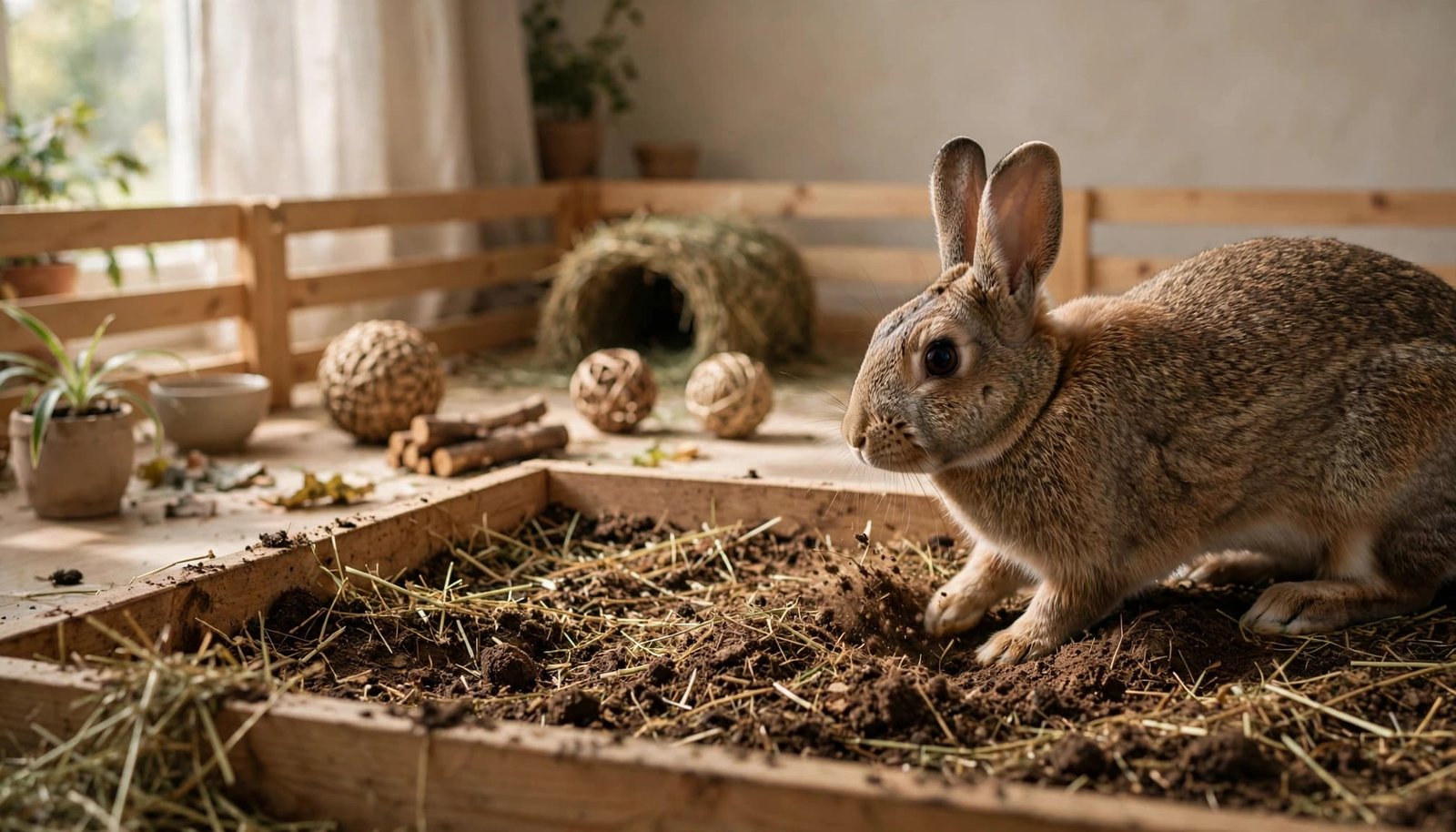
A diggy box gives your rabbit a clear place where those busy paws are welcome. It doesn’t need to be expensive or fancy.
Choose a stable, easy-entry container
Start with a roomy cardboard box or solid, washable tray. Your bunny should be able to enter, turn around, and leave comfortably without tipping it over.
Remove tape, staples, handles, and loose attachments from cardboard. Avoid glossy coatings and rough edges your rabbit could chew or catch a foot on.
For an older rabbit or one with limited mobility, choose a low entrance. Higher sides can help contain flying paper, but easy access matters more than containing every scrap.
Place the box on secure footing near a spot your rabbit already likes to investigate.
Pick simple filling and keep it fresh
Plain shredded paper and clean grass hay are easy indoor options. Avoid scented materials, stringy fabric, clumping cat litter, and anything with small plastic pieces.
Start with enough filling for your bunny to move around without making entry difficult. Supervise the first few sessions and watch how they use it.
Eating hay is expected. If your rabbit swallows paper or noticeable amounts of cardboard, remove that material and ask your vet about safer options.
Replace damp or dirty filling promptly. You can tuck a little of your rabbit’s usual hay or familiar greens into the box for a forage game. Use part of their normal food, rather than adding extra treats.
Protect Your Home Without Punishing Your Bunny
When your rabbit starts digging the carpet, calmly block access as part of bunny proofing and offer the diggy box nearby. Shouting, chasing, or tapping their nose can frighten them without teaching a useful alternative.
Protect favorite digging spots with secure barriers. Check carpet edges, furniture undersides, and soft furnishings for damage your bunny could swallow.
The House Rabbit Society’s rabbit-proofing advice recognizes digging as a natural instinct that needs an appropriate outlet. Our guide to rabbit-proofing each room can also help you check household hazards before expanding free-roam time.
Start with one room and supervise. Check for hazards to create a safe environment before opening another area, and note which corners interest your bunny.
Litter-box digging needs a practical adjustment, too. A roomy pan with higher sides may contain kicked litter, provided it still has an easy entrance. Keep the digging box separate so your rabbit has another place to play.
If litter habits suddenly change, check whether the bathroom box is dirty, cramped, or difficult to enter. A rabbit avoiding their usual box may need a setup change or a veterinary check.
Outdoor Rabbit Digging: Prevent Escapes
An outdoor rabbit can make a small hole much larger between checks. Digging near a run edge needs attention before it becomes an escape route.
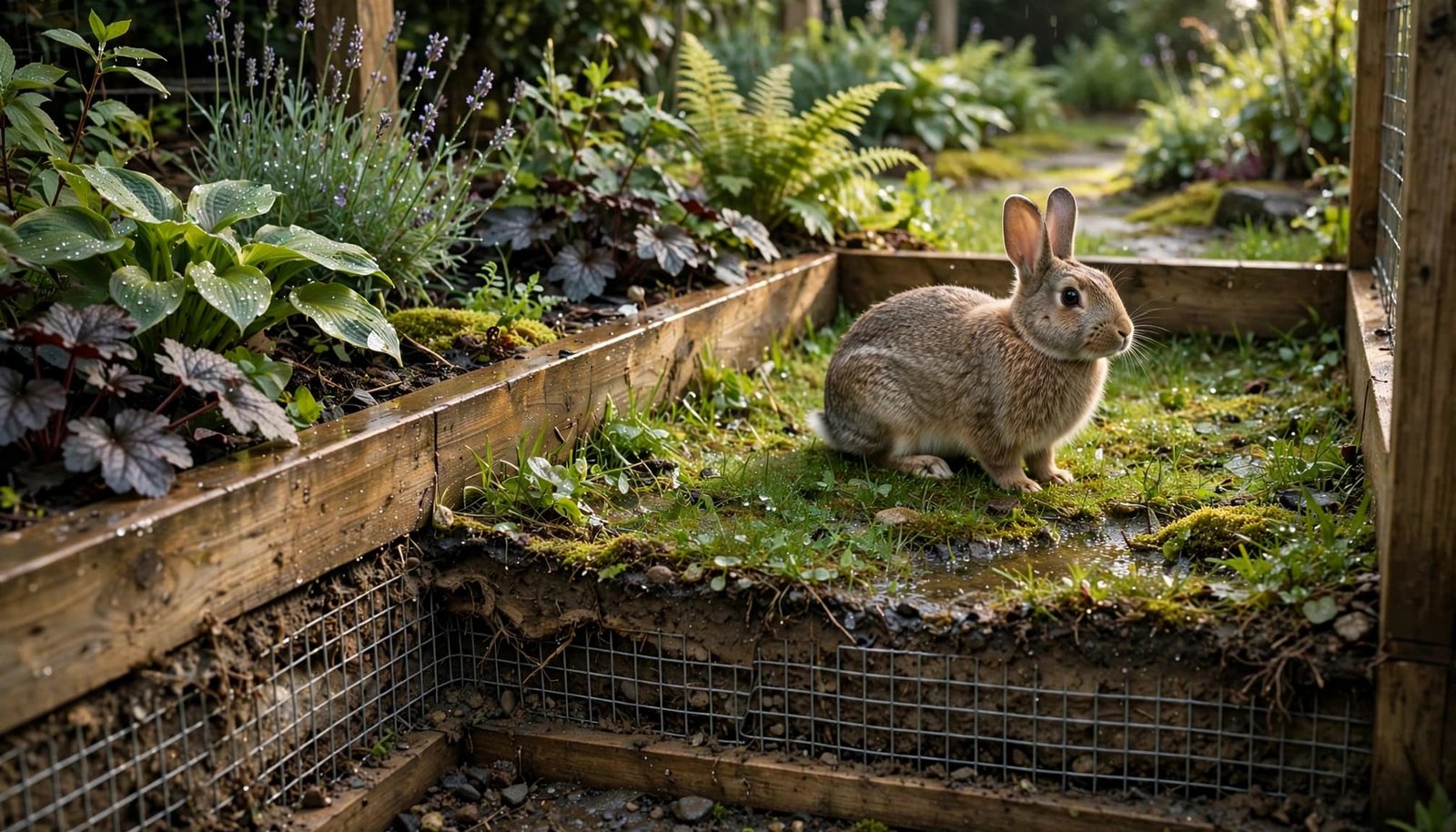
Check the enclosure before outdoor time. Look along the entire boundary for holes, loose panels, damaged fastenings, gaps around doors, and other escape hazards. Move your bunny to a secure area before repairing anything.
Filling one hole doesn’t make a run escape-safe. Your rabbit can start another nearby, so check the whole enclosure boundary.
A secure outdoor setup needs protection against rabbits digging out, as well as reliable predator protection. Ask a reputable rabbit-enclosure supplier or rabbit welfare organization about anti-dig protection for the whole setup, including any hutch and run. Don’t assume an ordinary garden fence provides enough protection.
Rabbit.org’s pet rabbit care primer advises fully enclosing outdoor areas and never leaving rabbits outdoors unsupervised, even briefly.
Free roaming in the yard adds risks beyond digging. With supervised access to an outdoor space, rabbits may still reach harmful plants, lawn treatments, or places where you can’t retrieve them easily. Dogs, cats, and other predators are another concern.
Keep a supervised digging outlet within the safe area to limit lawn damage. If the enclosure has a concrete floor, provide a contained place to dig there. Before you fill the hole, make sure no rabbit is inside. Don’t reach into a tunnel or collapse it while your bunny’s location is uncertain.
When Does Digging Need a Vet Check?
Digging by itself is usually normal. A sudden change matters more when it comes with other changes in your bunny’s daily habits.
Watch appetite, droppings, movement, and posture. A rabbit who stops eating, produces fewer droppings, sits hunched, or seems painful needs prompt veterinary attention. Don’t wait overnight when reduced eating and fewer droppings happen together.
Also contact your vet if your rabbit may have swallowed carpet fibers, plastic, string, or another unsafe material. Don’t wait for it to appear in their droppings.
A bunny who suddenly struggles to enter a familiar digging or litter box may have discomfort or mobility problems. Make access easier, but arrange a check rather than assuming your rabbit has become fussy.
FAQ About Rabbit Digging
Can you completely stop a rabbit from digging?
You can’t reliably remove a natural instinct. Blocking unsafe spots and offering an appealing digging area is a more practical goal. Try a different container or filling if your bunny ignores the first box, while keeping their overall space safe.
How deep can a rabbit hole get?
There’s no single depth you can safely expect. Soil conditions, available space, and time affect the result. Don’t wait for a hole to reach a particular depth before acting. A shallow tunnel beneath an enclosure boundary can already create an escape risk.
Why does my rabbit dig on my lap?
Your bunny may be adjusting their position, investigating fabric, or trying to move away. Look at their body language and let them leave. If they dig during cuddles, offer floor-level interaction instead of holding them in place. Remove any fabric they start chewing or pulling apart.
Help Your Bunny Dig Safely
Rabbit digging is part of normal bunny life, so this natural behaviour needs a safe outlet. Provide a comfortable living space and protect places where digging could cause harm.
Start with a simple diggy box and watch what your furry friend enjoys. Check indoor play areas and keep outdoor boundaries secure.
Those busy paws can stay busy while your bunny stays safe, comfortable, and free to enjoy being a rabbit.