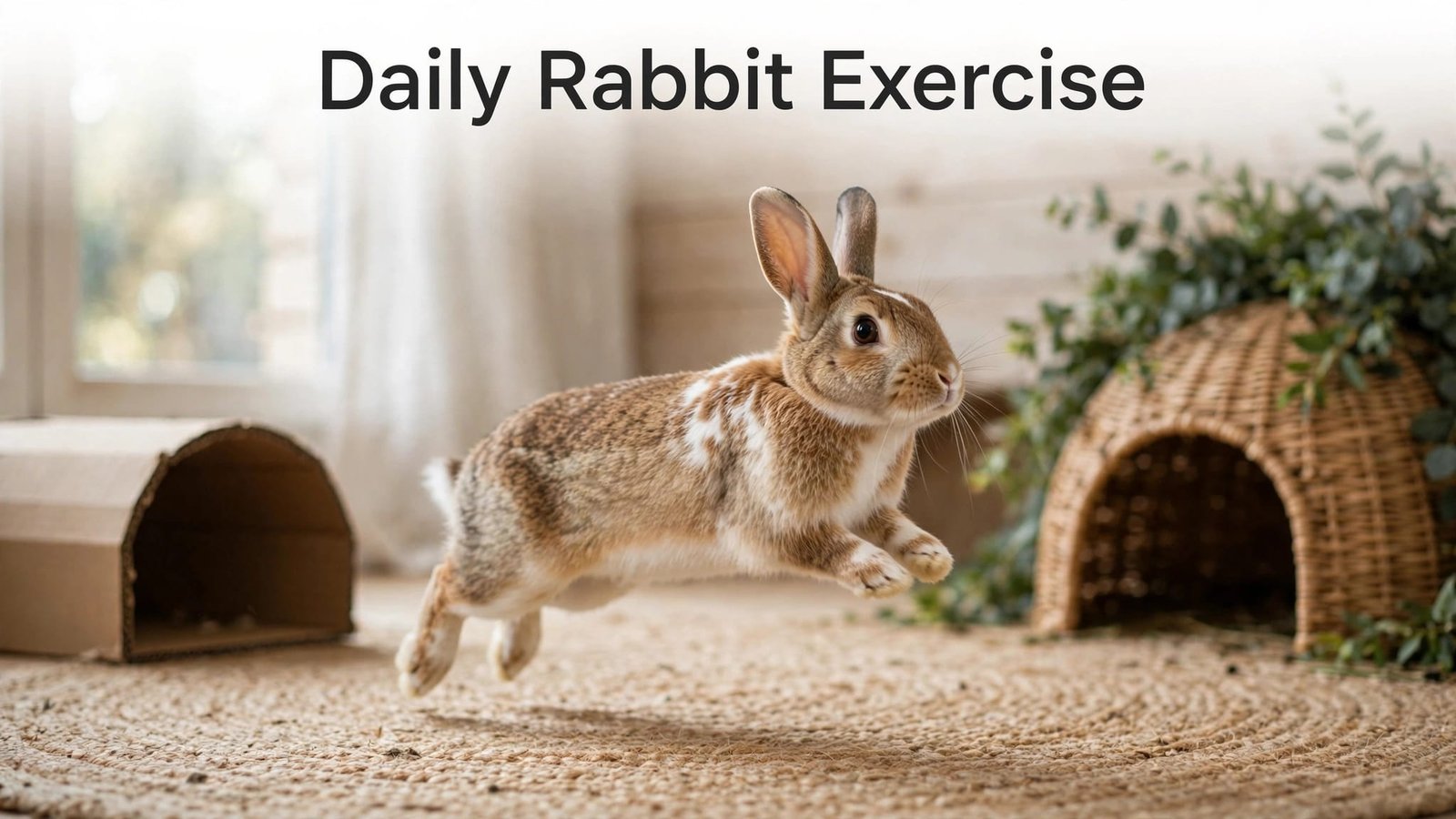
Your rabbit needs at least four hours of daily access to a safe area for hopping, running, and exploring. That means time to move freely, with plenty of rest between playful bursts.
A simple rabbit exercise routine doesn’t require expensive equipment or constant entertainment. A roomy setup, comfortable flooring, and a few simple activities give your bunny a helpful start.
Key Takeaways
- Give your bunny exercise opportunities every day, ideally around their naturally active times.
- Provide open floor space, safe footing, and places to hide.
- Treat sudden inactivity, reduced eating, or fewer droppings as possible health concerns.
Understanding Your Rabbit’s Daily Exercise Needs
Rabbit.org guidance recommends at least four hours daily, or around 30 hours weekly. The Reddit rabbit-care wiki also recommends four hours daily. Google’s AI Overview cites Petco and the Anti-Cruelty Society for three to four hours of supervised out-of-cage time.
For your routine, aim for four hours every day, with longer access where possible. Weekend playtime doesn’t replace daily movement.
What counts as exercise?
Hopping, exploring, digging, sprinting, and binkying all count. A binky is that joyful jump, sometimes with a twist!
Your rabbit will move in short bursts and then rest. Four hours of access doesn’t mean four hours of running.
When should you offer playtime?
Rabbits are crepuscular, meaning they’re most active around dawn and dusk. Try offering two hours in the morning and two in the evening.
Let your bunny choose their pace. Don’t wake, chase, or repeatedly pick them up to encourage movement.
How Much Space Does Your Rabbit Need?
The Reddit rabbit-care wiki uses 16 square feet (about 1.5 square metres) on one base floor as a minimum for average-sized rabbits. Larger breeds need more room. Stacked levels don’t replace running space.
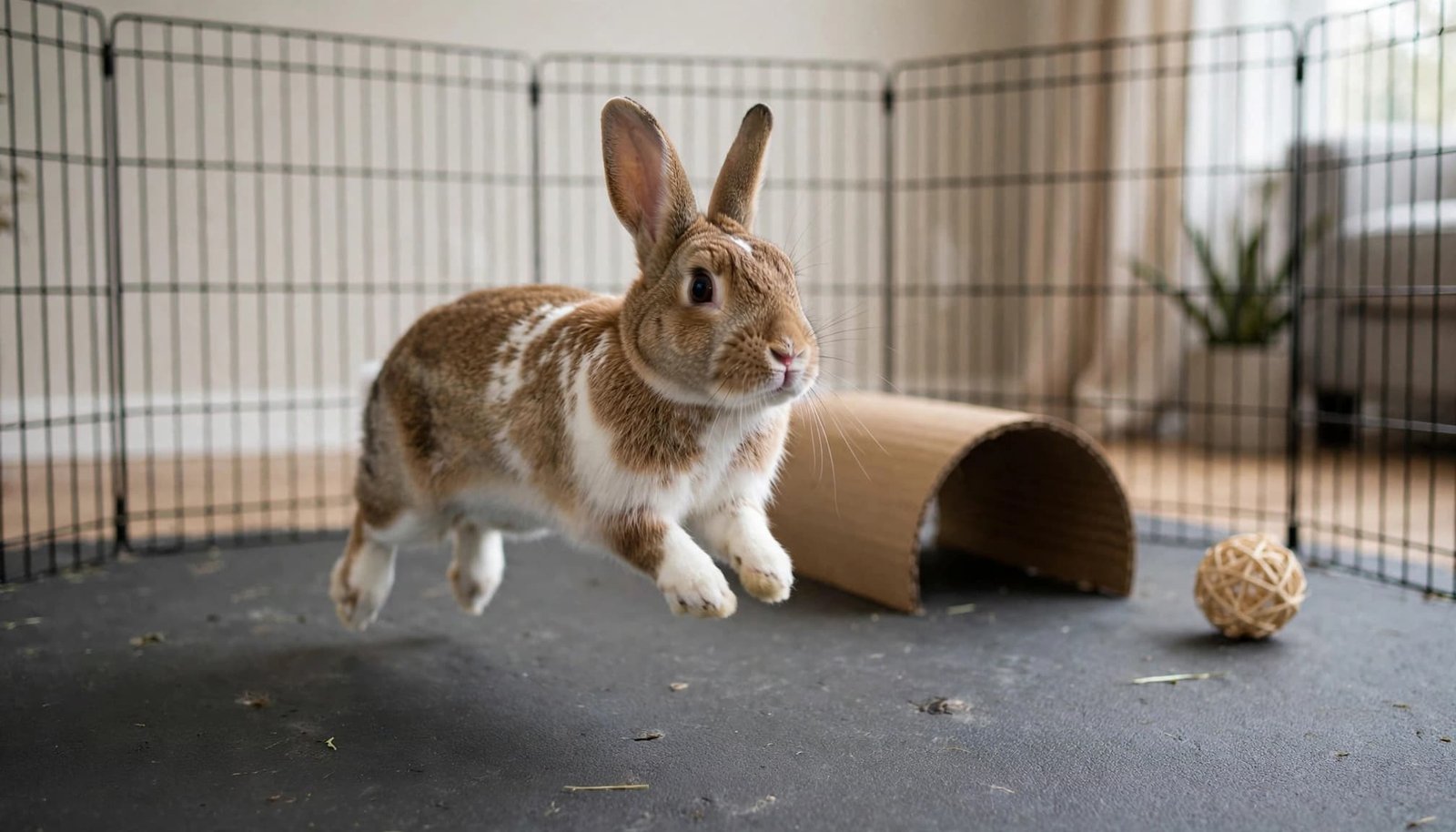
For an indoor house rabbit, The Rabbit Haven describes indoor housing at least six times your adult rabbit’s size, with an eight-panel exercise pen as a basic setup. Panel sizes vary, so measure the usable floor area.
Aurora Vet recommends pens at least 3 feet high. You can arrange panels into different shapes, but some rabbits climb or jump higher.
For two bonded, average-sized rabbits, our indoor rabbit space guide recommends starting around 3 metres by 2 metres. Don’t halve that space for a solo bunny.
Cage-only living leads to confinement and doesn’t provide enough movement. Rabbit.org’s care primer explains the importance of roomy housing and daily exercise.
How Can You Make Exercise Safe and Fun?
Before free roam, start bunny proofing by covering or removing electrical cords, toxic plants, sharp objects, and tempting small items. Block stairs, narrow gaps, and sneaky escape routes behind furniture.
Use solid, non-slip flooring with secure, washable rugs or soft mats. Wire or barred floors can cause painful sore hocks, also called pododermatitis. Remove loose threads and damaged coverings.
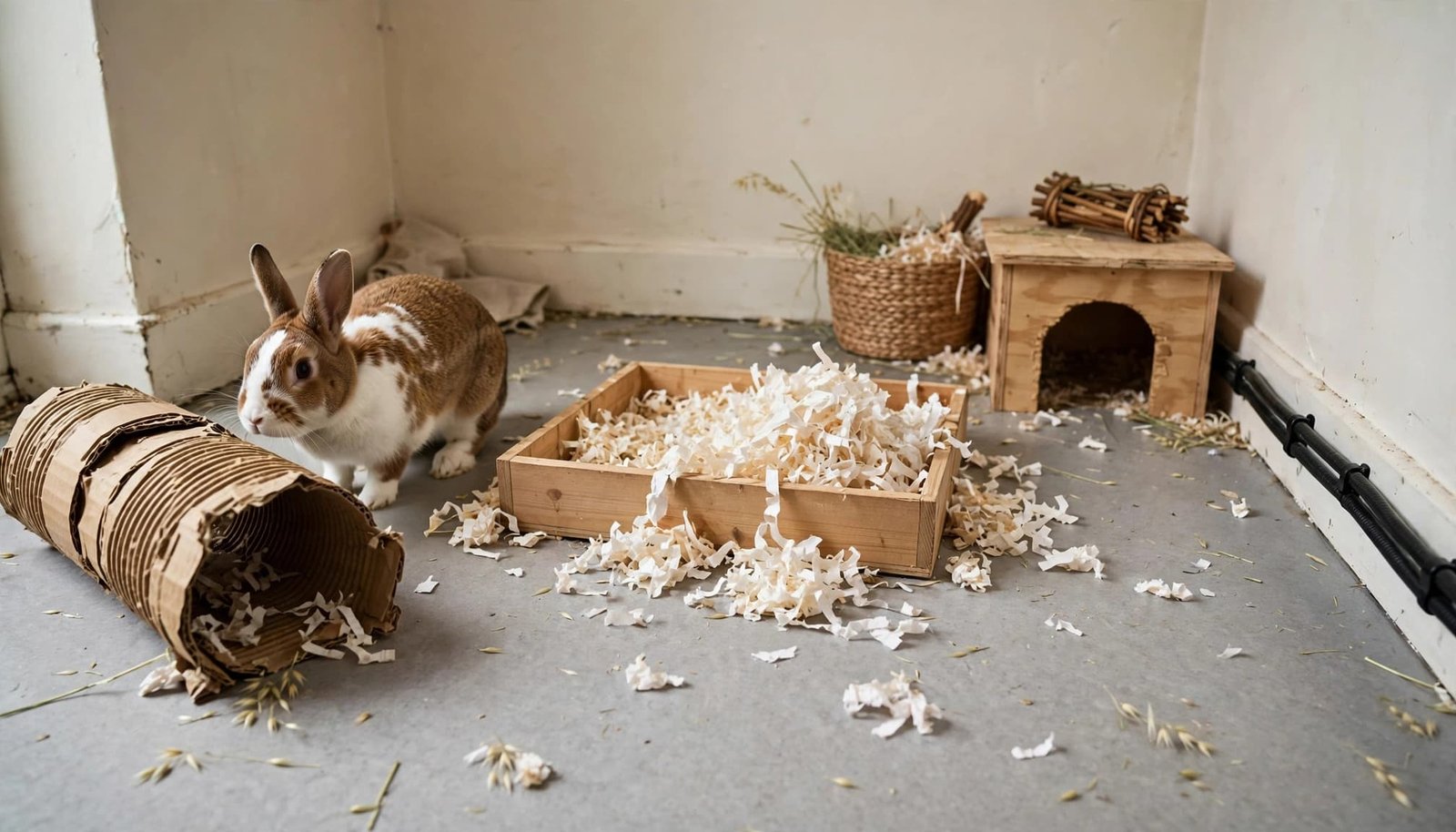
Offer a cardboard box with two exits, tunnels, digging boxes, and safe chew toys for enrichment. A supervised DIY snuffle mat can encourage foraging, provided your bunny doesn’t swallow fabric.
Keep hay, water, a litter box lined with paper-based litter, and a hideout together in a familiar base camp. Rotate a few toys without crowding the hopping space.
What If Your Bunny Won’t Come Out?
A shy rabbit may need better footing, quieter surroundings, or a nearby hiding place. Keep other pets away and leave their home base accessible.
- Place a secure rug between the pen doorway and a nearby cardboard hide.
- Offer a little of their usual hay or greens just outside the doorway.
- Let them approach voluntarily, then gradually extend the exploring area as confidence grows.
A well-bonded rabbit companion may help some shy rabbits feel more confident, but introduce a second rabbit gradually and address any fear or unsafe surroundings.
Keep the larger safe space available without forcing activity. If your rabbit is overweight, stiff, elderly, or newly inactive, get veterinary advice before increasing exercise.
How Exercise Supports Your Rabbit’s Health
Too little movement can contribute to obesity, muscle loss, sore hocks, digestive slowdowns, and depression-like withdrawal. Low activity can also mean pain or illness.
Keep food supportive and familiar
For a healthy adult rabbit, provide unlimited grass hay, such as timothy hay, fresh water, and familiar fresh greens. Choose plain, timothy-based pellets with 18% to 20% fibre and no more than 16% protein.
Measure pellets rather than offering unlimited amounts, especially if your rabbit is overweight. Never restrict hay to encourage weight loss, and discuss weight-management changes with your rabbit vet.
Watch for changes every day
Use daily checks to track appetite, drinking, and droppings. Weigh your bunny regularly, because weight loss can indicate illness.
Watch for sore hocks, drooling, or difficulty eating, which can signal dental disease. Check your rabbit’s rear for soiling or signs of flystrike. Arrange veterinary check-ups at least annually, and discuss dental and weight checks, vaccinations, and neutering with your rabbit vet.
Reduced eating with smaller, fewer, or missing droppings needs urgent veterinary attention. The RSPCA’s rabbit health guidance identifies these as possible signs of GI stasis, when digestion slows or stops. Extra playtime isn’t treatment.
Frequently Asked Questions
Is it normal if your rabbit only binkies once or twice a week?
Binkies aren’t a daily fitness requirement. Your bunny may prefer exploring or gentle hopping. Watch their usual activity, appetite, and droppings rather than counting jumps.
Does a free-roam rabbit need scheduled exercise?
If your rabbit already has continuous access to a spacious, rabbit-proofed area, you don’t need to arrange separate out-of-cage sessions. Keep that space interesting and watch for changes in movement.
Give Your Bunny Daily Room to Move
Your rabbit’s exercise needs are easier to meet with daily freedom to move, safe flooring, and familiar places to explore.
Start with at least four hours of access each day. Let your bunny set the pace, and take changes in appetite or activity seriously.