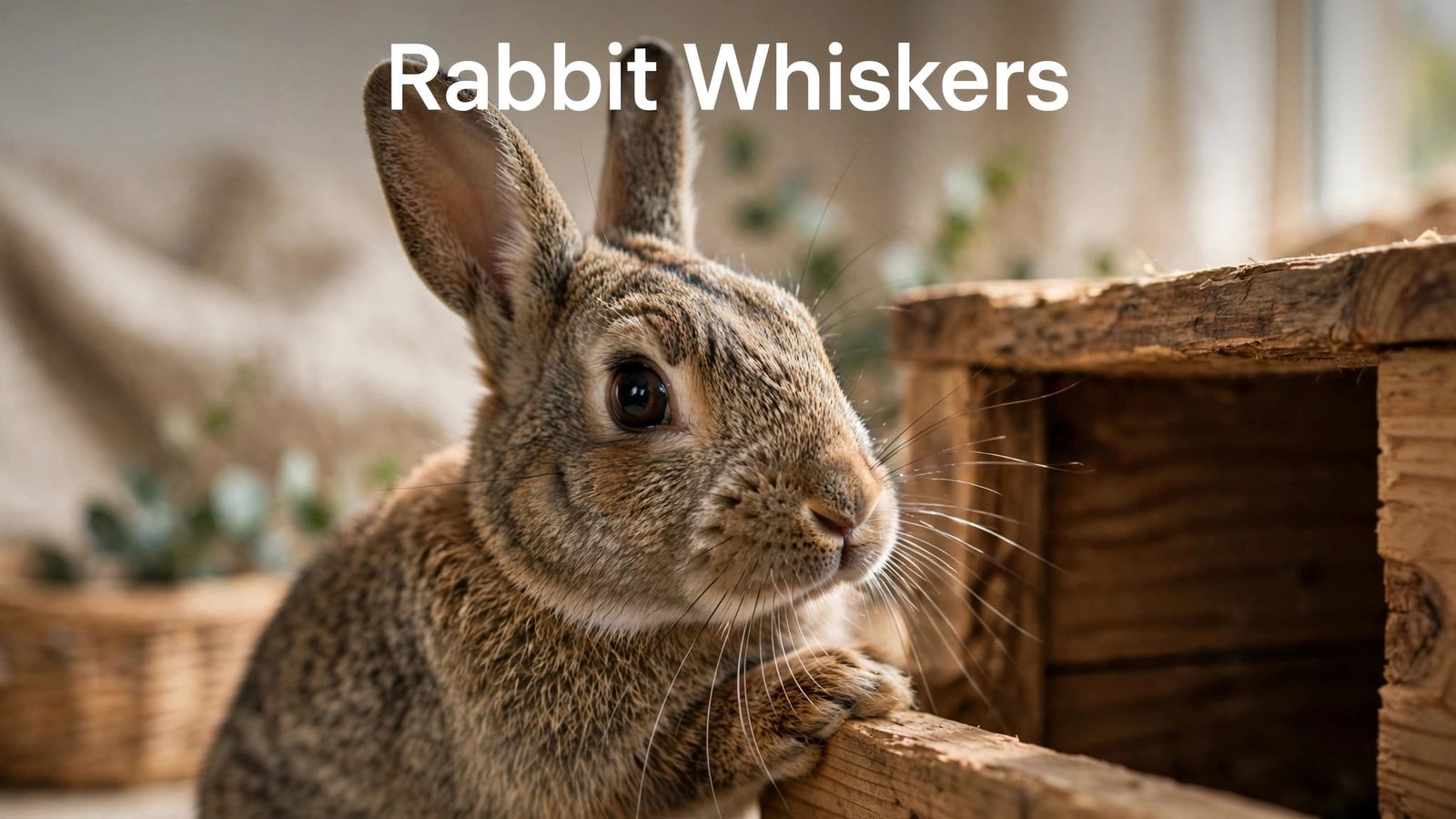
Yes, rabbits have whiskers, and your bunny uses them to feel nearby objects, judge gaps, and explore in low light. These sensitive hairs help with navigation, so leave them untrimmed, even when one whisker looks longer or messier than the others.
Finding a whisker on the floor is usually normal, but bleeding, sore skin, or sudden loss needs closer attention. Knowing what these sensitive hairs do makes everyday care simpler, starting with when to leave them alone.
Key Takeaways
- Your rabbit’s whiskers help them judge nearby spaces and investigate things they can’t see clearly.
- A clipped whisker shaft doesn’t cause pain, but shortening whiskers removes useful sensory information.
- An occasional shed hair is normal and usually regrows without help.
- Leave bent or broken hairs alone, and contact your vet if the roots stay irritated, blood appears, or whiskers touch the eye.
What Do a Bunny’s Whiskers Do?
Your bunny’s whiskers are touch-sensitive hairs called vibrissae. They work with sight, smell, and hearing to help your rabbit understand their surroundings.
Research on whiskers as tactile sensory tools describes their importance in how mammals explore nearby objects. For your rabbit, that information is useful during ordinary activities such as finding food or entering a hideout.
Feeling what your rabbit can’t see clearly
Your rabbit has a wide field of vision, but their depth perception is limited, especially for nearby objects. They also have a blind spot directly in front of their nose.
These hairs provide tactile feedback in that close-up area. When your bunny lowers their face toward hay, a bowl, or a toy, they help them feel what’s there.
They’re also helpful in the dark. Your rabbit doesn’t need a clear view of every surface to notice that something is close to their face.
Exploring movement and texture
You may notice your bunny moving these hairs while investigating something new. This movement, often called whisking, brings them into contact with nearby surfaces.
They can detect texture, vibrations, and small air or water movements that disturb the hairs. That doesn’t mean your bunny can sense every movement across the room. The information is most useful around their face and immediate surroundings.
BBC Wildlife’s explanation of how animal whiskers work describes these modified hairs as specialized touch organs.
Where Do They Grow?
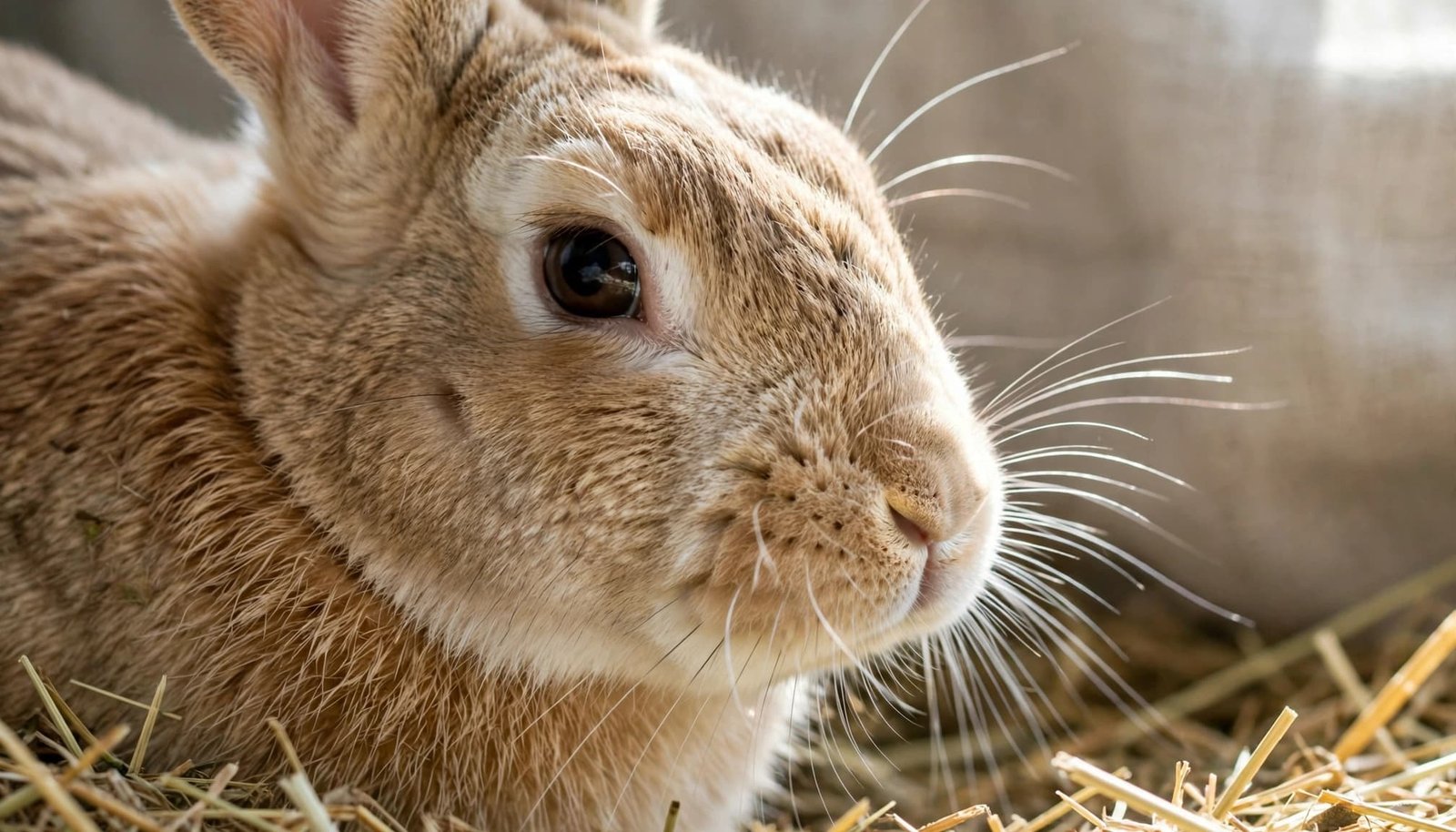
Look closely while your bunny is relaxed, and you’ll see whiskers of different lengths around the face. You don’t need to hold their head still or separate the hairs to inspect them.
Whiskers around the nose and chin
A rabbit has whiskers in rows around the nose and muzzle, with additional hairs under the chin. They generally become longer toward the cheeks and upper parts of the head.
This layout gives your rabbit feedback across different parts of its face. Shorter whiskers help with close contact, while longer hairs reach farther into the surrounding space.
A few uneven lengths aren’t automatically a problem. Natural hair loss means older and newer hairs can be present together.
Whiskers above the eyes
The whiskers above the eyes can look like long false eyelashes. They help protect the eyes by detecting contact with nearby objects or debris.
Leave these hairs alone during grooming. Their position matters more than whether they look tidy.
A hair pointing outward is different from one curling inward against the eye. If it appears to rub the eye’s surface, your bunny needs veterinary attention rather than a home trim.
How Do Whiskers Help Rabbits Judge Gaps?
The longest hairs are roughly as long as your rabbit’s body is wide. Their reach helps your bunny assess whether a narrow opening may be passable.
As the whiskers touch the sides of a gap, your rabbit receives information about the available space. You may see them pause, sniff, and move their head before entering.
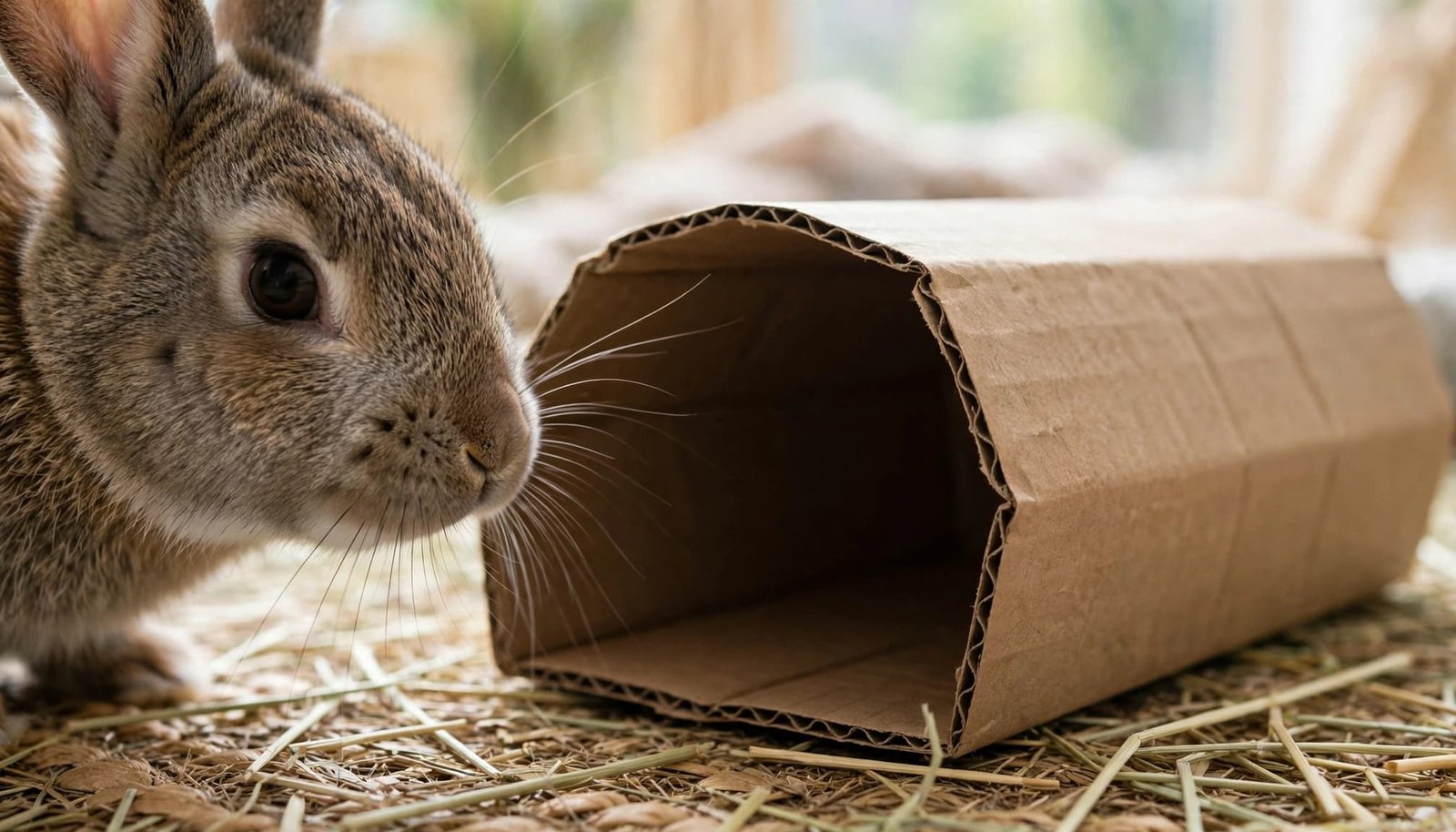
These hairs aren’t a perfect measuring system, though. Rabbits can still get stuck, especially in an opening that narrows farther inside. Choose tunnels and hideouts with plenty of clearance for the whole body.
Shortened whiskers can give misleading information about space. Your bunny may approach or try to squeeze through an opening that’s too small because the usual warning contact happens later.
A rabbit putting their head through a gap doesn’t prove the rest of their body will fit.
For your home setup, block access behind appliances and other awkward spaces rather than relying on sensory cues to keep your bunny out.
Should You Trim Your Rabbit’s Whiskers?
Leave healthy whiskers untrimmed. Your rabbit doesn’t need them shortened for comfort, appearance, or routine cleanliness.
Does cutting a whisker hurt?
The whisker shaft has no nerves or blood supply, so cutting that outer hair doesn’t itself cause pain. Its root sits inside a follicle with a blood supply.
That difference matters. Pulling a whisker from the root can hurt, even though a cut to the shaft doesn’t.
Painless cutting can still have an effect. Removing sensory feedback can interfere with spatial awareness, balance, and coordination. Your rabbit may find nearby obstacles or narrow passages harder to judge.
What if you accidentally snip one?
If you accidentally cut one or two whiskers, don’t panic or trim the others to match. Leave the remaining whiskers intact and watch your bunny’s usual eating and exploring.
A small accidental snip isn’t a reason to shorten healthy hairs routinely.
If your rabbit’s facial fur is tangled or blocking its eyes, ask an experienced professional for help. The skin is thin, and scissors near the face can cause injuries.
Do Rabbit Whiskers Grow Back?
Yes, they usually grow back after normal shedding or damage, as long as the rabbit’s follicle remains healthy. You don’t need to apply anything to encourage replacement.
Normal whisker shedding
Finding an occasional shed whisker in your rabbit’s enclosure is normal. Whiskers shed and are replaced, much like ordinary coat hair.
Losing one is usually reassuring when your bunny’s skin looks healthy and their behavior hasn’t changed. Losing several together, developing bare areas, or repeatedly damaging them deserves more attention.
There isn’t a reliable regrowth deadline for every bunny. Replacement depends on the hair’s growth cycle and whether its base was injured, so don’t expect a new whisker by a particular day.
Bent, broken, or partly detached whiskers
A bent or broken one may lose its damaged section or remain until it falls out naturally. Don’t straighten it or pull it yourself.
Watch for rubbing, skin irritation, or discomfort instead of trying to fix its appearance. Your bunny can usually carry on normally with an occasional damaged hair.
One that’s partly detached at the base needs a different approach. Don’t tug it free. If it remains attached after a couple of days, contact your veterinarian.
What If a Whisker Bleeds or Looks Sore?
A small spot of blood can occur when a whisker is pulled out during rough play or catches on something. Blood comes from the injured follicle, not the shaft.
Keep your rabbit calm and avoid handling nearby whiskers. If the spot is accessible without struggling, hold clean gauze gently against it. Active or persistent bleeding needs a call to your veterinarian. Heavy bleeding or an obvious facial wound needs urgent care.
Don’t put nail styptic powder near your rabbit’s eyes or nose. A product used for a nicked nail isn’t automatically suitable for a facial injury.
Contact your veterinarian if you notice:
- The whisker base is swollen, inflamed, crusty, or oozing.
- A partly detached one remains after a couple of days.
- Whiskers disappear in clusters, or the surrounding fur and skin look abnormal.
- An above-eye one turns inward and rubs the cornea, the clear surface of the eye.
Squinting, eye discharge, repeated face rubbing, or avoiding food also deserves attention. Don’t wait for one of the whiskers to shed if it’s irritating an eye.
Our guide to signs of rabbit pain covers other changes that can help you recognize when your bunny needs care.
How Can You Protect Whiskers During Grooming?
A quick look during ordinary brushing is enough for most rabbits. Choose a quiet spot with secure, non-slip footing, and keep the session short.
Brush nearby fur gently without dragging a comb through whiskers. Don’t pull on facial tangles or slide scissors near the face. Skin can be caught inside tangled fur even when the knot looks separate from the body.
Stop if your bunny freezes, struggles, thumps, or tries to escape. A break is safer than holding a frightened bunny still to finish grooming.
Our gentle rabbit grooming guide can help you build a calmer routine.
No special products are needed. A soft brush for the coat and a few everyday rabbit care essentials are more useful than extra face-grooming tools. Healthy facial hairs generally need observation, not maintenance.
Frequently Asked Questions About Rabbit Whiskers
Can you touch your rabbit’s whiskers?
Accidental light contact during a head rub is usually fine if they stay relaxed. Avoid pulling, bending, or repeatedly brushing them with your fingers. Let your bunny move away when they’ve had enough attention.
Should you shorten them if they seem too long?
No. Don’t trim them because their length is normal, and appearance isn’t a reason to shorten them. If one changes direction and touches the eye, arrange veterinary care rather than trying to make it match the others.
Is one missing whisker an emergency?
One missing whisker usually isn’t an emergency if the skin and eye look healthy and behavior hasn’t changed. A rabbit that eats and explores normally is different from one rubbing their face, hiding, or refusing food.
Keeping Your Bunny’s Whiskers Healthy
These feelers help your bunny make sense of the space close to their face. The simplest care is to leave your rabbit’s whiskers intact, groom gently, and observe them without pulling.
An occasional broken one usually needs no treatment. If you see blood, inflamed roots, unusual loss, or eye contact, seek veterinary care.
Your rabbit’s whiskers don’t need to match. They need comfortable skin, healthy eyes, and room to explore safely.