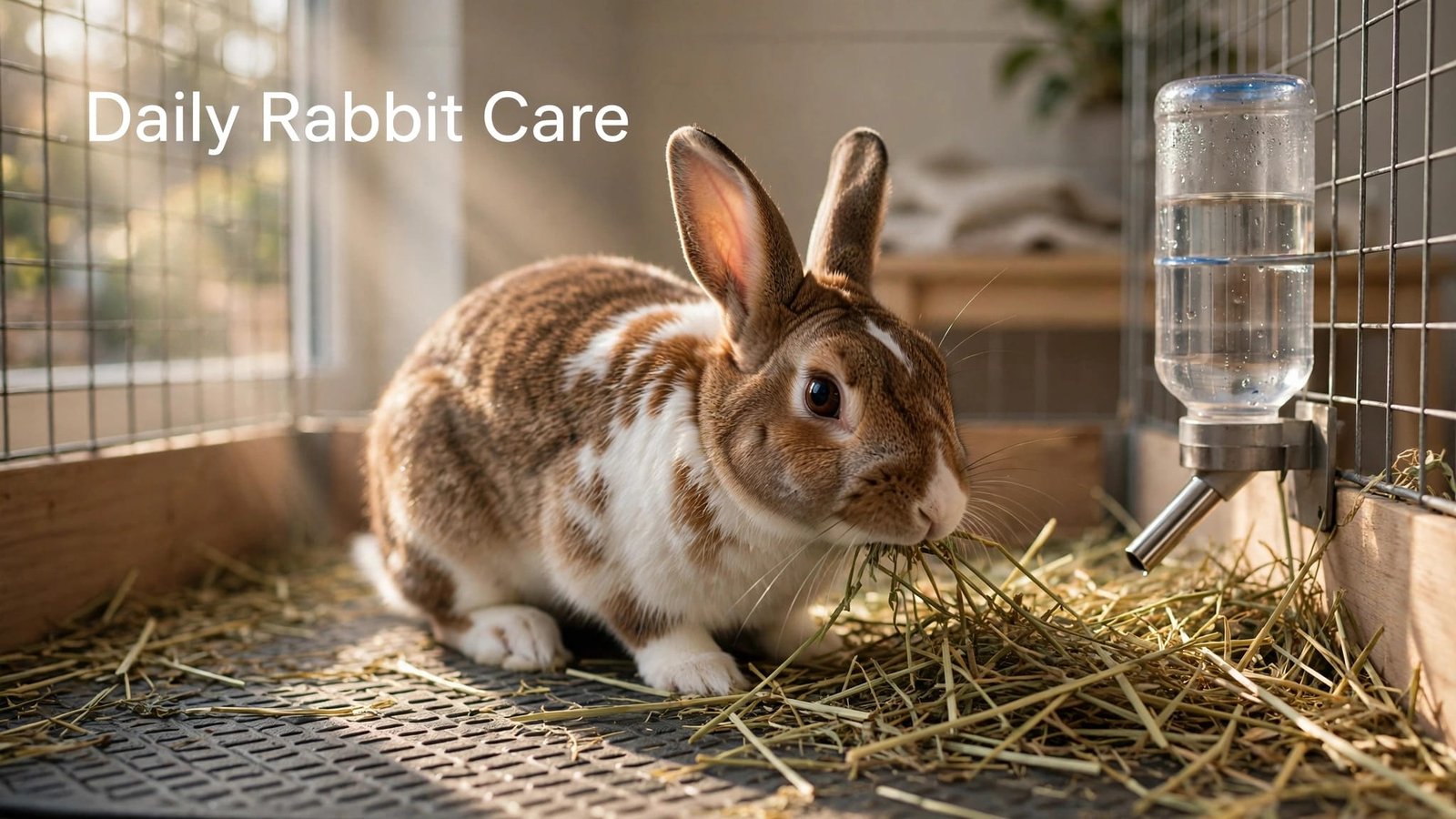
Your rabbit needs fresh hay and water, safe space to move, and gentle attention every day. Knowing how to take care of rabbits means turning those needs into a steady routine you can maintain.
Feeding, cleaning, exercise, and grooming become more manageable when you handle small tasks regularly. You also get to know your bunny’s usual appetite, droppings, and behavior, so changes are easier to notice.
Start with morning and evening check-ins, then build the rest of your care around your rabbit’s needs.
Key Takeaways
- Keep suitable grass hay and fresh water available at all times, and check your rabbit’s appetite and droppings morning and evening.
- Remove soiled litter and leftover fresh food daily, and provide a clean, roomy area with safe, grippy flooring.
- Offer daily supervised exercise, rabbit-safe toys, and a protected space to stretch, hop, and rest.
- Brush regularly, handle your rabbit gently, and contact a rabbit-experienced veterinarian promptly if appetite, droppings, movement, or behavior changes.
How to take care of rabbits with a simple daily routine
A predictable schedule helps you cover the essentials without turning rabbit care into a long chore list. Keep supplies nearby, and agree on feeding amounts if several people share responsibility.
Check food, water, and droppings morning and evening
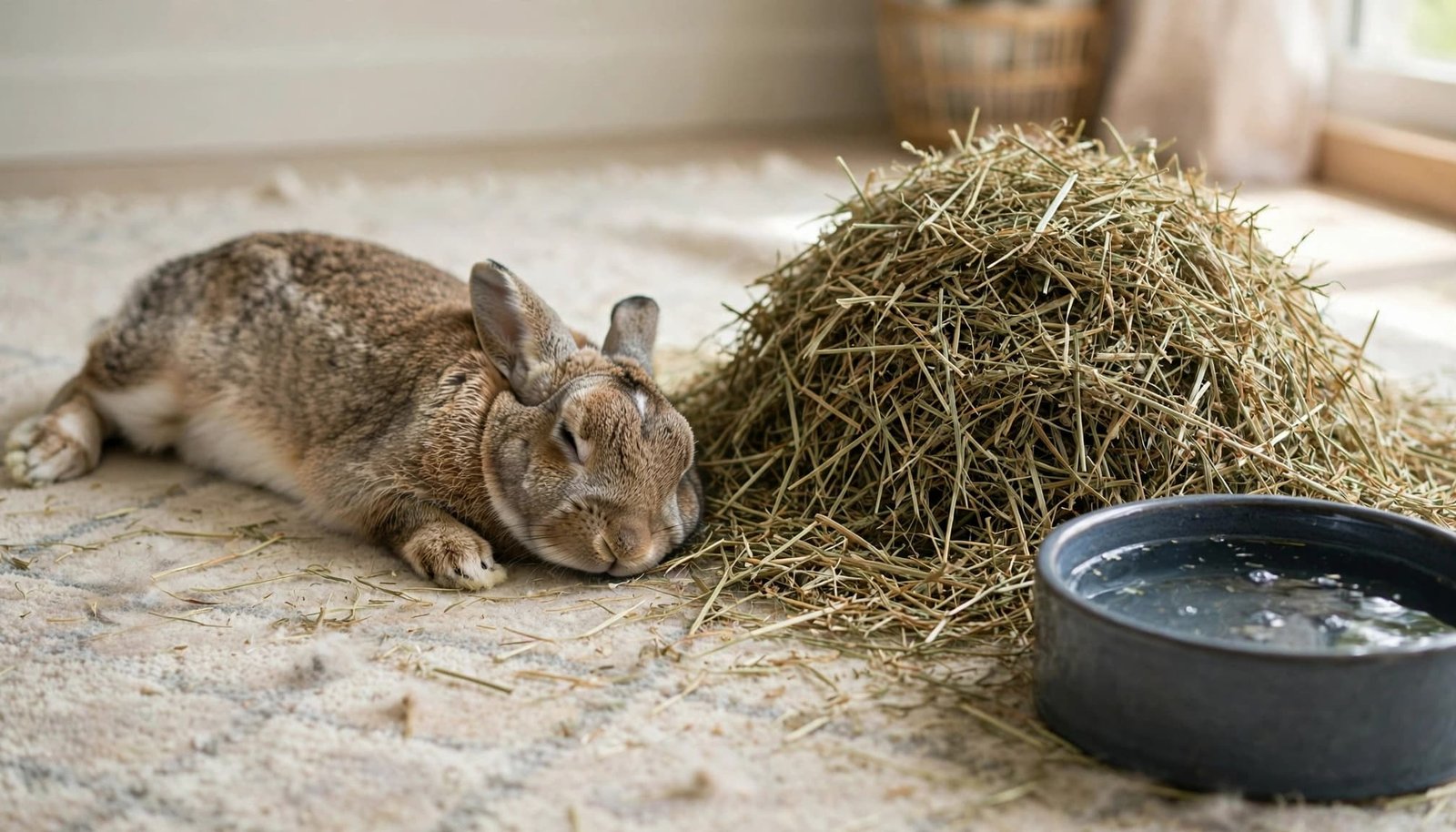
Keep suitable grass hay and fresh water available around the clock, including between check-ins. Each morning and evening, refresh supplies and notice what your rabbit has used.
Wash the water bowl regularly. If you use a bottle, check that water flows through the nozzle rather than assuming a full bottle means your rabbit can drink.
Look for their usual round droppings and comfortable movement. Rabbits often rest during the day and become more active near dawn and dusk, so learn your bunny’s pattern.
A full hay rack doesn’t prove your rabbit is eating. Watch them chew, and notice whether fresh droppings appear.
If your rabbit stops eating or eats much less, contact a rabbit-experienced veterinarian promptly.
Keep litter and living areas clean without overcomplicating it
Remove wet litter, soiled hay, and leftover fresh food daily. Use rabbit-safe, unscented paper-based litter, and avoid clumping cat litter.
A roomy litter box in a consistent location supports litter training. If your bunny repeatedly chooses another corner, moving the tray there may help. Never punish accidents.
Plan a deeper clean about weekly, with extra cleaning whenever needed. Wash bowls and trays, clean dirty surfaces, and rinse and dry everything before your rabbit returns.
Choose solid, grippy flooring rather than wire floors, which can hurt sensitive feet. The House Rabbit Society’s care primer covers these housing basics alongside everyday care.
Feed your rabbit a steady, fiber-rich diet
When you’re learning how to take care of rabbits, planning a rabbit diet can feel confusing. Start with familiar, age-appropriate foods, and ask a rabbit-experienced veterinarian to tailor portions to your bunny’s health and body condition.
Make grass hay the main part of your rabbit’s diet
For most adult rabbits, suitable grass hay should form the foundation of daily feeding. Timothy hay, orchard grass, and meadow hay are common options.
Hay supplies fiber for normal digestion, and regular chewing helps wear continuously growing teeth and support dental health. The House Rabbit Society’s diet guidance emphasizes keeping hay available without restriction.
Choose fresh, dry hay without mold or a musty smell. Store it somewhere dry, and remove any hay that becomes wet or dirty.
Young rabbits have different nutritional needs. Don’t move a youngster straight onto an adult feeding plan or suddenly replace the food they already know. Fresh drinking water should always remain available.
Offer greens and pellets carefully
Offer familiar leafy greens, such as romaine lettuce or cilantro, if they’re already part of your rabbit’s diet. Introduce one new food at a time, gradually, while watching appetite and droppings. If your rabbit stops eating or eats much less, contact a veterinarian promptly because this can signal GI stasis.
Suitable pellets can complement hay, but measure them rather than continually topping up the bowl. Your rabbit’s age, size, and medical needs affect the right amount.
Avoid colorful mixes containing seeds, dried corn, or sugary pieces. Remove spoiled greens promptly, and don’t assume every garden plant or kitchen scrap is safe.
For unfamiliar ingredients, use the Can Rabbits Eat…? food-safety database before offering them. Keep feeding decisions consistent across caregivers so your bunny doesn’t receive extra portions by accident.
Create a safe home where your rabbit can move and explore
A small cage alone doesn’t provide enough usable space. A secure exercise pen or rabbit-proofed room can provide a roomy enclosure where your rabbit can stretch, hop, and rest comfortably.
Start with one prepared area, then expand access as you learn what your bunny investigates.
Rabbit-proof hazards and provide comfortable footing
Get down to floor level and check for electrical cords, toxic plants, cleaning products, and narrow gaps. Block wires completely, secure unsafe rooms, and prevent access to stairs as part of rabbit-proofing.
Use washable rugs or mats that stay flat and don’t slip. Remove loose threads, curled edges, or damaged material your rabbit might swallow.
Add a private hideaway with two exits, and treat it as a no-touch retreat. Keep other pets outside the protected area; a pen alone might not stop a jumping cat or determined dog.
Make daily exercise and enrichment part of the routine
Give your rabbit daily access to a safe area for supervised exercise beyond any smaller resting enclosure. Four hours is a useful exercise guideline, with opportunities to pause and rest.
Adjust the routine for age, health, mobility, personality, and available space. A rabbit with arthritis needs suitable movement and accessible surroundings, rather than pressure to run.
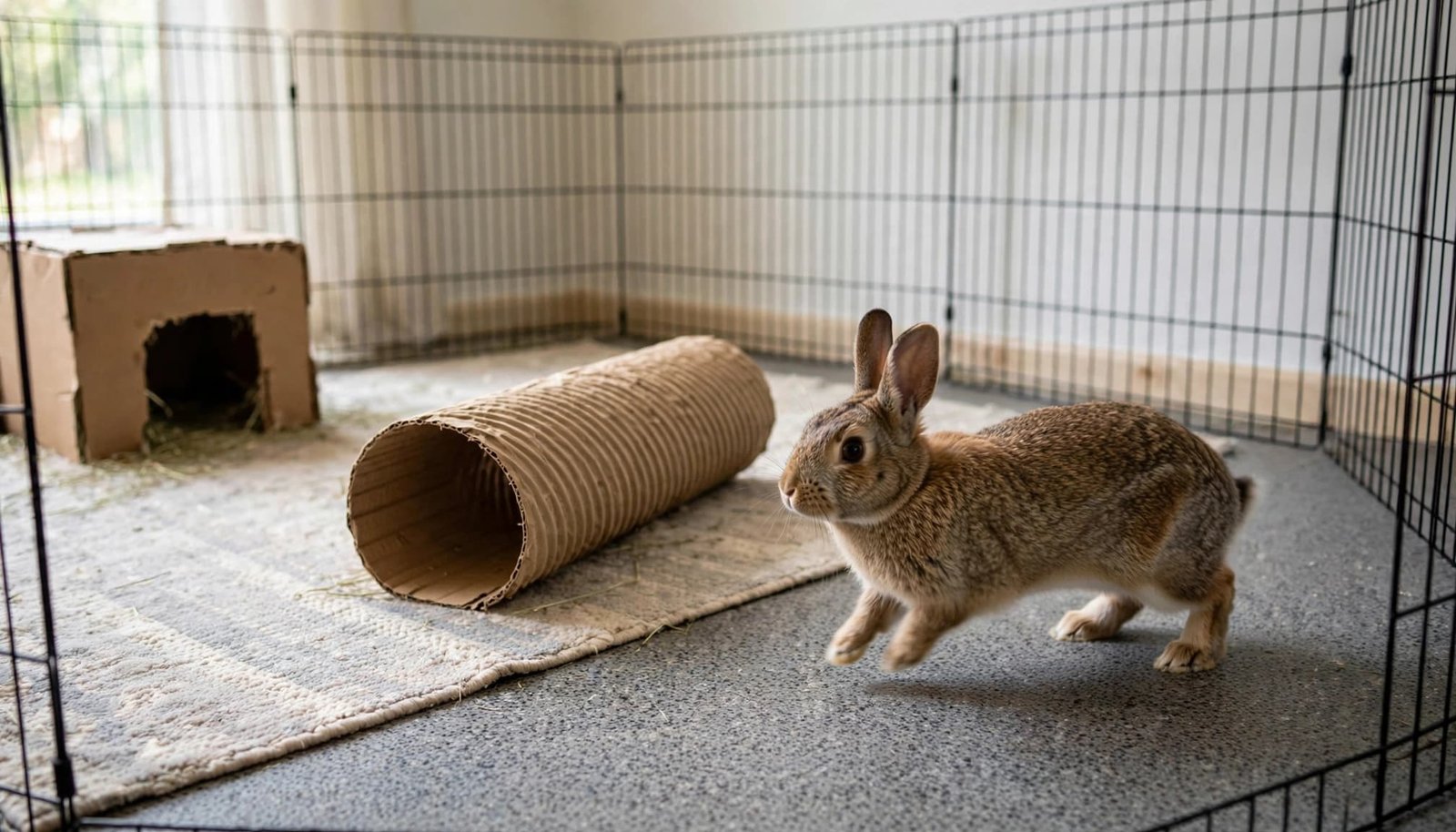
Offer tunnels, plain cardboard boxes, and rabbit-safe chew toys and foraging toys. Remove tape and staples, and replace items that become wet, damaged, or heavily swallowed.
Keep the main hopping route clear instead of filling every corner with accessories. Agriculture Victoria’s rabbit welfare guidance includes exercise and social contact among everyday care needs.
Protect your rabbit’s health with grooming and veterinary care
Find a rabbit-savvy vet before an urgent problem occurs. Schedule routine exams, discuss having your rabbit spayed or neutered, and ask which vaccinations fit your rabbit and location.
Keep the clinic’s number and an emergency contact readily available.
Brush your rabbit and handle nail care gently
Regular brushing removes loose fur and gives you a chance to notice skin problems or tangled areas. Increase grooming during shedding, and give long-haired rabbits more frequent coat care.
Keep sessions brief and calm. Don’t pull at mats close to the skin; ask a veterinary professional for help when you can’t remove them safely.
Rabbits usually don’t need baths. A dirty bottom can indicate a health or mobility problem, so seek advice rather than repeatedly washing away the evidence.
Ask a veterinary professional to demonstrate nail trimming and safe handling. Never lift your rabbit by the ears or scruff, and support their body during necessary handling.
Know when a change needs veterinary attention
Compare today’s behavior with your rabbit’s usual pattern. Smaller or fewer droppings, reduced appetite, a hunched posture, or reluctance to move deserve attention.
Sudden withdrawal matters too, especially when a normally curious bunny stops responding to familiar activities. A rabbit that stops eating needs prompt veterinary advice, rather than a wait until tomorrow.
Difficulty breathing, collapse, or visible maggots require immediate emergency care. Don’t substitute human medication, sudden diet changes, or unprescribed home treatments for an examination.
Routine prevention matters between illnesses, too. The Animal Humane Society’s rabbit care guide covers medical care alongside feeding and housing, which helps you plan beyond the daily chores.
Build trust by respecting your rabbit’s personality
Good rabbit care includes giving your bunny choices about everyday contact. Some rabbits enjoy forehead strokes; others prefer sitting nearby without being touched.
Confidence can grow gradually, especially after a move or adoption. Avoid setting a deadline for cuddling or treating hiding as bad behavior.

Sit quietly at floor level and let your rabbit approach. Reading nearby or speaking softly lets them investigate without someone reaching overhead.
When your bunny moves away, allow the interaction to end. Don’t chase them, pull them out of a hideout, or keep picking them up to make them “get used to it.”
Because rabbits are prey animals, being lifted can feel frightening. Keep affection at floor level whenever possible, while gradually helping your rabbit tolerate necessary care.
Predictable feeding and cleaning also build familiarity. Move calmly around their supplies, and leave their resting places undisturbed when you don’t need to clean them.
Companionship deserves planning as well. A compatible companion rabbit offers social contact that people can’t fully replace. An already-bonded pair can be a good option when you’re considering adoption.
However, unfamiliar rabbits can fight. Work with a rabbit-experienced rescue or veterinarian on neutering and a careful bonding plan rather than placing two strangers together.
Toys and human attention support wellbeing, but they don’t replace compatible companionship or daily care. Learning how to take care of rabbits means noticing the individual in front of you, including how they prefer to socialize.
Frequently Asked Questions
What should rabbits eat every day?
Suitable grass hay should be the foundation of most adult rabbits’ diets, and fresh water should always be available. Familiar leafy greens and measured pellets can complement hay, with portions adjusted for your rabbit’s age, size, and health.
How often should I clean my rabbit’s living area?
Remove wet litter, soiled hay, and leftover fresh food daily. Plan a deeper clean about once a week, and clean sooner when needed.
How much exercise does a rabbit need?
Give your rabbit daily access to a safe area for supervised exercise beyond a smaller resting enclosure. Four hours is a useful guideline, adjusted for your rabbit’s age, health, mobility, and personality.
When should I contact a veterinarian?
Contact a rabbit-experienced veterinarian promptly if your rabbit stops eating or eats much less, has smaller or fewer droppings, or shows changes in movement or behavior. Difficulty breathing, collapse, or visible maggots require immediate emergency care.
Keep your rabbit’s care consistent and personal
A dependable routine starts with hay and water, a clean and safe living area, and daily opportunities to move. Gentle interaction and regular grooming help you notice changes while respecting your rabbit’s comfort.
Your most useful habit is knowing what’s normal for your bunny. Pay attention to eating, droppings, and movement, then act promptly when something changes.
Keep the basics steady, and adapt care as your rabbit ages throughout their lifespan. Seek rabbit-experienced veterinary guidance whenever health concerns arise.