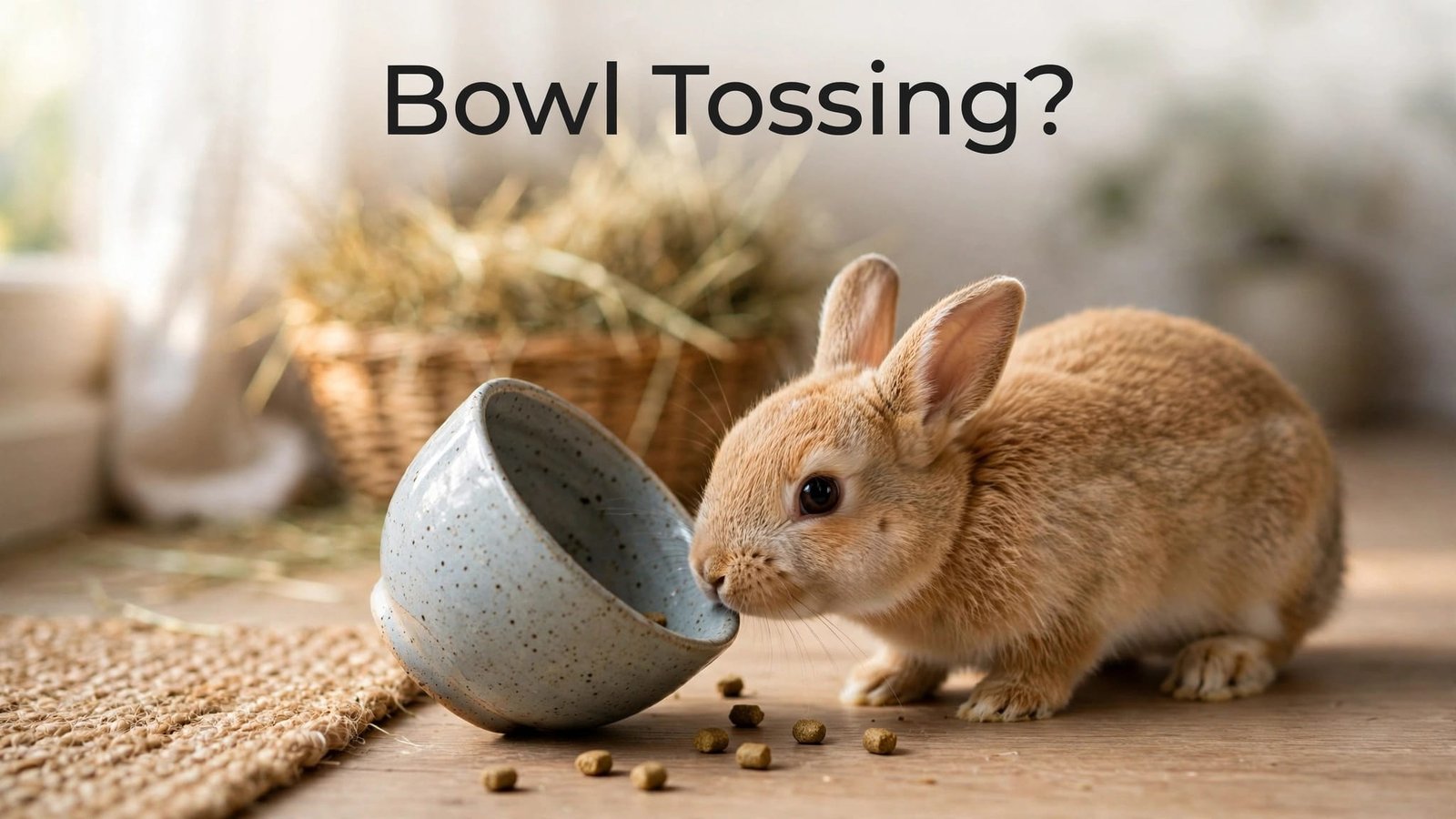
Your rabbit may toss their food bowl because it’s easy to flip, they’re exploring, or they’re looking for something to do. A steadier bowl and more opportunities to play are helpful starting points.
A bowl tipping over doesn’t automatically mean your bunny is hungry or unhappy. Start by noticing when it happens and whether food is still inside.
Key Takeaways for New Rabbit Owners
- Choose a heavy, food-safe bowl with a broad base.
- Give your bunny room to move and safe objects to toss.
- Keep fresh hay and water available, even when the pellet bowl is empty.
Why Is Your Rabbit Tossing Their Food Bowl?
Exploring the bowl and searching underneath
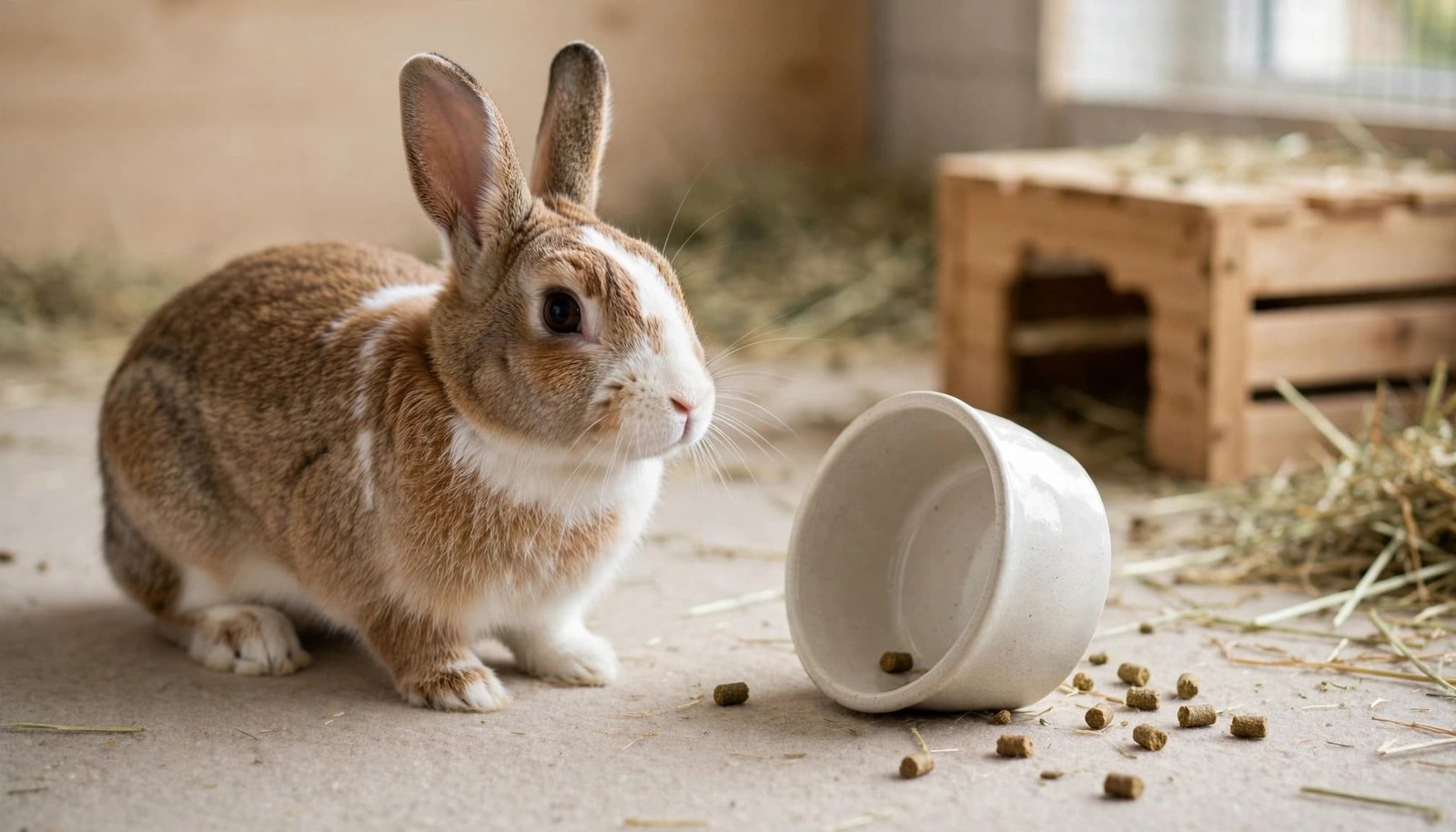
Some owners suspect their rabbits flip bowls to look for food underneath. Throwing bowl contents may be exploratory or playful, but tossing alone can’t tell you what your rabbit is thinking.
The bowl itself can make the behavior easier. A lightweight dish with an accessible edge lets your bunny push their head underneath and tip it over.
Notice whether your rabbit noses around the floor afterward or immediately starts throwing the dish again. Their next move can give you a useful clue.
Boredom and wanting more activity
Your rabbit may also treat the bowl as something fun to move. Throwing can happen when they want attention, more activity, or a chance to come out and explore.
RSPCA Australia’s enrichment guidance explains that enrichment helps prevent boredom and behavioral problems. A heavier dish can reduce spills, but if they seem bored, offer more space, exercise, and interesting things to do.
Avoid shouting or chasing. Calmly changing the setup is more helpful.
How Can You Stop Your Rabbit Flipping the Bowl?
Choose a heavier, harder-to-grip dish
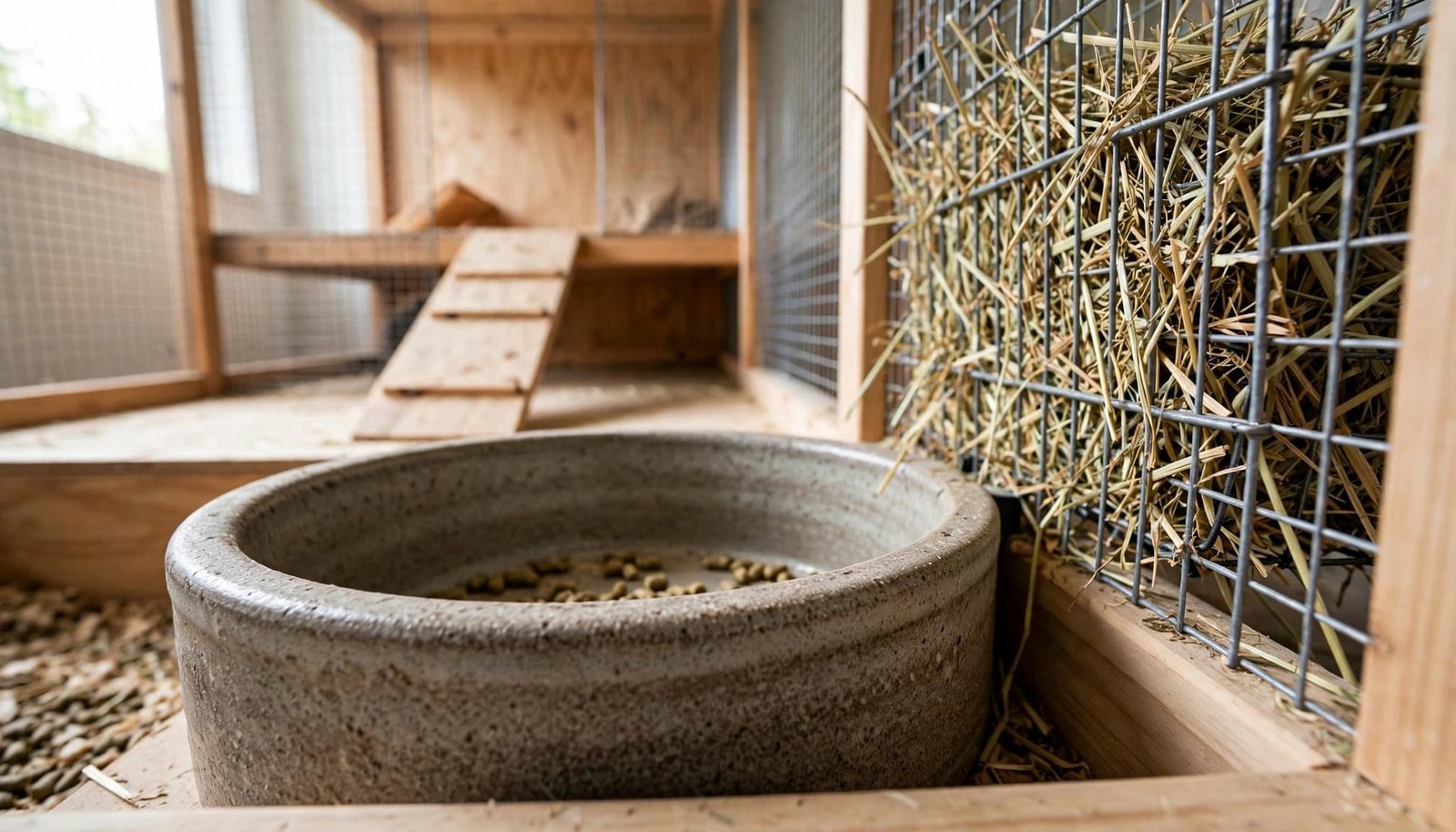
Choose a heavy bowl with a wide base, such as a glazed clay or stoneware dish. A heavy ceramic dog dish can also work, but check that its sides are low enough for comfortable eating.
Choose food-safe materials and replace chipped or cracked dishes. Low, rounded edges on a food dish offer less purchase than a projecting lip.
A lightweight dish can flip over easily. If your first choice still lifts, try a second heavy bowl with a wider base. No bowl is guaranteed to stay put for every rabbit, so watch how they use it.
Secure the bowl or change its position
Some owners wedge the bowl into a corner or surround it with bricks. Loose or stacked bricks can shift or topple, so a purpose-made holder is safer than an improvised barrier.
A purpose-made holder that clips onto hutch wire is another option. Attach it to the wire front, low enough for comfortable eating, with attachments outside chewing reach and no trapping gaps.
If your rabbit throws bowls over an upper edge, move the dish down the ramp to the bottom section. Use clean, solid flooring, and keep the bowl away from the ramp’s landing area.
Give Your Bunny Something Better to Toss
Your rabbit may enjoy tossing even after you’ve secured the food bowl. Offer a lightweight willow ring or sturdy cardboard tube instead. Our guide to safe toys for rabbits includes simple options for moving, chewing, and exploring.
One owner described using a 40p plastic cat dish as a toss toy. That’s an anecdotal price, not a current buying guide. Plastic isn’t suitable for pets who bite pieces off.
Supervise new toys and remove anything damaged. Keep the main hopping area clear rather than filling it with objects.
What About Water Bowls and Litter Trays?
Some rabbits move litter trays and tip full water bowls too. A rabbit who jumps into or overturns their dish may need a heavier water bowl secured in place. If it has tipped, clean and refill it.
Don’t remove drinking water to prevent mess. The Rabbit Welfare Association & Fund’s water guidance recommends bowls because lapping is more natural. Owner accounts also describe rabbits preferring dishes to bottles. Keep the water bowl available, and refill it if it’s tipped again.
Keep water far enough from the litter box that spills won’t soak the litter. For a frequently overturned tray, try a roomy, stable cat litter box rather than a tiny corner pan.
Refresh spilled water promptly. Our simple rabbit daily-care routine helps you keep these everyday checks manageable.
Frequently Asked Questions
Does throwing an empty bowl mean my rabbit needs more pellets?
Not necessarily. Even rabbits receiving only a small daily handful may happily toss the empty dish. Don’t add extra pellets or refill it automatically. It needs an appropriate pellet portion and plentiful fresh hay. Our rabbit hay guide explains that hay-first routine.
Is the bottom of the hutch too dirty for a food bowl?
It can be suitable if the floor is clean and dry. Keep the dish away from urine, dirty bedding, and the litter area. Wash it regularly and discard contaminated food. Your rabbit shouldn’t have to climb a ramp to reach every meal.
When should bowl-tossing concern me?
Tossing alone doesn’t diagnose a health problem. However, contact a rabbit-experienced veterinarian promptly if your rabbit eats less, produces fewer droppings, seems hunched, or becomes unusually quiet. Don’t assume a sudden behavior change is boredom when it also seems unwell.
A Steadier Bowl and a Happier Bunny
Start with a stable feeding setup, then give your rabbit safe ways to explore and play. Watch whether the tossing happens during meals, afterward, or when your bunny wants activity.
You don’t need to stop every playful throw. The goal is to keep food clean, water available, and your furry friend comfortable.