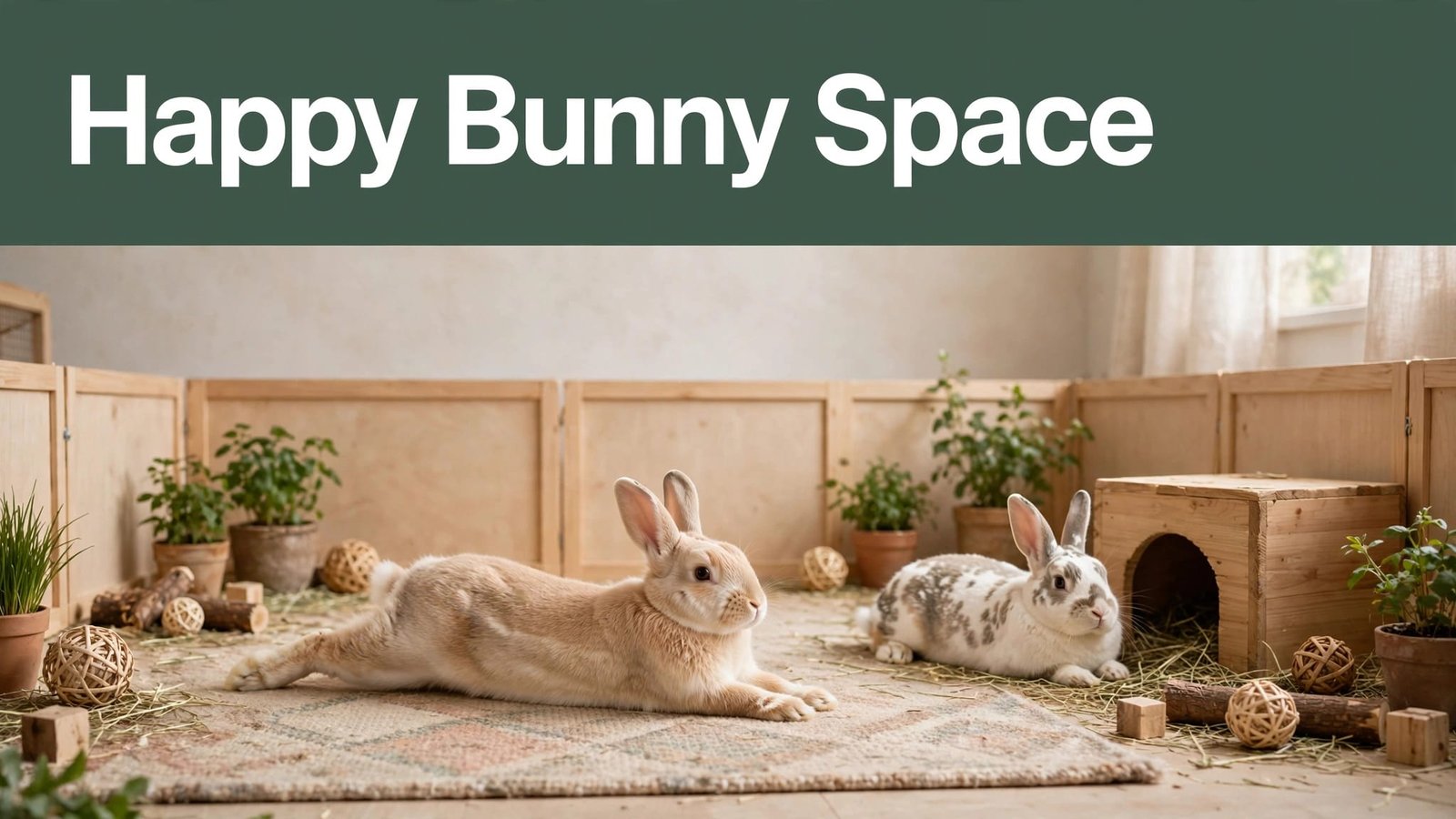
A pet rabbit may look small, but they still need room to hop, stretch, dig, chew, hide, and relax. These natural behaviors help your bunny stay active, comfortable, and content.
Tiny cages may seem convenient, but they don’t give a rabbit enough room to act like a rabbit. Your long-eared friend needs safe floor space, soft footing, and time outside their main area.
The good news is that suitable indoor housing can fit into many homes, including apartments and rentals.
Key Takeaways
- Indoor rabbits need generous usable floor space for hopping, stretching, resting, and natural behaviors. A practical starting point for two bonded average-sized rabbits is around 3 metres by 2 metres, with adjustments for size, mobility, personality, and exercise time.
- Solid flooring covered with secure, washable rugs or mats is safer and more comfortable than wire flooring. Protect cords, baseboards, plants, and other tempting hazards with barriers and rabbit-safe alternatives.
- Exercise pens, free-roam base camps, and C&C grids can all work well when they provide a predictable area for hay, water, litter, hiding, and rest.
- Daily supervised exercise makes the living space more useful and engaging. Watch how your rabbit moves through the room and adjust rugs, barriers, hideouts, and enrichment as needed.
How Much Room Does a Rabbit Need Indoors?
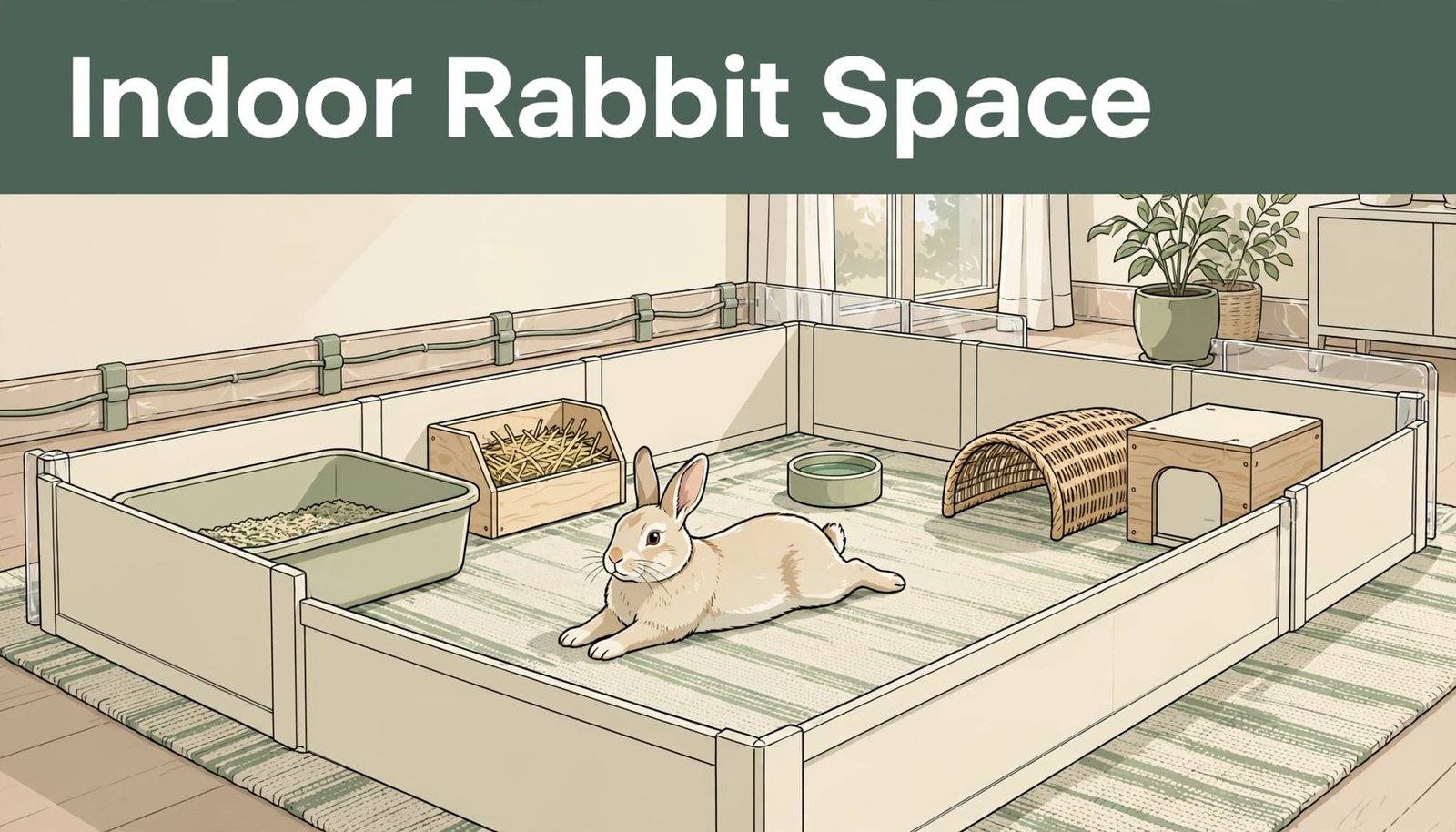
For two average-sized rabbits who are bonded, a practical minimum is a single living area around 3 metres by 2 metres, with a height of about 1 metre. Both the Rabbit Welfare Association and Fund’s space recommendations and the RSPCA’s rabbit home guidance support this enclosure size as a starting point for indoor housing. It’s a practical minimum, not a universal rule.
That is roughly 10 feet by 6.5 feet. It may sound large at first, but rabbits need space for full hops, quick zoomies, and joyful binkies. Larger breeds, older or less-mobile rabbits, highly active rabbits, and rabbits with limited exercise time may need more usable room.
Horizontal space matters most
Rabbits live close to the ground. They need room to move forward, turn around, and lie fully stretched out. A rabbit condo can add a fun lookout spot, but vertical levels don’t replace open floor space.
Avoid using a small cage as your rabbit’s full-time home. A wire floor can hurt delicate feet and may lead to sore hocks, so a solid floor with rugs or mats is a safer base. Compared with wire flooring, a solid floor is kinder to sensitive paws.
One rabbit or a bonded pair?
Space needs vary by your rabbit’s size, age, mobility, personality, and whether they have a companion. A large breed, an older bunny, or a rabbit with mobility trouble may need wider paths and fewer jumps.
Bonded rabbits need enough resting space to separate when they want to, then cuddle when they choose. Don’t simply divide a pair’s space in half for one rabbit. Your solo bunny still needs a generous area for movement.
Choosing the Best Indoor Rabbit Space Setup
A safe rabbit home doesn’t need to be fancy. The best housing options are roomy, easy to clean, and placed where your bunny can enjoy family life without too much noise.
An Exercise Pen Is Easy for New Owners
Metal puppy pens are one of the simplest options for new owners. They give your rabbit a clear boundary while leaving plenty of open space inside. Check their spacing, doors, and height before choosing one.
Place the exercise pen against a wall or in a quiet living-room corner. Some curious rabbits are excellent climbers, so watch them during the first few days.
Free-Roam Rabbits Need a Base Camp
Some rabbits safely free roam in one room or much of the home. Even then, a free-roam rabbit needs a predictable base camp with hay, water, a litter box, and a hiding place.
Keep these essentials together in a calm area, so your rabbit doesn’t search the house for water or cross busy rooms to use the toilet. A larger supervised play space can connect to the base camp, while baby gates block stairs, unsafe rooms, or busy household areas. Check out 10 Signs of a Happy Rabbit here.
C&C Grids Can Fit Awkward Spaces
C&C grids are modular cube-storage panels joined with connectors or cable ties. They provide flexible shapes around furniture, but require careful measuring, secure connectors, and gap checks. Add a smooth, waterproof coroplast base, then cover it with a rug or fleece layer.
A standard pen is faster to set up. These panels offer more shape choices, but they take more measuring and checking for gaps.
Your rabbit’s main living area should be a place for resting, eating, and moving around, not a small cage opened only for playtime.
Flooring and Bunny-Proofing Your Rabbit’s Area
Good bunny proofing protects both your rabbit and your home. Slippery floors can make rabbits feel unsteady, while bare carpet is hard to keep clean.
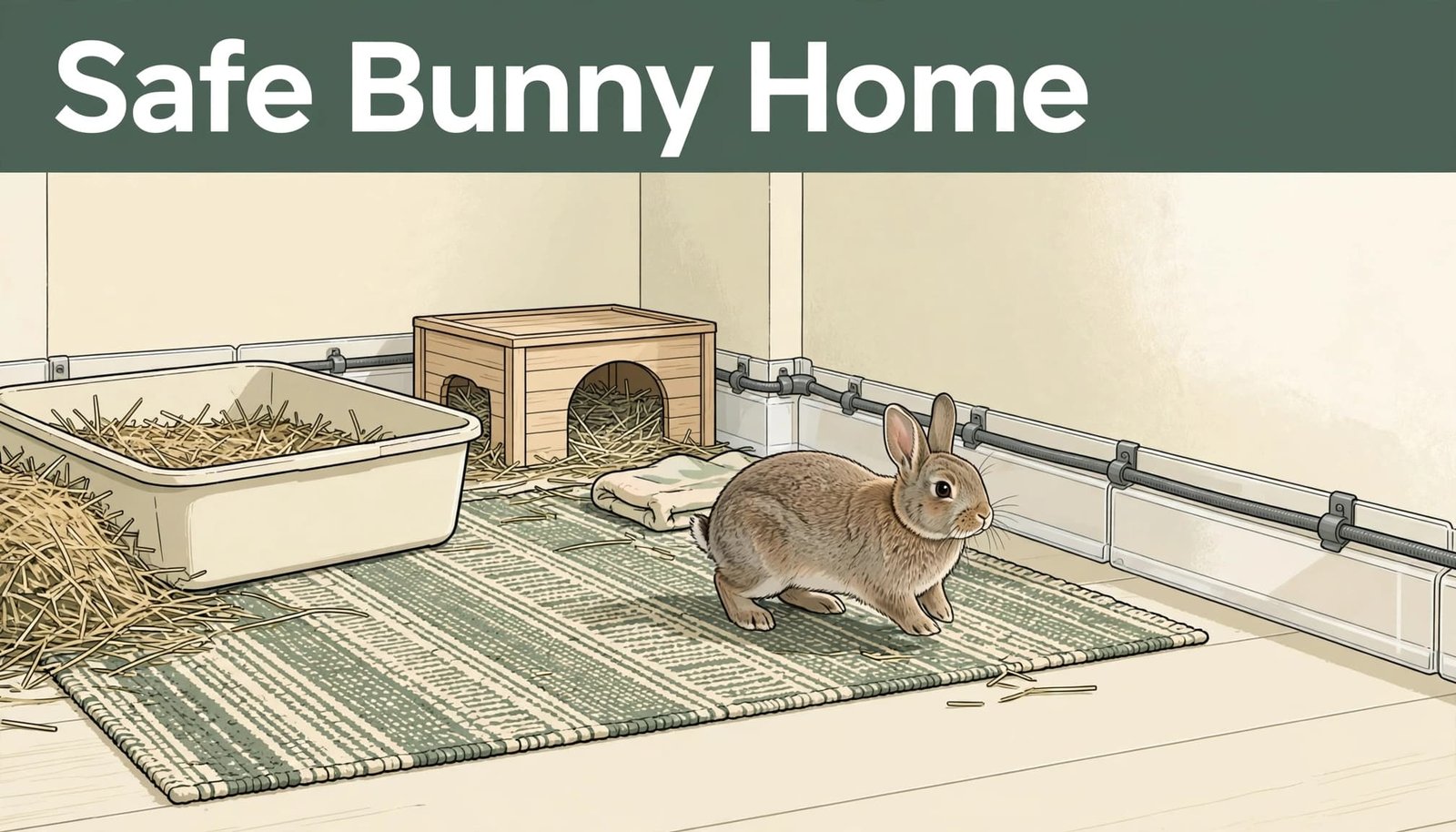
For a rental-friendly setup, start with a stable solid floor beneath the pen, using vinyl flooring or a waterproof floor protector. Place washable, low-loop flatweave rugs or cotton mats over this solid floor for traction and comfort. Keep coverings secure, dry, washable, and comfortable for your individual rabbit. Skip loose-loop rugs, since nails can catch in them.
A wire floor can be uncomfortable and may contribute to foot problems such as sore hocks. A padded, well-maintained solid surface is generally safer.
Protect cords, walls, and plants
Rabbits chew because chewing is normal rabbit behavior. Cables, baseboards, and houseplants can become tempting targets fast.
- Cover electrical cords with sturdy cord sleeves or hard plastic tubing.
- Block access to baseboards with pen panels, untreated wood guards, or furniture.
- Remove houseplants unless you have checked they are rabbit-safe.
- Offer hay, cardboard boxes, willow toys, and chew toys for safe chewing nearby.
Don’t rely on telling a rabbit “no.” Barriers and cord covers are more reliable than constant verbal correction.
Keep the litter box simple
Use a large cat-sized litter box with low sides if your rabbit is older or less mobile. Fill it with paper-based litter, then place a pile of fresh hay at one end or in a hay feeder above it.
Most rabbits like to eat hay while using it. Clean the litter box daily, replace all litter as needed, and keep its location consistent to support house training. This keeps their indoor rabbit space fresher and makes litter habits easier to maintain.
Daily Exercise Makes the Space Work Better
Even a well-sized enclosure benefits from time to explore. Agriculture Victoria’s rabbit care guidance recommends at least four hours of daily exercise. The right amount and intensity vary with age, breed, mobility, health, personality, and usable enclosure space.
Let your bunny explore a bunny-proofed room, hallway, or supervised play space. Tunnels, cardboard boxes with two exits, and a few low platforms make playtime more interesting.
Watch how your bunny uses the room
Your rabbit will show you what needs changing. A bunny that slips may need more rug coverage. A rabbit chewing one corner may need a barrier there. A rabbit hiding all day may need a quieter spot and a second hide box.
Keep water available in a heavy ceramic water bowl, and provide unlimited hay. Regular grooming and nail checks also matter, because overgrown nails can make hopping on rugs and mats uncomfortable.
Frequently Asked Questions
How much indoor space does a rabbit need?
For two bonded average-sized rabbits, a practical minimum is around 3 metres by 2 metres, with a height of about 1 metre. Larger, older, less-mobile, or highly active rabbits may need more usable floor space.
Is a cage suitable as a rabbit’s full-time home?
A small cage does not provide enough room for a rabbit to hop, stretch, and explore comfortably. Use a roomy exercise pen or a safe free-roam area instead, with a base camp for hay, water, litter, and hiding.
What type of flooring is best for indoor rabbits?
A solid, stable floor covered with secure, washable rugs or cotton mats provides better comfort and traction than wire flooring. Avoid loose-loop rugs, slippery surfaces, and coverings that allow nails to catch.
How can I bunny-proof an indoor rabbit space?
Cover electrical cords, block baseboards, remove unsafe houseplants, and use barriers around furniture or hazardous areas. Provide hay, cardboard, willow toys, and other safe chew options so your rabbit has suitable things to explore.
How much daily exercise does an indoor rabbit need?
Even a spacious enclosure benefits from daily time outside it, and at least four hours is a useful guideline. The right amount varies with your rabbit’s age, health, mobility, personality, and available living space.
Give Your Bunny Room to Be a Bunny
The best indoor rabbit space isn’t about buying the biggest cage. It is about providing usable floor area, comfortable footing, a clean toilet area, and regular time to explore.
Start with the 3 m by 2 m recommendation for a bonded pair where possible. Then adjust the setup for your rabbit’s size, mobility, activity level, personality, and available exercise time. This approach works well in apartments and rentals, too. More usable space gives your furry friend more chances to hop, explore, and relax.