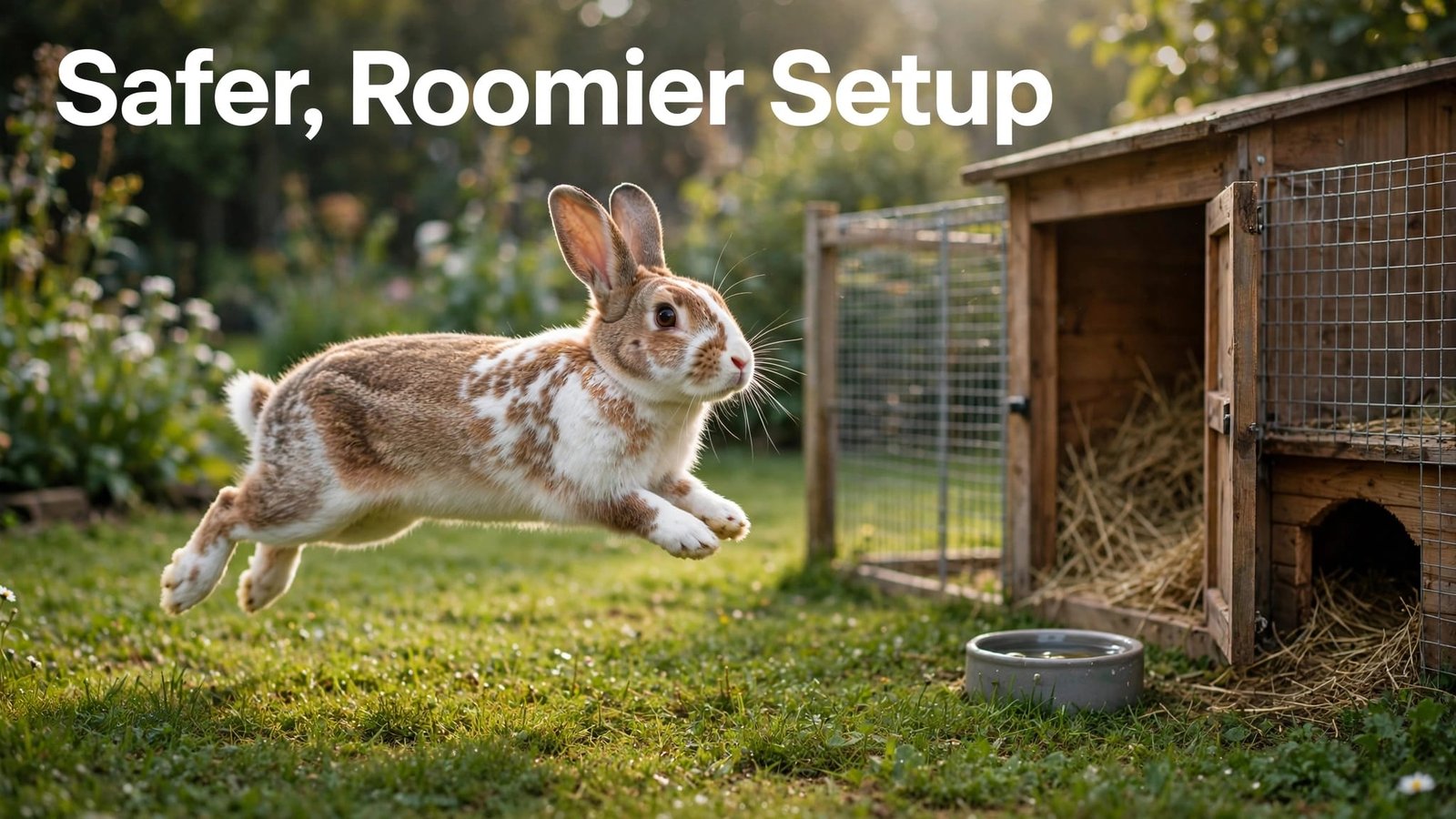
An outdoor rabbit enclosure needs to give your bunny room to move while protecting them from escape, predators, and changing weather. A suitable setup starts with usable space, a connected shelter and run, and daily supervised care. Before choosing a ready-made or modular setup, consider how its size, construction, placement, and cleaning access will work in your yard.
Plan an outdoor rabbit enclosure with enough room to move
Your rabbit’s hutch is a covered resting place, not a complete living area on its own. Connect a ready-made outdoor hutch or modular setup to a secure, permanently accessible exercise run.
Measure that home after adding hay, water, litter, and hiding places. Supplies can take up more room than you expect!
Measure the space your rabbit can actually use
Your bunny needs room to stretch out fully, stand upright, turn around comfortably, and take several uninterrupted hops. A layout filled with ramps and accessories can make those simple movements difficult.
For two bonded, average-sized rabbits, start with approximately 3 by 2 meters of continuous living space, or 6 square meters, with about 1 meter of height. That’s roughly 10 by 6.5 feet, with 3.3 feet of headroom. This minimum space is a starting point, not a maximum. The Rabbit Welfare Association & Fund’s space recommendations support this minimum footprint.
One rabbit still needs generous space. Don’t divide the recommended area in half for a solo bunny.
Larger rabbits may need wider entrances and roomier equipment. Older or less-mobile rabbits benefit from level routes and easy access to essentials. Extra stories don’t replace clear floor space.
Choose a shelter and run that connect securely
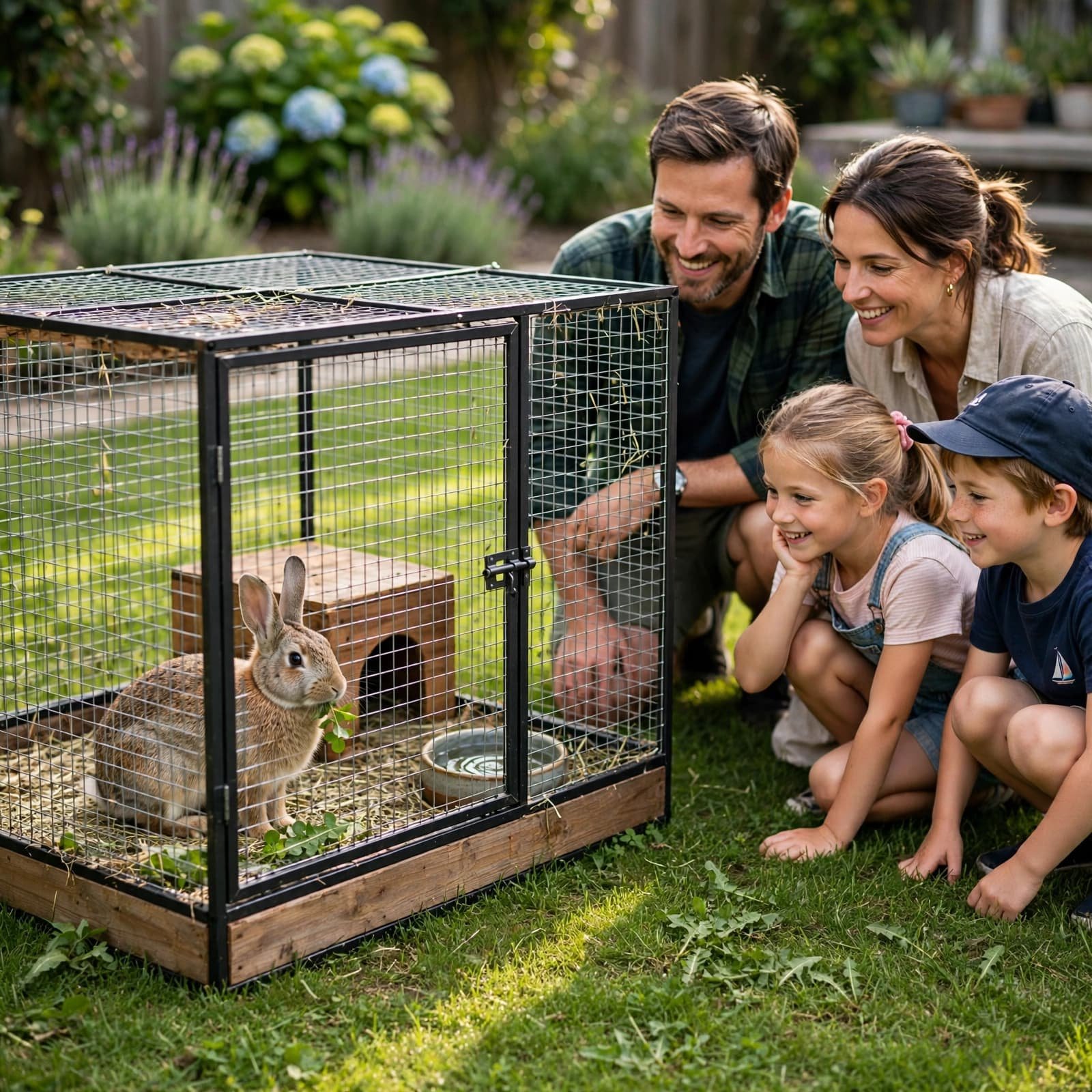
Choose solid, stable flooring in the covered area, with comfortable traction. Exposed wire flooring can hurt your rabbit’s feet, while slippery surfaces make movement harder. If you choose a wooden hutch, check that its surfaces are sturdy, smooth, and easy to clean.
Provide a hideout with two exits, fresh hay, water, and a roomy litter box. Keep a clear hopping route between them. Bonded rabbits also need room to rest separately when they choose.
Look closely at the connection between the covered area and run. Narrow doors, steep ramps, and raised thresholds can leave part of the enclosure difficult to reach.
You should also be able to reach every corner for cleaning without chasing your bunny. If the litter box blocks the doorway, the layout needs changing.
Make your outdoor rabbit run harder to escape from or break into
The whole boundary matters: covered resting area, run, doors, roof, flooring, and connecting points. One weak connection can undermine otherwise sturdy construction.
An ordinary garden fence doesn’t provide complete protection. Chicken wire alone may also fail against determined predators or leave openings that rodents can use.
Block digging and secure every opening
Before every outdoor session, inspect the complete enclosure. Look for holes, loose panels, weak flooring, damaged fasteners, and gaps around doors. Pay attention to corners and places your rabbit has already investigated.
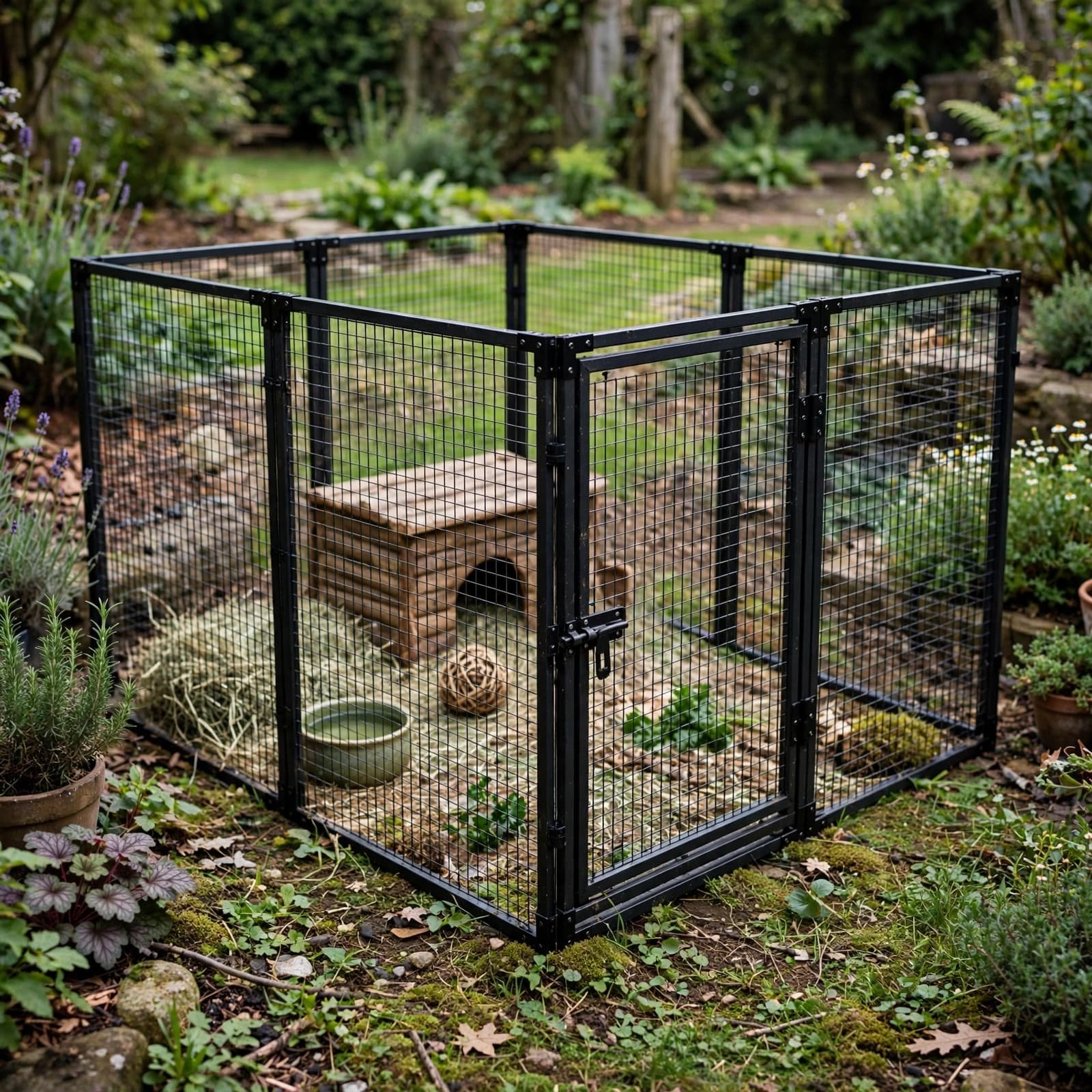
Choose sturdy, securely attached wire mesh with openings suited to local risks and small enough to keep rodents out. Depending on the required specifications, use welded mesh or hardware cloth. Keep cut ends and sharp edges away from every surface your bunny can reach. Doors need dependable fastenings that nearby animals can’t easily work open.
Plan anti-dig protection around the complete setup, including the hutch and connecting sections. A properly installed wire mesh skirt can form an apron around the whole setup, while paving slabs offer another option. Keep the footing comfortable and secure. The RWAF’s outdoor housing guidance is a useful reference for planning the whole home.
Move your rabbit somewhere secure before repairs. Then inspect the full boundary again, rather than assuming one repaired hole solves the problem.
Supervise outdoor time and reduce nearby risks
Even a carefully built enclosure doesn’t remove every outdoor risk. Never leave your rabbit outdoors unsupervised, even briefly. When supervision ends, bring your bunny into an appropriately sized, rabbit-proofed indoor living area.
Stay close enough to notice distress or damage. Dogs, cats, and wildlife can frighten rabbits even when they can’t enter the run. Keep other pets away from the enclosure.
Remove harmful plants and avoid lawns treated with pesticides, herbicides, or fertilizers. Don’t allow access while treatments remain unsafe according to their directions.
Keep brush piles, spilled feed, and stored bedding away from the rabbit area. Store food securely and clear leftover fresh food promptly to discourage rodents.
A secure roof and strong walls don’t stop digging underneath. Ground protection needs to cover the whole connected setup.
Keep your rabbit comfortable in changing outdoor weather
Location matters as much as construction. Your rabbit needs shade, airflow, a dry covered resting area, and protection from wind and rain.
The RSPCA’s rabbit environment guidance treats suitable covered space as part of a complete home. A rain-resistant shell still needs comfortable conditions inside.
Check shade, airflow, and shelter throughout the day
A cool morning spot can become dangerously hot by afternoon. Follow the shade across your yard before deciding where the enclosure belongs.
Look for protected ventilation openings, a sound roof, and a covered area that stays dry during rain. Protective covers mustn’t block airflow or trap hot air. Wood, plastic, and metal each need suitable placement; no material automatically keeps temperatures safe.
Cold conditions bring different problems, including damp bedding and frozen drinking water. Keep clean, dry straw available for bedding. Heat, storms, or freezing conditions may require a safer, temperature-controlled indoor space.
Prepare that space before challenging conditions arrive. Use a rabbit-proofed room or suitable pen for backup housing, not a dog crate or small cage. Bunny-proof cords, remove unsafe plants, and keep other pets outside your rabbit’s area. Avoid repeated abrupt temperature changes, and discuss seasonal housing with a rabbit-experienced veterinarian.
Also See: Best Outdoor Rabbit Runs
Build daily checks and cleaning into your routine
Each morning and evening, notice appetite, droppings, movement, and water access. During outdoor sessions, also watch changing shade, mesh, and fastenings. Test a water bottle’s nozzle rather than assuming a full bottle means your rabbit can drink.
Remove wet bedding, droppings, soiled hay, and leftover fresh food daily. Plan a deeper clean about once a week, or sooner when needed. Wash bowls and litter trays, clean dirty surfaces with rabbit-safe products, and let everything dry.
Check your bunny’s bottom for soiling and flies, especially during warm weather. Ask your veterinarian about local disease risks and appropriate vaccinations.
Regular calm interaction and supervised exercise help you notice changes. Refresh safe toys for simple enrichment without crowding the hopping route. If outdoor conditions make daily company difficult, reconsider the housing arrangement.
Contact a rabbit-experienced veterinarian promptly if appetite or droppings decrease. A rabbit who stops eating needs urgent attention.
Assess the complete configuration and cost
Compare each configuration by its listed length, width, and height together. A long, narrow run can offer less useful movement space than its advertised length suggests.
Map the footprint in your yard, including the hutch and any connecting sections. Allow room outside the run to open doors, remove litter trays, and reach your rabbit calmly.
Access deserves equal attention. You need openings that make feeding, cleaning, and retrieving damaged toys straightforward. Your bunny needs entrances that suit their size and mobility.
Include the hutch, connections, covers, ground protection, and any expansion panels in the total setup cost. A lower starting price means little if essential parts are missing.
Expansion options are helpful only when the final configuration remains stable and securely connected. Any extra level should add interest without replacing the continuous floor area your rabbit needs.
Compare the run with your rabbit’s needs and your yard
Use this short decision checklist before choosing a layout:
- Measure the complete living area, then subtract space occupied by supplies, ramps, and inaccessible corners.
- Assess doorways and any ramps against your rabbit’s size, health, and mobility.
- Make sure the proposed connection to the hutch can be secured without gaps or exposed sharp edges.
- Match the roof, mesh, fastenings, and ground protection to nearby predators and your yard’s surface.
Think about cleaning and weather protection alongside those measurements. You should be able to remove wet bedding and reach every corner without dismantling the setup each day.
Grass allows natural grazing, but rabbits can dig and the ground can become muddy. Check the grass for holes or muddy patches before placing the run. A solid base needs comfortable traction and somewhere dry to rest.
A modular run may suit your yard if you have room for a generous footprint and dependable protection. An outdoor rabbit hutch with a compact attached run can become cramped after furnishing, even if it fits neatly beside the fence.
Judge the complete home, rather than the product’s appearance, advertised length, or starting price.
Versatile Space to Consider
Zippi Rabbit Runs & Playpens
Frequently Asked Questions
Is an outdoor rabbit hutch enough on its own?
No. A hutch is a covered resting place, so connect it to a secure exercise run that your rabbit can access at all times.
How much space does an outdoor rabbit enclosure need?
For two bonded, average-sized rabbits, start with about 3 by 2 meters of continuous living space and roughly 1 meter of height. This is a minimum starting point, and one rabbit still needs generous space.
How can I protect an outdoor rabbit enclosure from digging and predators?
Secure the whole boundary with sturdy mesh, dependable fastenings, and ground protection around the complete connected setup. Inspect the roof, doors, flooring, connections, and mesh regularly for holes or damage.
Also See: How Much Space Needed Outdoors
Can I leave my rabbit outside in an enclosure alone?
No. Supervise your rabbit during outdoor sessions, and bring them into an appropriately sized, rabbit-proofed indoor living area when supervision ends. Move them indoors when heat, storms, or freezing conditions make the outdoor space unsafe.
Give your bunny room, protection, and daily care
A suitable outdoor rabbit enclosure combines generous usable space with a connected covered resting area and run. Digging protection, secure boundaries, safe placement for changing conditions, and daily supervision all need to work together.
Adjust the layout for your rabbit’s size, health, and mobility. Bring your bunny indoors when supervision ends or outdoor conditions become unsafe.
Your rabbit should have room to move comfortably, a dry place to rest, and regular company wherever they live.