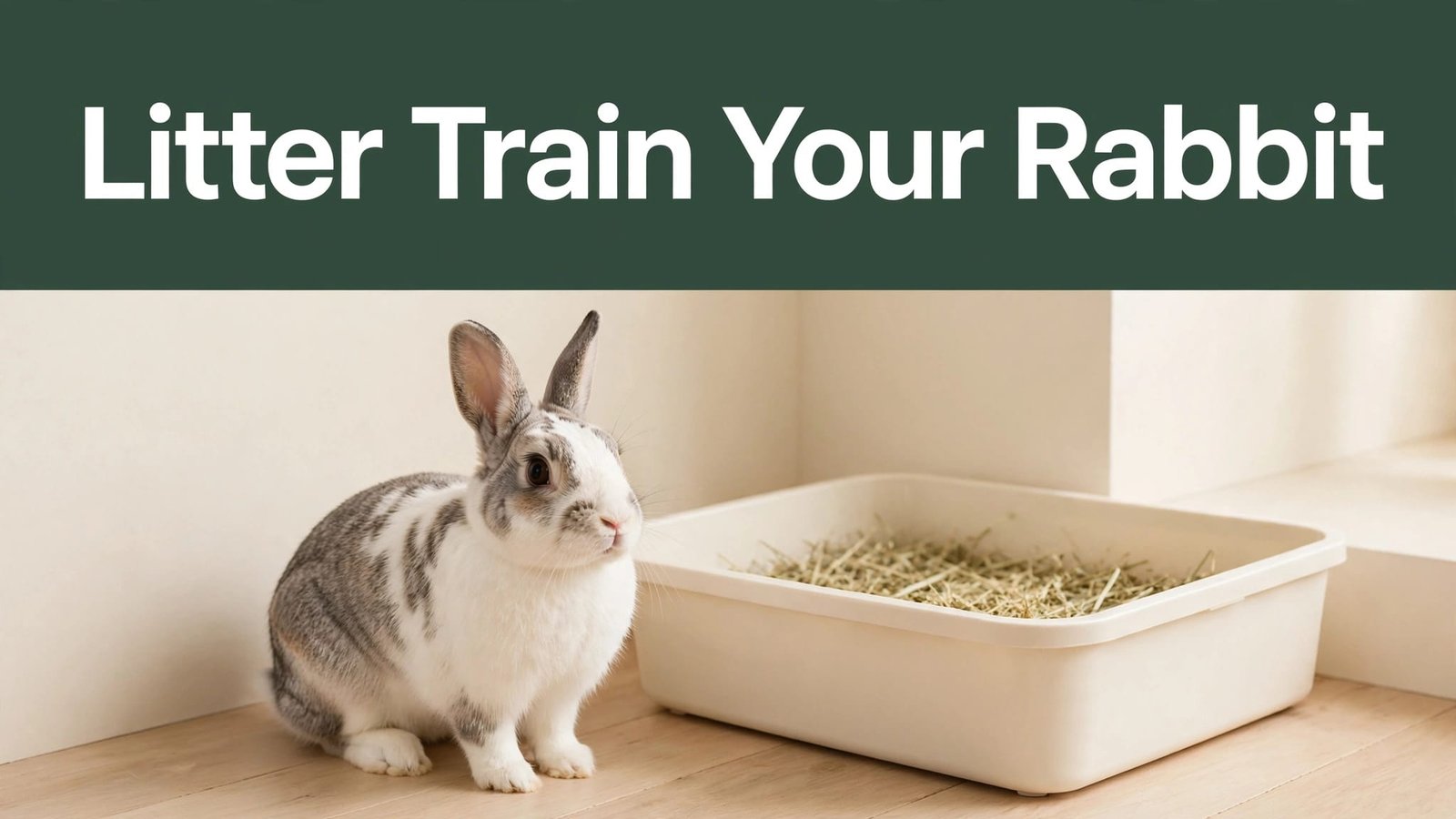
A rabbit litter box can make daily bunny care much easier, though the first few days may feel messy. Most rabbits prefer a regular bathroom corner, so training is often easier than new owners expect.
To teach your rabbit to use a litter box, start small, keep the box clean, and follow your bunny’s natural habits. Occasional accidents are normal as your long-eared friend adjusts to a new home.
With patience, fresh hay, and a roomy box, your rabbit can build better litter box habits without stress or punishment. A tiny high value treat can also support positive reinforcement.
Why Rabbits Can Learn Litter Box Habits
Rabbits are tidy animals in their own way. Many choose one or two corners for urine and most droppings, which gives you a helpful starting point.
Watch your bunny for a day or two before choosing a box location. The corner your rabbit already uses is usually the right place for the litter box, even if it isn’t your favorite corner of the room.
Let litter box placement follow a familiar bathroom spot
A rabbit may return to the same area because it feels safe and familiar. Litter box placement should follow the corner your rabbit already prefers.
Keep the box in one quiet, familiar spot. Put it away from a water bowl or bottle that could spill and make the litter damp.
Hay makes the box more appealing
Rabbits often enjoy eating while they pee and poop. A handful of fresh hay inside one end of the box, or in a hay rack right above it, gives your bunny a good reason to return.
This can also encourage natural bathroom habits while supporting healthy daily eating. You can find more beginner-friendly feeding help in this guide on why rabbits need hay every day.
Key Takeaways for New Rabbit Owners
- Start in a smaller rabbit-proofed space, such as an exercise pen or one room.
- Use a large, open litter box that gives your bunny room to turn around and eat hay.
- Choose non-toxic, unscented litter made for rabbits, since some bunnies may nibble at it.
- Put stray droppings and a urine-blotted paper towel into the box to help your rabbit understand the spot.
- Scoop wet litter and soiled hay daily, then refresh the whole box before it becomes damp or smelly.
- Never shout, chase, or tap your bunny’s nose after an accident. Calm routines work much better.
Choose a Rabbit Litter Box Your Bunny Will Use
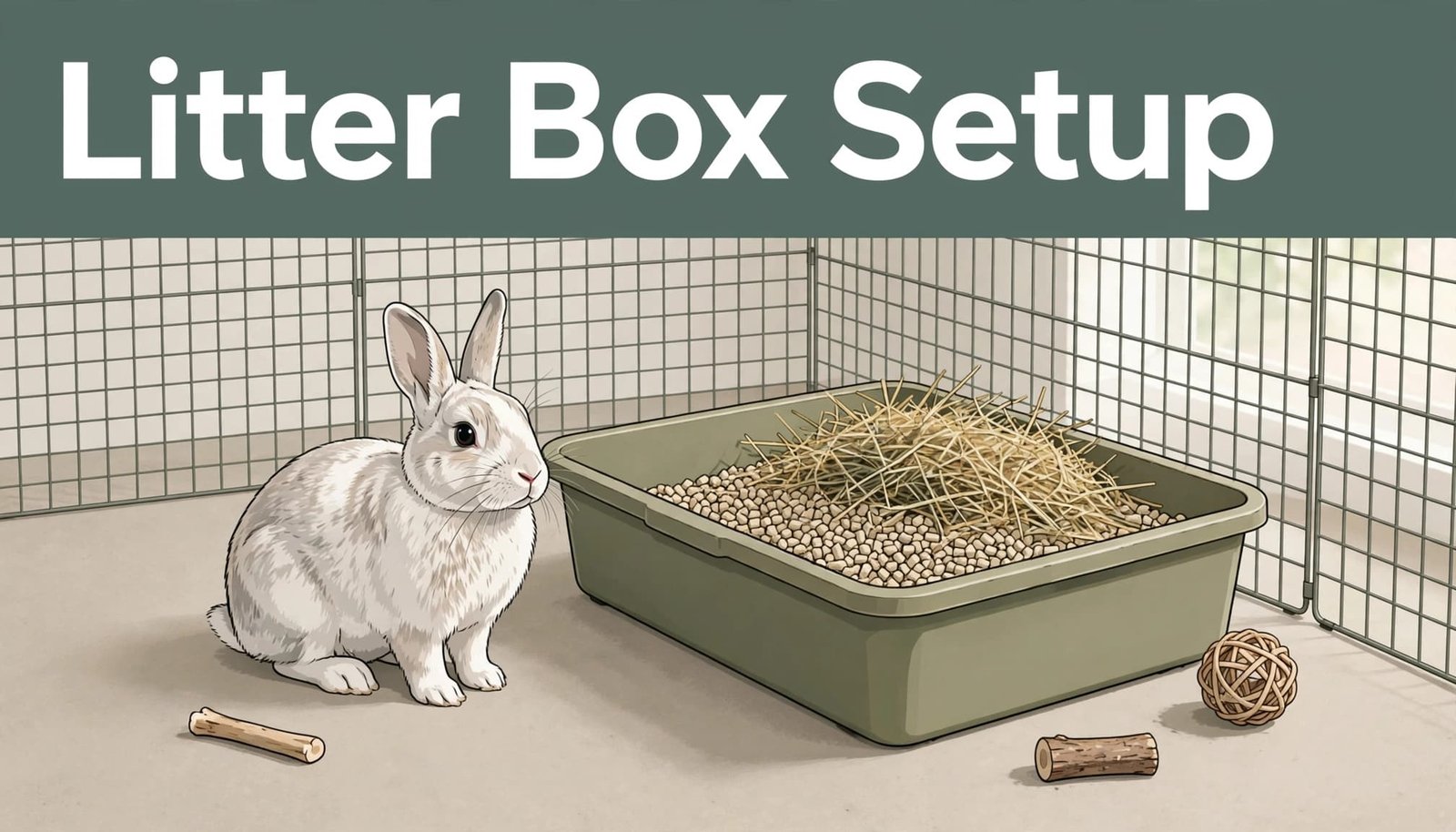
Tiny corner pans may look cute in the pet shop, but many rabbits outgrow them fast. The right litter box size lets your bunny hop in, turn, sit fully inside, and munch hay without hanging over the edge.
A large open cat litter pan often works well. A shallow storage bin or low-sided tray can help larger rabbits and messy diggers.
Pick a roomy box with easy access
For litter box material, choose a solid, washable container that’s easy to clean. High sides can contain kicked litter, but your rabbit still needs a comfortable entrance.
Senior rabbits, small rabbits, and bunnies with sore hocks may need a low-entry box. If your rabbit hesitates at the edge or struggles to hop in, switch to a lower pan.
A large box isn’t wasted space. Many rabbits sit in the litter box to snack on hay or relax.
Use rabbit-safe litter, not cat litter
Choose unscented, low-dust, non-toxic paper-based pellets, yesterday’s news, or compressed wood pellets specifically labeled safe for rabbits.
Don’t use clumping cat litter, clay cat litter, cedar shavings, or scented litter. Best Friends also warns rabbit owners to avoid these products in its rabbit litter training guide.
A shallow layer of rabbit-safe litter is enough. Add fresh hay at one end, then remove any wet or soiled hay each day.
Rabbit Litter Box Training: Step by Step
The easiest way to teach a rabbit to use the box is to begin with a small area. Too much free-roam space too soon can make it harder for a new bunny to find the box.
Urine training and poop training both develop gradually. Your rabbit is learning a new home, new smells, and new rules at the same time.
Step 1: Start with a limited area
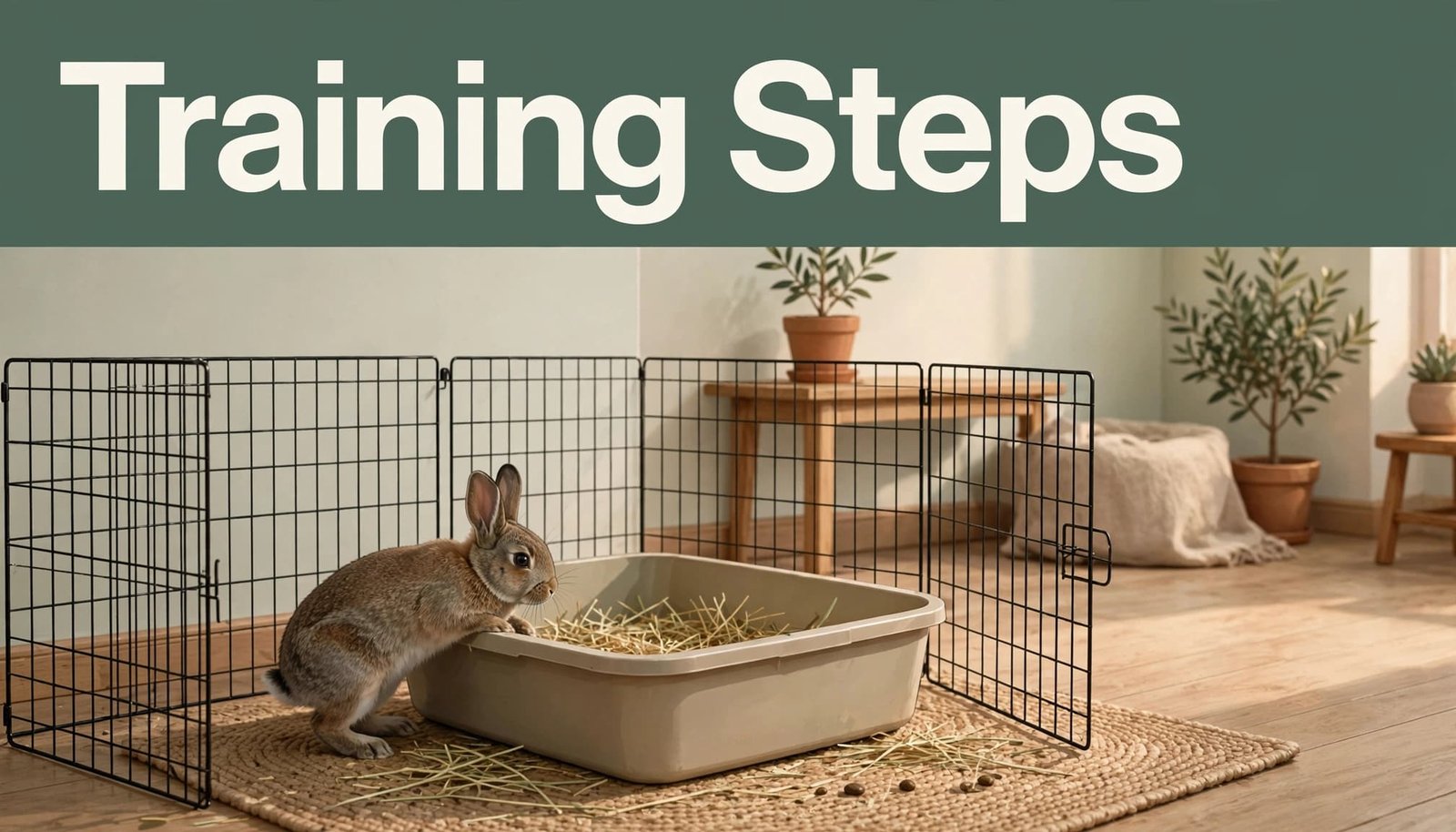
Set up your bunny in an exercise pen or one rabbit-proofed room. Put the litter box in the corner your rabbit has already chosen for peeing.
Add hay, a hiding place, water, and safe chew toys. Keep water far enough from the box that spills won’t soak the litter.
Give your rabbit time to explore. Don’t keep picking them up and placing them in the box. Let them discover it naturally.
Step 2: Move the evidence into the box
If your rabbit pees outside the box, blot the spot with a paper towel. Place the paper towel in the litter box, then clean the floor.
Move stray poop pellets into the box too. The scent helps show your bunny where the bathroom belongs.
Some dry pellets outside the box are common. A few stray poops don’t mean your training has failed.
Step 3: Use quiet praise and small rewards
When you see your bunny use the box, offer a calm “good bunny” and one small rabbit-safe high value treat. Don’t overfeed treats. Hay is still the main attraction.
Never punish accidents. Shouting or chasing can make a rabbit nervous, and a nervous bunny may have more accidents.
Step 4: Open up more space slowly
Once your rabbit uses the box reliably in the pen or first room, increase free roam access one rabbit-proofed area at a time. Add another litter box before your bunny needs it.
If accidents begin again, reduce the space for a few days and return to the last setup that worked. For more simple setup ideas, see these tips on pee pads for rabbits and litter box use.
Keep Litter Box Habits Going
Training doesn’t end when your rabbit has a good week. A clean box and a steady routine help your bunny keep using the right spot.
More litter boxes are not a sign of failure. They are often the easiest answer in a bigger home.
Add boxes where your rabbit spends time
Put an extra box near a favorite nap area, under a table, or in a newly opened room. In a multi-floor home, having a box on each level is usually easier than expecting your bunny to travel far.
Bonded rabbits may share a box, but they can fill it quickly. Start with separate roomy boxes in different corners if one rabbit seems crowded or avoids the box.
Keep the box dry and fresh
Remove wet litter, soiled hay, and extra droppings each day. Fully refresh the box when it becomes damp, dirty, or smelly.
A spare box can be helpful while the main one is washed and drying. For a fuller home-cleaning routine, read how to clean a rabbit cage.
A rabbit may avoid a box that is too dirty, too small, or hard to enter. Check the setup before assuming your bunny is being stubborn.
Troubleshooting Rabbit Litter Training Problems
A few accidents are part of learning. Look for patterns instead of blaming your bunny.
Did the accident happen near a new couch, under a table, or after opening a new room? That spot may need another litter box.
When accidents happen in the same place
Put a litter box directly over the chosen spot if possible. If that won’t work, block access for a while and clean the area well.
Use warm water and a mild rabbit-safe cleaner for everyday messes. A rabbit-safe enzymatic cleanser, such as nature’s miracle, can help with dried urine, while diluted white vinegar works on a plastic box. Rinse well and let the surface dry before your rabbit returns.
Skip bleach, heavy perfumes, and strongly scented sprays around your bunny.
Hormones, changes, and health concerns
Intact rabbits may spray urine or leave territorial droppings, a form of territorial marking, especially in a new room or around another rabbit. Rabbits that are spayed or neutered may show less urine spraying and territorial behavior, but this isn’t an instant cure for every accident.
Talk with a rabbit veterinarian about the right timing for your pet. Special Bunny also recommends veterinary guidance about spaying or neutering rabbits.
A rabbit who suddenly stops using a familiar litter box needs closer attention. Contact your veterinarian promptly if your bunny strains to urinate, dribbles urine, has blood in the urine, or seems uncomfortable. Call promptly if your bunny stops eating or produces fewer droppings, which may signal intestinal blockages.
Rabbit Litter Training FAQ
Can older rabbits learn to use a litter box?
Yes, older rabbits can learn new habits. Baby rabbits are still developing reliable habits, so they may need more time and supervision.
Keep the box close to favorite resting places. A rabbit with arthritis, sore hocks, or limited movement should not have to cross a large room to reach it. Choose a low-entry box if hopping is difficult.
Why does my rabbit leave poop outside the box?
A few dry pellets outside the box are common, especially during exploration or when your rabbit is excited. Move the pellets into the box and keep the area clean.
If droppings suddenly increase around the home, check for a dirty box, a new room, stress, or territorial behavior.
How many litter boxes does my rabbit need?
Start with one box in a small training space. Add boxes as your rabbit gains access to more rooms, favorite hangouts, or another floor.
A bonded pair often does better with at least two roomy boxes. This gives both rabbits a comfortable bathroom option.
Should I put hay inside the litter box?
Yes, many rabbits like hay in one end of the box. You can also place hay in a rack above it.
Another helpful reference can be found at Rabbit.org’s litter training FAQ.
A Cleaner Home Starts With a Simple Routine
To litter train a rabbit, keep the setup roomy, dry, and full of hay. Begin in a small space, clean accidents calmly, and add freedom one room at a time.
Your bunny isn’t being naughty during an accident. They are learning where they feel safe, and patience helps that lesson stick.
A clean, familiar litter box can become one of your rabbit’s favorite places to eat, rest, and feel at home.