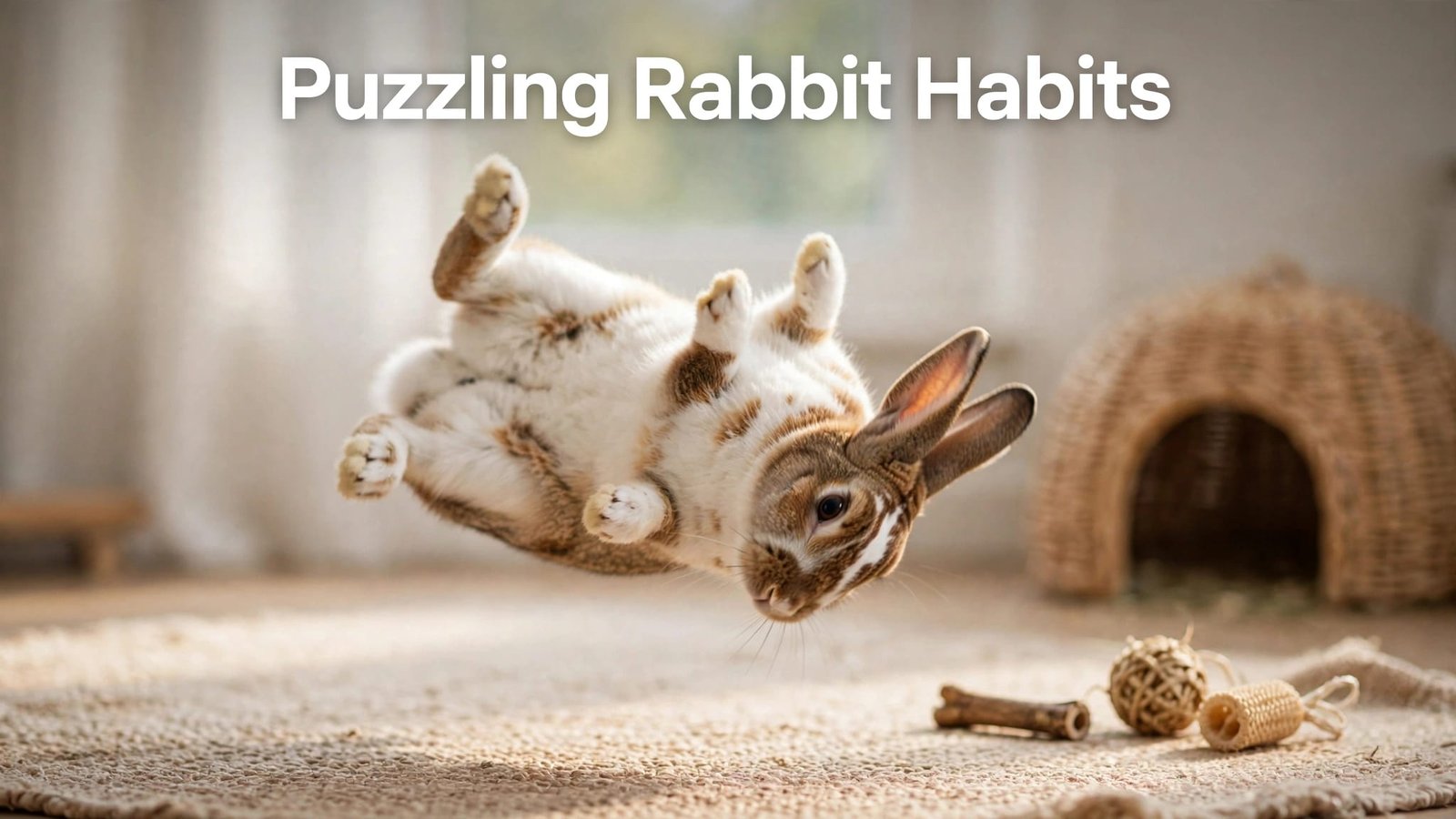
Your new rabbit may have strong opinions about blanket placement and a surprisingly dramatic way of taking a nap. Many rabbit habits that look puzzling at first are ordinary ways your bunny plays, rests, communicates, and explores.
A sideways flop can be reassuring, while a little tooth sound needs more context before you decide what it means. As a new owner, learning your bunny’s usual routine helps you enjoy these moments without overlooking signs of stress or pain.
These seven habits offer a friendly starting point, with practical clues to help you understand what your long-eared friend is telling you.
Rabbit Habits That Puzzle First-Time Owners
Rabbit body language includes movement, posture, sounds, and familiar routines. One action rarely gives you the whole answer, so watch what happens before and afterward.
The seven habits to get familiar with are energetic bursts, dramatic resting, tooth purring, chin marking, digging, chewing, and warning signals. Retreating to a hideout often adds useful context to that last group.
Start by noticing your bunny’s appetite, droppings, activity, and mood. A rabbit who has always preferred watching from a doorway may simply be cautious. A confident explorer who suddenly stays tucked away deserves closer attention.
Ear position helps, but it isn’t a complete answer. The RSPCA rabbit body-language guide describes relaxed ears held close together and facing slightly outward. Ears pressed tightly against the back can indicate worry, especially alongside wide eyes and tense muscles.
Ears resting backward can also accompany comfortable rest. Read the whole bunny rather than judging one ear position.
If you’re still helping a new rabbit settle in, give yourself time to learn these small differences. Trust and familiarity grow through calm, predictable care.
Why your rabbit suddenly zooms, jumps, or flops
Some rabbit behavior looks much more alarming than it feels to your bunny. A sudden sprint followed by a sideways flop can be an ordinary part of a comfortable afternoon.
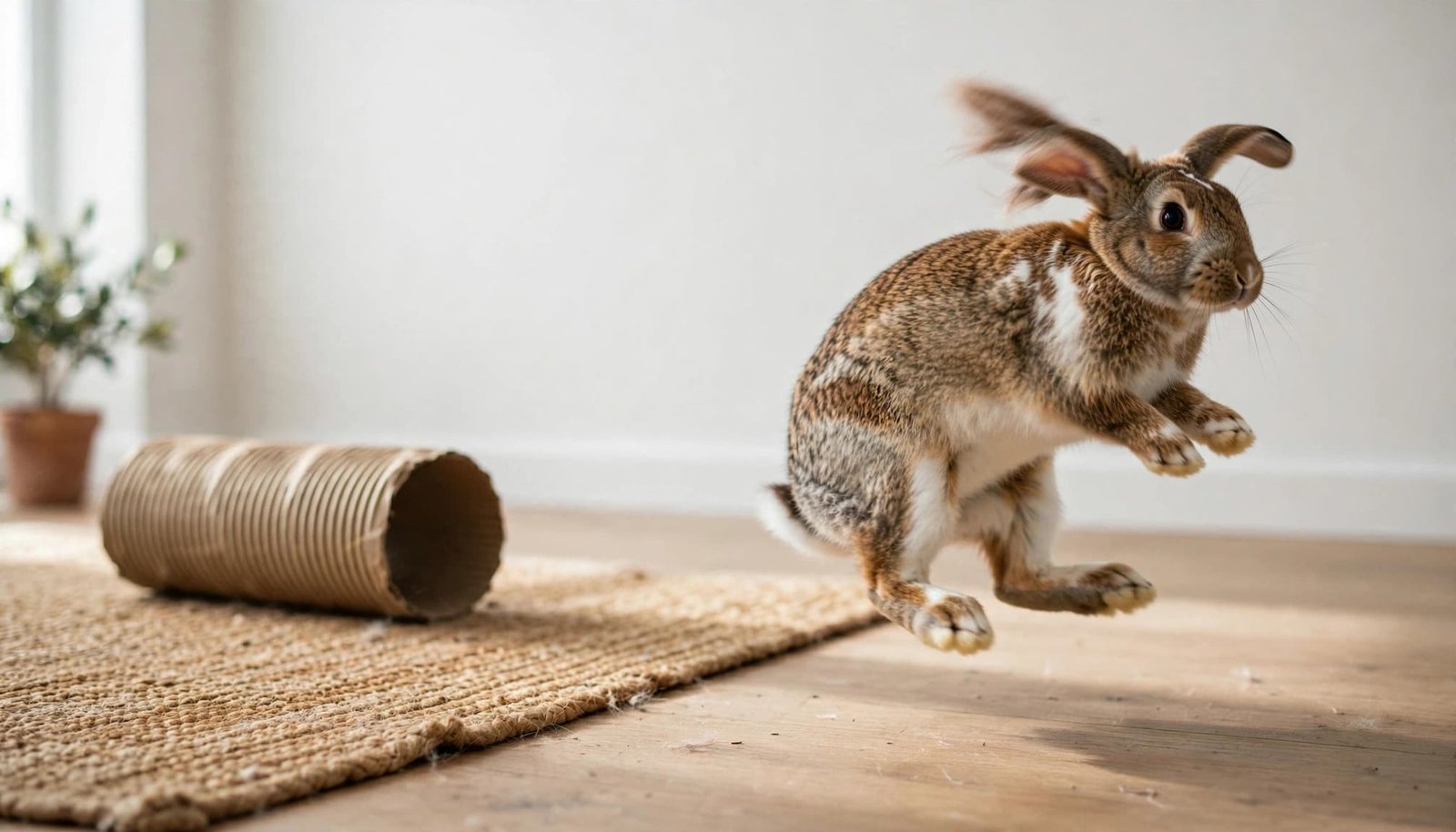
Binkies and zoomies are bursts of happy energy
A binky is a jump into the air with a twist or kick. Zoomies are quick bursts of running, sometimes mixed with binkies, sharp turns, and playful tunnel trips.
You’ll often see these movements when your rabbit feels safe and has room to move. Offer secure footing, open space, and tunnels for active play as simple enrichment. Avoid slippery surfaces and obstacles.
As Rabbit.org explains, rabbits are crepuscular, meaning they’re often most active around dawn and dusk. Your bunny’s busiest moments may arrive while you’re waking up or settling down.
Every rabbit has a different play style. Gentle exploring can be just as normal as enthusiastic laps.
A flop or loaf can mean your bunny feels safe
A relaxed loaf looks like a bunny resting with their feet tucked underneath. During a flop, your rabbit drops onto their side and settles with loose muscles and comfortable breathing.
Check the whole picture. A resting bunny should remain responsive, and ordinary eating and movement should continue between rests.
Freezing looks different. Wide eyes, a rigid body, and tightly flattened ears suggest fear rather than peaceful lounging.
Weakness, trouble breathing, or being unable to get up needs urgent veterinary care. Those signs shouldn’t be mistaken for a happy flop.
What tooth sounds and chin rubbing are telling you
Your bunny has some subtle ways of expressing comfort and familiarity. Tooth sounds and chin rubbing are easy to misunderstand until you know what else to watch.
Soft tooth purring is different from painful grinding
Quiet, gentle tooth chattering is often called tooth purring. During calm social interaction, including petting, you may hear gentle tooth chattering while your rabbit rests with a loose body and soft expression.
It’s usually reassuring when your bunny continues eating, grooming, moving comfortably, and producing normal droppings. Pause occasionally during petting so your rabbit can choose whether to stay.
Loud, forceful grinding can signal pain or illness. Take it seriously when it happens with a hunched posture, reduced appetite, hiding, or low energy.
A soft sound doesn’t rule out pain if your rabbit is also eating less or behaving differently.
Contact a rabbit-savvy veterinarian when grinding is new, persistent, harsh, or paired with other concerning changes. The sound alone can’t tell you the cause.
Chin rubbing is your rabbit’s way of marking things
If your bunny rubs their chin along a toy or chair leg, they’re leaving scent from glands beneath the chin. This ordinary communication helps make objects and places familiar.
You may notice it around favorite resting spots, new toys, or furniture you’ve moved. It doesn’t mean your rabbit is aggressive or needs cleaning.
Our guide to rabbit chin marking covers this habit in more detail. Usually, you can simply let your bunny finish their little inspection.
Why rabbits dig, chew, and rearrange their space
Both are natural instincts. Your bunny needs suitable ways to explore, forage, and gnaw, even when your carpet looks perfectly arranged to you.

Digging is instinctive, even when there is no burrow
Your rabbit may paw at bedding, a rug corner, or a blanket before settling down. Sometimes they’re preparing a resting spot; sometimes digging is simply an enjoyable activity.
A sturdy digging box with rabbit-safe material, such as plain paper, offers safe enrichment. Supervise while your bunny investigates. Remove materials they’re swallowing rather than merely moving or shredding.
Watch blankets carefully, too. A rabbit who paws at fabric may also chew and swallow threads.
You can reward your bunny for choosing the digging box with a small, familiar treat. Clicker training for rabbits pairs a click with a reward and can help you encourage suitable activities without punishment.
Chewing helps rabbits explore and wear down their teeth
Chewing helps your rabbit investigate their surroundings. Their teeth continue growing throughout life, and a suitable diet helps support healthy wear.
Keep unlimited grass hay available. Its fiber supports digestion, while the chewing action helps wear down teeth. Offer rabbit-safe chew items alongside hay, rather than expecting toys to replace it.
Keep electrical cords, cleaners, houseplants, and unsuitable household objects out of reach. Our room-by-room rabbit-proofing tips can help you protect tempting corners without removing every opportunity to explore.
Safe toys can’t treat existing dental problems. Drooling, dropping food, avoiding hay, or eating less calls for veterinary advice.
How to read thumping, grunting, and sudden hiding
A rabbit is a prey animal, so an unfamiliar sound or approach can feel threatening. Thumping and retreating can be fear responses, but context matters.
A thump or grunt is a message, not bad behavior
A rabbit may stamp a back foot to warn of danger or express annoyance. Look for a trigger, such as barking, a dropped object, or someone reaching into their space.
A short grunt can mean your bunny wants distance, particularly if they feel cornered or protective of a familiar area. It can also express annoyance.
Pause, stay calm, and leave a clear path to a hideout. Avoid punishment or repeated attempts to pick your rabbit up.
The RSPCA’s guide to natural rabbit behaviors also emphasizes context. Ears held backward mean something different when the body is comfortable than when they’re tightly pressed against a tense bunny.
Hiding is normal when your rabbit needs a quiet refuge
Your rabbit needs safe hiding places they can choose to enter without being followed. A quiet hideout helps them feel secure after noise, visitors, or unfamiliar activity.
Keep food and water accessible, and allow your bunny to come out at their own pace. Don’t pull them out just to encourage friendliness.
Familiar shyness differs from suddenly hiding much more than usual. If that change comes with less eating, reduced grooming, uncomfortable movement, or fewer droppings, contact your veterinarian.
When a puzzling rabbit habit needs a vet’s attention
Your rabbit can hide discomfort, so small changes matter. You don’t need to diagnose the problem. You need to notice when your furry friend isn’t acting like themselves.
Watch for changes from your rabbit’s usual routine
Each morning and evening, check hay and water intake, litter box output, movement, grooming, and mood. Notice whether your bunny approaches food normally and moves comfortably between familiar spots.
Compare your rabbit with their own baseline. One bunny greets you eagerly; another waits until the room is calm. Neither personality needs changing.
Our daily rabbit care routine can help you build these observations into ordinary feeding and cleaning.
Brief notes or a short video can help your veterinarian understand a change. Record only when doing so won’t delay care.
Know which signs call for prompt veterinary advice
These combinations deserve attention rather than a wait-and-see approach.
| What you notice | What to do |
|---|---|
| Refusing food, or noticeably fewer or no droppings | Contact a rabbit-savvy veterinarian urgently. |
| Loud grinding with low energy, hunching, or persistent hiding | Seek prompt veterinary assessment. |
| Trouble breathing, severe weakness, collapse, or inability to rise | Seek emergency veterinary care immediately. |
A rabbit who stops eating can become seriously ill quickly. Don’t wait until tomorrow for appetite and droppings to return.
A veterinary review of gastrointestinal diseases in rabbits describes gastrointestinal stasis as a common presentation in sick rabbits. Similar outward signs can have different causes, so veterinary assessment matters more than guessing at home.
Getting to know your bunny’s everyday habits
Zoomies, flops, chin rubbing, digging, and warning sounds become easier to understand as you learn your rabbit’s personality. You don’t need to interpret every movement perfectly to provide thoughtful, loving care.
Give your bunny room to play, a quiet place to retreat, and the freedom to decline attention. Respecting those signals helps build trust.
Keep paying attention to sudden changes in eating, droppings, movement, grooming, or mood. Knowing your long-eared friend’s everyday habits helps you enjoy their funny little routines and recognize when they need help.