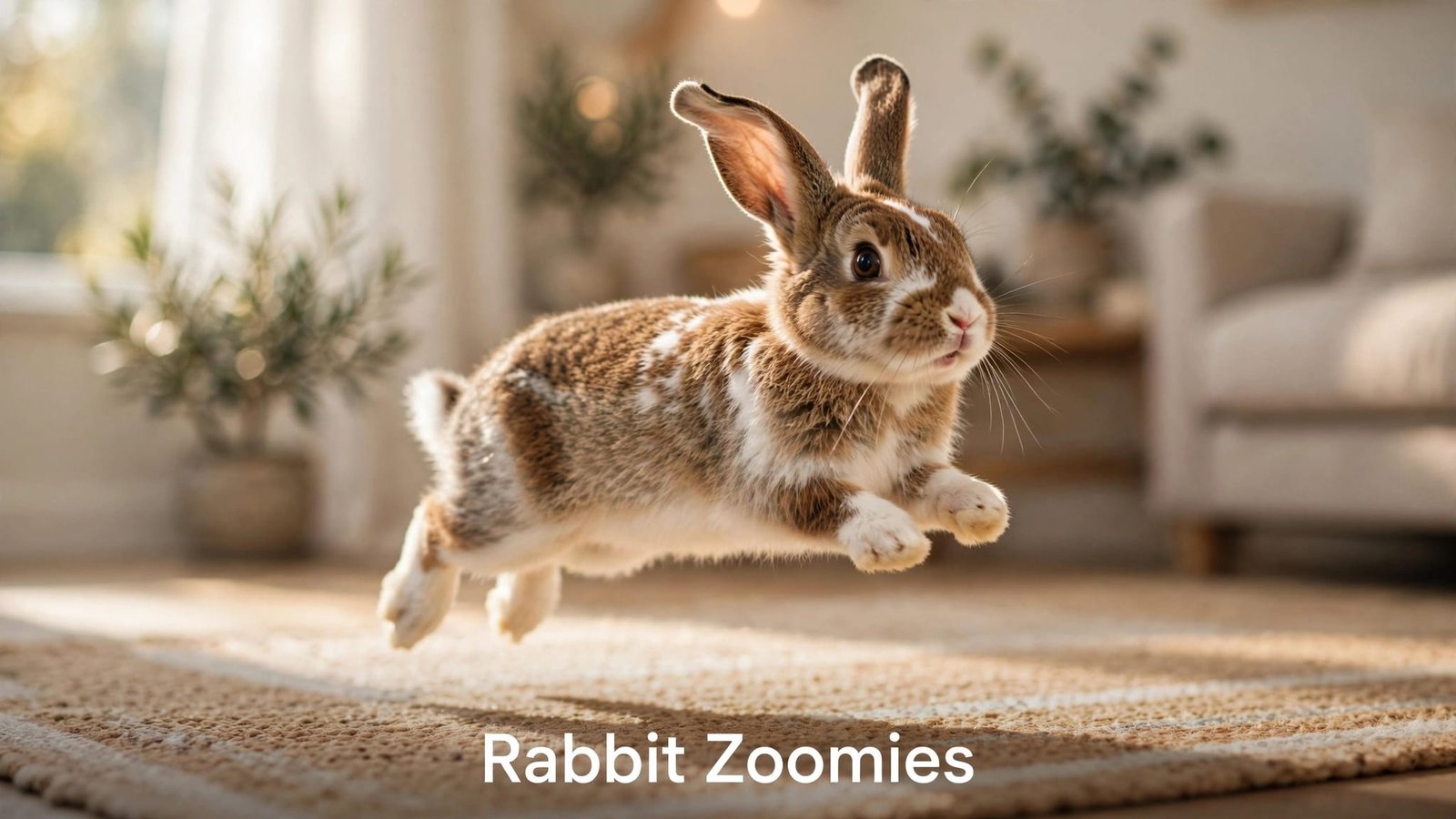
Rabbit zoomies are sudden high-speed sprints, sharp turns, and loops around your home, usually caused by happiness, excitement, or stored-up energy. Your bunny may add a mid-air twist or kick called a binky.
For most bunnies, this is normal, healthy rabbit behavior and a sign of pure joy when they feel safe. Watching how your bunny moves and settles afterward helps you tell playful running apart from fear or discomfort.
Key Takeaways
Your rabbit’s body language matters more than running speed. Loose movements and relaxed recovery usually suggest play. Frantic escape, poor balance, or difficulty breathing need a different response.
During daily playtime, give your bunny clear running space, good traction, and freedom to stop.
Why Do Rabbit Zoomies Happen?
Morning, evening, and food excitement
Rabbits are crepuscular, which means they’re most active around dawn and dusk. Because their crepuscular instincts peak at dawn and dusk, morning laps and evening races fit that natural rhythm. Active spells can happen overnight too, so late-night zoomies don’t automatically mean something is wrong.
After resting in an enclosure, your bunny may release pent-up energy during zoomies when free-roam time begins. Food anticipation can also start the fun. A crinkling pellet bag, rustling hay, or the scent of leafy greens may bring an excited sprint!
Age and companionship make a difference
Young rabbits often zoom more frequently than older rabbits. Senior bunnies may still enjoy a race, but choose shorter runs and longer rests.
Arthritis or painful sore hocks can make running uncomfortable. A sudden drop in activity deserves attention rather than being dismissed as age.
Bonded rabbits sometimes copy each other’s zoomies during shared play. Watch that both seem comfortable, since persistent chasing, biting, or cornering isn’t friendly exercise.
What’s the Difference Between Zoomies and Binkies?
Your bunny can do both during one playful burst. This quick comparison helps you name what you’re seeing.
| Behavior | Main movement | What it looks like |
|---|---|---|
| Zoomie | Horizontal running | Fast laps, sudden acceleration, tunnel charges, and sharp turns |
| Binky | A jump upward | A mid-air twist or a kick of the back legs |
A binky can happen without a running start. Chewy’s explanation of why rabbits binky describes how these playful movements also provide exercise.
You don’t need to count jumps or laps. Your bunny’s usual habits and overall comfort are more helpful.
Is Your Rabbit Happy or Running in Fear?
Look at the whole sequence, including what happened just before the sprint, to tell playful running from panic running. A sudden crash, barking dog, or unexpected approach can trigger an escape response.
- Happy zoomies usually include fluid movement, intentional loops, curious eyes, and ears held comfortably for your rabbit. Your bunny may pause to explore, engage in grooming, or flop afterward.
- Panic running often involves a direct dash toward a dark corner, flattened ears, wide eyes with visible whites, and freezing with rapid breathing afterward.
Ear position alone isn’t enough, especially with lop-eared rabbits. If your bunny shows clear signs of distress, reduce noise, give them space, and leave a familiar hideout accessible. Don’t follow them into their hiding place.
How Can You Make Zoomies Safer Indoors?
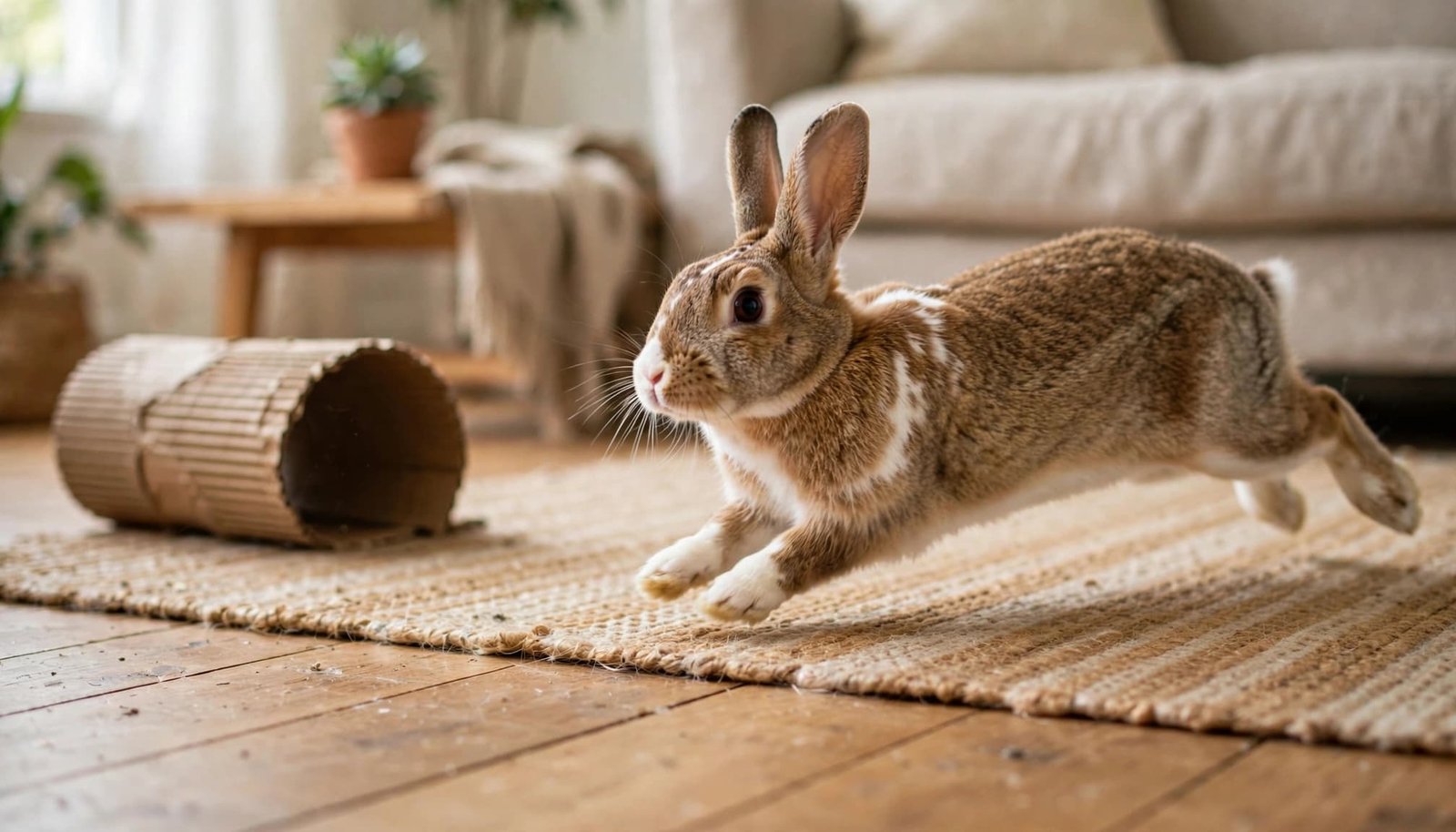
Slippery floors, such as uncarpeted tile or hardwood floors, make sudden sprints risky. Your rabbit has fur-covered feet rather than protective paw pads.
- Secure runner rugs or washable carpets along the running route. Foam mats only suit rabbits who won’t chew and swallow them. Better traction reduces slips and the risk of muscle or joint injuries.
- Block exposed electrical cords, sharp furniture corners, unsafe gaps, and access to unstable heavy objects. Our room-by-room rabbit-proofing guide covers these household hazards.
- Put fabric or cardboard tunnels around the room’s perimeter. Cardboard castles need entry and exit holes, with tape and staples removed. Leave the main route open. Dashing through tunnels provides safe enrichment along the perimeter.
- Keep free-roam playtime predictable. Don’t chase your bunny to encourage running or scoop them up mid-sprint.
Regular movement supports heart health and muscle tone. Exploring tunnels and hideouts also provides mental enrichment and helps reduce boredom-related chewing. Check out our article on How to Choose a Safe Home Base.
When Does Fast Running Need Veterinary Attention?
Loss of balance, repeated collisions with fixed objects, involuntary twitching outside a playful jump, or unusual lethargy need prompt assessment by a rabbit vet. Panting isn’t normal recovery for a bunny. Open-mouth breathing or collapse is an emergency.
Any sign of physical distress, a sudden drop in appetite, or noticeably fewer droppings needs prompt evaluation by your rabbit vet, even if your bunny recently seemed playful. Don’t wait overnight or try to solve it with treats.
Note when the change started and what else looks different. A brief video can help your vet, provided recording doesn’t delay care.
Frequently Asked Questions
Why does my rabbit flop down after zoomies?
A dramatic sideways flop, commonly called flopping, is normal rabbit behavior after active play. Your bunny should remain responsive and breathe comfortably.
Collapse, difficulty breathing, or weakness needs urgent care. Those signs shouldn’t be mistaken for a relaxed flop.
Does a bunny need zoomies to be happy?
No. Some rabbits prefer gentle hopping, exploring, or resting near you. There isn’t a required number of daily zoomies.
Look for other signs your rabbit is happy, alongside normal eating, droppings, and comfortable movement.
Give Your Bunny Room to Enjoy the Run
Rabbit zoomies are usually a cheerful part of life with a comfortable, energetic bunny. Your main job is to provide safe traction and watch their normal patterns.
Let your furry friend run, explore, and rest at their own pace. Familiar body language helps you enjoy the happy laps and notice when something needs care.