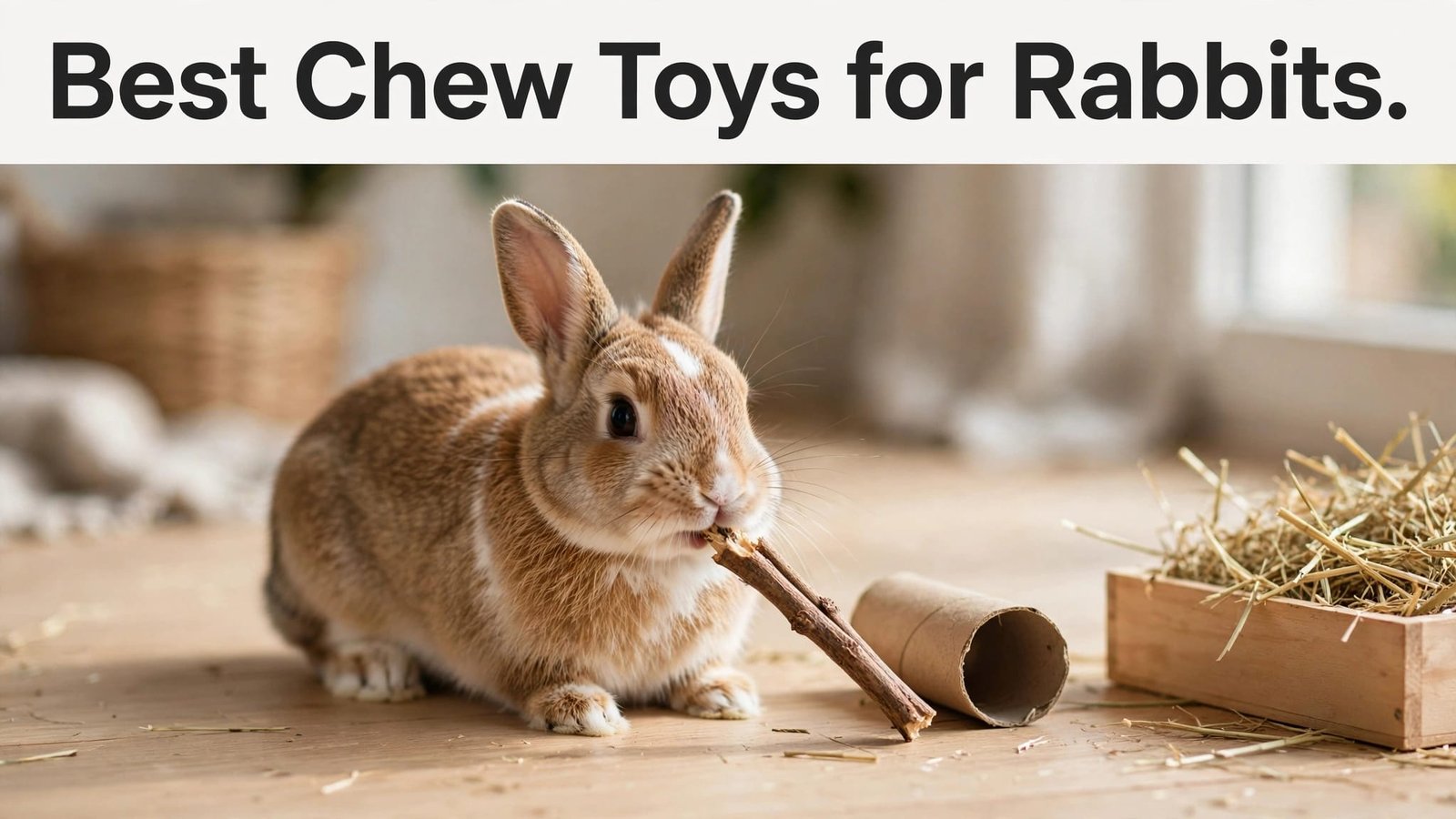
Your rabbit wants to chew, but finding something safer than the rug or a table leg takes thought. The best chew toys for rabbits use simple, untreated materials and suit the way your bunny plays.
However, toys provide extra enrichment, while unlimited grass hay supplies the main daily chewing activity and fiber. A few well-chosen options are enough to start, provided you inspect them and watch how your rabbit uses them.
Start with familiar materials, then let your bunny’s preferences guide what stays in the play area.
Best Chew Toys for Rabbits: Safe Options to Try at Home
A plain cardboard tube may get more attention than an elaborate store-bought toy. Some rabbits enjoy stripping bark from a willow stick; others prefer pushing a ring or pulling hay from a box.
We recommend starting with a few different options rather than buying a large collection. The RSPCA’s rabbit toy guidance connects toys with natural behaviors, including chewing, digging, and jumping. Watch what your rabbit chooses without forcing interaction.
Untreated willow, applewood, and hay toys
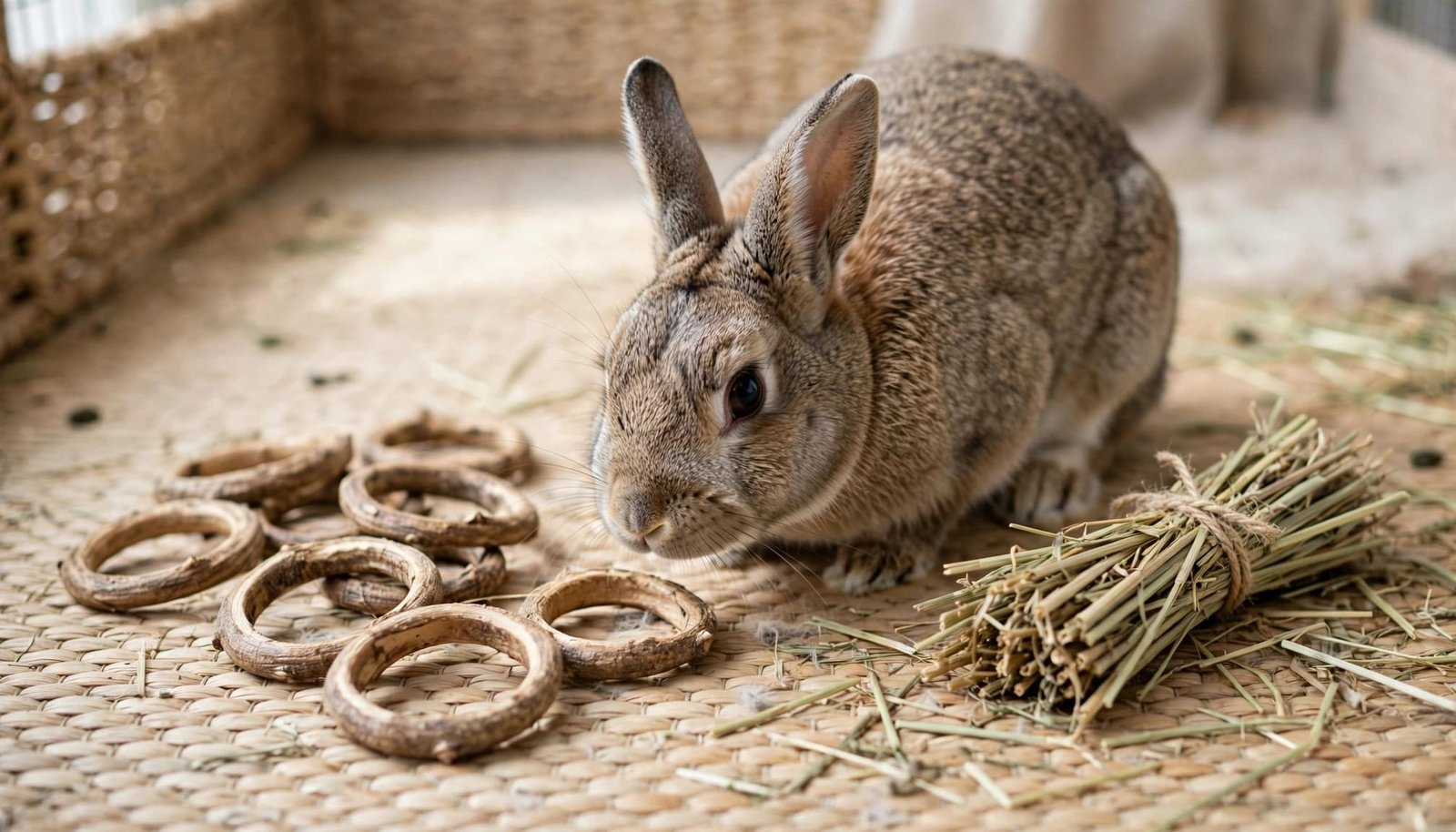
Untreated willow sticks, applewood sticks, and simple willow rings are useful starting points. They offer different textures and shapes, so your rabbit can investigate, nibble, or toss them.
Choose wood without paint, varnish, preservatives, or other chemical treatments. Avoid decorative craft wood and branches of unknown origin. A familiar-looking branch may have been sprayed, and appearance alone doesn’t tell you whether it’s suitable.
For purchased toys, choose clearly identified materials rather than vague descriptions such as “natural wood.” Also inspect the construction. A willow shape with hidden wire, exposed adhesive, or loose attachments introduces hazards beyond the wood itself.
Loose grass hay tucked into an open willow shape can encourage foraging as well as chewing. Plain hay bundles also offer an edible material your rabbit already needs. However, compressed hay sticks and products sold as dental chews need separate consideration because their ingredients and feeding directions vary.
Place a new toy where your bunny usually explores, with enough room to move around it. Then watch the first sessions. Remove wooden pieces if they splinter, develop sharp points, or become small enough to swallow.
Although a little nibbling is expected, wood shouldn’t become a meal. Remove the toy if your rabbit eats noticeable amounts instead of mainly chewing and shredding it.
Plain cardboard tubes and boxes
Plain cardboard can provide inexpensive chewing and exploring opportunities. A clean tube, shallow box, or open cardboard hideout gives your rabbit something to investigate without needing an elaborate setup.
Use cardboard without tape, staples, glossy coatings, or exposed glue. Remove shipping labels and attached fasteners completely. If adhesive remains where your rabbit can reach it, choose another piece.
Packaging that held cleaning products, medicines, or other potentially harmful substances doesn’t belong in the play area. Likewise, skip damp, moldy, heavily printed, or food-soiled cardboard.
A tube loosely filled with your rabbit’s usual hay can make grazing more interesting. Keep the hay easy to reach, and choose a size that won’t trap your bunny’s head. Boxes should have roomy openings and remain stable when your rabbit pushes against them.
Cardboard is enrichment, not food. Shredding a box and swallowing chunks are different behaviors. Oxbow’s guide to chew materials discusses suitable options, including cardboard, alongside the importance of hay.
If your rabbit eats noticeable amounts of cardboard, remove it and ask a rabbit-savvy veterinarian for advice. There isn’t a useful universal allowance for cardboard eating. Your bunny’s behavior determines whether that item remains a suitable toy.
Replace a cardboard toy once urine, water, or heavy chewing leaves it soggy or unstable.
How Rabbit Chew Toys Support Teeth, and Why Hay Matters More
Rabbit teeth grow throughout life, including the back teeth that grind food. Long strands of grass hay encourage repeated chewing and supply fiber for healthy digestion.
Chew toys offer another outlet for natural behavior, but their role has limits. A rabbit can enthusiastically chew wood and still have dental disease.
A rabbit that chews toys but starts avoiding hay may have mouth pain. Offering harder toys won’t correct the problem.
Toys cannot prevent every dental problem, treat existing disease, or replace a hay-based diet.
Keep fresh grass hay available all day
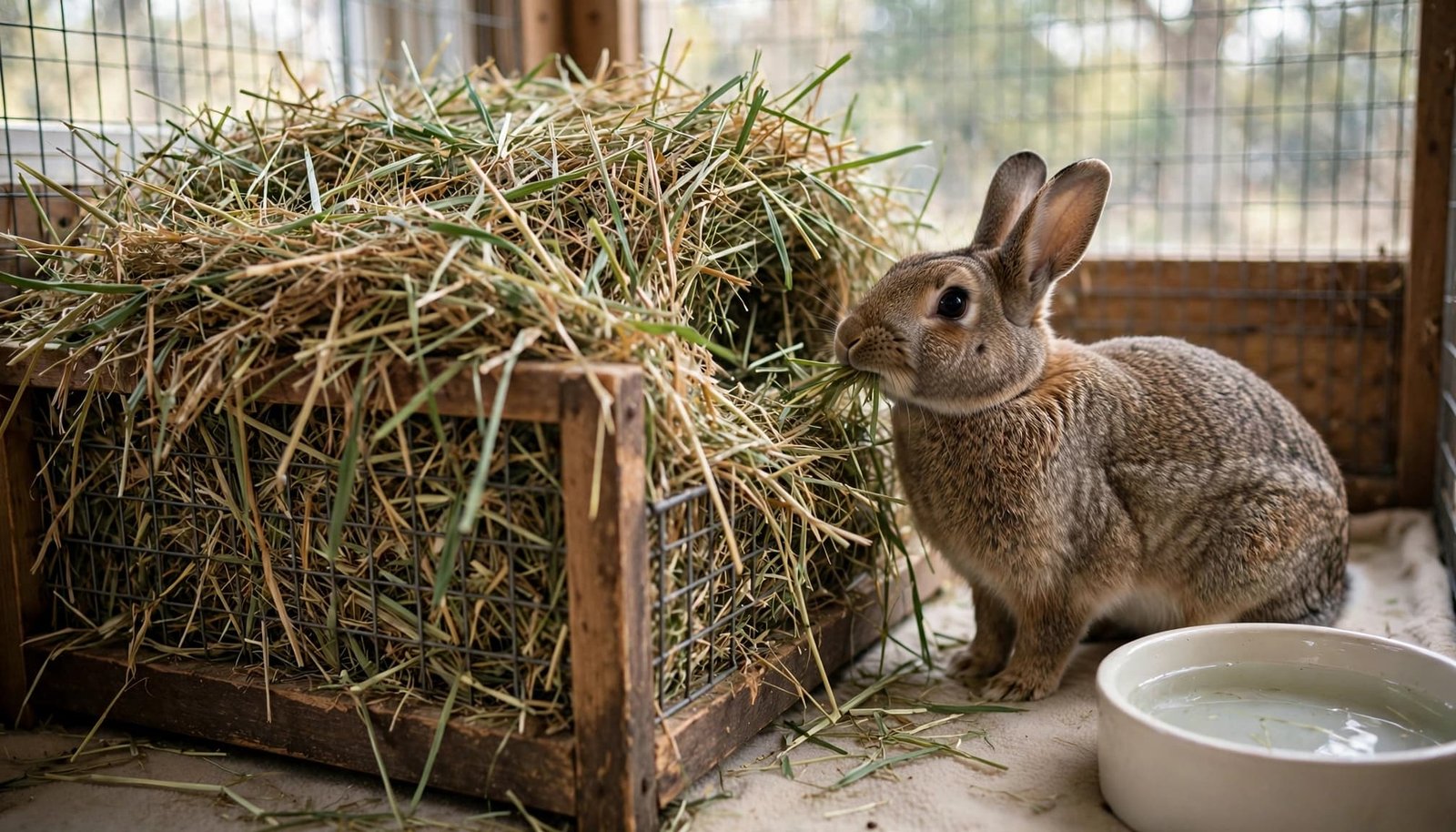
Timothy, orchard grass, and meadow hay are suitable grass-hay choices. Keep hay available throughout the day and night, with fresh water close by.
Clean, dry hay matters more than a complicated feeding arrangement. Store it away from moisture, remove soiled portions, and refresh the supply regularly. A feeder or clean hay area beside the litter box can make grazing convenient.
Choose an arrangement your rabbit can reach comfortably without squeezing through narrow openings. Hay offered through a toy should supplement the main supply, not make every mouthful a puzzle.
Also, watch whether your rabbit is eating the hay. A full rack doesn’t prove adequate intake. Notice the amount disappearing, your bunny’s usual grazing habits, and any changes in droppings.
Some rabbits prefer a different grass hay’s texture or scent. Offering another suitable type can help you learn that preference. However, a sudden refusal to eat hay deserves veterinary attention, especially when your rabbit previously ate it readily.
Drooling, dropping food, choosing softer foods, or losing weight can accompany dental trouble. A rabbit that stops eating or produces fewer droppings needs prompt veterinary care. Don’t wait for a chew toy to restore the appetite.
Use dental chews only with veterinary guidance
Rabbit-labeled dental chews and hay-based sticks are optional products. They aren’t a necessary replacement for loose grass hay, and the word “dental” doesn’t establish that a product suits your rabbit.
Ask a rabbit-savvy veterinarian before introducing them, especially if your bunny has known dental disease or difficulty eating. Ingredients and texture matter, as does the rabbit’s current diet.
A compressed stick may contain more than hay. Read the ingredient list rather than assuming every green or brown chew is equivalent to ordinary grass hay. Avoid using a sweetened chew to persuade a rabbit with a poor appetite to eat.
If your veterinarian recommends a product, follow the advised portion and keep unlimited grass hay available. Also watch whether the chew reduces interest in hay or causes your rabbit to break off large pieces.
Existing dental problems require an examination and treatment plan. A harder chew can’t realign teeth, remove painful points, or address tooth-root disease.
Visible front teeth also tell only part of the story. Rabbits can have problems with their back teeth that owners can’t safely inspect at home. Don’t force your bunny’s mouth open or attempt to trim teeth yourself.
Choose and Maintain Rabbit Chew Toys Without the Hazards
The same toy can work well for one rabbit and poorly for another. A gentle nudger may leave a tube intact, while a determined chewer tears it apart quickly.
Choose safe chew toys for rabbits around their actual habits. Inspect each new item before offering it, then supervise until you understand how your bunny uses it.
Check size, construction, and chew behavior
Look for sturdy construction, smooth edges, and a shape your rabbit can move without becoming trapped. Small parts, narrow openings, and fragile attachments can make an otherwise appealing toy unsuitable.
Leave items with these hazards out of the enclosure:
- Loose strings or dangling cords can come free during chewing.
- Detachable bells, beads, or decorative pieces may be swallowed.
- Brittle plastic can break into sharp fragments.
- Unknown coatings or exposed adhesive make the material harder to assess.
A pet-store label doesn’t replace inspection. Pull gently on attached parts before play, and look inside openings where fasteners or rough edges may be hidden.
During the first sessions, observe whether your rabbit nudges, tosses, shreds, or swallows the material. Remove anything they pull apart into hazardous pieces or persistently try to eat. A safe material doesn’t make every size or design safe.
Place toys in a rabbit-proofed area with secure footing and room to hop. Block access to electrical cords, unsafe plants, and household objects that your bunny could chew. An approved toy won’t reliably stop a rabbit investigating nearby hazards.
Keep hay and water within easy reach during play. If your rabbit ignores an item, try another safe shape or location. There’s no need to force interest or keep an unsuitable toy because it was expensive.
Inspect toys often and refresh play options
Make toy inspection part of refreshing hay and water. This keeps the check tied to an existing routine rather than leaving damaged items unnoticed.
Examine wood for splinters, cardboard for soggy edges, and woven toys for loose strands. Also look for urine contamination, trapped food, and pieces that have become small enough to swallow.
Discard damaged or dirty disposable toys. For items designed to be washable, use mild soap, rinse thoroughly, and allow them to dry completely before returning them. Don’t soak cardboard or try to rescue moldy material.
Rotation can renew interest without filling the enclosure with clutter. Keep a few favorites available, then swap an item when your rabbit loses interest. The House Rabbit Society’s toy ideas include play beyond chew sticks, such as objects rabbits can toss.
Your bunny may enjoy moving a willow ring more than gnawing it. That still counts as enrichment. Keep observing the activity rather than judging a toy only by the bite marks it collects.
If your rabbit may have swallowed plastic, string, or another harmful item, contact a veterinarian promptly. Describe what the item was and roughly how much appears missing. Keep the remaining toy or packaging to help identify the material.
Don’t wait for the piece to appear in droppings or for symptoms to develop. Reduced appetite, fewer droppings, unusual quietness, or signs of pain make the situation more urgent.
A Few Safe Toys, With Hay at the Center
The best chew toys for rabbits are simple, suited to your bunny’s habits, and removed when wear makes them unsafe. Untreated willow or applewood, plain cardboard, and hay-based enrichment offer practical starting points.
However, fresh grass hay remains essential for everyday chewing and digestion. Toys add interest without replacing that daily need.
Start small, keep the options your rabbit enjoys, and inspect them regularly. If eating habits change or dental concerns appear, seek veterinary advice rather than adding another chew.