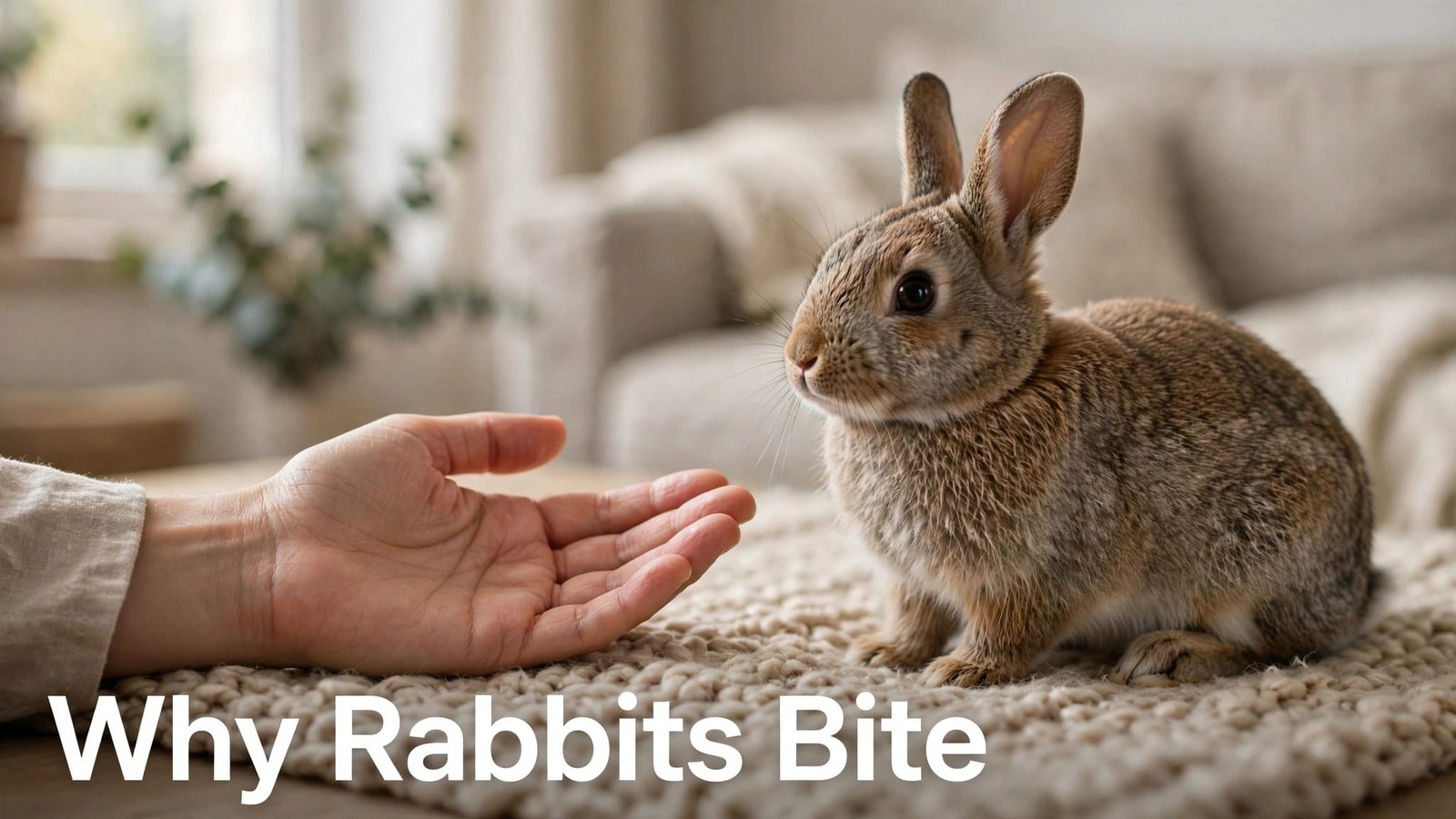
A rabbit bite can hurt, surprise you, and leave you wondering what went wrong. This behavior often comes from fear, discomfort, territorial behavior, or an attempt to communicate.
The safest response is to pause and give your rabbit space, then look at what happened before the bite. If their behavior changed suddenly, pain or illness needs attention too.
First, learn the difference between a small nip and a skin-breaking wound.
Key Takeaways
- Rabbit bites can come from communication, fear, food smells, territorial behavior, hormones, or pain. Look at the situation and your rabbit’s body language to identify the trigger.
- Pause the interaction and give your rabbit space. Change the trigger, reward calm behavior, and avoid punishment or forced handling.
- Sudden or persistent biting can point to pain or illness. Contact a rabbit-savvy veterinarian, and seek urgent advice if your rabbit stops eating or producing droppings.
- Wash any skin-breaking bite promptly, cover it with a clean bandage, and seek medical care for deep wounds, ongoing bleeding, or signs of infection.
Is It a Nip or a Skin-Breaking Bite?
A nip is usually a quick pinch and release. It doesn’t break the skin, though it may leave a tiny bruise smaller than a pencil eraser.
A stronger bite can puncture or tear skin and draw blood. Rabbit.org describes bites that leave two marks roughly an inch apart, but spacing varies. Any broken skin needs wound care, regardless of what you call the injury.
Calling it an aggressive bite doesn’t establish motive. Fear or pain may still be involved, and the injury alone doesn’t explain your rabbit’s feelings.
Watch the whole interaction and your rabbit’s body language. Lunging, a tense body, flattened ears, repeated attacks, or grunting can indicate fear or aggression. A gentle pinch after nudging your ankle may be communication.
Rabbit.org’s guidance on why rabbits use biting explains how context changes the meaning.
A skin-breaking bite needs first aid even if your rabbit was frightened, playful, or mistaken about your fingers.
Common Causes of Rabbit Biting
Your rabbit’s surroundings and your actions often provide the biggest clues.
Communication and attention
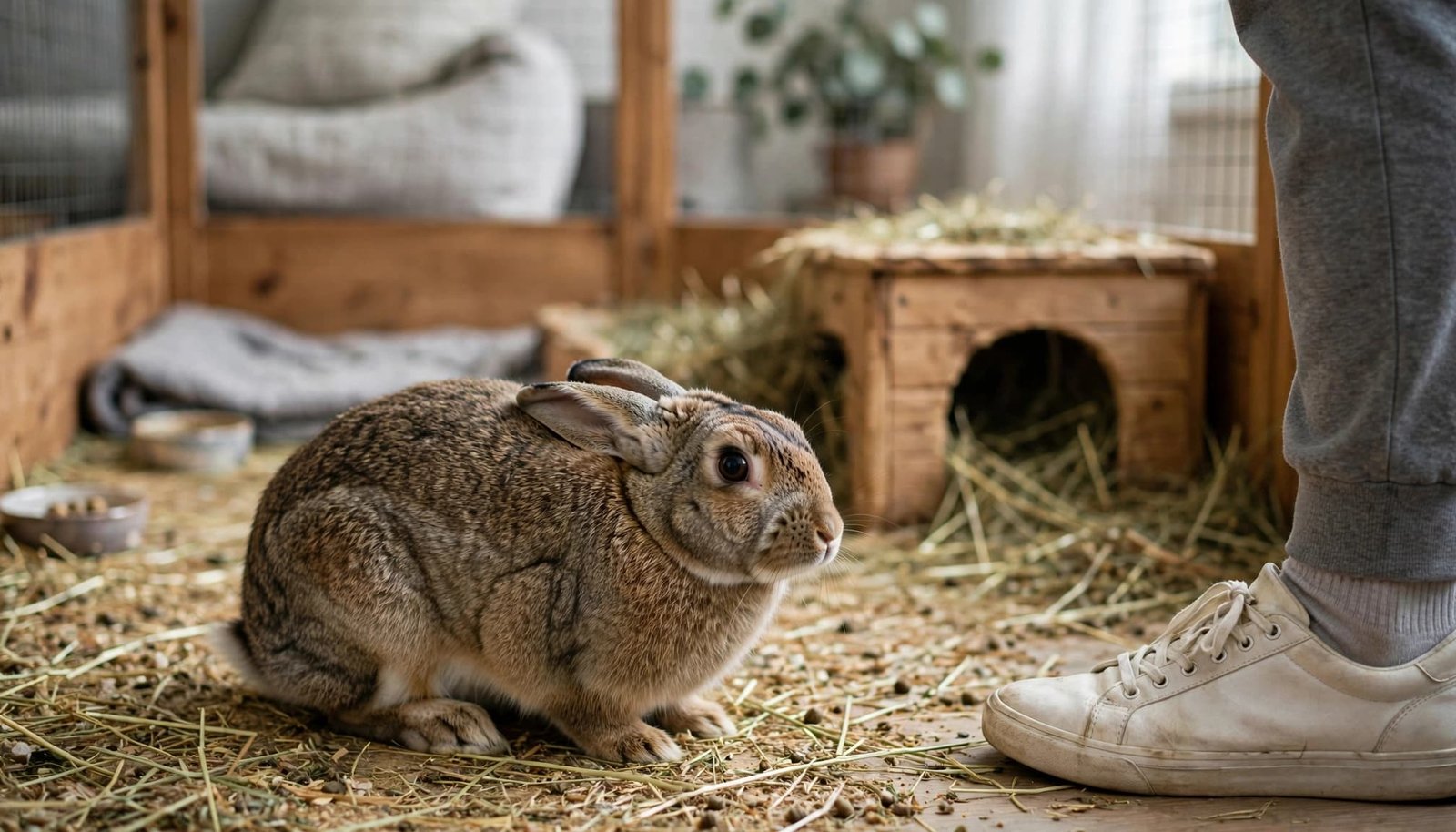
Bunnies may nip to ask for attention, request more room, or say they’ve had enough petting. A rabbit nudging your feet might want you to move.
Best Friends explains these signals in its rabbit body-language guide. Respond before a nip when possible. Move your foot after a clear nudge, or pause petting when your bunny turns away.
Boredom can lead a rabbit to learn that nipping gets an immediate reaction. Offer regular interaction and suitable activities, then reward calm approaches. You don’t need to ignore distress or tolerate repeated nipping.
Fear, nervous nibbling, and food smells
Fear may prompt a rabbit to nip while being held, asking to be put down. This response is often stronger when their feet leave secure ground.
Don’t discipline fear-driven nibbling. Thick clothing can protect you during necessary handling, but floor-level interaction is better for everyday bonding. Build comfort gradually rather than repeatedly lifting a frightened bunny.
Rabbits have side-facing eyes and a small blind spot directly in front of their face. They use scent to investigate nearby objects. Fingers smelling of banana, raisins, or pretzels can be mistaken for food.
Wash your hands after handling food. Keep fingertips away from your rabbit’s mouth, and place treats down if hand-feeding leads to accidental nips.
Why Rabbits Bite During Feeding or Mounting
Biting around an enclosure or another rabbit often has a different cause from biting during petting.
Protecting food, litter boxes, and living space
Some rabbits are territorial about their pen, food bowl, or litter box. Reaching into that space can trigger grunting, lunging, or a nip.
Rabbits who aren’t spayed or neutered may be especially possessive of their litter box. Rabbit.org’s guidance on rabbit aggression connects hormonal behavior with circling and other territorial actions.
Let your bunny come out before cleaning or refilling supplies. Follow a predictable routine instead of pushing past a warning. Don’t withhold hay or water as a response to guarding.
For a relaxed rabbit who already enjoys touch, gentle forehead strokes while you set down food may help. Don’t try this with a tense or lunging bunny.
Hormones and mounting bites
During mating-related mounting, a rabbit may grip loose fur at the back of another rabbit’s neck. This grip isn’t necessarily an aggressive attack.
This behavior can also occur during bonding. Keep bonding sessions supervised, and stop head contact immediately because the rabbit underneath can injure the other’s genitals. Repeated attempts, distress, or forceful gripping need intervention.
Never put bare hands between fighting rabbits. Use a rigid barrier, such as a large dustpan, to separate them without striking either bunny.
Spaying or neutering can reduce hormone-driven behavior. A rabbit-knowledgeable veterinarian should perform the procedure. Improvement isn’t immediate, and learned fear or guarding may still need patient care.
Sudden Biting: When Your Rabbit Needs a Vet
A normally friendly rabbit who suddenly bites may be uncomfortable or unwell. Dental disease, sore feet, arthritis, an injury, or urinary problems can make ordinary touch painful.
Contact a rabbit-savvy veterinarian promptly if biting appears alongside reduced appetite, fewer or smaller droppings, drooling, weight loss, hiding, limping, or a hunched posture.
Loud teeth grinding, difficulty urinating, or repeated reactions when one body area is touched also deserve attention. Our guide to recognizing rabbit pain signs covers these changes in more detail.
Not eating or producing droppings needs urgent veterinary advice. Don’t wait for your rabbit to look seriously ill. Breathing difficulty, collapse, or severe weakness requires emergency care.
Even without other obvious symptoms, arrange an examination for sudden, persistent, out-of-character biting.
Keep your bunny comfortable while arranging help. Avoid repeatedly pressing the painful area, forcing their mouth open, or trying to trim their teeth. Never give human pain medicine unless a veterinarian prescribes it.
What To Do if a Rabbit Bite Breaks the Skin
Put your rabbit somewhere secure without chasing or punishing them. Then care for your injury.
Clean and cover the injury
For a minor skin-breaking bite:
- Wash immediately with soap and warm running water for at least 30 seconds. Rinse thoroughly; don’t treat this minimum as enough cleaning for a deep or dirty injury.
- If bleeding continues, apply steady pressure with a clean cloth or sterile gauze for 5 to 10 minutes. Avoid repeatedly lifting it to look.
- Once bleeding stops, apply a thin layer of antibiotic ointment if tolerated, then cover the injury with a clean bandage. Change it daily and whenever it’s wet or dirty.
Mayo Clinic’s animal-bite first-aid advice supports washing, antibiotic ointment, and a clean covering.
When you need medical care
Seek medical care if bleeding hasn’t stopped after 10 minutes of direct pressure. Severe bleeding, deep punctures, torn skin, numbness, or difficulty moving the affected area needs urgent assessment.
A bite on the hand, face, or near a joint also deserves prompt medical advice. Tell the clinician if your tetanus vaccination is outdated or uncertain.
Watch closely over the next 24 to 48 hours for increasing redness, swelling, warmth, pain, or pus. Red streaks, severe throbbing, or fever need urgent care. Don’t wait for that monitoring period to end if symptoms appear earlier.
How To Stop Rabbit Biting Safely
Changing the trigger usually helps more than correcting a bite afterward.
- Pause the interaction. Move your hand away calmly when safe. If you’re holding your rabbit, support their body and hindquarters, then lower them securely. Never drop them or let them leap.
- Identify the pattern. Note whether a nip happens during petting, lifting, feeding, cleaning, or contact with another rabbit. Include health changes in your observations.
- Change the setup. Clean while your bunny is outside the pen. Shorten petting sessions, wash food smells from your hands, and avoid unnecessary lifting.
- Reward comfortable behavior. Use positive reinforcement with gentle praise or a tiny rabbit-safe food reward when your bunny approaches calmly. Reward an alternative, such as sitting nearby, rather than offering food immediately after a bite.
- Keep interactions easy. End before your rabbit becomes tense. Repeat brief, pleasant sessions and track whether warnings and nipping become less frequent.
Some older rabbit-care advice recommends a loud “eeeep” or high-pitched yelp followed by “No Bite.” Repeating “No Bite” or adding another yelp can frighten rabbits, so we recommend calm withdrawal and changing the trigger instead.
Never use physical discipline: don’t hit, tap the nose, pin the head down, shout, or shake noisy objects at your bunny. These actions can worsen fear and cause serious injury to both rabbit and handler.
There isn’t a fixed recovery time. A food-scent mistake may resolve quickly, while handling-related fear can need weeks of patient work. Our advice on building trust with shy rabbits can help with that slower process.
Help Your Bunny Feel Safer Every Day
Give your rabbit room to hop, secure footing, and a hideout where nobody reaches in to grab them. Sit nearby and let your bunny choose to approach. If they grunt, give them space instead of forcing contact.
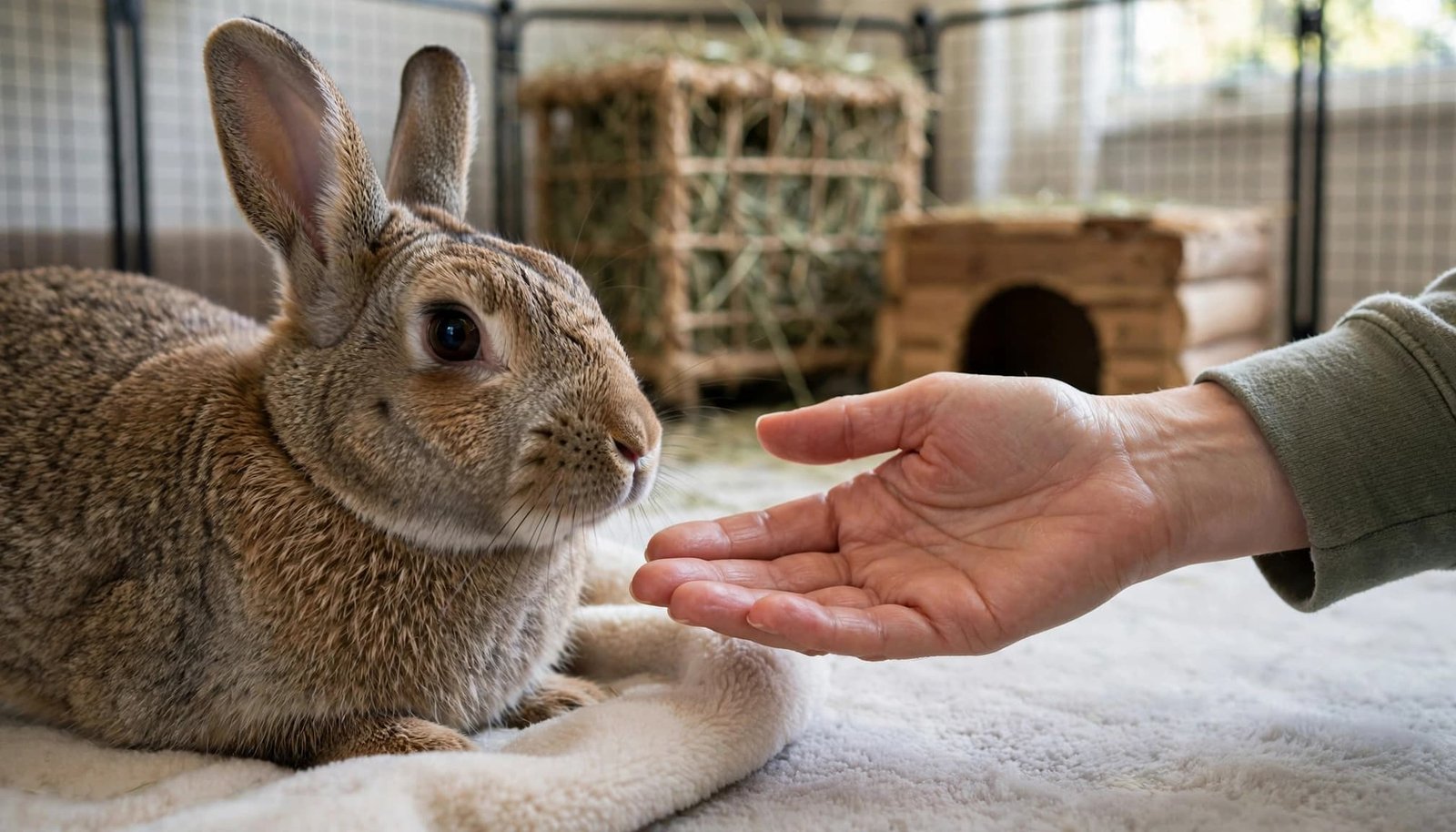
When offering touch, keep your hand flat, palm down, with relaxed, slightly spread fingers. Approach slowly within your rabbit’s view. Let them investigate before gently touching their forehead, if they welcome it.
Thick gloves can add protection during necessary care, but they aren’t bite-proof and don’t make forced contact safe. Supervise children and teach them to stay low, speak softly, and avoid chasing.
Boredom needs practical outlets. Provide hay, safe chew items, tunnels, and digging opportunities. Our safe rabbit toy ideas can help you choose suitable options. Inspect toys often and remove loose strings, detachable pieces, or damaged materials.
A compatible companion can support your rabbit’s wellbeing. A neutered opposite-sex pairing often works well, but bonding needs careful supervision. Don’t place an unfamiliar rabbit straight into your bunny’s territory as a quick fix.
FAQs About Rabbit Biting
Why does my rabbit bite when I pet her?
She may dislike the area you’re touching, feel cornered, or want the session to stop. Pause and let her choose whether to return. New sensitivity, especially in one body area, needs veterinary advice.
Does a rabbit bite hurt?
Yes. A small rabbit bite can feel like a pinch, while a hard one can cause painful punctures or tearing. Rabbits have sharp teeth, so treat any broken skin as an animal-bite wound.
Does biting mean my rabbit dislikes me?
A bite doesn’t tell you how your rabbit feels about you overall. Look at the situation, her body language, and her health. Respecting warnings and making interactions comfortable helps your bunny feel safer around you.
A Calmer Response Helps Your Rabbit Feel Safe
A change in your bunny’s behavior is a reason to look closely at their comfort, surroundings, and health. Understanding the trigger helps you choose a safer response.
Care for broken skin promptly, take sudden behavior changes seriously, and keep handling gentle. With clear routines and patient care, you can protect yourself while helping your long-eared friend feel more secure.