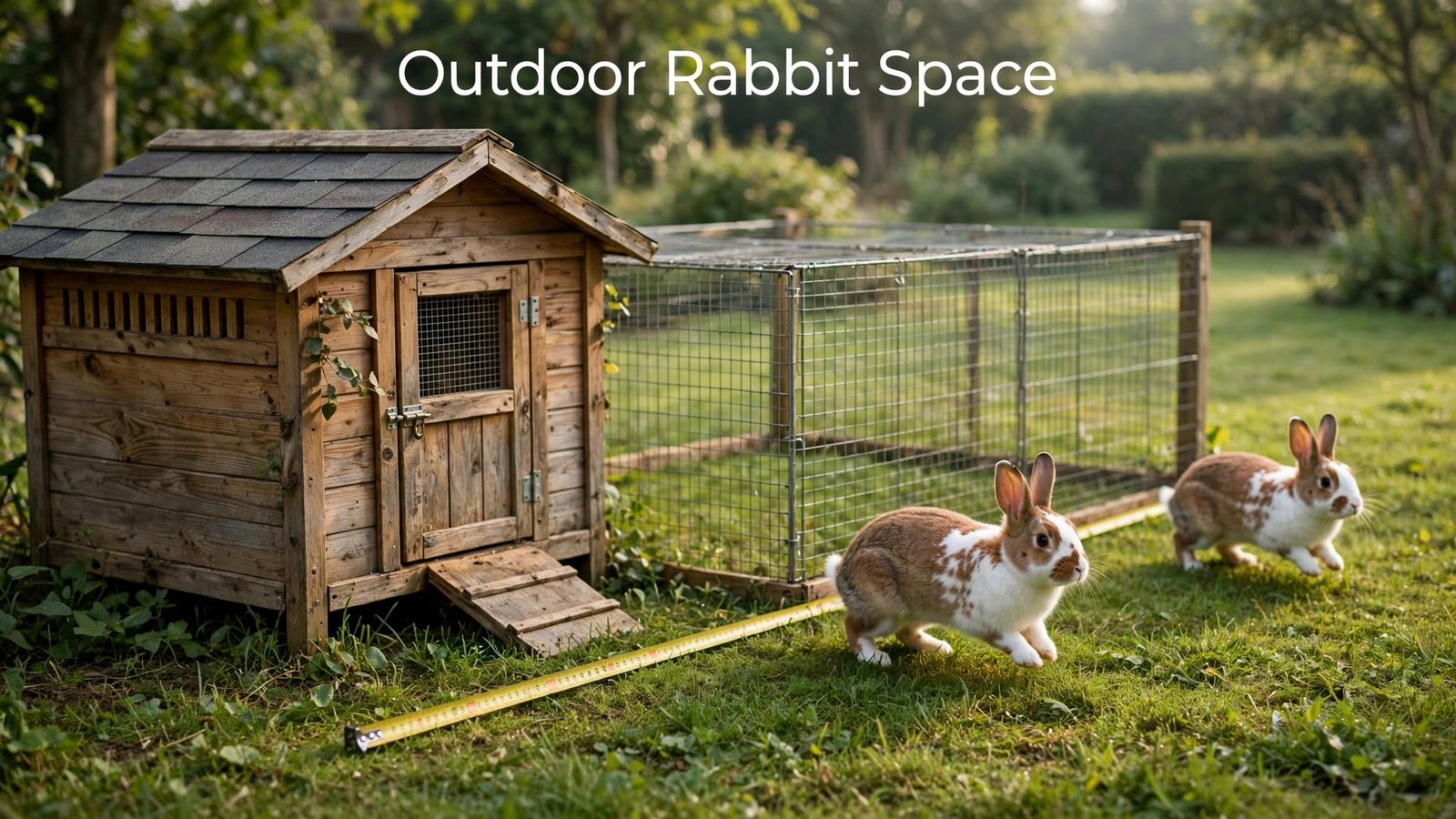
Your rabbit needs enough continuous, usable space to stretch out, stand upright, turn comfortably, and take several uninterrupted hops. For two medium-sized rabbits, a practical minimum planning reference is 3 by 2 meters, with about 1 meter of height.
A rabbit hutch alone isn’t a complete full-time home. Your bunny also needs a connected run that they can reach comfortably as part of their living area.
Start with the overall dimensions, then look closely at how much room remains once the enclosure is furnished.
Key Takeaways
- For two average-sized rabbits, use a connected living area of at least 3 by 2 meters, with about 1 meter of height, as a planning reference.
- Count space your rabbits can reach and use together. Separate compartments and upper levels don’t replace a roomy, continuous main floor.
- Measure the enclosure’s interior and account for hay, water, a litter box, hideouts, ramps, and fixed compartments when checking the usable floor area.
- Keep the route between the shelter and run clear, with comfortable access, supportive footing, and enough room for cleaning and routine care.
Rabbit Enclosure Outdoor Sizing: How Much Room Does a Pair Need?
A useful size reference gives you somewhere to begin, but the layout matters too. Your rabbit needs room they can use throughout their living area, rather than a small base with occasional access to somewhere larger. If an exercise pen is part of the setup, connect it so your rabbits can use it as part of their continuous living area.
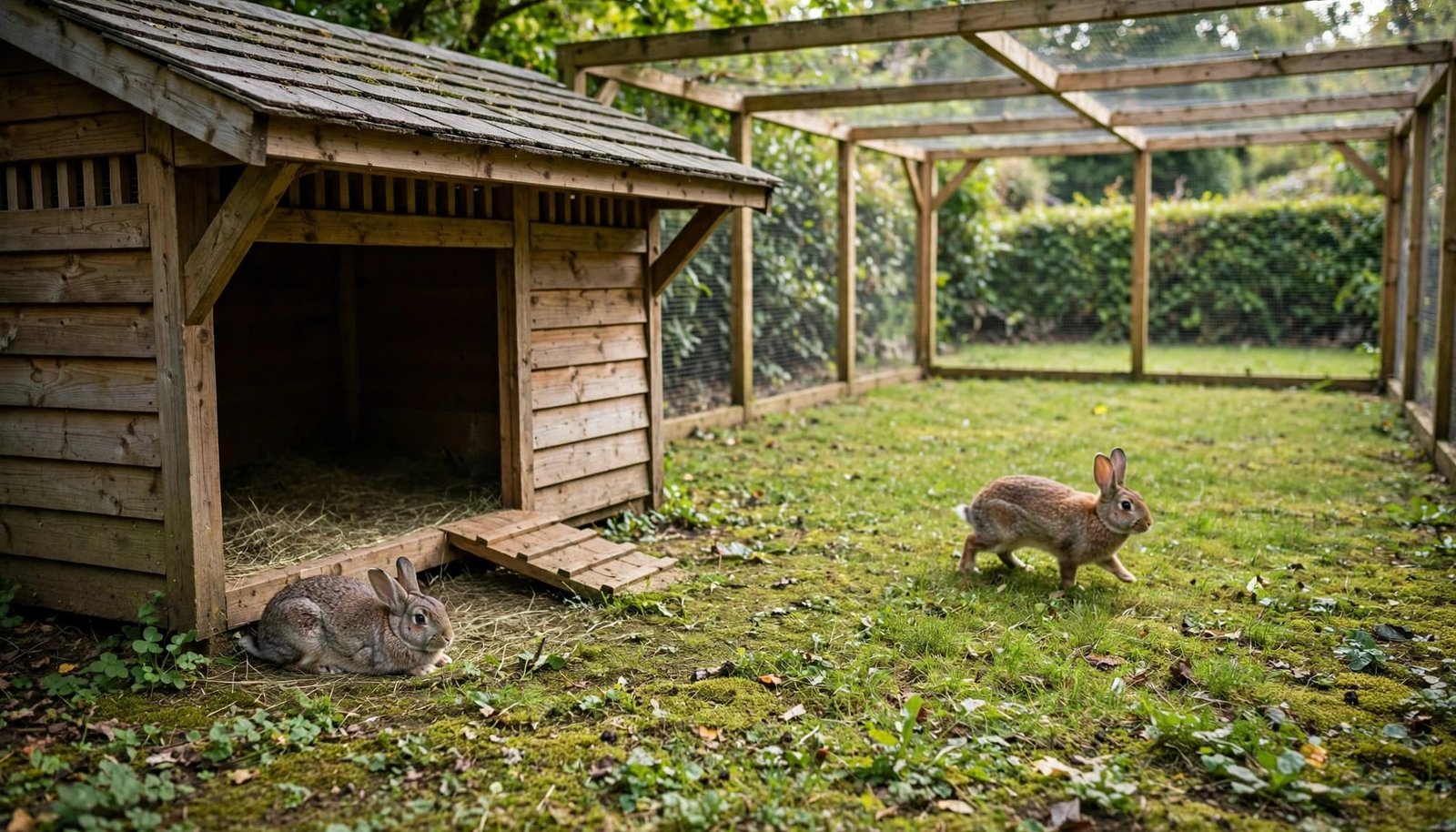
Use 3 by 2 meters as a starting point for two rabbits
The Rabbit Welfare Association and Fund recommends a minimum enclosure measuring 3 by 2 meters, with 1 meter of height, for a pair of average-sized rabbits. RSPCA Australia’s summary of the RWAF recommendation gives this reference.
That footprint is 6 square meters. The height is a separate measurement, so a tall enclosure doesn’t make up for a smaller floor area.
Treat these dimensions as your starting point when comparing an outdoor rabbit enclosure. Look at the complete connected home, including the shelter and exercise area, rather than assuming the hutch must provide all that space alone.
The measurements should describe somewhere your rabbits can live and move comfortably. A collection of separate spaces that aren’t available together won’t provide the same continuous living area.
Measure the Usable Space in Your Outdoor Rabbit Enclosure
Product photographs can make an empty enclosure look generous. Measuring the inside gives you a clearer picture of the home your bunny will actually use.
The RSPCA’s rabbit home guidance includes both the main shelter and exercise area within its minimum living-space recommendation.
Leave clear floor space after adding daily supplies
Measure the internal length and width of each connected section. Outside dimensions include walls and framing, so they can overstate the space available inside.
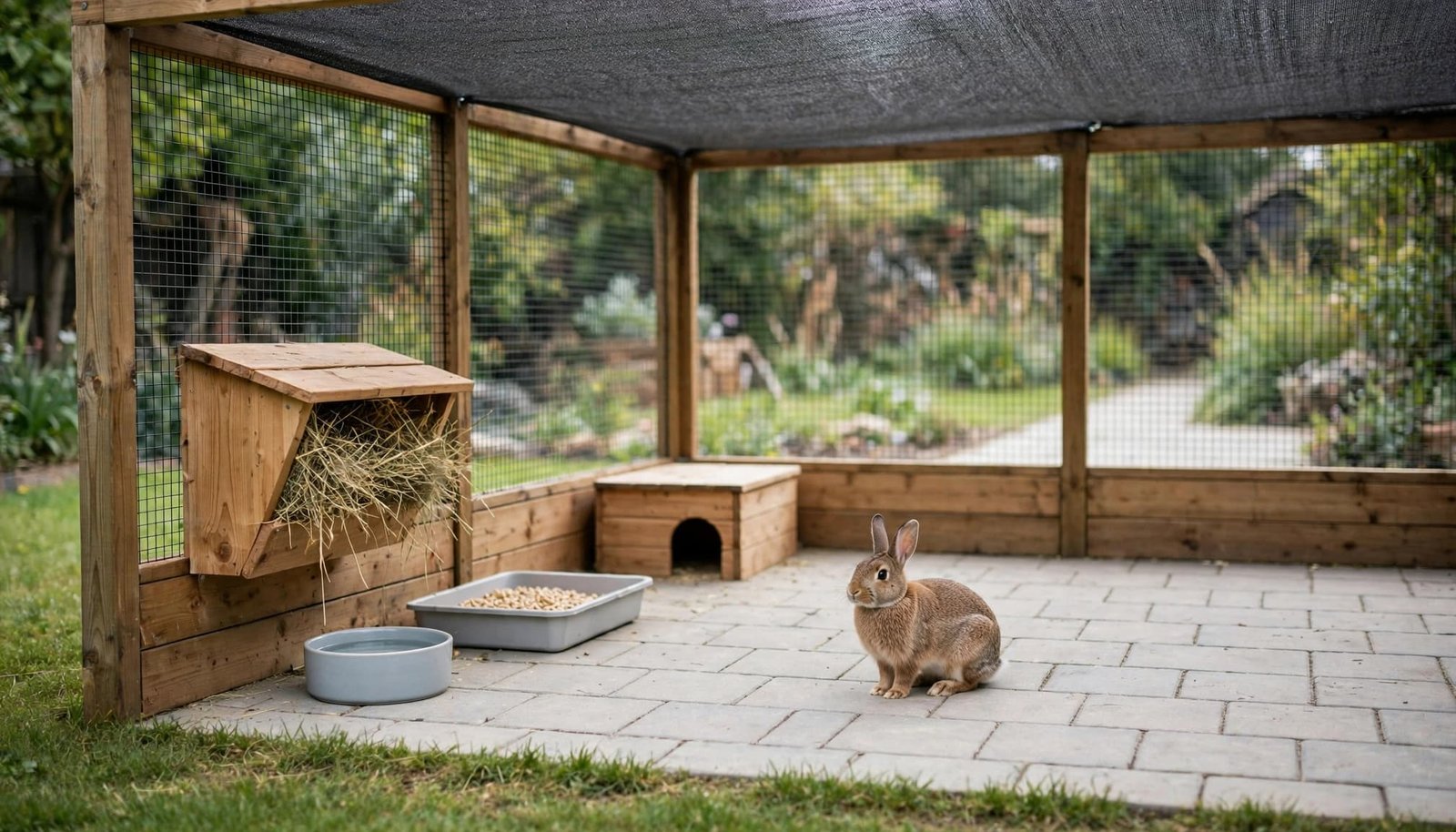
Next, map where the hay, water bowl, litter box, hideouts, and any ramps will sit. Include fixed sleeping compartments rather than treating the whole footprint as open floor.
These supplies are important, but their placement can change how your rabbit moves. A litter box beside an entrance may leave a much better route than the same box directly in front of it.
Don’t judge the layout by the leftover area alone. Notice its shape. A narrow strip around bulky equipment may leave little room for a comfortable turn.
Keep the main route open, with supplies positioned where your bunny can reach them easily. You shouldn’t need to remove everyday essentials to create enough room for movement.
Compare the full layout, not just run length
A long run can sound roomy in a product description. Its length tells you little without its width, internal height, and connection to the shelter.
Use the same measurements when comparing different designs.
| Measurement | What it helps you understand |
|---|---|
| Internal length and width | How much floor area is available inside the walls |
| Clear height | Whether your rabbit can stand upright comfortably |
| Entrance clearance | Whether connected sections are easy to reach |
| Furnished floor layout | Whether supplies leave a clear route |
| Door-opening space | Whether you can access the enclosure for care |
The strongest comparison is between finished, usable layouts, rather than headline measurements.
Look closely at compact hutches with attached runs. The attached section may occupy much of the advertised length, while the sheltered compartment has a smaller interior than expected.
Likewise, a long, narrow design may offer less practical movement than a broader layout. Your bunny needs room to turn and settle, as well as travel forward.
Map the layout before choosing a setup
A simple floor plan can make buying decisions easier. Draw the inside boundary, mark fixed partitions, and add the actual footprints of the supplies you plan to use.
Measure those items rather than guessing their size. A roomy litter box or hideout can take up more floor space than it appears to in a photograph.
Then trace the route between the shelter, run, hay, and water. Notice where a ramp, doorway, or accessory narrows that route.
Leave room for doors to open without moving everything around. Check that you can remove a pull-out tray for cleaning without shifting supplies. An arrangement that works only with a door held open isn’t the same as a usable everyday enclosure.
This planning is especially helpful with modular designs. Decide where each connection will go before choosing panels, so the finished arrangement has a clear purpose rather than unused corners.
Make the Living Area Safe and Comfortable to Use
The enclosure is easier to use when the shelter, run, and access points work together. Keep the measurements in mind, but also consider how your bunny will move through the finished enclosure.
Connect the shelter and run with comfortable access
An outdoor rabbit hutch should connect to the run with an entrance your rabbit can use easily. Unlike an indoor rabbit hutch, an outdoor setup also needs suitable protection from weather and predators.
Look at the entrance from your rabbit’s level. A raised threshold, narrow opening, or steep ramp can make a generous section harder to reach.
A connection also needs room at either end. Placing a hideout against the run entrance can create a bottleneck, even when the doorway itself is wide.
Keep this transition clear when arranging supplies. Your bunny should be able to leave the resting area without squeezing between equipment.
Sturdy wire mesh, secure latches, and effective predator protection help keep predators out. A weatherproof roof should keep rain out. An asphalt roof is one option, but the shelter still needs shade and ventilation to reduce overheating.
Keep the resting area sheltered and draft free. Insulation doesn’t replace suitable temperature control, and rabbits need protection in winter and from heat that could cause heatstroke.
Our outdoor rabbit enclosure planning guide covers the connected setup in more detail.
For this sizing decision, focus on accessibility. Count a section toward the overall living area only when your rabbit can reach and use it comfortably.
Leave room for cleaning and routine care
Your rabbit needs access to the whole enclosure, and you need access too. Cleaning becomes harder when the litter box fits through the door only after several other items are removed.
Plan how you’ll lift out the litter tray, replace hay, refill water, and reach the back corners. These tasks should be manageable without taking the enclosure apart.
Allow working space outside the setup as well. A hutch squeezed tightly beside a fence may leave little room to open its doors fully or reach its rear section.
If the setup has wheels, secure them before your rabbit enters. Think about where removable supplies will go while you clean, so they don’t block the only entrance or force you to lean across your rabbit.
Easy daily access helps you keep the living area comfortable. It also makes a spacious enclosure more practical to care for over time.
Frequently Asked Questions
How much outdoor space do two rabbits need?
For two average-sized rabbits, the Rabbit Welfare Association and Fund recommends a minimum enclosure measuring 3 by 2 meters, with 1 meter of height. Treat this as a planning reference, and check that the finished layout provides usable, connected space.
Does a rabbit hutch provide enough space on its own?
A hutch alone isn’t a complete full-time home. Connect it to a run that your rabbits can reach comfortably and use as part of their living area. Also see Making an Outdoor Rabbit Space Safe.
How do I measure usable space in an outdoor rabbit enclosure?
Measure the inside length and width of each connected section, since outside dimensions include the walls and framing. Then account for supplies, fixed compartments, and access points to see whether your rabbit has a clear route and room to move.
What should I check besides the enclosure’s size?
Check that your rabbit can move comfortably between the shelter and run, and that the floor is stable and offers good traction. Make sure you can open the doors, remove the litter tray, refill supplies, and reach the back corners for cleaning.
Give Your Bunny Space They Can Use
For two average-sized rabbits, start with a connected living area measuring at least 3 by 2 meters, with about 1 meter of height. Then measure the clear floor area after adding hay, water, litter, hideouts, and other supplies.
Choose a shelter and run that your bunny can move between comfortably. Keep the hopping route open and the footing supportive.
A useful outdoor enclosure gives your rabbit room to move while making access and everyday care straightforward. The finished layout matters more than how roomy an empty product looks.
We recommend the FunXplore indoor/outdoor Rabbit Hutch. It’s highly rated, weatherproof, easy to clean and movable. Includes 2 Tiers for plenty of space and is an excellent value. Customer reviews also point to it being easy to assemble compared to other enclosures.
Check out the FunXplore Rabbit Hutch Here.
We only recommend top-rated, affordable products you can trust. As an Amazon Associate, I may earn from qualifying purchases through the affiliate links above at no extra cost to you. Thank you for supporting our work.