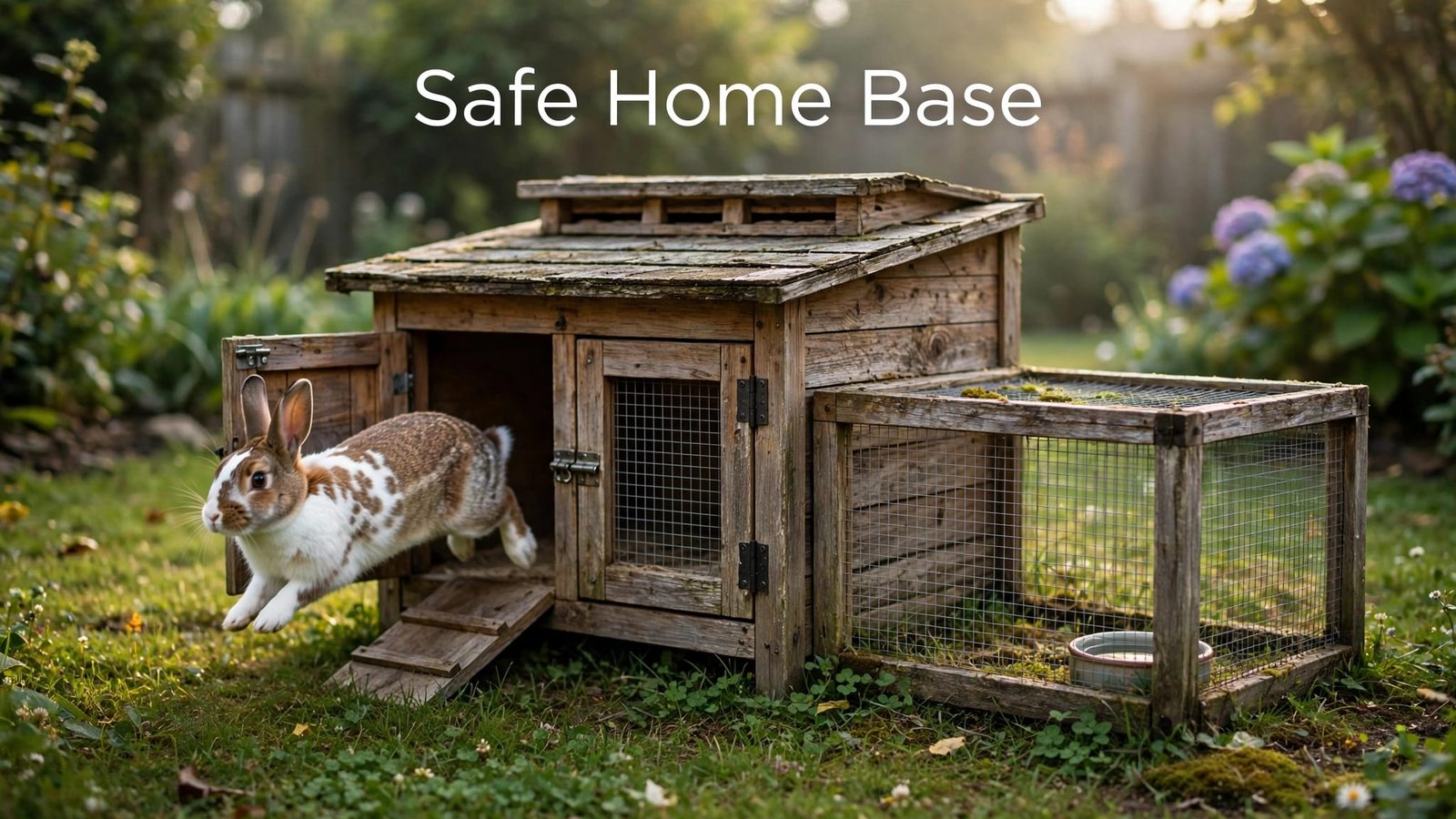
Choose a rabbit hutch by its usable space, secure construction, and protection from your local weather. Even the top rabbit hutches are sheltered home bases, but each is only one part of a rabbit habitat. They don’t replace generous living space and daily exercise.
A good-looking hutch can still have cramped sleeping quarters, slippery flooring, or doors that make cleaning difficult. Your rabbit needs a setup that supports comfortable movement and gives you easy access for everyday care.
Start with the complete living area, then compare the shelter, attached run, and upkeep each option requires.
Key Takeaways
- Choose a hutch by its usable space, secure construction, airflow, weather protection, and ease of cleaning.
- Treat the shelter and a secure, permanently accessible run as one connected living area. A hutch alone doesn’t provide enough room for daily movement.
- Check floors, doors, mesh, fasteners, and digging protection. Match access and layout to your rabbit’s size, age, and mobility.
- Provide fresh hay and water, a litter box, a two-exit hideout, daily cleaning, supervised exercise, and regular health and safety checks.
What makes the top rabbit hutches safe and comfortable?
Space, sturdy construction, airflow, weather protection, and easy cleaning matter more than appearance. Consider how the enclosure works when your rabbit, litter box, and other supplies are inside.
Check the usable space, not just the outside dimensions
Your rabbit needs room to stretch out fully, stand upright, turn around, and take several uninterrupted hops. Exterior measurements can mislead because walls, sleeping compartments, ramps, and feeders reduce the space available inside.
For two bonded, average-sized rabbits, use approximately 3 by 2 meters of continuous living space, with about 1 meter of height, as a planning reference. That’s roughly 10 by 6.5 feet, with 3.3 feet of headroom. The Rabbit Welfare Association and Fund’s housing guidance supports this generous starting point.
Treat the shelter and secure, permanently accessible rabbit run as one connected home. A small hutch doesn’t become adequate because you offer occasional garden time.
Measure the clear floor space and hopping route after adding supplies. A stacking cage may add vertical interest, but it can’t replace continuous horizontal room. Bonded rabbits need enough room to rest apart when they choose, as well as space to settle together.
Look for solid floors, good airflow, and weather protection
Choose a solid, stable floor with comfortable traction. A wire cage floor can injure feet and isn’t an appropriate resting surface. Indoors, secure washable rugs can improve grip, provided your rabbit doesn’t chew and swallow them.
The shelter should stay dry without trapping stale air. Look for air openings protected against rain, a sound roof, and doors that close securely. The RSPCA’s rabbit environment guidance emphasizes shelter, ventilation, and protection against predators.
Shade must last beyond the morning. A position that’s comfortable at breakfast can become dangerously hot by afternoon.
Finally, consider cleaning access. You should be able to reach every corner without dismantling the enclosure or chasing your rabbit. Reject exposed sharp edges, flaking finishes, and damaged surfaces that absorb urine or are difficult to clean.
Which rabbit hutch style fits your home and climate?
Choose an outdoor rabbit hutch or indoor rabbit hutch to match its location and climate. Also consider run access and how easily you can supervise your rabbit. Neither wood nor plastic automatically makes a hutch suitable.
Compare wooden hutches with modular plastic designs
A wood hutch often offers a familiar layout and sheltered compartments. However, absorbent timber, awkward corners, and exposed edges can make cleaning harder. Weathered roofs, loose joints, and chewed doors need attention before they become safety problems.
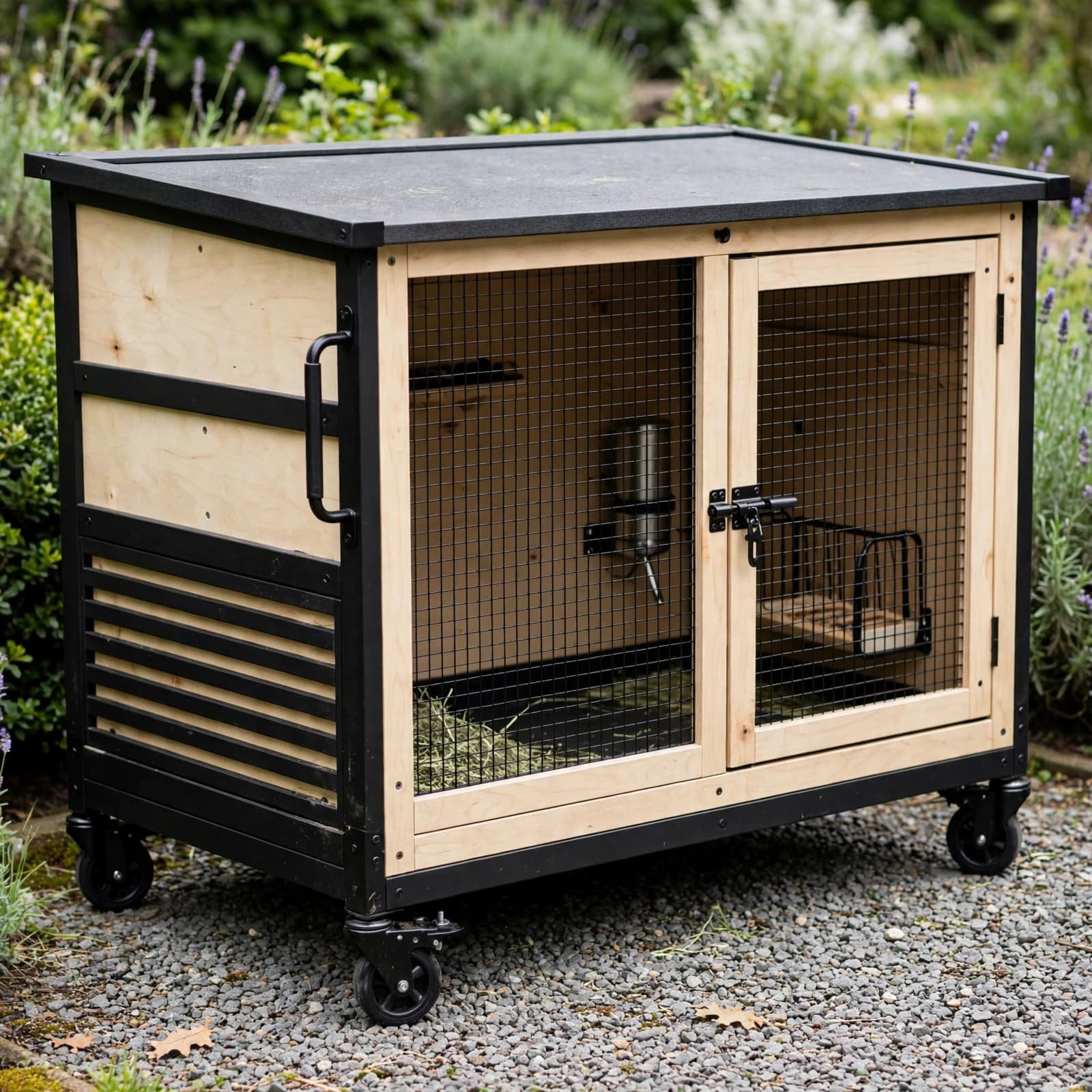
An asphalt roof alone doesn’t guarantee a dry, cool shelter. Check its seams, the amount of shade, and the roof’s overall condition. In winter, keep outdoor housing dry and protected from wind and cold while maintaining airflow. Moving your rabbit to a safer, temperature-controlled space may be necessary.
Plastic designs usually have wipe-clean surfaces, while some modular systems make expansion easier. Smooth flooring still needs traction, and an enclosed shell needs effective air exchange. Plastic construction alone doesn’t guarantee comfortable temperatures.
As the Merck Veterinary Manual’s housing advice explains, outdoor housing needs ventilation and protection against predators. Those requirements apply regardless of the material you choose.
Compare the complete layout rather than the shell alone. Wide access doors, secure connections, and room for an adequately sized run matter more than decorative trim. If a hutch has casters, keep it stable and lock them when parked. Never move an occupied enclosure. Place it somewhere you pass frequently, rather than at a distant garden boundary where changes in behavior are easier to miss.
How to choose a rabbit hutch that suits your rabbit
Before buying, assess your rabbit and the complete setup. Advertised cage size, a breed label, or a rabbit cage’s claimed capacity can’t tell you whether your bunny can move comfortably through the usable space.
Match the setup to your rabbit’s size, age, and mobility
Larger breeds need wider entrances, bigger litter boxes, and more turning space. A doorway that admits your rabbit can still be uncomfortable if they must squeeze through or crouch awkwardly.
For an older rabbit or one with limited mobility, favor a single-level layout with low entries. Keep hay, water, litter, and resting places accessible without climbing. A steep ramp can make part of a two-story hutch effectively unusable.
Don’t halve the living-space allowance because you have one rabbit. A solo bunny still needs generous room for full hops and comfortable movement.
Before buying, work through these practical questions:
- Can your rabbit reach every essential without negotiating a steep ramp or slippery surface?
- Will the litter box and hideout leave a clear route for hopping?
- Can you reach your rabbit and remove supplies without squeezing through a tiny door?
If an arrangement depends on your rabbit managing difficult access every day, choose a more accessible layout.
Also Read: Make an Outdoor Rabbit Enclosure Safe
Check the mesh, fasteners, and digging protection
For outdoor setups, inspect the entire enclosure boundary. Look for gaps around doors, loose panels, damaged flooring, weak roof connections, and fasteners that can work free. Check for chew-resistant doors and enclosure materials, but don’t treat any material as completely chew-proof. Inspect them regularly for damage.
Use sturdy, rodent-resistant galvanized wire mesh with small openings, securely attached and free of exposed sharp edges. The Association of Shelter Veterinarians’ guidelines describe strong mesh and openings small enough to exclude local predators as part of outdoor protection.
Ordinary chicken wire may not resist determined predators or exclude rodents. Likewise, a garden fence doesn’t provide a secure roof, prevent digging, or close every escape route.
Plan protection against both rabbits digging out and animals digging in. Any perimeter protection must cover the complete setup, including connections between the hutch and run. Keep uncomfortable exposed wire away from resting and hopping surfaces.
Finally, remove nearby brush piles, spilled feed, and stored bedding that could attract rodents. Move your rabbit into a secure area before making repairs, then inspect the whole boundary again.
Set up and care for your rabbit’s hutch every day
A suitable enclosure needs daily attention. Give your rabbit exercise and social contact, supervise outdoor access, and watch how they use the layout so you can make practical adjustments.
Create a calm home base with hay, water, litter, and a hideout
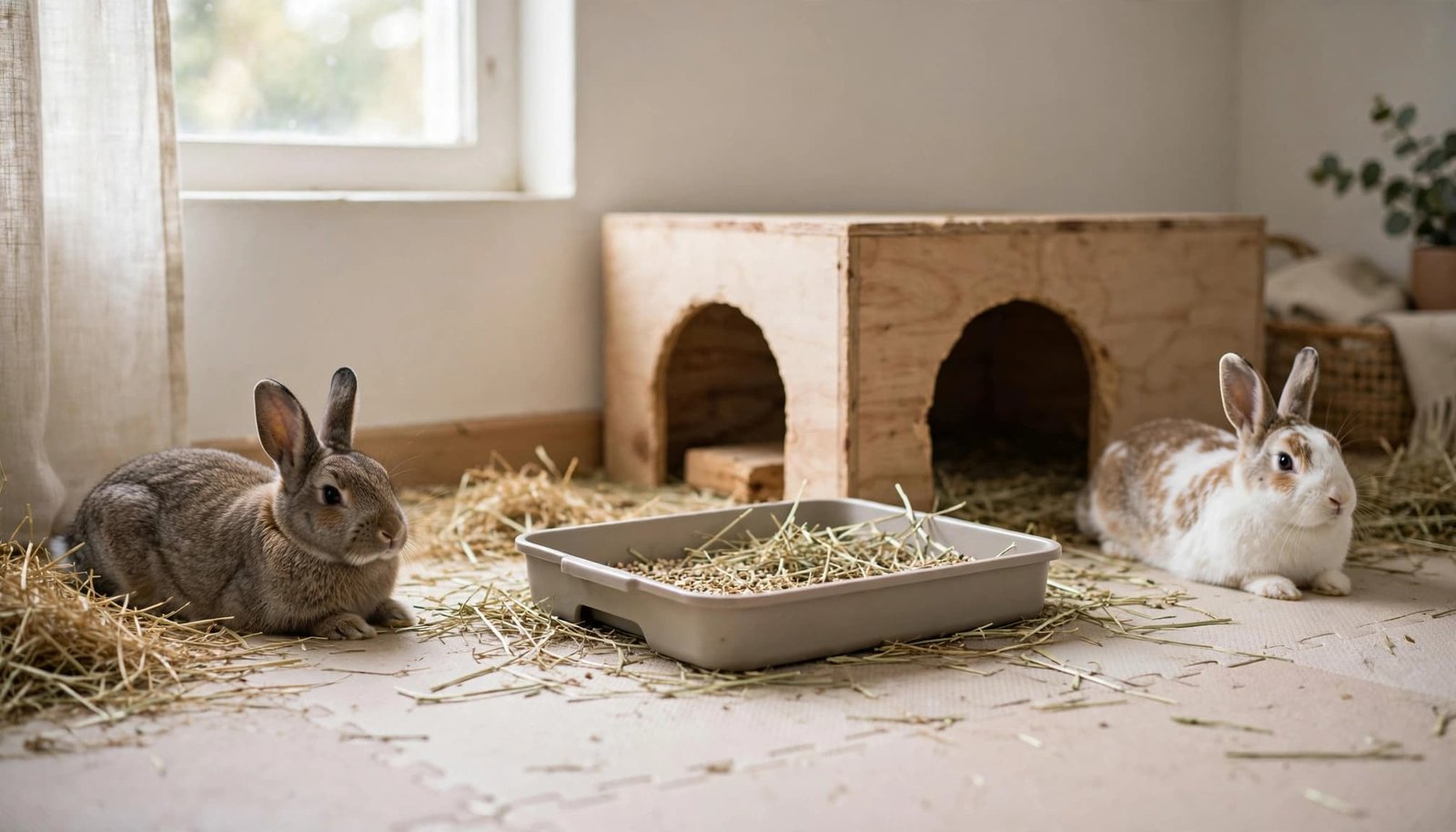
Keep fresh hay and fresh water available at all times. A heavy ceramic bowl is a practical water option; wash it regularly and position it away from easily kicked litter.
Provide a roomy litter box with an entrance your rabbit can manage comfortably. Place hay nearby or at one end so your rabbit can eat without crossing the enclosure.
Add a hideout with two exits, large enough for easy turning. Treat it as a retreat rather than reaching inside to pull your rabbit out.
Tunnels and rabbit toys designed for chewing add interest, but leave the main hopping route clear. Replace wet cardboard, loose threads, and damaged mats before your rabbit swallows pieces.
The House Rabbit Society’s housing guidance emphasizes roomy housing and daily exercise. A rabbit playpen can provide supervised indoor movement, while a rabbit tractor can offer supervised outdoor access. Neither replaces a secure, generously sized permanent living area. Stay nearby throughout outdoor sessions; mesh doesn’t remove every risk. Indoors, protect cords, remove unsafe plants, and block narrow gaps before opening a larger area.
Keep the enclosure clean and watch for changing conditions
Remove wet bedding, droppings, soiled hay, and leftover fresh food daily. Use aspen bedding where needed. A removable drop tray can make waste cleanup easier, but it doesn’t replace a comfortable solid resting floor.
Plan a deeper clean about once a week, or sooner when needed. Wash bowls and litter trays, clean dirty surfaces, and use rabbit-safe products according to their directions. Rinse when required and let everything dry before your rabbit returns.
Each morning and evening, notice appetite, droppings, movement, and water access. If you use a water bottle, test the nozzle rather than assuming a full bottle means your rabbit can drink.
Also inspect for dampness, chewing damage, loose fasteners, and shifting shade. Heat, cold, and storms may require moving your rabbit into a safer, temperature-controlled space. Never cover ventilation openings to weatherproof a shelter.
Contact a rabbit-experienced veterinarian promptly if your rabbit eats less, produces fewer droppings, or changes movement or behavior. A rabbit that stops eating needs urgent attention, even when the hutch appears clean and comfortable.
Frequently Asked Questions
How much space does a rabbit hutch need?
For two bonded, average-sized rabbits, use approximately 3 by 2 meters of continuous living space and about 1 meter of height as a planning reference. Count the hutch and a secure, permanently accessible run together, and measure the clear space after adding supplies. We have another article on Best Outdoor Rabbit Runs Here
Is a wooden or plastic rabbit hutch better?
Neither material automatically makes a hutch suitable. Compare the complete layout, including usable floor space, traction, airflow, weather protection, secure connections, and cleaning access.
What should I check in an outdoor rabbit hutch?
Inspect the full boundary for gaps, weak fasteners, damaged panels, sharp edges, and places where rabbits or predators could dig through. Use sturdy, securely attached mesh with small openings, and protect the hutch and run from rain, heat, and cold while maintaining ventilation.
What should a rabbit hutch contain?
Keep fresh hay and water available, and provide a roomy litter box and a hideout with two exits. Leave a clear hopping route and remove wet bedding, droppings, soiled hay, and leftover fresh food daily.
How often should I clean a rabbit hutch?
Remove waste and leftover fresh food daily, and plan a deeper clean about once a week or sooner when needed. Wash bowls and litter trays, clean dirty surfaces with rabbit-safe products, and let everything dry before your rabbit returns.
Choose the complete home, not just the hutch
The right rabbit hutch provides secure, comfortable shelter within a generous living area. Its value depends on usable space, safe access, and how well it connects to room for daily movement.
Compare options against your rabbit’s needs rather than price or appearance alone. Then support that choice with daily care, supervised exercise, social contact, and regular safety checks.
A thoughtful setup gives your rabbit room to move and a dependable place to rest.
A Reliable Option to Consider
Eglu Go Rabbit Hutch