
Yes, rabbits can share a home with cats and dogs, but only after a careful introduction and with secure separation. Some pets become comfortable neighbors, while others should never share access.
Your bunny’s safety comes before friendship. A playful chase, swat, or bite can cause serious injury, even when your other pet seems friendly.
Start by deciding whether your animals are suitable, then build a setup that protects your bunny every day.
Key Takeaways
- Never leave your rabbit alone with a dog or cat, even after many peaceful meetings.
- Move gradually through scent swapping and protected contact behind a secure enclosure.
- Stop if any animal becomes frightened, fixated, or aggressive. Permanent separation is a responsible choice.
When Can Rabbits With Cats and Dogs Share a Home?
Understand the predator and prey risk
Dogs and cats are predators, while rabbits are prey animals. Your pets don’t need to be aggressive for the predator-prey mismatch to matter.
Rabbits with cats and dogs can share a home when interactions stay calm. A dog may chase a running bunny through excitement, and a startled prey animal may bolt. A cat may swat during play. Rabbits have delicate bodies, and an encounter can become dangerous before you can react.
Your goal is calm behavior around each other. Shared sleeping spots, grooming, and close friendships aren’t necessary for a happy household.
Know when not to try
Don’t arrange a meeting with a dog that stalks, chases, grabs, or becomes intensely focused on small animals. Obedience alone doesn’t remove prey drive.
Terriers, sighthounds, and dogs with hunting histories deserve particular caution. Sporting, herding, and working dogs may also chase or control movement. Breed can flag concerns, but an animal’s personality matters more than breed alone. Breed and obedience can’t prove safety.
If you can’t provide reliable, permanent separation, adding a rabbit may not be suitable. For a rescue or foster placement, share your existing pets’ behavior history before bringing a bunny home.
Prepare a Rabbit-Only Space First
Your house rabbit needs a protected home base. A closed room is usually more dependable than an open-topped pen.
A cat can jump over barriers, and a dog may push, climb, or knock panels down. Use secure doors, stable enclosures, and a roof where needed. Mesh must prevent paws and noses from reaching through.
Double panels with a gap help prevent contact through bars. Keep furniture away from enclosure edges so it doesn’t become a launch point.
Inside the enclosure, provide solid flooring, good traction, hay, water, and a cardboard hide with two exits. Avoid narrow spaces where your pet could become cornered. Our guide to setting up an indoor rabbit space covers these everyday essentials.
Make this room your rabbit’s territory, and let a new pet settle before introductions. Begin with small scent swapping between separate spaces, stopping if either animal becomes distressed.
If you have a bonded pair, protect both. One confident bunny doesn’t mean their quieter companion feels safe.
How Should You Introduce Your Dog to a Rabbit?

Build calm behavior before visual contact
Before any contact, your dog must sit and lie down on command. They must also leave food or a toy when asked.
These are starting requirements in the RWAF’s other-pet introduction guidance, not proof that a dog is rabbit-safe or that training removes prey drive.
Practice away from your bunny first. Reward relaxed behavior and attention to you. A pet that can’t disengage from an interesting smell or moving toy isn’t ready.
After scent swapping, allow distant visual contact through a secure barrier. Your rabbit should remain free to retreat rather than being held for inspection.
Keep meetings short and controlled
Use a lead and secure barriers. Ideally, have one adult manage the dog while another watches your rabbit. Keep the cat out of the room during these sessions.
Keep each session to about five minutes, ending sooner if either pet becomes uncomfortable. Stop immediately if your pet tenses, stares, whines, barks, or lunges.
Reward looking away and settling. Don’t allow nose-to-nose pressure, chasing, or repeated approaches to the enclosure.
Progress only after repeated calm sessions. Face-to-face access is optional, and many households should keep barriers permanently.
Never leave them alone together without supervision. Even a familiar, playful animal can accidentally cause a fatal injury.
How Should You Introduce Your Cat to a Rabbit?
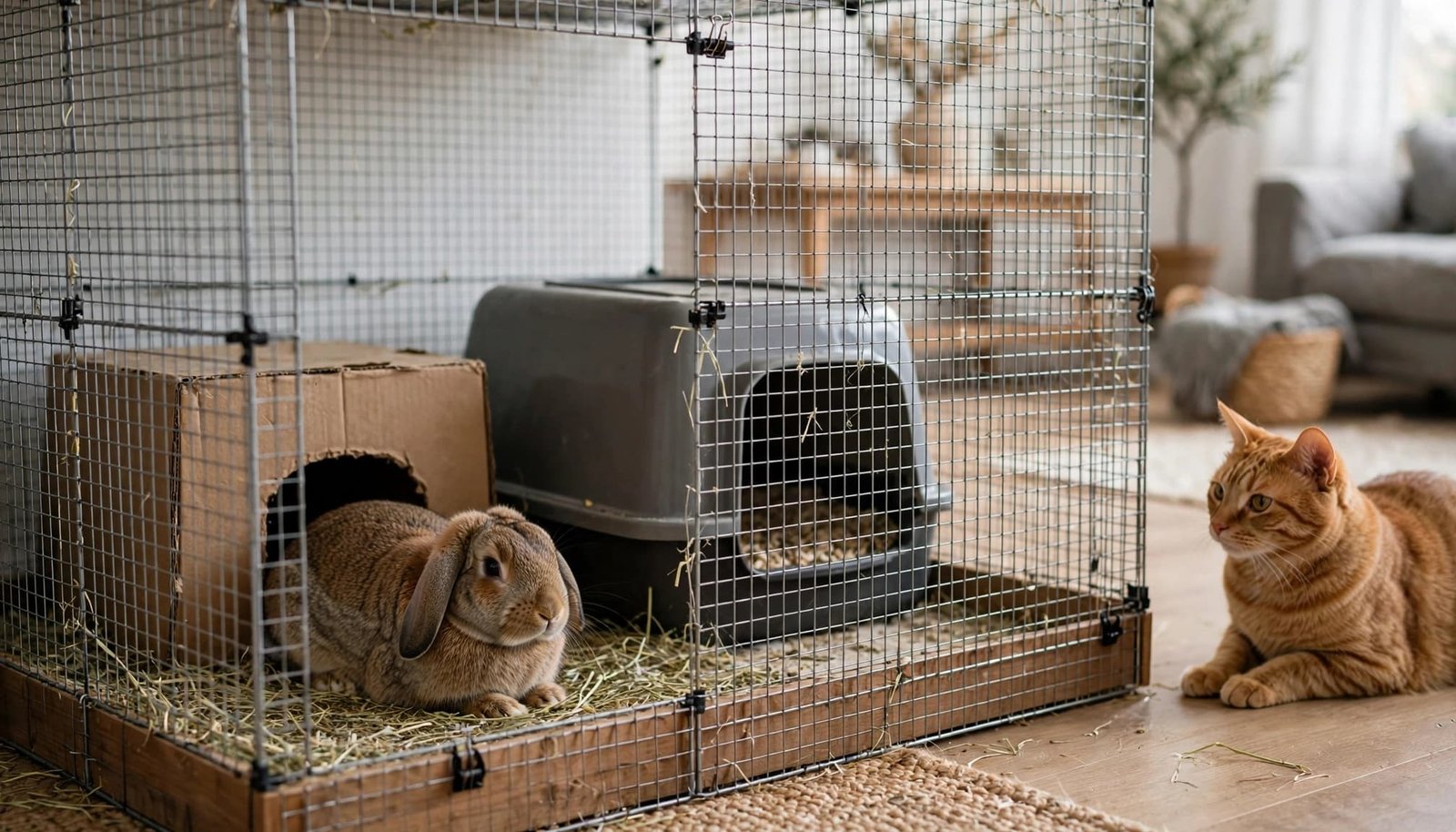
Start in your rabbit’s familiar territory
Let your rabbit establish their own safe area first. Then introduce your cat under supervision, with your bunny protected inside a secure enclosure.
The Rabbit.org cat-and-rabbit guidance recommends mesh small enough to stop a cat reaching through, plus a hiding place.
Begin by exchanging familiar scents before visual meetings. Don’t carry either animal toward the other or block your bunny’s retreat.
RWAF recommends a larger rabbit for a resident cat’s home, but size doesn’t remove the risk, and a kitten isn’t automatically safe.
Prevent swats and rough play
Trim your cat’s claws about once a month, with veterinary help if needed. Trimming claws reduces scratch damage but doesn’t make swatting acceptable.
Keep the first introduction short and supervised. Allow closer access only after both pets repeatedly remain relaxed through barriers, with an adult ready to separate them.
Your bunny may chase or boss the other pet around to defend territory, so protect its escape route too.
Older guidance suggests interrupting rough behavior with a hidden water squirt. We recommend calm separation instead, since spraying can add fear.
End the meeting before chasing starts. Don’t let either animal practice bullying the other.
Which Stress Signs Mean You Should Stop?
Watch your rabbit and cat for stress, not only the animal you think is more vulnerable. Stop an introduction when you notice:
- Your rabbit crouches tensely with their head angled upward, boxes with their front paws, vocalizes, or displays their front teeth during a confrontation.
- Your cat flattens their ears, hisses, chatters their teeth while fixated on the rabbit, stalks, or prepares to pounce.
- Either animal repeatedly retreats, gets cornered, or cannot return to normal activity after the meeting.
An animal that stays completely still may be frightened. As prey, it may freeze or retreat, so stillness alone doesn’t show that an introduction is going well.
Don’t use forced carrier sharing, frightening car rides, or other stressful shortcuts to encourage friendship.
Watch behavior between sessions too. Stress can continue after a meeting, with signs such as persistent hiding, changed litter habits, reduced eating, or fewer droppings. Contact a rabbit-experienced veterinarian promptly if appetite or droppings decrease.
Daily Safety Rules for a Mixed-Pet Household
Safe introductions are only part of keeping pets together. Your daily routine matters just as much.
- Separate pets whenever you cannot actively supervise. Close and latch the rabbit-room door overnight, during errands, and when visitors arrive. Children shouldn’t manage introductions or be responsible for keeping animals apart.
- Keep food and litter areas apart. Feed the dog where your rabbit can’t reach its bowl. Our advice on keeping rabbits away from cat food explains why shared feeding areas aren’t suitable.
- Prevent access to clumping litter. Swallowed litter can cause a life-threatening intestinal blockage. Use unscented paper litter or suitable compressed wood pellets in the tray. An ordinary open litter box can work as the container; the filling must be safe for your pet.
- Take scratches and bites seriously. The House Rabbit Society’s cat-and-rabbit safety advice explains that saliva and wounds can introduce harmful bacteria. A single scratch or love bite can cause an abscess or potentially fatal infection. Seek urgent veterinary care after any bite or scratch, even if it looks tiny.
- Use species-appropriate parasite prevention. The dog can bring fleas indoors. Check each pet regularly for fleas, and ask your vet about preventing fleas. The dog can also spread tapeworms, so ask your vet about tapeworm prevention and treatment for each pet. Never put a dog or cat flea product on your pet without veterinary approval.
Frequently Asked Questions
Can a cat or dog replace another rabbit?
No. Friendly contact with another species doesn’t meet the same social needs as a compatible rabbit companion.
The RSPCA’s rabbit companionship advice explains why bonded company matters. If you already have a bonded pair, watch each bunny individually during introductions. Don’t assume both feel comfortable because one approaches the barrier.
Why does my rabbit chase my cat?
Your pet may be defending territory or confidently moving the other animal away from a valued space. Chasing doesn’t prove they’re safely playing together.
Separate them before either becomes frightened or retaliates. Give your pet a protected home base and the other animal a route away that doesn’t require crossing the enclosure.
Can other small pets share space instead?
Don’t assume another small animal is a safer roommate. Strong hind legs can injure a guinea pig, while hamsters and birds are too small and fragile for shared access.
Provide species-specific housing and companionship. Keep each animal protected from species it could hurt or that could hurt it.
A Safe Home Doesn’t Require Shared Space
A rabbit, cat, and dog can sometimes share a home with patient introductions and dependable boundaries. Your rabbit’s comfort matters more than whether the rabbit and its housemates become friends.
Choose secure boundaries whenever behavior remains uncertain. A calm home with separate living areas is a successful outcome too.