Senior rabbit care means keeping your bunny comfortable, maintaining a hay-based diet, and spotting health changes early. For a senior rabbit, easier access to food, better footing, and regular vet visits can make everyday life more comfortable.
Your senior bunny may rest more with age, but weight loss, stiffness, and missed meals need attention. Treatable pain can look like slowing down. Start with your bunny’s size and age, then adjust care around what they need.
Key Takeaways
- Keep grass hay available constantly, and weigh your rabbit weekly.
- Make food, water, resting areas, and litter trays easy to reach without climbing.
- Contact a rabbit-experienced vet about changes in appetite, movement, weight, or behavior. Don’t assume they’re simply part of aging.
At What Age Is Your Rabbit a Senior?
Your rabbit’s breed and size affect when senior care becomes helpful. There isn’t one birthday that fits every bunny.
The RWAF senior rabbit guide gives these approximate ages and lifespans.
| Breed size | Considered senior | Approximate lifespan |
|---|---|---|
| Small | 8 years or older | 12 to 13 years |
| Medium | 6 years or older | 9 to 10 years |
| Large or giant | 4 years or older | 4 to 7 years |
These are planning guides, not deadlines. Your rabbit’s health, body condition, and mobility matter more than the label.
You can begin watching for age-related changes before these milestones. A giant rabbit may need easier access to its litter tray years before a small rabbit does.
Make Your Older Rabbit’s Home Easier to Use
Small changes can help your bunny move around with less effort. Keep their familiar layout where possible.
Add Grip and Remove Climbing
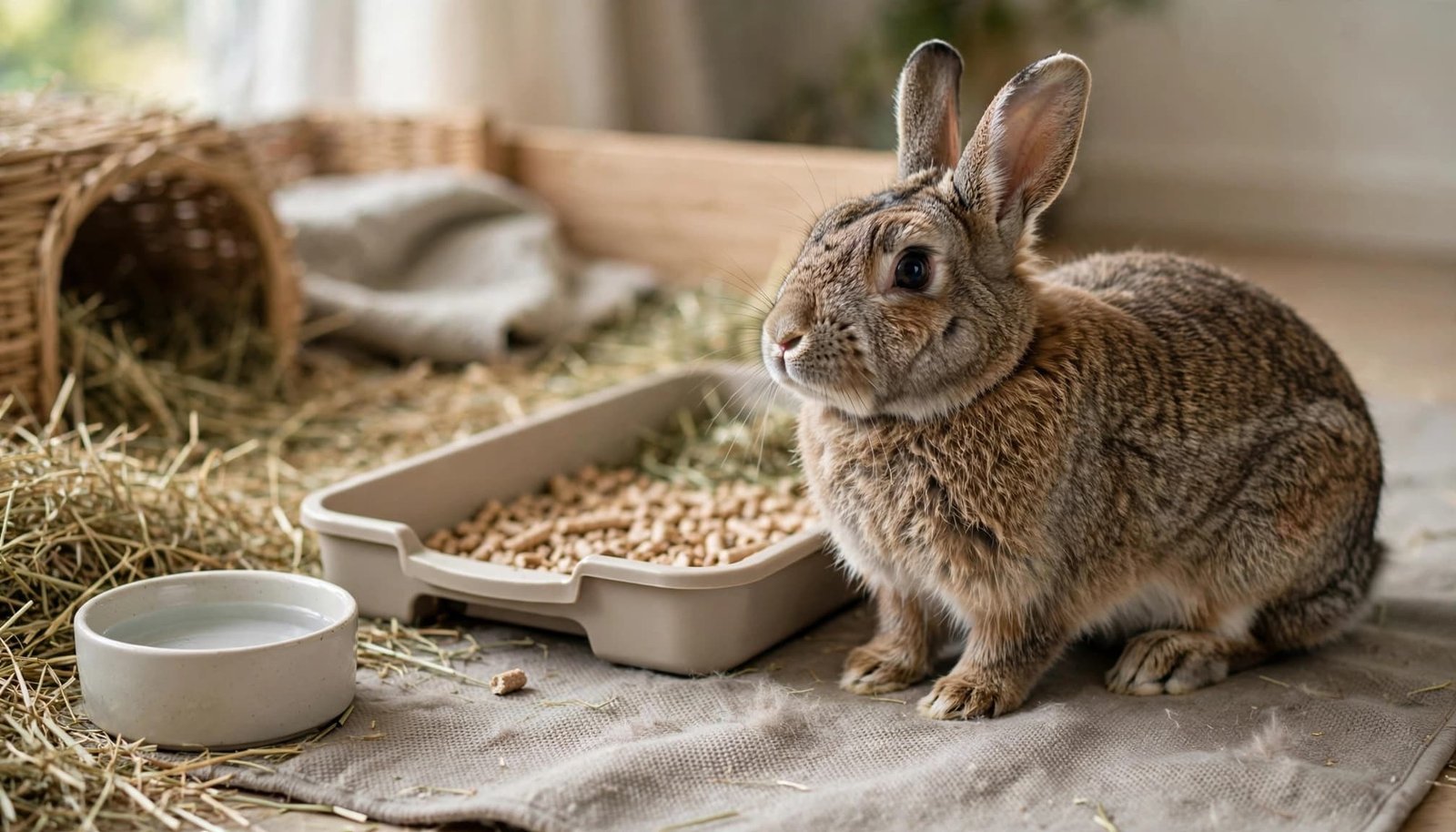
Cover slippery floors with secure rugs, carpet, or rubber-backed mats. Choose washable materials without loose threads your rabbit could swallow.
Replace multi-level setups with a single-story living area. Remove ramps and keep food, water, and shelter at floor level. Your bunny still needs space for gentle exercise and exploring.
Avoid rearranging everything at once, especially if your rabbit has reduced eyesight. Familiar routes help them feel settled.
Choose an Easy-Entry Litter Tray
High sides can make toileting painful for an arthritic rabbit. Offer a roomy, low-entry litter tray with absorbent, rabbit-safe litter.
A plastic dog bed with a cut-out entrance can work well. Keep its entrance smooth and easy to step across.
Place the tray near your rabbit’s usual resting area. Add soft, dry bedding nearby, and change wet material promptly.
Keep Hay at the Center of Older Rabbit Nutrition
Your older bunny still needs plenty of fiber. Age alone doesn’t mean they need richer food or a lower-fiber diet.
Offer Unlimited Grass Forage
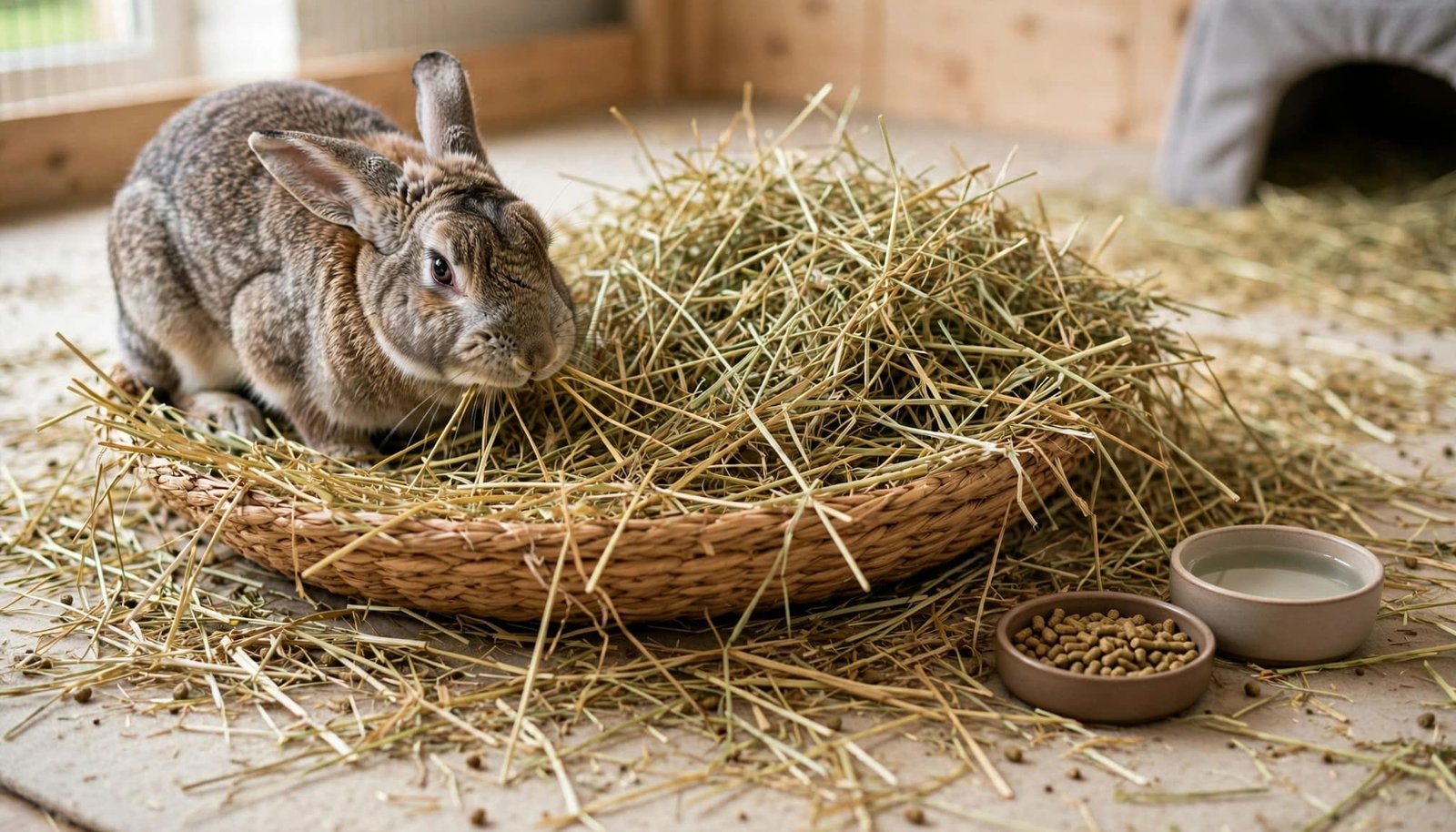
The RSPCA’s advice for older rabbits recommends constant access to hay or grass. A useful daily guide is a bundle of forage about as big as your rabbit, with more always available.
Timothy, orchard grass, and meadow forage are suitable choices. Fiber in forage supports digestion, and chewing it helps wear down continuously growing teeth.
Keep fresh water in an easy-to-reach, stable bowl. Continue familiar leafy greens, such as romaine and cilantro, while watching appetite and droppings.
Measure Pellets and Follow Weight Trends
RWAF gives an adult guideline of no more than one tablespoon of pellets per kilogram of body weight daily. That’s about two tablespoons for a 2 kg rabbit, before individual adjustments.
Some seniors need more calories; less-active rabbits may need fewer. Choose plain, high-fiber pellets without seeds or sugary pieces.
Investigate weight loss before simply increasing food. For an overweight bunny, reduce excess pellets gradually with veterinary guidance. Never restrict forage.
Change pellet brands over about one to two weeks. Our guide to introducing new rabbit foods can help you make changes slowly.
Recognize Arthritis and Ask About Pain Relief
Arthritis is common and under-diagnosed in pet rabbits. Your bunny may hesitate before hopping, stop grooming their back, or avoid the litter tray.
Other clues include stiffness after resting, reduced exploring, and difficulty reaching food. A vet can assess movement and may recommend X-rays or a monitored pain-relief trial.
RWAF describes liquid meloxicam, a nonsteroidal anti-inflammatory drug, as a usual arthritis treatment. Its meloxicam guidance for rabbits explains why treatment needs veterinary supervision.
RWAF recommends blood tests before starting treatment to look for hidden kidney disease. It recommends repeat bloodwork every three to six months, adjusted to your rabbit’s needs.
Never give human painkillers or change a prescribed dose yourself.
Trouble entering the litter tray can be a sign of pain, even when your rabbit still eats enthusiastically.
Watch for Dental Disease and Reproductive Problems
Your rabbit’s feeding habits and toileting can reveal problems before they become obvious. Mention new changes promptly rather than waiting for a routine checkup.
Eating Less Can Mean Dental Pain
Dental warning signs include eating less, salivating, fewer droppings, dropping food, and swelling around the mouth or jaw.
Your bunny may accept soft greens while avoiding coarse forage. That still needs attention.
Your vet may recommend a dental examination with skull X-rays to assess the teeth and roots. Simply looking at the front teeth won’t reveal every problem.
Don’t replace forage with treats while waiting for the problem to improve. Reduced eating can quickly affect digestion.
Unspayed Females Need Individual Advice
Uterine cancer is a major concern in unneutered female rabbits. Published estimates differ. The RSPCA gives around 80% after age three; RWAF gives up to 85% by age five. These figures describe population-level uterine cancer risk, not an individual rabbit’s diagnosis.
RWAF recommends spaying when young. If your older rabbit is unspayed, discuss her health, surgical suitability, and risks with a rabbit-experienced vet.
Blood around the genital area, weight loss, or unusual discharge needs prompt assessment. These signs don’t establish a diagnosis at home.
Build a Simple Home-Check Routine
A short routine helps you notice changes without making care overwhelming.
- Watch eating, drinking, droppings, and movement every day. Record anything different from your rabbit’s usual pattern.
- Inspect the bottom and tail area daily, and more often during warm weather or if soiling occurs.
- Weigh your bunny weekly on accurate scales, using the same container and similar timing.
- Check claws, foot pads, coat, and body condition weekly. Look for overgrown nails, redness, sores, or muscle loss.
Arthritis and obesity can make grooming difficult. Gently spot-clean soiled fur, dry it thoroughly, and get help with persistent mess. Avoid full baths.
Keep bedding dry to reduce sore hocks and skin irritation. Flies, eggs, or maggots on your rabbit mean immediate veterinary care.
Know When Your Rabbit Needs the Vet
Arrange senior checkups about every six months, or more often when your vet recommends them. Choose someone who regularly treats rabbits, including dental disease and digestive emergencies.
Our guide to choosing a rabbit-savvy veterinarian explains the care experience to look for.
Plan for repeat bloodwork, ongoing medication, and possible dental procedures alongside examination fees.
A rabbit that stops eating, produces markedly fewer droppings, struggles to breathe, collapses, or develops sudden weakness needs urgent care. Don’t wait overnight for improvement.
Our rabbit GI stasis warning signs explain why reduced eating and droppings matter.
New head tilt, straining to urinate, an unexplained drop in weight, or reduced activity also needs prompt assessment. Rabbits hide illness, so a small change can be important. Don’t begin assisted feeding unless your vet advises it.
Support Quality of Life and Handle Companion Loss
You don’t have to judge your bunny’s comfort by age alone. Look at their daily experience and how well treatment helps.
When Should You Consider Euthanasia?
Track appetite, comfort, mobility, cleanliness, and interest in companionship. Note whether your rabbit can rest peacefully and enjoy familiar activities.
A brief daily record helps you see whether comfortable days still outnumber difficult ones.
Persistent pain despite treatment, repeated distress, or inability to eat or stay clean calls for an honest veterinary discussion. These signs can also reflect treatable illness, so assessment comes first.
RWAF’s guidance on rabbit euthanasia focuses on prognosis and expected quality of life. Age alone isn’t a reason to say goodbye.
Help a Surviving Companion Feel Secure
If one bonded rabbit dies, allow supervised time beside the body, then remove it. If infection or poisoning is suspected, seek veterinary advice before contact.
House Rabbit Society’s support for a bereaved rabbit describes this approach.
Keep the survivor’s routine familiar. Offer extra attention and small familiar treats, while monitoring forage intake and droppings. A grieving rabbit that stops eating still needs urgent care.
Senior Rabbit Care FAQs
Does Your Rabbit Need Senior Pellets?
Not automatically. Your rabbit’s weight, hay intake, teeth, and medical needs matter more than the word “senior” on a bag.
Ask your vet about a change if your bunny is losing weight or struggling to eat. Keep any transition gradual and track their response.
Should You Give Joint Supplements?
RWAF says senior rabbits generally don’t need supplements when their diet meets their needs. Extra calcium can contribute to urinary sludge or stones.
Oxbow offers joint supplements, and some owners report improvement. Owner reports don’t establish that a product treats arthritis.
Discuss a specific supplement with your vet before adding it, especially if your rabbit has kidney or urinary problems. Supplements shouldn’t replace prescribed pain relief.
Keep Care Focused on Comfort
Good care for an older rabbit starts with knowing your bunny’s normal habits. Weekly weights, easy-access housing, and prompt attention to changes can help you catch problems earlier.
Keep comfort and enjoyment at the center of your decisions. A softer resting spot or effective pain relief can make everyday activities easier.
Your older rabbit deserves familiar routines, gentle attention, and care that changes with their needs.